science share account_circle

Category: Misc

  • Bharat Ek Khoj – Ancient Vigyan

    Bharat Ek Khoj – Ancient Vigyan

    The Rust-Resistant Iron Pillar

    The Iron Pillar at Mehrauli in Delhi standing tall for the past 1600 years has attracted the attention of archaeologists and material scientists across the world because of its high resistance to corrosion. The base of the Pillar rests on a grid of iron bars soldered and is estimated to weigh more than 5,000 kilograms. The 23 feet 8 inches high Pillar made of 98 per cent wrought iron stands testimony to the high level of skill achieved by the ancient Indian metallurgists in the extraction and processing of iron.

    According to researchers, the corrosion resistance results from an even layer of crystalline iron hydrogen phosphate film that serves to protect the Iron Pillar from corrosion. The presence of second-phase particles (slag and unreduced iron oxides) in the microstructure of the iron, that of high amounts of phosphorus in the metal, and the alternate wetting and drying existing under atmospheric conditions are the three main factors in the three-stage formation of that protective passive film.

    -Dr Shobha Tawade

    Team, ScienceNow Digital

  • Bharat Ek Khoj :Vaigyanik

    Baudhayana

    Baudhayana was a mathematician who lived around 800 BCE. He is the author of Baudhayana Sulbasutra which was more like a pocket dictionary, full of formulae and results for quick references. He is credited with calculating pi, and the square root of 2. The most creditable achievement is that Baudhayana introduced the Pythagoras theorem1000 years before Pythagoras had developed it!

    In Baudhayana Sulbasutra, there are several mathematical formulae or results that told how to precisely construct an altar. He was a man of very considerable learning and probably wrote the Sulbasutra to provide rules for religious rites. The mathematics given in the Sulbasutra-s enables the accurate construction of altars needed for sacrifices. It is clear from the writing that Baudhayana, as well as being a Vedic priest, must have been a skilled craftsman. He was skilled in the practical use of the mathematics and construction of sacrificial altars of the highest quality.

    Dr Shoba Tawade

    -Team ScienceNow Digital

  • Bharat Ek Khoj :Vigyan

    Gol Gumbaz

    Gol Gumbaz, situated in Bijapur district of Karnataka, is the largest dome in India built by Sultan Muhammad Adil Shah in the year 1656. About 20 years were spent for the complete construction of this large tomb. The unique thing about the Gol Gumbaz is that ‘even the softest sound can be heard on the other side of the tomb due to the acoustics of the space’. This circular whispering gallery of the tomb is a great combination of sound and civil engineering.

    The tomb is built in such a way that a small whisper gets amplified and is carried across a distance of more than 40 meters in the vast dome and can be heard clearly. Even the slightest whisper is heard from side to side; and a conversation can be most easily carried on across the full diameter of the dome in the lowest undertone. Even if you are 110 meters apart, on the far end of the floor, each whisper, each clap and each shift of your garment will be heard at the other end, as if they were speaking to you over your shoulders.

    Dr Shobha Tawade

    -Team ScienceNow Digital

  • What If?

    Ocean Currents Stops?

    Ocean currents play a significant role in controlling climate around the globe. These currents act like a giant conveyor belt, warming and cooling parts of the Earth as water circulates. Melting ice caps, which can happen due to global warming, can cause ocean waters to circulate and have a drastic effect on climate.

    What are Ocean Currents?

    Around the world, there are a number of ocean currents which have a serious impact on climate. For instance: The Gulf Stream in the Atlantic transports warm water with a high level of salinity and low density from equatorial regions further north on the ocean’s surface, warming countries such as the United Kingdom. The further north the water travels, the cooler it gets. Cold water becomes denser, falls further towards the bottom of the ocean and is carried back further south. This causes a continual ocean current in the North Atlantic.

    Global Warming

    Polar ice caps are beginning to melt due to global warming. Since ice caps are composed of freshwater, and if they continue to melt, it would bring down the level of salinity in the surrounding ocean waters. Changes in salinity levels could affect thermohaline currents by preventing water from achieving enough density to sink to the bottom of the ocean. More seriously, ocean currents could stop completely.

    Effects of Ocean Currents

    If ocean currents were to stop, climate could change drastically, especially in Europe and countries in the North Atlantic. In these countries, temperatures would drop, affecting humans as well as plants and animals. In turn, economies could also be affected, particularly those that involve agriculture. If these effects were to continue, Europe, North Atlantic countries and parts of North America could experience long periods of freezing conditions. Also, if ocean currents stopped because of climate change it will have many other affects associated with the global-warming phenomenon.

    Earlier Phenomena

    Earlier evidence of rocks and ice have shown that ocean currents have indeed stopped for periods of time in history. One example can be found around 13,000 years ago when the warmth experienced at end of an ice age caused large masses of ice to melt into the sea. The resulting changes in water density stopped ocean currents from flowing and caused freezing conditions in some parts of the world for over 1,000 years.

    -Dr Siddhivinayak Barve

    Editor, ScienceNow Digital

  • Ancient Vaigyanik

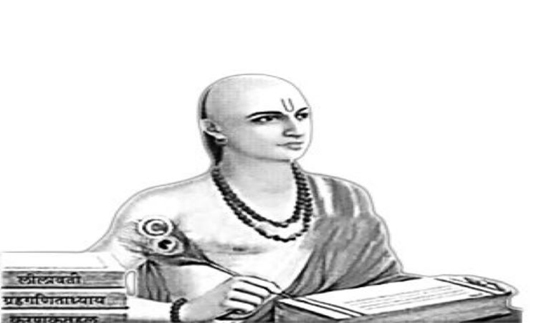
    Bhaskaracharya – The Mathematician Astronomer

    India’s Ancient Mathematician and Astronomer Bhaskaracharya with his famous treatise Siddhant Shiromani…

    Bhaskaracharya was one of the leading mathematicians of the 12th century. He is famous for his book Siddanta Shiromani, which is divided into four sections: Lilavati (Arithmetic), Beejaganit (Algebra), Goladhyaya (Sphere) and Grahaganit (mathematics of planets).

    He developed the Cyclic or the Chakrawat method for solving algebraic equations. The Bhaskara II satellite, named in honor of the mathematician and astronomer, was launched by the Indian Space Research Organization (ISRO) on November 20, 1981.

    -Dr Shobha Tawade

    Team ScienceNow

  • Ancient Vigyan

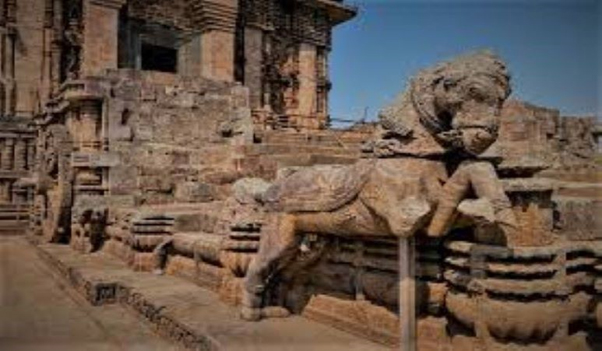
    The Konark Sun Temple

    The magnificent Sun Temple at Konark is the masterpiece in ancient architechture…

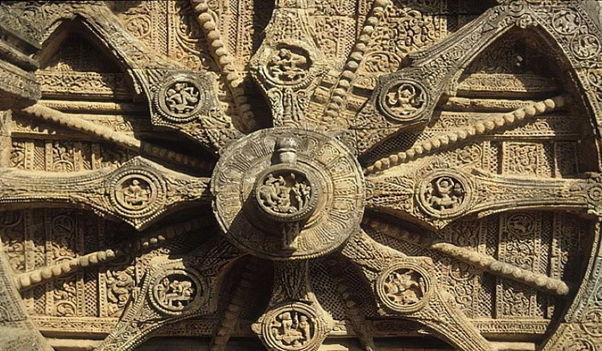
    The Konark Sun temple in Odisha is a famous Indian temple dedicated to the sun god, Surya. The temple faces the east and it is built at such an incline that the first rays of sunlight hit the main entrance of the temple. But what is fascinating is that the 24 stone carved wheels of the Sun Temple are actually sundials which show time anti-clockwise.

    This sundial at the temple, has 8 major spokes that divide 24 hours into 8 equal parts. This means that the time between two major spokes is 3 hours. There are also 8 minor spokes. Each minor spoke runs exactly in the middle of 2 major spokes. This means that the minor spoke divides the 3 hrs in half, so the time between a major spoke and a minor spoke is 90 minutes.

    The edge of the wheel has several beads. There are 30 beads between a minor and a major spoke. So, the 90 minutes are further divided by 30 beads. This means that each bead carries a value of 3 minutes. The beads are large enough, so you can also tell if the shadow falls in the centre of the bead or on one of the ends of the bead. This way we can further calculate time accurately to the minute. The placing of the sundial in the monument shows the precision and co-ordination that must have taken place between the astronomers, engineers and the sculptors to create a structure like this one, 750 years ago!

    Do you know?

    The chariot of the Sun Temple at Konark contains twelve pairs of wheels, each twelve feet in diameter, representing the twelve months of the Hindu calendar. The eight spokes of the wheel represent the eight intervals of the day and the seven horses represent the days of the week.

    Dr Shobha Tawade

    Team ScienceNow


  • Acharya Charak

    Acharya Chark was the founder of Ayurveda- a holistic system of medicine…

    Acharya Charak born around 300 BC and was a key contributor to Ayurveda’s ancient art and science, medicine, and lifestyle philosophy. Charaka lived between AD 150-200 and 100 BC.

    Charaka was an important and respected part of ancient Indian society and medical practice. He followed professional behavior and ethical ideals.

    Charaka studied all parts of medicine, including the logic and philosophy underlying the Indian medical system, he placed a specific focus on illness diagnosis and regarded Ayurveda as a holistic system of health care that addressed both preventative and curative elements.

    The Charaka Samhita written by Acharya Charak is an Ayurvedic treatise written in Sanskrit. The Charaka Samhita is one of Ayurvedic fundamental texts. The text is a fascinating source of ancient medical practices.

    According to Charaka, a body works because it has three doshas or principles: movement (Vata), transformation (Pitta), and lubrication and stability (Kapha). They are created when dhatus (blood, flesh, and marrow) interact with the food consumed.

    Dr ShobhaTawade

    Team ScienceNow Digital

  • Iron Pillar of Delhi

    Iron Pillar of Delhi is a monument that allures everyone with its mysterious iron built that has not rusted since its construction for more than 1600 years back. It is an excellent example of scientific and engineering advancement in ancient India…

    Iron Pillar is situated inside the Qutub Complex where the famous QutubMinar is located. Iron Pillar stands majestically with a height of 24 feet, placed in front of the Quwwatul Mosque in Qutb Complex. It is made up of 6 tons of wrought iron.

    The history of Iron Pillar Delhi is still under research and as per scholars, the Mehrauli Iron Pillar was constructed during early period of Gupta reign however according to one of the prominent theories, Iron pillar was built on top of a hill Udaygiri in Madhya Pradesh and was transported to Delhi by King Iltutmish after his victory

    Iron Pillar stands on an artistically carved base with a diameter of 48 cm and a weight of 6.5 tonnes. The pillar weighs more than 5865 kg. Iron pillar has inscriptions carved on it.

    It is an ancient Indian architectural wonder.


    -Dr Shobha Tawade

    Team ScienceNow Digital

  • Visualisation: Law of Attraction

    Visualisation: Law of Attraction

    Successful people have a clear idea of their life goals. Constantly dreaming and visualising about them, they are able to harness the power of their subconscious mind thereby setting in motion favorable events that eventually help achieve the goals…

    “What you think, you become” – Gautama Buddha..Centuries ago, when the great saint spoke these wise words, he was trying to bring to fore the strong connection between our ‘thinking’ and ‘actions’? Surely, he wanted to communicate the fact that ‘negative’ people invariably think negative, and likewise attract negative people/events into their lives’.

    So also, positive people habitually tend to do a lot of ‘positive’ thinking and likewise attract positive people/situations into their lives. Eventually, bringing us face-to-face with the universal law of attraction– ‘like attract like’.

    Today, spiritually inclined or otherwise, most thought leaders/corporate trainers working with the nuts-and-bolts of ‘how thinking works’ and even modern-day scientists researching on ‘neurons’ and ‘brain‘would agree that Lord Buddha uttering those golden words might have just got it right.

    Visualisation: Reprogramming Mind

    In the 21 st century, humanity has clinically re-discovered that mind can be reprogrammed to get things to work-out in a desired manner. We are all waking up to a new reality that it is possible to train our brains to achieve set life goals and objectives. It is possible because the brain isn’t able to differentiate between things ‘actually happening’ and the things that are being ‘imagined’. In short, the brain cannot distinguish between a ‘real’ memory and an ‘imagined’ one. It means that if you visualise some life goal/objective and get the brain to encode it as a ‘real memory’, the brain would immediately set in motion a whole sequence of events leading to its achievement.

    Understanding the Brain’s Process System

    Our brain has a system called ‘Reticular Activating System’. It is a network of neurons that is designed to filter information allowing in only the required information and blocking the unwanted. It is a protective system, to prevent information overload. Because if the brain starts processing all the information it received, it would simply explode.

    Guess who programs this system? We do it, all the time. For instance, if you start feeling, ‘you are not loved’, your reticular activating system will immediately, through the day, start pointing out every piece of evidence to confirm the negative belief that, ‘you are not loved’.

    How to get our brain to work for us?

    We identify a ‘life goal’ and create a vivid picture in our mind of how things would seem to be when it is finally achieved. Immediately, this would create a conflict in our mind – between the visualised image of the goal being achieved and the present-day reality. Now as our minds are programed to resolve conflicts, our subconscious mind will get working on this visualisation. It will activate creative powers of the subconscious mind, motivate the mind to work harder, create new solutions, find innovative means… only to realise our goals.

    When should one do it?

    While visualisation can be used to help achieve life goals, we need not spend all day thinking about the goals and objectives. On the contrary, if you spend too much time on visualisation while going about the day-to-day tasks, it could prove to be counter-productive. Instead, you ought to establish the right balance between ‘visualisation’ exercise and ‘daily routines’. Ideally, you should spend no more than 5-10 minutes twice-a-day, preferably first thing in the morning when you wake-up and then just before you go to bed.

    How to get better results?

    While going about the daily 5-10 minute visualisation exercise, try making the images more real by

    adding a lot of emotions to it. The real feelings of sound, smell, taste and touch when added to visual image of life goals/objectives will make the mental image look more profound, and thus the brain will work more passionately to achieve them.

    Why make it a practice?

    Waking up every day and visualising life goals and objectives for a couple of minutes will not only help you reprogram your mind to get things done, but it will also help you develop the art/skill of getting the mind involved in constructive things. You will begin to feel really good.

    -Noel Fernandes

    Team, ScienceNow Digital

  • Ancient Science : Vigyan

    Charm of Charminar

    Built in 1591 CE in Hyderabad by Muhammad Quli Qutb Shah, the fifth Sultan of the Qutub Shahi Dynasty, the iconic Charminar has been standing tall for more than four centuries. Studies on all the ingredients that could have been used to make the lime mortar is considered to be the secret to its longevity.

    Researchers have revealed that the key component used was water fermented with plant extracts. This fermented plant extract, which was used to mix the lime mortar, contained alcohol which slowed down the process of carbonation. Additionally, the lime mortar was also found to have carbohydrates from plant extracts, which acted as a perfect binding agent that controlled the breaking of the mortar.

    Additionally, they also knew the correct lime to sand ratio, which is 1:3. This ratio has been proved to have better mechanical properties, reduce pores and boost carbonisation (the process of making solid carbon).

    Do you know?

    Charminar is built on a square structure and has four grand arches and four minarets on each corner that are built into the main structure. It is interesting to note that the number ‘char’ or four and its multiples can be figured in at least 22 spots in the design of the structure.

    -Dr Shobha Tawade

    Team ScienceNow