
science share account_circle

Category: Articles

  • HARMONY FOR TOMORROW: A SUSTAINABLE SYMPHONY

    HARMONY FOR TOMORROW: A SUSTAINABLE SYMPHONY

    Clean Energy

    As we find ourselves at the intersection of environmental stewardship and economic advancement, the resonance of a sustainable symphony reverberates through our collective efforts. We embark on a journey towards igniting progress in the realms of clean energy, aligning the imperative of sustainable development with the pursuit of prosperity.

    Affordable and Clean Energy

    India emerges as a shining example, leading the charge with bold initiatives in solar energy adoption. From the sprawling fields of rural communities to the bustling urban landscapes, India’s commitment to harnessing the power of the sun stands as a testament to the transformative potential of clean energy. Through innovative approaches in solar power generation and distribution, India not only addresses the pressing challenge of energy access but also champions environmental sustainability on a global scale.

    One notable success story lies in the village of Dharnai, Bihar. Once shrouded in darkness, Dharnai now basks in the glow of renewable energy, thanks to a micro-grid solar power system. This initiative has not only illuminated homes but also empowered the community, fostering economic growth and improving living standards. Dharnai exemplifies how solar energy can revolutionize rural life, inspiring similar endeavors across the nation.

    Challenge of Clean Energy

    Navigating the intricate landscape of sustainable development presents us with a formidable challenge: reconciling the pressing needs of economic growth with the imperative of environmental conservation. The pursuit of affordable and clean energy, while noble in its goal, is fraught with a multitude of hurdles, ranging from technological limitations to financial constraints. Yet, amidst these challenges, lies a beacon of hope- collaborative global efforts that can surmount these obstacles and pave the way for a resilient and sustainable energy landscape.

    Advancements in renewable energy technologies serve as a testament to human ingenuity and innovation. From solar and wind power to geothermal and hydroelectric energy, these technologies offer promising alternatives to traditional fossil fuels. However, their widespread adoption requires concerted efforts on a global scale- efforts that transcend borders and ideologies. It is through collaboration, sharing knowledge and resources, that we can accelerate the transition towards a cleaner, more sustainable energy future.

    Prospects of Clean Energy

    Moreover, initiatives aimed at enhancing energy efficiency play a crucial role in our quest for clean energy. By optimizing energy consumption across various sectors-  from transportation and manufacturing to residential and commercial buildings- we can reduce our carbon footprint and mitigate the adverse effects of climate change. Investing in energy-efficient technologies and practices not only conserves valuable resources but also drives economic growth by creating new markets and job opportunities.

    In embracing sustainability as a guiding principle, we not only safeguard the future of our planet but also cultivate a more equitable and prosperous society. By prioritizing investments in clean energy, promoting green employment opportunities, and fostering entrepreneurship, we can build a world where economic growth is synonymous with environmental preservation. Together, let us embark on this transformative journey towards a future that is not only sustainable but also inclusive and resilient.

    Conclusion:

    As we reflect on the symphony of progress orchestrated through sustainable energy, one thing becomes abundantly clear: the interconnectedness of our collective endeavors. The harmonious integration of clean energy initiatives with inclusive economic growth epitomizes the transformative potential of sustainable development. It is through collaboration, innovation, and a steadfast commitment to our shared goals that we can truly harness the power of sustainability to build a better world for all.

    -Prof (Dr) Sanjay Deshmukh

    Prof and former VC

    Mumbai University
  • Bharat Ek Khoj :Vigyan

    Bharat Ek Khoj :Vigyan

    Gol Gumbaz

    Gol Gumbaz, situated in Bijapur district of Karnataka, is the largest dome in India built by Sultan Muhammad Adil Shah in the year 1656. About 20 years were spent for the complete construction of this large tomb. The unique thing about the Gol Gumbaz is that ‘even the softest sound can be heard on the other side of the tomb due to the acoustics of the space’. This circular whispering gallery of the tomb is a great combination of sound and civil engineering.

    The tomb is built in such a way that a small whisper gets amplified and is carried across a distance of more than 40 meters in the vast dome and can be heard clearly. Even the slightest whisper is heard from side to side; and a conversation can be most easily carried on across the full diameter of the dome in the lowest undertone. Even if you are 110 meters apart, on the far end of the floor, each whisper, each clap and each shift of your garment will be heard at the other end, as if they were speaking to you over your shoulders.

    Dr Shobha Tawade

    -Team ScienceNow Digital

  • Bharat Ek Khoj : Vaigyanik

    Bharat Ek Khoj :Vaigyanik

    Baudhayana

    Baudhayana was a mathematician who lived around 800 BCE. He is the author of Baudhayana Sulbasutra which was more like a pocket dictionary, full of formulae and results for quick references. He is credited with calculating pi, and the square root of 2. The most creditable achievement is that Baudhayana introduced the Pythagoras theorem1000 years before Pythagoras had developed it!

    In Baudhayana Sulbasutra, there are several mathematical formulae or results that told how to precisely construct an altar. He was a man of very considerable learning and probably wrote the Sulbasutra to provide rules for religious rites. The mathematics given in the Sulbasutra-s enables the accurate construction of altars needed for sacrifices. It is clear from the writing that Baudhayana, as well as being a Vedic priest, must have been a skilled craftsman. He was skilled in the practical use of the mathematics and construction of sacrificial altars of the highest quality.

    Dr Shoba Tawade

    -Team ScienceNow Digital

  • The Serial Inventor

    The Serial Inventor

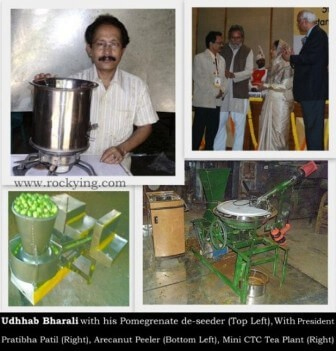
    Padma Shri Uddhab Bharali from Assam has over 150 inventions under his belt, and continues to make life easier for people through his machines…

    A grass root innovator from Assam, today Uddhab Bharali is known for more than 150 innovations to hisname such as paddy thresher, cane stripping machine, pomegranate de-seeder and low-cost incinerator.

    How did it all start?

    While Bharali was good at academics, the engineering aspirant had to drop out of college during his final year owing to financial hardships. To help his father in repaying debts, he experimented with innovation and developed new tools — an interest that Bharali had, even as a child.

    However, his first innovation came in 1988, when he developed a polythene making machine for the tea industry. Till then, Lakhimpur in Assam was a zero industries district, and at the time only the tea industry was booming. They required polythene covers in bulk and instead of buying a machine which would cost him lakhs of rupees, Bharali developed his very own for about Rs 65,000.

    The beginning…

    The success of the polythene cover making machine gave him the confidence he needed. To come upwith his innovative products, Bharali, like many others, relied on ‘jugaad’ where he used cheap, easy to find materials to develop products which are sustainable and efficient. By 1995, Bharali had paid-off all his father’s debt and got a job of looking after the machinery used in a hydropower project in Arunachal Pradesh. But it was short lived as he had to return back to his hometown after the news of his elder brother’s death.

    Realising he was the only bread earner for his family, Bharali had to make ends meet. Between the 1990s and mid-2000s, he developed 24 products which focused on helping farmers. Though Bharali wanted to develop or innovate for other sectors too, but the demand was huge from the farm sector.

    From developing different kinds of peelers, re-designing Assamese paddy grinder to cutters for tea- leaves, he took extra effort to simplify agricultural processes for the farming community. Identity as an inventor

    Bharali’s ultimate recognition came in 2006, but not before the serial inventor designed and prototyped an entire range of mechanical innovations. Bharali’s pomegranate seed peeling machine, which he designed, garnered accolades and appreciation not only from India but also from across the world.

    Truly one of its kind, the machine was designed to separate the outer skin from the thinner membrane without causing any damage to the seeds. The machine was an instant hit with orders pouring in for this unique invention from Japan, US and Turkey.

    Some of Bharali’s other inventions include: an arecanut peeling device, and the Cassava Peeler among others. The basic idea behind Bharali’s inventions was to reduce hours of back-breaking labour that farmers put in day and night; thus, making these inventions a hit with the farming community and those engaged in agricultural labour. In addition to these, he has also invented remi  recortication machine, garlic peeling machine, tobacco leaf cutter, paddy thresher, cane stripping machine, brass utensil polishing machine, safed musli peeling machine, and jatropha de-seeder. These inventions are popular abroad and local authorities like the Central Silk Board, North Eastern Region Community Resource Management Project and the National Innovation Foundation have helped Bharali to install these new machines. Bharali have recently developed a red cardamom dryer for the Spice Board of India, and a seed extractor for bananas for Institute of Advanced Study in Science and Technology.

    For a cause

    Despite his clients which consist of government bodies and research institutes, Bharali spends some of his time working for the betterment of the underprivileged. Keeping with this, he has started a shelter facility in his area, as well as a feeding programme. Bharali has also developed a number of machines for the differently-abled which helps them enhance their quality of life. Apart from being an innovator, he is a guest lecturer at a number of colleges and universities in Assam and all across India. A winner of many awards and recognitions, Bharali is far from retiring as his quest for knowledge and innovation is helping in bettering the society.

    -Dr Shobha Tawde

    Team ScienceNow Digital

  • Earth’s Magnetic Field

    Know Geology…

    Earth’s Magnetic Field

    Earth is surrounded by Magnetic Field.. Let’s understand it…

    We live on the planet Earth. The Earth is our provider of all of our needs. As we all know, there are various sources of radiation present on the Earth, such as Uranium, etc. There is also cosmic radiation surrounding us, although the intensity of the radiation is so low that it cannot directly harm us. However, there is a massive amount of radiation in the vast expanse of the universe. Even the Sun emits powerful ultraviolet radiation, which is able to cause fatal cancer like illnesses. Then why is this radiation not able to harm us? The answer lies with the Earth’s magnetic field.

    How magnetic field is generated?

    When the Earth was formed around 4.5 billion years ago, she was a hot ball of molten rocks. As the time passed, the Earth’s interior segregated into 3 parts: crust, mantle and core. This core is made of iron and nickel. The core can be divided into outer core and inner core. The outer core is hot, and therefore in liquid state, while the inner core is also hot, but in solid state due to the pressure from surrounding crust, mantle and outer core. Still, the iron particles present in the inner core are constantly moving. When the iron particles on the surface of the inner core get relatively cooler than the particles inside the inner core, they get denser, and move towards the center of the inner core. At the same time, the relatively warmer and lighter iron particles from the interior of the inner core tend to move towards its surface. This movement of the iron particles creates electric currents in the inner core, and the currents are formed inside the inner core. These currents are called as ‘Convection Currents’. The electric currents, combined with the magnetic properties of the iron particles, generate the Earth’s magnetic field, or the magnetosphere.

    Aurora

    When the solar winds reach the Earth, they interact with the Earth’s magnetic field, and the interaction causes a glow in the atmosphere. This event is called as ‘aurora’. Generally, due to the bipolar nature of the magnetic field, aurora is only visible in the north and south poles. But when the solar activity is intense, the aurora will move away from the poles, and may be visible even at lower latitudes. An excellent example of this activity was observed on April 22 and 23, 2023, when the solar activity was so intense that the aurora was visible in Ladakh in northern India.

    Effects of Magnetic Field

    This magnetic field protects the Earth and her inhabitants from harmful cosmic radiation. However, this magnetic field is not completely invincible. In case of strong cosmic activity, the high solar winds can disturb the magnetic field, and geomagnetic storms can penetrate the Earth’s magnetosphere. This can result in the widespread radio and power blackouts. During the greatest solar storm ever recorded, known as the ‘Carrington Event’ in 1859, the solar activity was so intense that the northern aurora moved down to Hawaii and Cuba, while the southern aurora moved up to Santiago, capitol of Chile. This event caused severe disruption of telecommunication around the world, as the telegraph poles were fried and communication was stopped. Similar event took place in 1989, plunging the province of Quebec, Canada into 12 hours of electrical blackout.

    Due to this magnetic field, there are charged particles trapped in the atmosphere. The area where the charged particles lie is called as the ‘Van Allen Belt’. The Van Allen Belt is supposed to be uniform around the Earth, but that is not the case. In some places, the Van Allen Belt has come closer to the Earth’s surface. In these areas, conflict between the Van Allen Belt and the Earth’s magnetosphere results in the reduction of the Earth’s magnetic field. In the southern Atlantic Ocean, there is such an area, where the strength of the Earth’s magnetic field is significantly lower than that of the rest of the Earth. This anomaly known as the ‘South Atlantic Anomaly’. Apart from the interaction with Van Allen Belt, there are few other factors, which play a crucial role in the reduction of the magnetic field. These factors include global warming, climate change, use of chlorofluorocarbons, etc. Without the magnetic field, the powerful solar winds would blow away the Earth’s atmosphere, and cause fatal cancer like illnesses on the Earth. The Earth as we know her would not exist, and instead a desolate planet would remain behind, should the Earth’s magnetic field vanish.

    -Ninad Bhagwat

    MTU, USA

  • Self-Driving Cars: Fact or Fiction 

    Self-Driving Cars: Fact or Fiction 

    With technology evolving quite rapidly, the role of science cannot be ignored which is helping us experience a whole new world of comfort: autonomous cars being one among them…

    Technology

    With technology evolving quite rapidly, the role of science cannot be ignored which is helping us experience a whole new world of comfort. And the latest advancement is in transportation in the form of self-driving or autonomous cars. What was once considered unreasonable or impossible by many is soon becoming a reality. For sure, self-driving cars are fast changing gears from science fiction to reality? 

    With companies like Tesla, Google, Nissan, and Ford already coming into the fray with their dedicated platforms and technology to develop self-driving cars, it wouldn’t be long before we have to just strap up, sit back and relax!

    How do Autonomous Cars work?

    Most of the cars available in the market today are partially autonomous with features like hands-free parking, self-braking systems, GPS assistance, etc. But since they have limited software capabilities, they require human intervention to make certain decisions. However it is not the case with self-driving car as several systems (mentioned below) work in tandem with each other to control a driverless car.

    Sensors

    There are a number of hi-tech sensors available today which make self-driving cars a reality. Sensors for forward collision warning, blind spot monitoring, radar, camera, LIDAR, and ultrasonic all of them come together to form an eye of the vehicle and make self-driving car possible. 

    Self-driving cars use cloud computing to know about adjacent cars, traffic data, maps, weather, surface conditions, etc. This helps them to monitor their surroundings better and make informed decisions. However internet connectivity is a must for the self-driving cars all-the-time even though computing hardware can solve small computing tasks locally.

    The main function of the software algorithms is that all the data collected by the car from the sensors (eye) and connectivity (ears) needs to be analyzed in no time to determine the best course of action. It is necessary for self-driving cars to make quick decisions without any error, otherwise it can be disastrous.

    Software algorithms is supposed to seize and integrate all the data from sensors and connectivity tools to make correct decisions on when to speed-up, turn, brake,  and map a route for guidance.

    Technology

    But the biggest invention in technology for the self-driving cars has come in the form of Light Detection and Ranging (LiDAR) system. This technology works by sending light pulses that reflect off objects. This helps it to create a 3D image of the vehicle’s surroundings which include the size, shape and distance of the objects.

    Likewise, in order to know if these objects are still or moving deterrents, a radar is used. This complex radar, like LiDAR, sends out sound waves that bounce off objects around the car and anything in its trail. Simultaneously it also gauges the objects in which way it is moving along with their range and speed. And to know what’s happening on the road like street signs, traffic lights, etc., self-driving cars use a high-definition video camera. It also helps the computer in knowing movable obstacles like pedestrians, bicyclists, or any other obstacles.

    Finally, a simple GPS is used for navigation, helping in reaching the destination accurately. Scientists say that the data collected from the hardware is more reliable than what people or humans can collect with their primitive senses, and is not affected by the driver’s fatigue.

    Strictly speaking, it is the processing that makes these self-driving cars special and not the way they gather the information. The computer processes the real-time inputs from the laser scanner, radar, and video camera, which is then combined with mapping and navigational data from the GPS to control vehicle’s steering wheel and pedals. It makes these decisions by relying on algorithms based on complex mathematical models.

    Precision

    According to studies, human error is seen behind 93% of the accidents that take place on the roads. And self-driven cars can be the answer to bringing down collisions and accidents. Inventions like these can bring down healthcare costs and also reduce the overall stress on emergency response teams.

    The two major companies – Google and Tesla – have taken a leap in the development of autonomous cars. Google is using LiDAR to develop cars that will have no foot pedals or a steering wheel, while Tesla on the other hand is using Autopilot – a software that uses advanced camera sensors acting as the car’s eye.

    With evolving technology likely to make autonomous cars a reality soon, at present these cars are made legal only in the US and few other countries. Finally it is how such vehicles interact with other objects and persons will see its acceptability in many more countries.

    Manoj Mahanta

    Team, ScienceNow Digital

  • HARMONY FOR TOMORROW: A SUSTAINABLE SYMPHONY

    HARMONY FOR TOMORROW: A SUSTAINABLE SYMPHONY

    ENERGIZING PROGRESS: A GLOBAL ENDEAVOUR

    Introduction:

    As we find ourselves at the intersection of environmental stewardship and economic advancement, the resonance of a sustainable symphony reverberates through our collective efforts. Today, we embark on a journey towards igniting progress in the realms of economic growth, aligning the imperative of sustainable development with the pursuit of prosperity.

    Decent Work and Economic Growth

    In tandem with India’s strides in clean energy, a paradigm shift unfolds in the realm of economic growth and job creation. By intertwining investments in renewable energy infrastructure with a burgeoning ecosystem of green entrepreneurship, India charts a course towards a future where economic prosperity and environmental preservation are not mutually exclusive. Through fostering inclusive economic growth, India pioneers a model where the principles of sustainability serve as the cornerstone of development, ensuring that no one is left behind in the march towards progress.

    One notable success story in this narrative is the rise of SolarTech Solutions, a startup based in Bangalore. Founded by a team of young entrepreneurs, SolarTech Solutions specializes in manufacturing affordable solar panels tailored for rural households. Through innovative financing models and community engagement, SolarTech Solutions has not only electrified remote villages but also created hundreds of jobs, particularly for women in rural areas. This success story highlights how green entrepreneurship can drive inclusive economic growth while advancing sustainability goals, setting a precedent for similar initiatives nationwide.

    Sustainable Development

    Navigating the intricate landscape of sustainable development presents us with a formidable challenge: reconciling the pressing needs of economic growth with the imperative of environmental conservation. The pursuit of affordable and clean energy, while noble in its goal, is fraught with a multitude of hurdles, ranging from technological limitations to financial constraints. Yet, amidst these challenges, lies a beacon of hope- collaborative global efforts that can surmount these obstacles and pave the way for a resilient and sustainable energy landscape.

    Advancements in renewable energy technologies serve as a testament to human ingenuity and innovation. From solar and wind power to geothermal and hydroelectric energy, these technologies offer promising alternatives to traditional fossil fuels. However, their widespread adoption requires concerted efforts on a global scale- efforts that transcend borders and ideologies. It is through collaboration, sharing knowledge and resources, that we can accelerate the transition towards a cleaner, more sustainable energy future.

    Moreover, initiatives aimed at enhancing energy efficiency play a crucial role in our quest for clean energy. By optimizing energy consumption across various sectors-  from transportation and manufacturing to residential and commercial buildings- we can reduce our carbon footprint and mitigate the adverse effects of climate change. Investing in energy-efficient technologies and practices not only conserves valuable resources but also drives economic growth by creating new markets and job opportunities.

    Simultaneously, as we embark on this journey towards a sustainable energy future, we must also address the intertwined challenge of fostering decent work and economic growth. In a world grappling with the dire consequences of climate change and environmental degradation, the imperative of sustainability cannot be overstated. It must become the cornerstone of our economic policymaking, guiding us towards a path of prosperity that is in harmony with the planet.

    Promoting green jobs is paramount in this endeavor. By investing in sectors such as renewable energy, sustainable agriculture, and conservation, we can create employment opportunities that not only provide livelihoods but also contribute to environmental stewardship. Equally important is the provision of vocational training and education, ensuring that individuals possess the skills and knowledge necessary to thrive in a green economy.

    Entrepreneurship, too, plays a pivotal role in driving the transition towards a low-carbon economy. By empowering aspiring entrepreneurs with the resources and support they need to launch sustainable businesses, we can unleash a wave of innovation and creativity. These green enterprises not only generate economic value but also catalyze positive social and environmental change, fostering inclusivity and social cohesion in the process.

    In embracing sustainability as a guiding principle, we not only safeguard the future of our planet but also cultivate a more equitable and prosperous society. By prioritizing investments in clean energy, promoting green employment opportunities, and fostering entrepreneurship, we can build a world where economic growth is synonymous with environmental preservation. Together, let us embark on this transformative journey towards a future that is not only sustainable but also inclusive and resilient.

    Conclusion:

    As we reflect on the symphony of progress orchestrated through sustainable energy and economic empowerment, one thing becomes abundantly clear: the interconnectedness of our collective endeavors. The harmonious integration of clean energy initiatives with inclusive economic growth epitomizes the transformative potential of sustainable development. It is through collaboration, innovation, and a steadfast commitment to our shared goals that we can truly harness the power of sustainability to build a better world for all.

    In the continuum of our sustainable journey, each episode serves as a melodic refrain in the symphony of progress. As we bid adieu to this segment, hope you would eagerly anticipate the next movement in this series, where I will delve deeper into the realms of innovation and social equity. Together, let us march forward towards a future harmonized by the chords of sustainability and shared prosperity.

    -Prof Sanjay Deshmukh

    Ex VC, University of Mumbai


  • SOCIAL APP

    SOCIAL APP

    HEAD: FOSTERING ‘BLOOD RELATIONS’ THROUGH TECHNOLOGY…

    BODY:

    India has over 3,000 blood banks but they still do not have enough supply to fulfil the demand. They often run short of up to millions of units and more than a millions units while more than a million units are discarded every year because the collected blood does not meet quality parameters or deteriorates during storage. But thanks to a few good Samaritans who have connected technology with humanity, have proved to be a boon to the society. They have connected the donors to the recipients with blood donation apps which offer a touch of kindness through technology.

    Mblood

    To bridge the gap between demand and availability of blood units, Sushil Lalwani conceptualized Mblood – a unique start-up. The idea struck to him after he lost a close relative as he was not able to get the required number of blood units in time. He met doctors, approached hospitals and blood banks and connected with volunteers from the local Rotary Club. Using GPS technology, Mblood enables users to connect with registered blood donors in their area for free at just the click of a button. As of now, there are 2100 blood banks listed with Mblood. So, when a requirement is posted, a willing donor is immediately notified. Mblood app went live in January 2018 and within a month over 10,000 users registered with the app. Currently the app has over 27,000 users across India.

    Donor2donor

    Donor2donor is an initiative by Arthaay Foundation which has come up with its own insight to offer services to the society. Founded by Mr. Dixit Sood, it is a blood donation platform where one can find live donors online, thereby evading the long waiting scenario of blood banks. Donor2donor mobile app allows the user to search blood donor within the range of 50 km. through the app, Donor2donor aims to encourage voluntary blood donation and spread awareness among the people to donate blood.  The app serves as a channel between the blood donor and recipient to curb unavailability of blood during emergency or crisis situation. Besides promoting the accessibility of blood to display our commitment to healthcare and betterment of society, the app also aims to spread awareness among the public so as to increase the count of donors.

    Friends2Support – Friends by ‘Blood’ Relation

    F2S is an organization launched by five friends – Sheikh Shareef, Naveen Reddy, S. Koteshwara Rao, Phani Kethamakka and Murali Krishna in Hyderabad. The founders are all software engineers by profession and were on a mission to fulfil every blood request across India with a web portal connecting people who are willing to donate. With over 1,00,000 donors, F2S is now India’s largest blood donor network with a free SMS facility to blood donors. Using technology, F2S has launched several mobile apps and plans to set up a GPS tracker which will detect the location of the caller and send details of available blood donors through call analysts. Thus F2S connects voluntary blood donors and those in need to a common platform through its website – http://www.friends2support.org .

    Indian Blood Donors

    Recognising the dearth of access to blood banks, Khushroo Poacha built a small network of volunteers and supporters through technology to connect blood donors and recipients. He registered his company Indian Blood Donors in 1991 with family and friends being the first registered users. Soon, using the paging technology, Poacha sent out a line asking people to page him if anyone needed blood from outside Nagpur. With a positive response, he immediately connected to his registered friends and soon a network of blood donors was formed. With over 50,000 registered donors, www.indianblooddonors.com connects donors and recipients across India building a community that cares.

    Technology has thus made a deep impact to foster humanity on a positive and healthy note.  

  • The Age of Probiotics

    The Age of Probiotics

    What are Probiotics?.. The market is flooded with Probiotics.. Know more about Probiotics…

    Indian markets are flooded with probiotic supplements that claim to improve digestion, gut health and food absorption. They come in liquid form, capsules or powder form. Probiotics today have become a huge industry even when the published research is conflicting. What are probiotics? How effective are they and whether your body really needs these gut supplements? Be probiotic savvy before you decide to gulp these supplements. You can always opt for naturally occurring probiotics in your regular diet.

    Understanding the Microorganism flora

    Trillions of microbes, together form a microbiome – like a forest of diverse community of organisms such as bacteria, fungi, yeast, viruses and protozoa. These naturally live on your body and within you. Interestingly, these co-exist peacefully. Each individual’s microbiome is unique determined by your DNA; no two people have the same microbial cells.

    The gut microbiome plays a very important role in your health. It includes bacteria, viruses, fungi, archaea (single-celled organisms) and helminthes (worm-like parasites). Most of the gut flora comprises of bacteria living in your colon or large intestine. Majority of these bacteria are harmless, in fact some are helpful while there are others that cause disease. The good bacteria help digest food, fight the disease-causing cells and produce vitamins.

    Research suggests that imbalance in gut microbiome could be linked to diseases such as cancer and type 2 diabetes. When there is infection in your body, the bad bacteria knocks your system out of balance and does more harm than good. You need extra good bacteria to fight the bad ones. This is the time when probiotic supplements, which contain friendly living microrganisms, help in restoring good health.   

    What are Probiotics?

    Mostly probiotics are good bacteria but certain types of yeasts also are used as probiotics. In addition to the supplements, you can also get probiotics from foods prepared by bacterial fermentation. When you ingest probiotics, they colonize your gut along with other microorganisms.

    Probiotics are identified by their genus, species, and specific strains. Like broad-spectrum antibiotics, some probiotic supplements also are denoted as broad-spectrum or multi probiotics, which combine different species in the same product.  The most common probiotic bacteria are Lactobacillus and Bifidobacteria. Others include Saccharomyces, Streptococcus, Enterococcus, Escherichia and Bacillus. The most common yeast found in probiotics is Sachharomyces boulardii.

    Probiotic-use

    Probiotic bacteria most importantly help to build a healthy immune system. Currently researchers are trying to identify the disorders for which probiotics can be used. Certain conditions such as inflammatory bowel disease, irritable bowel syndrome, diarrhoea, constipation, yeast infections etc. can be controlled by increasing the quantity of probiotics through food or supplements. Certain research studies have shown that probiotics give relief from antibiotic induced diahrroea. Antibiotics fight an infection and kill the bad bacteria. But in the process even the good bacteria get eliminated. That is where probiotics may help.

    Are Probiotics safe to consume?

    Microbes in probiotics already exist in your body. Hence they are considered safe. However, there are people with certain health issues, who should avoid probiotic consumptions.

    • Serious medical conditions
    • Weakened immune system
    • Recent surgery

    Sources of Probiotics

    Your gut microbe flora can be strongly influenced by the food you eat. Therefore, adding more probiotic rich foods to your daily diet can improve your overall health. Naturally occurring probiotics in food are in plenty, for instance, yogurt or curd, pickles, fermented tea (kombucha), fermented dairy drink (kefir), sour dough bread, cottage cheese, tempeh, kimchi, fermented sauerkraut, miso soup etc.

    Probiotic supplements are commercially available. These come in many forms such as drinks, powders, liquids and capsules or pills. The supplements may be combined with prebiotics, which are foods for the microorganisms present in the gut. Prebiotics basically are complex carbohydrates. A combination of probiotics with prebiotics also called synbiotics can help maintain good gut health.

    When you go to buy probiotics, check the labels to ensure their storage process and expiration date. This is because certain bacterial strains can be fragile and may break up due to heat, light, humidity and oxygen. Refrigeration may be required to keep some probiotics viable. If probiotics are shelf stable they do not need cooling.

    A probiotic must meet stringent regulations if it is marketed as a drug for treatment of a disease. The safety and effectiveness then needs to be determined and approved by the medical community and drug advisory bodies. As such there is no specific dosage for consumption and data regarding the efficacy of a probiotic. Use your discretion to select a probiotic that you wish to consume.

    -Dr. Parul R. Sheth

    Freelance Science Writer. NCSC


  • HARMONY FOR TOMORROW : A SUSTAINABLE ODYSSEY

    EMPOWERING LIVES

    Introducing a new series ‘Harmony for Tomorrow’ for deeper understanding for striking the balance  towards achieving Sustainable Development Goals….

    The title reflects the overarching theme of unity and balance embedded in the harmonious progression towards achieving the Sustainable Development Goals (SDGs) by 2030. As we step into the third decade of the 21st century, the call for a sustainable future resounds louder than ever. At the core of this odyssey lies the commitment to achieving the Sustainable Development Goals (SDGs) by 2030.

    Our journey commences with the exploration of two pivotal goals: SDG 1- No Poverty and  SDG 2- Zero Hunger. These goals set the stage for a balanced and sustainable future, highlighting the imperative need to uplift marginalized communities and pioneer sustainable agriculture practices.

    SDG 1: No PovertyEmpowering Marginalized Communities through Micro-Enterprises

    SDG 1 stands as a clarion call to eradicate poverty in all its forms. The deadline, set for 2030, underscores the urgency of the mission. The scope of SDG 1 goes beyond mere economic considerations; it seeks to address the multifaceted nature of poverty, encompassing issues of education, health, and social well-being.

    In the vast tapestry of India, a success story unfolds that resonates with the essence of SDG 1. The transformative power of micro-enterprises has emerged as a shining beacon, illuminating the path towards poverty eradication. These enterprises, characterized by their modest scale and community-centric nature, have proven to be formidable instruments in empowering marginalized communities.

    By providing opportunities for entrepreneurship, skill development, and access to financial resources, micro-enterprises have become catalysts for change. The success story from India demonstrates that localized solutions can have a profound impact. Empowering individuals to be self-sufficient not only lifts them out of poverty but also fosters resilient communities capable of withstanding the challenges of the future.

    As we embark on this sustainable odyssey, the micro-enterprise success story from India serves as a testament to the efficacy of community-centric approaches in achieving the broader goals of SDG 1. It highlights the potential for scalable, grassroots solutions that address the root causes of poverty.

    SDG 2: Zero HungerPioneering Sustainable Agriculture Practices in Rural India

    The second movement in our symphony is dedicated to SDG 2- Zero Hunger, a goal that envisions a world where every individual has access to sufficient, safe, and nutritious food. The 2030 deadline underscores the pressing need to address the paradox of abundance and scarcity in the global food landscape.

    India, with its rich agricultural heritage, offers an inspiring success story within the realm of sustainable agriculture practices. The narrative unfolds in rural landscapes, where innovative approaches have been pioneered to ensure food security while preserving the delicate ecological balance.

    The success story in sustainable agriculture is a testament to the harmonious marriage of tradition with technology. From precision farming to organic cultivation, India’s agricultural renaissance stands as a beacon of possibility. The emphasis on sustainable practices not only addresses hunger but also mitigates the environmental impact of conventional agricultural methods.

    In our sustainable odyssey, SDG 2 takes centre stage, emphasizing the importance of balancing the need for food production with ecological preservation. The success story from rural India showcases the transformative potential of sustainable agriculture in achieving not only food security but also environmental sustainability.

    Harmonizing SDG 1 and SDG 2: A Symphony of Empowerment

    As we reflect on the success stories emanating from the Indian subcontinent, it becomes evident that the objectives of SDG 1 and SDG 2 are interconnected. Poverty and hunger are not isolated challenges; they are intertwined components of a broader systemic issue that requires holistic solutions.

    The micro-enterprise success story under SDG 1 contributes not only to poverty eradication but also to food security by creating economically empowered communities capable of securing their nutritional needs. Similarly, sustainable agriculture practices under SDG 2 contribute to poverty alleviation by providing livelihood opportunities and economic stability to rural communities.

    In our sustainable odyssey, the harmonious integration of these goals reflects the interconnected nature of the challenges we face. The symphony we aim to create involves recognizing the synergy between different aspects of sustainable development. It is a melody that harmonizes diverse notes- economic, social, and environmental- to create a balanced and sustainable future.

    The Urgency of Our Sustainable Odyssey

    The urgency of our sustainable odyssey is underscored by the realization that time is of the essence. The 2030 deadline for the SDGs looms large, and our actions today will determine the harmony or discord of tomorrow. As we embark on this sustainable odyssey to empower lives, let us remember that our actions today shape the world of tomorrow. The success stories from India regarding SDG 1 and SDG 2 serve as beacons of hope, illustrating that a harmonious and sustainable future is within our grasp.

    In Conclusion, “Harmony for Tomorrow: A Sustainable Symphony” sets the stage for a transformative journey. The interplay of SDG 1 and SDG 2 showcases the potential for holistic solutions that address the root causes of poverty and hunger.

    Let this symphony resonate in our hearts and minds to be an active participant in the grand orchestration of a better world for all. Together, we can create a legacy of harmony that reverberates through the ages, leaving behind a sustainable and empowered tomorrow.

    Prof (Dr) Sanjay Deshmukh

    Professor of Life Sciences,

    Ex VC, University of Mumbai
