science share account_circle

Category: Articles

  • NOBEL ‘23

    NOBEL ‘23

    The Royal Swedish Academy of Sciences announced 2023 Nobel Prizes. 

    Nobel Prize, one of the worlds top honors, has been declared for the year 2023 in designated Science categories such as Medicine, Physics and Chemistry.

    The Nobel Prizes are five separate prizes awarded as per the will of Alfred Nobel to those who have conferred the greatest benefit to humankind. 

    Nobel Prizes are awarded in the fields of Physics, Chemistry, Physiology or Medicine, Literature, and Peace. In 1968, Swedish Central Bank funded the establishment of the Prize in Economic Sciences in Memory of Alfred Nobel….

    The announcement of Nobel Prize winners is one of the most awaited moments for people associated with fields ranging from Literature to Science, here is a look at this year’s winners…

  • Exoskeleton –Power-packed Performance

    Exoskeleton –Power-packed Performance

    Imagine a worker in the construction or industrial sector, routinely doing heavy physical work, and one fine day meets up with an accident or wakes up to an ailment that makes him completely/partially immobile for life.

    Or

    An army man on a mission in the treacherous mountain terrains or dense equatorial jungles, carrying loads of food supplies, arms and ammunition, watchfully moving in an unknown enemy territory. Imagine the physical exhaustion!

    Or

    A differently-abled person, living indoors for years, unable to move his hands and feet. Always dependent on family members for anything and everything, wanting to break-free and live independent as a free bird.

    All the above instances are beautifully summed up in a quote by motivational speaker Rashida Rowe, “Life is unpredictable and usually never goes the way we plan it or would like it to go, but we have it and with life anything is possible.” It is this hope of overcoming challenges that makes, us humans, different from all other living beings on this planet.

    Undoubtedly, over the centuries, the strong urge to overcome challenges led to ‘human’ evolution into an intellectually superior species! Interestingly, the evolution continues unabated to transform into an elite race of ‘super-humans’. The expression of collective evolutionary dreams and aspirations have been time-and-again visibly projected through the several iconic superhuman characters in the sci-fi movies, who possess fascinating super-powers. It is through the marriage of ‘man’ and ‘machine’ that humans can be empowered with fascinating ‘qualities’ and ‘features’ that hitherto were selectively gifted to some amazing creatures of this planet. For instance, possess the power of the ants who effortlessly carry 10-50 times their body weight or those of dung beetles who pull over things 1,000 times their body weight!

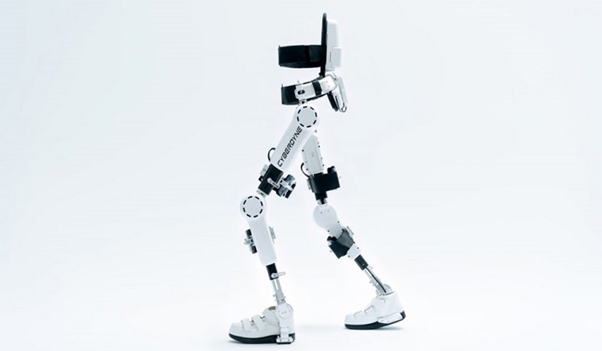
    Certainly, in the near future, it may be possible for the humans to do so and much more. Using the prevailing technology tools – robotics, artificial intelligence, virtual/augmented reality, machine learning, high-definition sensors…, scientists have succeeded in developing an exoskeleton that mimics the unique capabilities of ants and dung beetles. This ground-breaking mechanical suit, the exoskeletons – a wearable device that augments you physically through mechanical interaction with the body and help multiply strength far beyond that of normal humans. A technology that would not only reduce the amount of rigour that soldiers have to endure in the warzones, but also help those workers and physically challenged who are in need of support to walk, stand up and carry heavy objects.

    How do they work?

    These exoskeletons use an advanced nerve-sensing system that mimic working of nerves in the human legs. Normally, when a person moves a limb, an electrical impulse is sent from the brain to the muscle. The exoskeleton’s in-built intelligence is able to detect these impulses on the surface of the skin, and its specially developed chips are able to digitize those signals and send the information in the form of commands to different parts of the exoskeleton. The centrally networked system powered by a system of electric motors, pneumatics, levers, hydraulics and combination of technologies make the necessary limb movement with increased strength and endurance.

    Where can it be used?

    The marketplace is witnessing introduction of a wide range of exoskeletons for diverse functions – lightweight comfortable exoskeletons for safe and repetitive assembly work, single-joint exoskeletons to assist a limb for specific tasks, full-body powered suits for handling heavy loads in industrial settings, and so on. Here are some areas where their use is increasing in popularity:

    Safety: In addition to improving worker safety and efficiency, exoskeletons can considerably reduce (by more than 20%) the incidence of back injury by ensuring and encouraging proper body posture. This can affect millions of workers throughout the world. 

    Medical: Wearable exoskeleton technology holds a lot of potential in the medical realm. Studies have shown that the faster a patient gets up and moving, the faster he recovers, and using exoskeleton it is possible. Exoskeletons can optimise weight shift and ensure the proper alignment and synchronization of both sides of the body.

    Work: In addition to ensuring worker safety, exoskeletons could help check fatigue and increase productivity.  Many tasks may appear to be simple, but they cause a person to be exhausted. Wearable exoskeletons could be the answer to help address issues associated with tasks that cause a quick build-up in fatigue and which lead to work errors and accidents,

    Military: Beyond making a combat ready powered exoskeleton for use in active combat zone, there are still many other applications that are being considered. One of the more obvious ones is logistics. Many field bases do not have the cranes and forklifts. Here exoskeletons can assist soldiers with loading or unloading supplies.

    In conclusion

    Even if the current exoskeleton suits don’t bestow superhuman powers, they could be used for doing heavy physical jobs without pain or injuries, and in a safer way. Exoskeletons could also allow injured and disabled people get an opportunity to perform tasks that they thought they might never be able to do, thus giving them the opportunity to enter and stay employed in physically demanding occupations. Governments also could empower fire-fighter, disaster personnel and combat troops with protective exoskeletons. In short, exoskeleton technology has the potential to impact lives for the better.

    -Dr Siddhivinayak Barve

    Editor, ScienceNow Digital

  • Mysteries – Migration of Animals

    Mysteries

    Migration of Animals

    English swallows know the route to their winter feeding grounds in South Africa located 6,000 miles away and then manage to find their way back again in spring to breed, often to the very same place where they nested in the previous year!

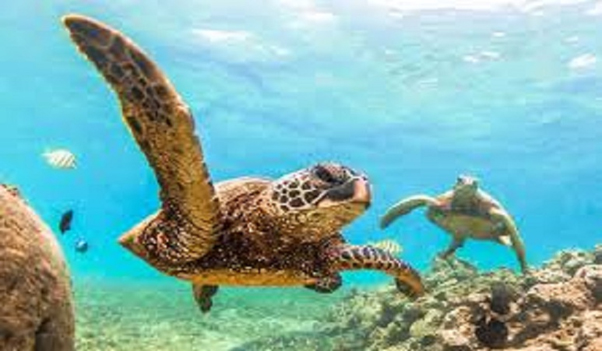
    Baby green turtles that have hatched on the beaches of Ascension Island in the middle of the Atlantic, find their way across the ocean to the ancestral feeding grounds off the Brazilian coast. Years later, when the time comes for them to lay their eggs, they then make their way back to Ascension Island over 1,400 miles away, with no land in between!

    Every summer, the ‘painted lady’ butterfly arrives in Britain from North Africa to breed – a non-stop journey of 1,000 miles. On arrival, they reproduce immediately and it is this second generation that will make the return journey to Africa in autumn – new ones which have not travelled the route before, but nevertheless know the way!

    The above instances are a few amazing examples that illustrate the extraordinary navigational skills of migratory animals – a mystery that scientists have been trying to decode for centuries.

    What is animal migration?

    Animal migration is a behavioural adaptation that has evolved over time to help animals survive. Sometimes animals move relatively short distances to find food or more favourable living or breeding conditions. Some migrate when the weather changes, while some animals migrate to breed.

    How do animals know to migrate?

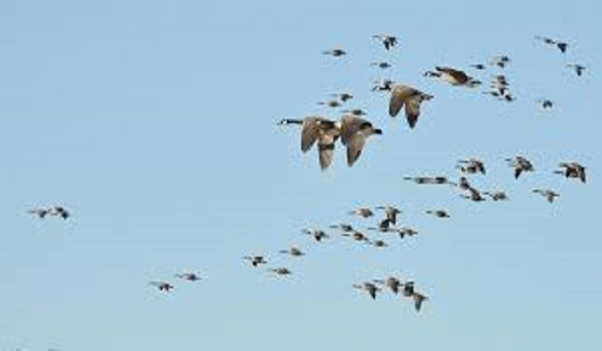
    The hypothesis currently accepted by most biologists is that these migrating animals use some of these ways to migrate either short distances or across continents:

    • Genetics—Some scientists believe that migratory animals genetically inherit migratory routes from their parents.
    • Mental maps—Animals carry a mental map that includes known landmarks, such as rivers, trees, and mountains.
    • Instinct—Animals use their instincts for simple migrations. For example, dolphins follow the topography of the ocean floor.
    • Sun and Moon—Some animals follow the sun as it crosses the sky from east to west. Starlings orient themselves using the path of the sun.
    • Stars—Like how explorers used the stars to navigate their course as they travelled over land and sea, animals also use stars, such as Betelgeuse and the North Star to move.
    • Smell—Scents can help animals find their way over small distances, or at specific locations on a migratory path. For example, salmon use scents in rivers to find spawning areas to lay their own eggs in the same area where they were hatched.
    • Magnetic field—Though humans usually cannot detect the earth’s magnetic field without a compass, some animals have the ability to detect and use it for their migrations. It helps them know which way is north.
    • Communication in groups—Some animals that migrate in groups communicate as they travel to help with navigation. For example, whales use sound to tell each other where they are and where they are headed.
    • Ocean currents—Some animals can use ocean currents to navigate to and from breeding or feeding grounds. Some eggs, larvae, and young fish drift passively with ocean currents.

    Although there have been successful experiments to show that all these factors play a part, it is not entirely satisfactory. For instance, heavenly bodies are not always visible, either due to cloudy conditions or, in the case of fish or marine turtles, because they are underwater. Another is that the Earth’s magnetic field is constantly varying and therefore cannot be relied upon. As for the sense of smell, this may help when an animal is nearing its destination, but not when it is thousands of miles away. Moreover, birds like the albatross do not follow a set route and are able to return home from anywhere.

    Thus the phenomena of animal migration still continues to mystify us, and we continue to seek answers…

    Do you know?

    The world record for the longest animal migration is held by a bird called the Arctic tern. Every six months they travel for 40 days from the northern Arctic all the way across the planet to Antarctica and back again six months later. The round trip distance is close to 50,000 miles!

    -Dr Siddhivinayak Barve

    Editor, ScienceNow Digital


  • Know Geology…

    Know Geology…

    Earth’s Interior

    Our mother Earth is formed around 2.5 billion years ago.

    The Earth was a hot ball of molten rocks at the time of her formation. She gradually cooled down

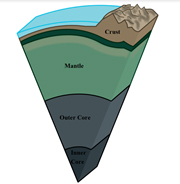
    from the surface inside, and currently is comprised of three distinct layers; the crust, mantle, and

    core. Let us understand each of the layer in detail.


    Crust: The Earth’s crust is the outermost layer of the Earth. Generally, the crust comprises

    of only first 100 km of the Earth’s interior. That is not even 2% of the total thickness of the

    Earth’s interior. But all the mining operations take place in this layer itself. This is because

    we do not yet possess the technology to drill deeper than even 15 km into the Earth’s interior

    (the deepest human interaction as of today is the Kola Superdeep Borehole, Russia (~12.3

    km)). This crust can be divided into two types; continental crust and oceanic crust. As the

    name suggests, the continental crust carries the continents, while the oceanic crust hosts

    oceans. The continental crust can be further divided in three layers. The first layer is 2 km

    thick, and is the lightest among them, with rock density approximately 2,200 kg/m 3 . This

    layer mainly comprises of sedimentary rocks. Important outtake from this layer is the soil we

    use for agriculture. The second layer goes up to 30 km depth, and comprises mainly of silica

    and alumina. Thus, this layer is also called as SIAL. Third layer reaches to boundary between

    the crust and the mantle, and mainly consists of silica and magnesia, earning it the name

    SIMA. Density of the rocks in this layer increases up to 2,800-3,000 kg/m 3 . This layer mainly

    comprises of igneous rocks.

    Mantle: The second layer, the mantle, starts under the crust, and extends up to 2,900 km

    depth. The boundary between crust and mantle is called ‘Mohorivicic Discontinuity’. The

    mantle can be divided into two regions; upper mantle and lower mantle. The boundary

    between the upper and lower mantle is located approximately at 700-800 km depth. The

    upper mantle can even further be divided into two layers, the first being the crazy one. This

    layer is called ‘Asthenosphere’. Asthenosphere means a layer of week particles. The

    asthenosphere is in the plastic state, instead of solid state. It means that the asthenosphere

    changes its shape according to the forces from the crust and mantle around it. Despite of the

    plastic state, the asthenosphere is able to bear the load of the crust. The reason behind this is

    the difference in densities. In the mantle, the density of rocks increases from 3,300 kg/m 3 in

    the beginning to 5,700 kg/m 3 in the end. Therefore, the lighter crust floats on the denser

    asthenosphere. The lower mantle is in the liquid state due to extreme heat. Mantle is also the region, where the subducted continental places arrive. Due to the heat and pressure, the plates

    melt, and are added to the Earth’s magma supply. This magma again reaches the Earth’s

    surface through volcanic eruptions and forms igneous rocks. Therefore, the mantle works as

    a furnace, where the utilized crust materials are recycled.


    Core: The Earth’s core begins at the end of the mantle, and extends up to the center of the

    Earth. Boundary between the mantle and the core is called ‘Gutenberg Discontinuity’. The

    core can be identified by the steep increase in the rock densities. The density of rocks, which

    was 5,700 kg/m 3 at the conclusion of the mantle, suddenly increases to 9,900 kg/m 3 . The

    density keeps increasing as we go even deeper, and it maxes out at 13,000 kg/m 3 at the center

    of the Earth. The core is made of iron and nickel, and the movement of iron and nickel

    particles in the core results in the formation of convection currents. These convection

    currents ultimately form the Earth’s magnetic field, or magnetosphere. The core can be

    divided into two regions; outer core and inner core. The outer core starts its regime from

    2,900 km depth, and extends up to 5,150 km depth. Inner core covers the rest of the thickness

    of the Earth’s interior. Inner core is in reality the hottest, but still in solid state, due to

    compressive pressure from surrounding crust, mantle and outer core.

    The difference in the rock densities throughout the Earth’s interior can be found by sudden

    change in the properties of seismic waves.


    -Ninad Bhagwat,

    Montana Tech University, USA

  • The Space Junk

    The Space Junk

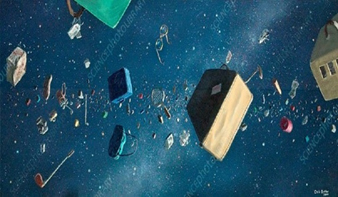
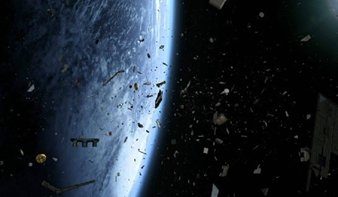
    According to the latest report, there are more than 200 million pieces of debris orbiting around the Earth, putting our working satellites at risk…

    At present there are hundreds of man-made objects circulating our planet Earth. These objects which move at a speed of over 22,300 mph, faster than a speeding bullet can put our working satellites in grave danger. And these small fragments can leave huge dents in several satellites, telescopes, and other objects orbiting our planet. In 2006, for instance, a tiny piece of space debris collided with the ISS, creating a big dent in a heavily reinforced window.

    There are more than 125 million pieces of debris smaller than 1 cm, about 900,000 pieces of debris 1–10 cm, and around 34,000 of pieces larger than 10 cm were estimated to be in orbit around the Earth. Most of these debris float within 1,250 miles of Earth's surface in what is known as low Earth orbit, home to a number of satellites, such as NASA’s Earth Observing System fleet and the International Space Station (ISS). And while space is big, this space junk can be problematic for active earth satellites because of their swift speeds.

    What is this space junk?

    Space debris began to amass in Earth’s orbit immediately with the first launch of an artificial satellite (Sputnik 1) into orbit in 1957. Immediately after that the North American Aerospace Defense Command (NORAD) began compiling a database of all known rocket launches and objects reaching orbit: satellites, protective shields and upper- and lower-stage booster rockets. Although it heralded a new beginning in the Space Age, with over 8,900 satellites from more than 40 countries launched so far, it left a mark in space in the form of junk.

    And this space junk mostly comprises of stages from rockets that put satellites into orbit and satellites itself after it becomes dysfunctional. In addition, it includes small pieces of junk lost to space which includes nuts and bolts, screwdriver, garbage bags and more. But the number has increased significantly recently with China and India testing their anti-satellite missile, creating at least 400 pieces of debris, which have further increased the risk of impacts to the ISS and other satellites orbiting the space.

    With our skies becoming overcrowded with scientific and commercial satellites, it is high time countries need to work towards curbing the growing problem.

    Cause for Concern?

    There is all possibility that some of the junk will lose altitude over time and burn up in the Earth’s atmosphere. Despite this, there is still a lot of junk up there. Even without launching new satellites or major explosions, the space debris in Earth’s low orbit is so huge that it will continue to create problem over the centuries.

    Reports suggest that over the next 200 years or so, debris larger than about 8 inches will increase by 1.5 times. And smaller trash will increase even more! Junk between 4 inches and 8 inches is expected to multiply 3.2 times and debris less than 4 inches will grow by a factor of 13 to 20. And this is likely to increase in future as more space programs have already been planned by various nations.

    Precautions

    Although many space agencies and private space firms have come out with various concepts, it still seems to be a distant dream. For example: JAXA, Japans space agency, is testing an electronic space whip that stretches six football fields long, known as the electrodynamic tether (EDT). The electrified line, nearly 2,300 feet long, is capped with a 44-pound weight. When deployed, it is intended to knock debris out of orbit, sending it to burn up in Earths atmosphere. Other options include giant magnets, harpoons, and nets to safely cut down the growing debris cloud.

    Many countries are also developing plans to ensure that any future man-made satellites sent into space have an appropriate “end-of-life plan” to stop the growing menace of debris that float above our planet.

    Manoj Mahanta

    -Team ScienceNow Digital

  • MUMBAI ENGINE to Moon Mission…

    MUMBAI ENGINE to Moon Mission…

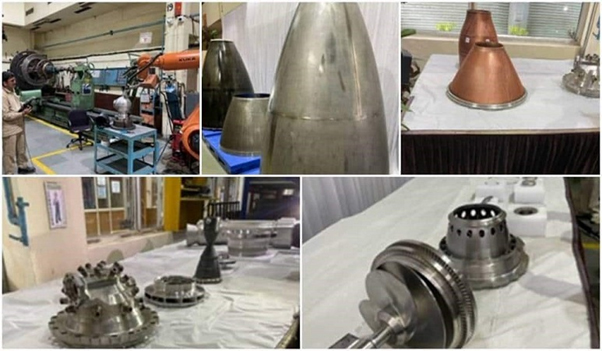
    Mumbai based Godrej Aerospace of Godrej Group has supplied critical components to ISRO for Chandrayaan—3 mission. It is the ‘Mumbai Engine’ that is propelling Moon Mission. Godrej Aerospace from Mumbai has made ‘Vikas’ engine for Chandrayan 3, Installed at the top-most part of the missile, the family of liquid-fuelled rocket engines conceptualised and designed by ISRO.

    A successful landing on Moon would make India ‘only the fourth country’, after the United States, the Soviet Union, and China, to achieve the feat. The objective of the mission is to investigate the Moon’s surface, particularly regions that have been shielded from sunlight for many billions of years.

    A innovative facility of Godrej Aerospace in Mumbai is supporting the specific feature of the lunar mission, the Vikas engine mounted at the very top of the missile. The indigenous production of the engine is the proud demonstration of ‘Make in India’ initiative. The three goals of the Chandrayaan-3 mission are to show a soft and safe lunar landing, lunar rover wandering, and to carry out in-situ scientific research.

    Partnership

    Godrej Aerospace has a long partnership with ISRO, since 1985, when India started producing Cryogenic Engines. The cryogenic engine in placing the lunar module in an orbit around the Earth has been prepared by Godrej Aerospace.

    Vikas engine is a family of liquid-fuelled rocket engines conceptualised and designed at the Liquid Propulsion Systems Centre of ISRO in the 1970s. The second stage of the Polar Satellite Launch Vehicle (PSLV), boosters, the second stage of the Geosynchronous Satellite Launch Vehicle (GSLV) Mark I and II, as well as the first stage of the GSLV Mark III or Launch Vehicle Mark 3 (LVM3), are all propelled by Vikas propulsion motors.

    Mumbai Connection

    Since 1985, Godrej Aerospace has been one of ISRO’s major private suppliers and producers. In addition to taking part in ISRO’s other projects. Godrej Aerospace made significant contributions to the Chandrayaan-1 and 2 and Mangalyaan space missions.

    Godrej has provided Vikas engine, Thrustors, vital components for the remote sensing antenna, and ground system antenna for Chandrayaan-1. Godrej Aerospace has provided Chandrayaan-2 with the L110 and CE20 engines for the GSLV Mk III launcher, as well as thrusters for the orbiter and lander and parts for the DSN antenna.

    The Man Behind

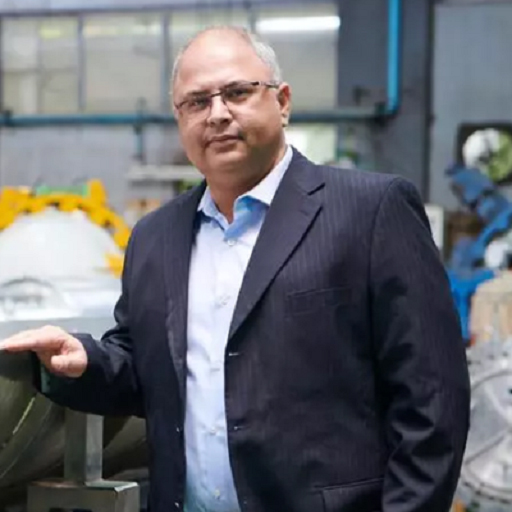
    Maneck Behramkamdin, Business head at Godrej Aerospace is force behind the Mumbai Connection. More than 175 engines supplied to ISRO have hurled Satellites in space using PSLV, GSLV launcher with Satellite Thrusters, Antenna Systems and the Liquid Propulsion Engines.  

    Chandrayaan 3 is a special moon exploration mission of ISRO

    The LVM3 launched Chandrayaan-3 from Sriharikota, with a Lander and a Rover. The propulsion module will transport the Lander and Rover configuration to a lunar orbit of around 100 miles.

    The propulsion module is topped by the Spectro-polarimetry of the Habitable Planet Earth (SHAPE) payload, which will conduct Spectral and Polarimetric studies of Earth from the lunar orbit. This payload will provide crucial data and insights into the characteristics and habitability of the Earth from a unique vantage point on the Moon.

    Maneck Behramkamdin, AVP & Business Head, Godrej Aerospace expresses his deep satisfaction with the involvement in the mission moon and is very proud for contribution to ISRO’s Chandrayaan – 3

    Godrej Aerospace has contributed with indigenously developed technology. The remarkable accomplishment exemplifies the commitment to advancing India’s space exploration endeavours using indigenous expertise. Godrej Aerospace has played a pivotal role in the resounding success of ISRO’s satellite launches. It is the ‘Mumbai Engine’ that is contributing to the success of the mission

    -Dr Siddhivinayak Barve

    Editor, ScienceNow Digital

  • Science and Technology in Independent India

    Science and Technology in Independent India

    As India celebrating 75 years of Independence, we encapsulate some defining moments of the nation’s journey in the field of science and technology

    Today, seventy-five years after India’s independence, the country is considered as one of the top five superpowers on the planet, with Indian scientists contributing enormously to facilitating the country’s rapid development and progress. While it was the Prime Minister Pandit Jawaharlal Nehru who initiated several reforms in higher education and set up pioneering science and technology institutions like TIFR, DRDO, BARC, IITs, DST… the policies of subsequent governments ensured that we continued to stay on the growth and development track. The present-day government under Prime Minister Shri Narendra Modi is giving significant emphasis to creation of an ‘Atmanirbhar Bharat’ focusing on creation of a strong indigenous R&D and manufacturing infrastructure across the country.

    At India’s ‘Amrit Mahotsav’, we look back in history at some of the major milestones achieved by the country in the area of science and technology:

    1945: Tata Institute of Fundamental Research (TIFR) – Dr. Homi Jehangir Bhabha asked Sir Dorabji Tata Trust for help and cooperation to begin nuclear research program in India. In 1945, Tata Institute of Fundamental Research (TIFR) was born, and thus started India’s journey in the world of nuclear energy development.

    1954: India’s first Atomic Establishment at Trombay – Under the leadership of Dr. Homi Bhabha, the Atomic Energy Establishment, Trombay (AEET) was established in 1954. Later, the institution was renamed as BARC in 1967 to help consolidate all research and technology activities. Today, BARC is India’s premier research and development facility in nuclear science and engineering, giving the country a strategic edge in nuclear power.

    1956: India’s first atomic reactor ‘Apsara’– This first nuclear reactor was designed by BARC and built with assistance from United Kingdom. Apsara is a light water swimming pool-type reactor with a maximum power output of one megawatt thermal (MWt), and it first went critical on August 4, 1956. The reactor is utilised for various experiments including neutron activation analysis, radiation damage studies, forensic research, neutron radiology, and shielding experiments.

    1958: Formation of Defence Research and Development Organisation – DRDO was formed in 1958 from the amalgamation of the then already functioning Technical Development Establishment (TEDs) of the Indian Army and the Directorate of Technical Development & Production (DTDP) with the Defence Science Organisation (DSO). It has a network of laboratories engaged in developing defence technologies covering various fields like aeronautics, armaments, electronics, land combat engineering, life science, materials, missiles and naval systems.

    1959: Launch of Television – Television was introduced in India on September 15, 1959 in Delhi, and the programs were broadcasted twice a week for an hour a day. Initially, the topics covered were community health, citizen’s duties and rights, and traffic and road sense, but in 1961 the broadcasts were expanded to include school educational television project. The first major expansion began in 1972, when a second television station was opened in Bombay, and it was followed by stations in Srinagar, Amritsar, Calcutta, Madras and Lucknow.

    1964: The first Indian jet trainer – The two seat intermediate jet trainer HAL HJT-16 Kiran (Ray of Light) were built by Hindustan Aeronautics Limited (HAL) on September 4, 1964. The jet called Kiran-I was powered by the Rolls Royce Viper Mk 11 delivered to the Indian Air Force in March 1968. Later the trainer jet was upgraded with hardpoints under each wing for weapon training and redesignated as the Kiran-IA.

    1969: Indian Space Research Organisation (ISRO) – Established in 1969, ISRO is India’s pioneer space exploration agency with a vision to develop and harness space technology in national development. Over the years, ISRO has gained place among the elite space agencies in the world owing to its unique and cost effective technologies. Recently, it conducted several remarkable space probes like Chandrayaan – 1 lunar orbiter, Mars Orbiter Mission (Mangalyaan – 1) and ASTROSAT space observatory.

    1974: Pokhran – India’s first successful nuclear bomb – After Indira Gandhi had authorised scientists at BARC to design nuclear device in September 1972, it took nearly two-years of preparation to conduct the first nuclear test. Code named ‘Smiling Buddha’ the test was conducted on May 18, 1974 in the deserts of Pokhran, Rajasthan. This made India the world’s sixth nuclear power country.

    1975: Launch of Aryabhata – Named after the ancient Indian astronomer – Aryabhata, the country launched its first satellite into space on April 19, 1975. The satellite was constructed by the Indian Space Research Organisation (ISRO) and was launched into space aboard a Kosmos-3M launch vehicle from Kapustin Yar, the then Soviet Union’s rocket launch and development site.

    1978: India’s first test-tube baby – On October 3, 1978, Ms. Bela Agrawal delivered India’s first test-tube baby under the medical care and supervision of Dr. Subhash Mukhopadhyay. The child later named ‘Durga’ was conceived via in-vitro fertilisation, and the event took place just 67 days after the world’s first test-tube baby – Marie Brown, was born.

    1982: Launch of India’s first satellite – Insat-1A was a multi-purpose satellite system designed to provide two high power TV broadcast and twelve telecommunications national coverage transponders, in addition to providing meteorological services. The Insat-1A was launched by a Delta 3910 launch vehicle on April 10, 1982 but was abandoned on September 6, 1983 when its attitude control propellant was exhausted.

    1983: Research base at the South Pole – The country established its first scientific base station in Antarctica named Dakshin Gangotri. The station was built in record time of eight weeks by an 81-member team, and was powered by solar energy. The base was used to conduct scientific tests on radio transmission, physical oceanography, chemical analyse of freshwater lakes in the areas, geomagnetism, geology and glaciology.

    1984: First Indian in Space – The Indian Air Force Squadron Leader Rakesh Sharma spent eight days aboard the Salyut 7 space station along with two Soviet Cosmonauts. They had departed on April 2, 1984 in a Soyuz T-11 spacecraft. This manned mission saw Sharma conduct several scientific and technical studies in the area of biomedicine, remote sensing and construction of hydro-electric power station in the Himalayas.

    1988: Launch of C-DAC – In 1987, when US President Ronald Reagan refused to sell their supercomputers CRAY, India decided to develop it indigenously. In 1988, the Centre for Development of Advanced Computing or C-DAC was launched under the leadership of Dr. Vijay Bhatkar. With a deadline of three years and a budget of around Rs. 30 crore, India’s first super computer PARAM 800 was developed in 1991.

    1991: DNA Finger Printing – During his study of evolution of sex chromosomes in a species of snake, Dr. Lalji Singh observed and recorded specific pattern in the DNA sequences, which he named the ‘Bkm sequences’. He made use of this technique to identify people based on specific characteristic of their DNA, and was able to solve several court cases over disputed paternity and criminal cases. He pioneered the concept of ‘DNA fingerprinting’ in India.

    1993: Launch of Pentium Chip – Vinod Dham is popularly known as the ‘Father of the Pentium Chip’ for his contribution to the development of highly successful Pentium processors from Intel. Responding to consumer’s demand of computers with faster processing speed, Intel changed the game with the launch of its breakthrough chip – the Pentium.

    1994: India’s first heart transplant surgery – On August 3, 1994 a team of 20 surgeons led by Dr. Panangipalli Venugopal performed India’s first successful human to human heart transplant at the All Indian Institute of Medical Sciences (AIIMS), New Delhi. The entire operation took nearly 59 minutes and the patient lived for at least 15 more years.

    1998: Pokhran – II – Operation Shakti stunned the world community as India conducted a series of five nuclear weapons tests – one fusion or thermonuclear weapon, two fission devices and two sub-kiloton devices, which proved to the world India’s capability in development of nuclear arsenal. Pokhran – II was the first Indian test of a nuclear weapon after 1974.

    2000: Launch of indigenous fighter jet – Tejas, the single seat, single-engine, lightweight, high-agility supersonic fighter aircraft made its first maiden test flight aboard Indian Navy’s aircraft carrier INS Vikramaditya in January 2000. The aircraft’s design and development program was led by Aeronautical Development Agency (ADA) under the supervision of Hindustan Aeronautical Limited (HAL).

    2002: The Simputer – A low cost alternative to conventional computers, the Simputer was a self-contained, open hardware Linux-based handheld computer. It was devised to bridge the digital divide, but it did not succeed in taking off. Launched in 2002, it was the brainchild of seven scientists from the Indian Institute of Science, and was led by Dr. Swami Manohar. While it did not succeed, it remains an important home-grown development in computer manufacturing.

    2003: Kalpana Chawla space disaster – Kalpana Chawla, was the first Indian-origin woman to go space on a 16-day mission aboard NASA space shuttle Columbia. On the morning of February 1, 2003, the space shuttle was to return to Earth. At the time of launch, a briefcase-sized piece of insulation had broken off and damaged the thermal protection system of the shuttle’s wing. On its entry into the Earth’s atmosphere, the hot gas caused the break-up of the wing and the shuttle leading into an explosion killing all seven astronauts on board.

    2008: Chandrayaan – 1 – The country’s first unmanned mission into space became a reality with Chandrayaan -1’s moon mission. The mission launched on October 22, 2008 from the Satish Dhawan Space Centre – Sriharikota, Andhra Pradesh, included a lunar orbiter and an impactor. The goals of the mission included high-resolution mapping of the moon’s surface; near infrared, low energy X-ray and high-energy X-ray spectra, and preparation of a three-dimensional atlas of regions of scientific interest.

    2009: INS Arihant – After five decades of hard work, on July 26, 2009 India formally launched its first indigenously designed and constructed ballistic missile submarine (SSBN) – the INS Arihant. Powered by ISROs nuclear reactor, the submarine is designed to span the ocean depths at high speed and launch ballistic missiles and nuclear weapons in the range of over 3,000 km.

    2013: Mangalyaan – On November 5, 2013 India’s Mars Orbiter Mission lifted off from Sriharikota powered by PSLV C-25. After spending about a month in orbit around the Earth, the spacecraft Mangalyaan began its journey unto Mars. Almost a month later, the spacecraft entered the Mars’ orbit, putting India in the elite club of five countries which have successfully sent missions to Mars. At a cost of Rs. 450 crore, it was the cheapest mission to Mars, and India had succeeded in the very first attempt.

    2017: ISRO tests its first cryogenic engine – ISRO successfully tested its indigenously developed Cryogenic Upper Stage (CUS) for GSLV MkIII on February 17, 2017. It was tested for a flight duration of 640 seconds at ISRO Propulsion Complex (IPRC) in Mahendragiri, this test was carried out after a similar successful test for 50 seconds on January 25, 2017. The test is a significant milestone as it is the last in series of engine before the first flight of GSLV MkIII.

    2019: Chandrayaan – 2 Moon mission – India made a failed attempt to make a soft landing on to the lunar surface, and missed out on the opportunity of being the fourth country to successfully land on the moon, after erstwhile USSR, US and China. While the spacecraft has successfully entered the lunar orbit, the lander Vikram missed the primary landing site and went for the second. Thereafter, the visuals went missing as it had a crash landing.

    ..and Now with Mission Moon – Chandrayaan 3, we are just a step away from creating a history by soft landing on moon and being the first country to explore the south pole of the moon..

    While each of the above scientific events have contributed in transforming India into a global superpower, there have been some major scientific revolutions based on government policies that have also played a strategic role in taking the benefits of these developmental changes to the masses:

    The Green Revolution – Post-independence, India was going through its worst agriculture disaster owing to re-occurrence of famines as the country was witnessing wide spread poverty and hunger. In 1960, the government made a policy decision to initiate the ‘Green Revolution’ under the guidance of Dr. M.S. Swaminathan. The country resorted to the use of modern agricultural methods and technology – high yielding variety (HYV) seeds, tractors, irrigation facilities, pesticides and fertilisers. This Green Revolution led to increase in food production and resulted in India becoming one of the world’s biggest agricultural producers.

    The White Revolution – After the huge success of the Green Revolution, the Indian government initiated ‘Operation Flood’ also known as the ‘While Revolution’ aimed at increasing milk production. It helped create a nationwide milk grid linking producers to consumers by eliminating the middlemen. The mission was to make India self-dependent nation in milk production. Pioneered by Dr. Verghese Kurien the revolution was a huge success, making India one of the largest producers of milk in the world.

    The Yellow Revolution – It started in 1986- 87, to multiply the production of vegetable oils, especially mustard and sesame seeds. During the Yellow Revolution, nine oil hybrid seeds – peanuts, mustard, soyabeans, saffron, sesame, sunflower, niger, flaxseeds and castor seeds were planted. Within 10-years of the launch of the program, India’s oil production doubled from 12 million tons in 1986 to 24 million tons in 1997. The Yellow Revolution also offered farmers several support incentives associated to processing equipment, irrigation equipment, fertizers, pesticides, etc.

    The Blue Revolution – Also known as ‘Neel Kranti Mission’, the Blue Revolution was launched in the year 1985 with the objective of developing, managing and promoting fisheries so as to increase farmer’s income and sustain livelihood. This revolution tripled the production of fish in India – both island and marine sector by 2020, transformed the fish and aqua industry into a modern industry using technology and processes, increased income through development of innovative marketing platforms and also ensured food security in India. Dr. Arun Kishnan and Dr. Hirlal Chaudhuri are known as Father of ‘Blue Revolution’ in India.

    The Golden Revolution – The period between 1991-2003 is known as the period of India’s ‘Golden Revolution’, as the country saw a phenomenal rise in production of honey and horticulture products under the supervision of Nirpakh Tutej, who is considered to be the father of the ‘Golden Revolution’ in India. During this period India became the world leader in the production of a variety of fruits like coconut, mangoes, cashew nuts and the second largest producer of vegetables and fruits in the world

    Conclusion Since ancient times, Science and Technology have always been an integral part of India’s culture, and Indian intellectuals have pursued higher education vigorously and engaged relentlessly in development and innovation activities. While the government of India has played a key role in creating conducive environment, it is Indian scientists like Chandrasekhara Venkata Raman, Har Gobind Khorana, Subrahmanyan Chandrasekhar, Venkatraman, Shanti Swarup Bhatnagar, Homi Bhabha… who have made the country proud with their extraordinary vision and work. India has evolved from humble beginnings into being a ‘Global Superpower’ and is all set to play a leadership role in all spheres of science and technology..

    -Manoj Mahanta

    -Team,ScienceNow

  • Know Geology…

    Know Geology…

    Earth’s Magnetic Field

    Earth is surrounded by Magnetic Field.. Let’s understand it…

    We live on the planet Earth. The Earth is our provider of all of our needs. As we all know, there are various sources of radiation present on the Earth, such as Uranium, etc. There is also cosmic radiation surrounding us, although the intensity of the radiation is so low that it cannot directly harm us. However, there is a massive amount of radiation in the vast expanse of the universe. Even the Sun emits powerful ultraviolet radiation, which is able to cause fatal cancer like illnesses. Then why is this radiation not able to harm us? The answer lies with the Earth’s magnetic field.

    How magnetic field is generated?

    When the Earth was formed around 4.5 billion years ago, she was a hot ball of molten rocks. As the time passed, the Earth’s interior segregated into 3 parts: crust, mantle and core. This core is made of iron and nickel. The core can be divided into outer core and inner core. The outer core is hot, and therefore in liquid state, while the inner core is also hot, but in solid state due to the pressure from surrounding crust, mantle and outer core. Still, the iron particles present in the inner core are constantly moving. When the iron particles on the surface of the inner core get relatively cooler than the particles inside the inner core, they get denser, and move towards the center of the inner core. At the same time, the relatively warmer and lighter iron particles from the interior of the inner core tend to move towards its surface. This movement of the iron particles creates electric currents in the inner core, and the currents are formed inside the inner core. These currents are called as ‘Convection Currents’. The electric currents, combined with the magnetic properties of the iron particles, generate the Earth’s magnetic field, or the magnetosphere.

    Aurora

    When the solar winds reach the Earth, they interact with the Earth’s magnetic field, and the interaction causes a glow in the atmosphere. This event is called as ‘aurora’. Generally, due to the bipolar nature of the magnetic field, aurora is only visible in the north and south poles. But when the solar activity is intense, the aurora will move away from the poles, and may be visible even at lower latitudes. An excellent example of this activity was observed on April 22 and 23, 2023, when the solar activity was so intense that the aurora was visible in Ladakh in northern India.

    Effects of Magnetic Field

    This magnetic field protects the Earth and her inhabitants from harmful cosmic radiation. However, this magnetic field is not completely invincible. In case of strong cosmic activity, the high solar winds can disturb the magnetic field, and geomagnetic storms can penetrate the Earth’s magnetosphere. This can result in the widespread radio and power blackouts. During the greatest solar storm ever recorded, known as the ‘Carrington Event’ in 1859, the solar activity was so intense that the northern aurora moved down to Hawaii and Cuba, while the southern aurora moved up to Santiago, capitol of Chile. This event caused severe disruption of telecommunication around the world, as the telegraph poles were fried and communication was stopped. Similar event took place in 1989, plunging the province of Quebec, Canada into 12 hours of electrical blackout.

    Due to this magnetic field, there are charged particles trapped in the atmosphere. The area where the charged particles lie is called as the ‘Van Allen Belt’. The Van Allen Belt is supposed to be uniform around the Earth, but that is not the case. In some places, the Van Allen Belt has come closer to the Earth’s surface. In these areas, conflict between the Van Allen Belt and the Earth’s magnetosphere results in the reduction of the Earth’s magnetic field. In the southern Atlantic Ocean, there is such an area, where the strength of the Earth’s magnetic field is significantly lower than that of the rest of the Earth. This anomaly known as the ‘South Atlantic Anomaly’. Apart from the interaction with Van Allen Belt, there are few other factors, which play a crucial role in the reduction of the magnetic field. These factors include global warming, climate change, use of chlorofluorocarbons, etc. Without the magnetic field, the powerful solar winds would blow away the Earth’s atmosphere, and cause fatal cancer like illnesses on the Earth. The Earth as we know her would not exist, and instead a desolate planet would remain behind, should the Earth’s magnetic field vanish.

    -Ninad Bhagwat

    MTU, USA


  • India’s Mission Moon

    India’s Mission Moon

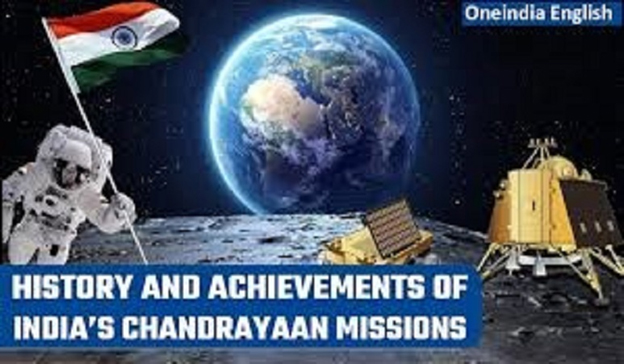
    The Indian Space Research Organization (ISRO) launched the Chandrayaan mission. While Chandrayaan 1 was successfully launched in October 2008, the Chandrayaan 2 mission was launched on 22 July, 2019.

    An insight into the missions that propelled India onto the global space platform

    India launched Chandrayaan 1 – its first mission to the moon on 22 October, 2008 from the Satish Dhawan Space Center in Sriharikota, Andhra Pradesh. The mission gave a major boost to India’s space program as India’s scientists researched and developed the country’s indigenous technology in order to explore the Moon.

    Chandrayaan 1

    Chandrayaan-1 was India’s first deep space mission and it lasted for 312 days. The mission is said to have mapped about 95% of the moon’s surface, with its biggest achievement being the detection of water on the Moon’s surface. NASA’s Moon Mineralogy Mapper (M3) on board of Chandrayaan-1 detected water and hydroxyl molecules on the surface soil and rocks on the Moon. Though the lunar probe was expected to remain in orbit and send data for two more years; on 29 August 2009 radio signals from Chandrayaan-I were lost and the mission was considered ended at that point.

    Ten years after this historic mission, ISRO embarked on another glorious launch with Chandrayaan 2…

    Chandrayaan 2 

    Chandrayaan-2 lifted off from Sriharikota at 2.43 p.m. on 22 July, 2019 on a Geosynchronous Satellite Launch Vehicle called GSLV-Mk II. In 17 minutes it injected into a geostationary orbit. The ₹978-crore mission is by far the biggest and most complex space mission for India.

    The Spacecraft

    The Chandrayaan-2 spacecraft comprised  a composite module consisting of an Orbiter, a Lander (Vikram), and a Rover (Pragyan). All three components were located in the heat shield of the GSLV MK III rocket – India’s most powerful launch vehicle which is entirely designed and made within the country. And at 3,853 kg, Chandrayaan-2 is the heaviest payload launched by an Indian rocket.

    The Objectives

    Chadrayaan-2’s voyage to the Moon was nearly 3.8 lakh km, lasting for 54 days. After approaching the 100 km lunar orbit, the Lander covering the Rover was to depart from the Orbiter.

    Some of the objectives of the mission were:

    • The primary objective of Chandrayaan-2 was to demonstrate the ability to soft-land on the lunar surface and operate a robotic rover on the surface.
    • The instruments on the rover to navigate across the site and perform a chemical investigation which included collecting various rock and soil samples to trace the origin and evolution of Moon.
    • The orbiter to map the lunar surface and help prepare its 3D maps. The on-board radar was to map the surface to find the possibility of craters that might contain fossilised records of the early solar system in this region.

    The Mission Mapping

    Chandrayaan 2 was in the Earth’s orbit for 23 days. On the 23rd day, scientists performed the ‘trans-lunar’ injection and Chandrayaan 2 was expected to make a soft-landing on the moon at 2.58 a.m. on
    7th September, 2019. It would also take India to where no country has stepped before – the South Pole of the Moon.

    The Challenge

    A soft landing on the Moon’s surface which is covered with craters, dust and rocks was the trickiest part for the mission. During the touchdown, the lander has to protect the delicate electronic components on board. After landing, the rover was to be slowly positioned over the course of four hours to explore and carry out experiments on the lunar surface for 14 earth days (1 lunar day) while the orbiter will continue its mission for a year.

    ISRO had lost contact with lander Vikram on September 7, 2019 as it was 2.1 km above the lunar surface, trying to soft-land on the unexplored South Pole of the Moon. It had a hard-landing very close to the planned touch-down site and while the lander is in a single piece, it is in a tilted position. The module was carrying rover Pragyan and three scientific instruments, meant to study the soil composition, atmosphere, seismic activity and other aspects of the environment around the landing site.

    Meanwhile its orbiter in lunar orbit with its eight payloads was to conduct remote-sensing observations for one year from a 100 km orbit above the Moon’s surface. It was the orbiter that had spotted Vikram on the lunar surface on September 8, 2019, making ISRO continue its efforts of re-establishing communication.

    Mission Highlights

    • Chandrayaan-2 was a three satellite missions stacked in a single launch. Out of the three, two systems – Vikram (lander) and Pragyan (rover) were completely new to ISRO.
    • The mission was led by Vanitha Muthayan as program director and Ritu Karidhal as mission director. This is the first time women have headed an interplanetary mission.
    • Till date 90 to 95% of the mission objectives have been accomplished and will continue to contribute to lunar science, notwithstanding the loss of communication with the Lander.

    Do you know?

    The lander of Chandrayaan – 2 is named ‘Vikram’ in honour of Dr. Vikram Sarabhai – the father of the Indian Space program. The rocket GSLV Mk III is also nicknamed “Bahubali”.

    -Dr Siddhivinayak Barve

    Editor, ScienceNow Digital

  • Lander and Rover

    Lander and Rover

    Spectacular launch of the Chandrayan III will take to the moon, the most ambitious experiment of the moon mission. India is aiming to soft land on the moon and perform certain experiments with the moon rover. The lander is named Vikram and the Rover is called Pragyan

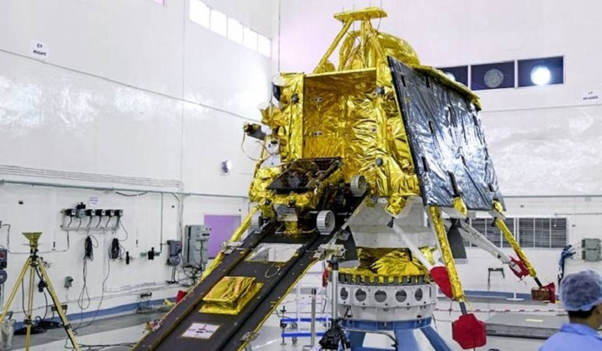
    A propulsion module will carry the lander-rover configuration to a 100-km lunar orbit. Once the ‘Vikram’ lander module makes it safely to the moon, it will deploy ‘Pragyan’ which will carry out in-situ chemical analysis of the lunar surface during the course of its mobility

    Vikram – moon lander with slight modification in leg strength will help payloads from Chandrayan 3 to land on Moon

    The lander will ensure soft landing of the rover and other payloads about 70 degrees from the Moon’s south pole. The lander and propulsion module will detach from the spacecraft when it reaches an orbit 100 x 100 km away from the surface.

    Vikram lander features a new instrument to precisely calculate the spacecraft’s descent speed, stronger legs to handle a higher landing speed, and a wider landing site of 4km by 2.5km.

    Once the lander and propulsion module are separated from the spacecraft, the latter will steer the ensemble from launch vehicle injection orbit to lander separation.

    The technologies used in this process will help in other inter-planetary missions. India, in June 2023, signed Artemis Accords with NASA which will determine the parameters of human space flight missions. This Chandrayan 3 mission would turn out beneficial for such future missions.

    Scientific experiments

    The lander, rover and the propulsion module will have payloads for performing experiments designed to give scientists new insights into the characteristics of earth’s lone natural satellite.

    The lander will have four payloads — Radio Anatomy of Moon Bound Hypersensitive ionosphere and Atmosphere (RAMBHA), Chandra’s Surface Thermo physical Experiment (ChaSTE), Instrument for Lunar Seismic Activity (ILSA) and the LASER Retroreflector Array (LRA).

    The six-wheeled rover will have two payloads — the Alpha Particle X-ray Spectrometer (APXS) and the LASER Induced Breakdown Spectroscope (LIBS).

    India will be the first country to map the south pole of the moon. The mission will be a leap forward for the Indian Space Programme

    -Dr Siddhivinayak Barve

    Editor, ScienceNow Digital