
Mysteries
Migration of Animals
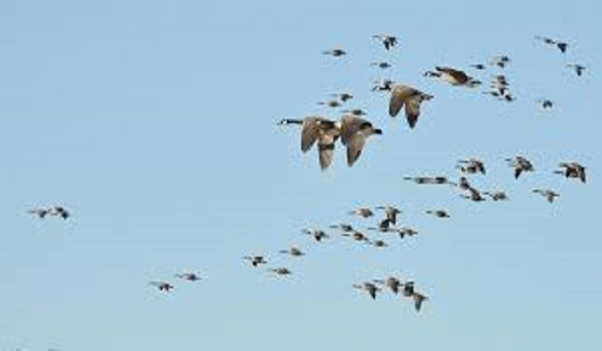
English swallows know the route to their winter feeding grounds in South Africa located 6,000 miles away and then manage to find their way back again in spring to breed, often to the very same place where they nested in the previous year!
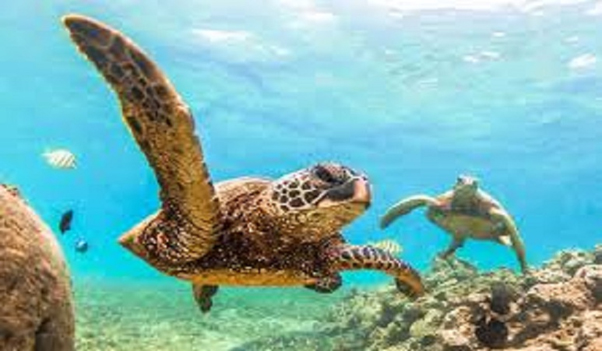
Baby green turtles that have hatched on the beaches of Ascension Island in the middle of the Atlantic, find their way across the ocean to the ancestral feeding grounds off the Brazilian coast. Years later, when the time comes for them to lay their eggs, they then make their way back to Ascension Island over 1,400 miles away, with no land in between!
Every summer, the ‘painted lady’ butterfly arrives in Britain from North Africa to breed – a non-stop journey of 1,000 miles. On arrival, they reproduce immediately and it is this second generation that will make the return journey to Africa in autumn – new ones which have not travelled the route before, but nevertheless know the way!
The above instances are a few amazing examples that illustrate the extraordinary navigational skills of migratory animals – a mystery that scientists have been trying to decode for centuries.
What is animal migration?
Animal migration is a behavioural adaptation that has evolved over time to help animals survive. Sometimes animals move relatively short distances to find food or more favourable living or breeding conditions. Some migrate when the weather changes, while some animals migrate to breed.
How do animals know to migrate?
The hypothesis currently accepted by most biologists is that these migrating animals use some of these ways to migrate either short distances or across continents:
- Genetics—Some scientists believe that migratory animals genetically inherit migratory routes from their parents.
- Mental maps—Animals carry a mental map that includes known landmarks, such as rivers, trees, and mountains.
- Instinct—Animals use their instincts for simple migrations. For example, dolphins follow the topography of the ocean floor.
- Sun and Moon—Some animals follow the sun as it crosses the sky from east to west. Starlings orient themselves using the path of the sun.
- Stars—Like how explorers used the stars to navigate their course as they travelled over land and sea, animals also use stars, such as Betelgeuse and the North Star to move.
- Smell—Scents can help animals find their way over small distances, or at specific locations on a migratory path. For example, salmon use scents in rivers to find spawning areas to lay their own eggs in the same area where they were hatched.
- Magnetic field—Though humans usually cannot detect the earth’s magnetic field without a compass, some animals have the ability to detect and use it for their migrations. It helps them know which way is north.
- Communication in groups—Some animals that migrate in groups communicate as they travel to help with navigation. For example, whales use sound to tell each other where they are and where they are headed.
- Ocean currents—Some animals can use ocean currents to navigate to and from breeding or feeding grounds. Some eggs, larvae, and young fish drift passively with ocean currents.
Although there have been successful experiments to show that all these factors play a part, it is not entirely satisfactory. For instance, heavenly bodies are not always visible, either due to cloudy conditions or, in the case of fish or marine turtles, because they are underwater. Another is that the Earth’s magnetic field is constantly varying and therefore cannot be relied upon. As for the sense of smell, this may help when an animal is nearing its destination, but not when it is thousands of miles away. Moreover, birds like the albatross do not follow a set route and are able to return home from anywhere.
Thus the phenomena of animal migration still continues to mystify us, and we continue to seek answers…
Do you know?
The world record for the longest animal migration is held by a bird called the Arctic tern. Every six months they travel for 40 days from the northern Arctic all the way across the planet to Antarctica and back again six months later. The round trip distance is close to 50,000 miles!
-Dr Siddhivinayak Barve
Editor, ScienceNow Digital
