
science share account_circle

Author: sn_admin

  • Hello world!

    Welcome to WordPress. This is your first post. Edit or delete it, then start writing!

  • Greetings from Siddhant Edubridge Media!

    Greetings from Siddhant Edubridge Media!

    Greetings on India’s 78th Independence Day!

    India’s journey in Science and Technology has been very Spectacular. The Founding fathers and the visionaries have transformed the country with developments in Science and Technology.

    India is a young and dynamic country and its progress in Science and Technology through the years has been phenomenal. The nation is rapidly progressing and its strides are clearly evident with the most spectacular successes. Be it Nuclear, Space, Information Technology, Biotechnology, Agriculture or Environment, the Temples of Modern India are transforming India as the Most Advanced Nation..

    Our endeavour through ScienceNow Digital is to bring glorious developments in Science and Technology for the benefit of Indian Youth. The digital magazine is a sincere attempt to bring the world of Science to the Masses, sensitize the young creative minds towards the subject and bring science communities together to work towards nation building

    The Magazine is catering to the Youth in Schools, Colleges, Research Centres and Research Institutes projecting Science and Technological developments in India and the World. The Magazine is the means to ignite the young minds in India Redefining the Future of our country….

    It is a Mission… Science Mission… The mission is to take Science Ahead… To Build Science of Future…

    …and that’s the Promise of Science Now!

    Scientifically yours,

    Dr Siddhivinayak Barve

    Editor, ScienceNow Digital


  • Science and Technology in India – Cover Story

    Science and Technology in India

    As India celebrating 75 years of its formation of Republic, we encapsulate some defining moments of the nation’s journey in the field of science and technology

    Today, India is considered as one of the top five superpowers on the planet, with Indian scientists contributing enormously to facilitating the country’s rapid development and progress. While it was the Prime Minister Pandit Jawaharlal Nehru who initiated several reforms in higher education and set up pioneering science and technology institutions like TIFR, DRDO, BARC, IITs, DST… the policies of subsequent governments ensured that we continued to stay on the growth and development track. The present-day government under Prime Minister Shri Narendra Modi is giving significant emphasis to creation of an ‘Atmanirbhar Bharat’ focusing on creation of a strong indigenous R&D and manufacturing infrastructure across the country.

    At this junction, we look back in history at some of the major milestones achieved by the country in the area of science and technology:

    1945: Tata Institute of Fundamental Research (TIFR) – Dr. Homi Jehangir Bhabha asked Sir Dorabji Tata Trust for help and cooperation to begin nuclear research program in India. In 1945, Tata Institute of Fundamental Research (TIFR) was born, and thus started India’s journey in the world of nuclear energy development.

    1954: India’s first Atomic Establishment at Trombay – Under the leadership of Dr. Homi Bhabha, the Atomic Energy Establishment, Trombay (AEET) was established in 1954. Later, the institution was renamed as BARC in 1967 to help consolidate all research and technology activities. Today, BARC is India’s premier research and development facility in nuclear science and engineering, giving the country a strategic edge in nuclear power.

    1956: India’s first atomic reactor ‘Apsara’– This first nuclear reactor was designed by BARC and built with assistance from United Kingdom. Apsara is a light water swimming pool-type reactor with a maximum power output of one megawatt thermal (MWt), and it first went critical on August 4, 1956. The reactor is utilised for various experiments including neutron activation analysis, radiation damage studies, forensic research, neutron radiology, and shielding experiments.

    1958: Formation of Defence Research and Development Organisation – DRDO was formed in 1958 from the amalgamation of the then already functioning Technical Development Establishment (TEDs) of the Indian Army and the Directorate of Technical Development & Production (DTDP) with the Defence Science Organisation (DSO). It has a network of laboratories engaged in developing defence technologies covering various fields like aeronautics, armaments, electronics, land combat engineering, life science, materials, missiles and naval systems.

    1959: Launch of Television – Television was introduced in India on September 15, 1959 in Delhi, and the programs were broadcasted twice a week for an hour a day. Initially, the topics covered were community health, citizen’s duties and rights, and traffic and road sense, but in 1961 the broadcasts were expanded to include school educational television project. The first major expansion began in 1972, when a second television station was opened in Bombay, and it was followed by stations in Srinagar, Amritsar, Calcutta, Madras and Lucknow.

    1964: The first Indian jet trainer – The two seat intermediate jet trainer HAL HJT-16 Kiran (Ray of Light) were built by Hindustan Aeronautics Limited (HAL) on September 4, 1964. The jet called Kiran-I was powered by the Rolls Royce Viper Mk 11 delivered to the Indian Air Force in March 1968. Later the trainer jet was upgraded with hardpoints under each wing for weapon training and redesignated as the Kiran-IA.

    1969: Indian Space Research Organisation (ISRO) – Established in 1969, ISRO is India’s pioneer space exploration agency with a vision to develop and harness space technology in national development. Over the years, ISRO has gained place among the elite space agencies in the world owing to its unique and cost effective technologies. Recently, it conducted several remarkable space probes like Chandrayaan – 1 lunar orbiter, Mars Orbiter Mission (Mangalyaan – 1) and ASTROSAT space observatory.

    1974: Pokhran – India’s first successful nuclear bomb – After Indira Gandhi had authorised scientists at BARC to design nuclear device in September 1972, it took nearly two-years of preparation to conduct the first nuclear test. Code named ‘Smiling Buddha’ the test was conducted on May 18, 1974 in the deserts of Pokhran, Rajasthan. This made India the world’s sixth nuclear power country.

    1975: Launch of Aryabhata – Named after the ancient Indian astronomer – Aryabhata, the country launched its first satellite into space on April 19, 1975. The satellite was constructed by the Indian Space Research Organisation (ISRO) and was launched into space aboard a Kosmos-3M launch vehicle from Kapustin Yar, the then Soviet Union’s rocket launch and development site.

    1978: India’s first test-tube baby – On October 3, 1978, Ms. Bela Agrawal delivered India’s first test-tube baby under the medical care and supervision of Dr. Subhash Mukhopadhyay. The child later named ‘Durga’ was conceived via in-vitro fertilisation, and the event took place just 67 days after the world’s first test-tube baby – Marie Brown, was born.

    1982: Launch of India’s first satellite – Insat-1A was a multi-purpose satellite system designed to provide two high power TV broadcast and twelve telecommunications national coverage transponders, in addition to providing meteorological services. The Insat-1A was launched by a Delta 3910 launch vehicle on April 10, 1982 but was abandoned on September 6, 1983 when its attitude control propellant was exhausted.

    1983: Research base at the South Pole – The country established its first scientific base station in Antarctica named Dakshin Gangotri. The station was built in record time of eight weeks by an 81-member team, and was powered by solar energy. The base was used to conduct scientific tests on radio transmission, physical oceanography, chemical analyse of freshwater lakes in the areas, geomagnetism, geology and glaciology.

    1984: First Indian in Space – The Indian Air Force Squadron Leader Rakesh Sharma spent eight days aboard the Salyut 7 space station along with two Soviet Cosmonauts. They had departed on April 2, 1984 in a Soyuz T-11 spacecraft. This manned mission saw Sharma conduct several scientific and technical studies in the area of biomedicine, remote sensing and construction of hydro-electric power station in the Himalayas.

    1988: Launch of C-DAC – In 1987, when US President Ronald Reagan refused to sell their supercomputers CRAY, India decided to develop it indigenously. In 1988, the Centre for Development of Advanced Computing or C-DAC was launched under the leadership of Dr. Vijay Bhatkar. With a deadline of three years and a budget of around Rs. 30 crore, India’s first super computer PARAM 800 was developed in 1991.

    1991: DNA Finger Printing – During his study of evolution of sex chromosomes in a species of snake, Dr. Lalji Singh observed and recorded specific pattern in the DNA sequences, which he named the ‘Bkm sequences’. He made use of this technique to identify people based on specific characteristic of their DNA, and was able to solve several court cases over disputed paternity and criminal cases. He pioneered the concept of ‘DNA fingerprinting’ in India.

    1993: Launch of Pentium Chip – Vinod Dham is popularly known as the ‘Father of the Pentium Chip’ for his contribution to the development of highly successful Pentium processors from Intel. Responding to consumer’s demand of computers with faster processing speed, Intel changed the game with the launch of its breakthrough chip – the Pentium.

    1994: India’s first heart transplant surgery – On August 3, 1994 a team of 20 surgeons led by Dr. Panangipalli Venugopal performed India’s first successful human to human heart transplant at the All Indian Institute of Medical Sciences (AIIMS), New Delhi. The entire operation took nearly 59 minutes and the patient lived for at least 15 more years.

    1998: Pokhran – II – Operation Shakti stunned the world community as India conducted a series of five nuclear weapons tests – one fusion or thermonuclear weapon, two fission devices and two sub-kiloton devices, which proved to the world India’s capability in development of nuclear arsenal. Pokhran – II was the first Indian test of a nuclear weapon after 1974.

    2000: Launch of indigenous fighter jet – Tejas, the single seat, single-engine, lightweight, high-agility supersonic fighter aircraft made its first maiden test flight aboard Indian Navy’s aircraft carrier INS Vikramaditya in January 2000. The aircraft’s design and development program was led by Aeronautical Development Agency (ADA) under the supervision of Hindustan Aeronautical Limited (HAL).

    2002: The Simputer – A low cost alternative to conventional computers, the Simputer was a self-contained, open hardware Linux-based handheld computer. It was devised to bridge the digital divide, but it did not succeed in taking off. Launched in 2002, it was the brainchild of seven scientists from the Indian Institute of Science, and was led by Dr. Swami Manohar. While it did not succeed, it remains an important home-grown development in computer manufacturing.

    2003: Kalpana Chawla space disaster – Kalpana Chawla, was the first Indian-origin woman to go space on a 16-day mission aboard NASA space shuttle Columbia. On the morning of February 1, 2003, the space shuttle was to return to Earth. At the time of launch, a briefcase-sized piece of insulation had broken off and damaged the thermal protection system of the shuttle’s wing. On its entry into the Earth’s atmosphere, the hot gas caused the break-up of the wing and the shuttle leading into an explosion killing all seven astronauts on board.

    2008: Chandrayaan – 1 – The country’s first unmanned mission into space became a reality with Chandrayaan -1’s moon mission. The mission launched on October 22, 2008 from the Satish Dhawan Space Centre – Sriharikota, Andhra Pradesh, included a lunar orbiter and an impactor. The goals of the mission included high-resolution mapping of the moon’s surface; near infrared, low energy X-ray and high-energy X-ray spectra, and preparation of a three-dimensional atlas of regions of scientific interest.

    2009: INS Arihant – After five decades of hard work, on July 26, 2009 India formally launched its first indigenously designed and constructed ballistic missile submarine (SSBN) – the INS Arihant. Powered by ISROs nuclear reactor, the submarine is designed to span the ocean depths at high speed and launch ballistic missiles and nuclear weapons in the range of over 3,000 km.

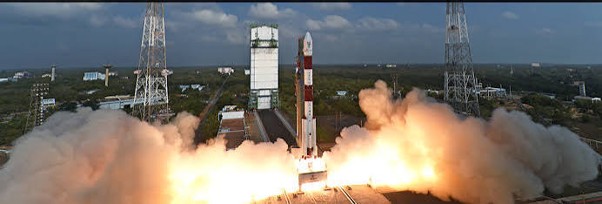
    2013: Mangalyaan – On November 5, 2013 India’s Mars Orbiter Mission lifted off from Sriharikota powered by PSLV C-25. After spending about a month in orbit around the Earth, the spacecraft Mangalyaan began its journey unto Mars. Almost a month later, the spacecraft entered the Mars’ orbit, putting India in the elite club of five countries which have successfully sent missions to Mars. At a cost of Rs. 450 crore, it was the cheapest mission to Mars, and India had succeeded in the very first attempt.

    2017: ISRO tests its first cryogenic engine – ISRO successfully tested its indigenously developed Cryogenic Upper Stage (CUS) for GSLV MkIII on February 17, 2017. It was tested for a flight duration of 640 seconds at ISRO Propulsion Complex (IPRC) in Mahendragiri, this test was carried out after a similar successful test for 50 seconds on January 25, 2017. The test is a significant milestone as it is the last in series of engine before the first flight of GSLV MkIII.

    2019: Chandrayaan – 2 Moon mission – India made a failed attempt to make a soft landing on to the lunar surface, and missed out on the opportunity of being the fourth country to successfully land on the moon, after erstwhile USSR, US and China. While the spacecraft has successfully entered the lunar orbit, the lander Vikram missed the primary landing site and went for the second. Thereafter, the visuals went missing as it had a crash landing.

    ..and Now with Mission Moon – Chandrayaan 3, we have created history by soft landing on moon and being the first country to explore the south pole of the moon..

    While each of the above scientific events have contributed in transforming India into a global superpower, there have been some major scientific revolutions based on government policies that have also played a strategic role in taking the benefits of these developmental changes to the masses:

    The Green Revolution – Post-independence, India was going through its worst agriculture disaster owing to re-occurrence of famines as the country was witnessing wide spread poverty and hunger. In 1960, the government made a policy decision to initiate the ‘Green Revolution’ under the guidance of Dr. M.S. Swaminathan. The country resorted to the use of modern agricultural methods and technology – high yielding variety (HYV) seeds, tractors, irrigation facilities, pesticides and fertilisers. This Green Revolution led to increase in food production and resulted in India becoming one of the world’s biggest agricultural producers.

    The White Revolution – After the huge success of the Green Revolution, the Indian government initiated ‘Operation Flood’ also known as the ‘While Revolution’ aimed at increasing milk production. It helped create a nationwide milk grid linking producers to consumers by eliminating the middlemen. The mission was to make India self-dependent nation in milk production. Pioneered by Dr. Verghese Kurien the revolution was a huge success, making India one of the largest producers of milk in the world.

    The Yellow Revolution – It started in 1986- 87, to multiply the production of vegetable oils, especially mustard and sesame seeds. During the Yellow Revolution, nine oil hybrid seeds – peanuts, mustard, soyabeans, saffron, sesame, sunflower, niger, flaxseeds and castor seeds were planted. Within 10-years of the launch of the program, India’s oil production doubled from 12 million tons in 1986 to 24 million tons in 1997. The Yellow Revolution also offered farmers several support incentives associated to processing equipment, irrigation equipment, fertizers, pesticides, etc.

    The Blue Revolution – Also known as ‘Neel Kranti Mission’, the Blue Revolution was launched in the year 1985 with the objective of developing, managing and promoting fisheries so as to increase farmer’s income and sustain livelihood. This revolution tripled the production of fish in India – both island and marine sector by 2020, transformed the fish and aqua industry into a modern industry using technology and processes, increased income through development of innovative marketing platforms and also ensured food security in India. Dr. Arun Kishnan and Dr. Hirlal Chaudhuri are known as Father of ‘Blue Revolution’ in India.

    The Golden Revolution – The period between 1991-2003 is known as the period of India’s ‘Golden Revolution’, as the country saw a phenomenal rise in production of honey and horticulture products under the supervision of Nirpakh Tutej, who is considered to be the father of the ‘Golden Revolution’ in India. During this period India became the world leader in the production of a variety of fruits like coconut, mangoes, cashew nuts and the second largest producer of vegetables and fruits in the world

    Conclusion Since ancient times, Science and Technology have always been an integral part of India’s culture, and Indian intellectuals have pursued higher education vigorously and engaged relentlessly in development and innovation activities. While the government of India has played a key role in creating conducive environment, it is Indian scientists like Chandrasekhara Venkata Raman, Har Gobind Khorana, Subrahmanyan Chandrasekhar, Venkatraman, Shanti Swarup Bhatnagar, Homi Bhabha… who have made the country proud with their extraordinary vision and work. India has evolved from humble beginnings into being a ‘Global Superpower’ and is all set to play a leadership role in all spheres of science and technology..

    -Manoj Mahanta

    -Team,ScienceNow

  • Temples of Modern India

    Temples of Modern India

    Bhabha Atomic Research Centre

     “Research reactors are the backbone of the Nuclear Programme…” – Dr. Homi J. Bhabha

    Located in the hustling-bustling city of Mumbai, the Bhabha Atomic Research Centre (BARC) is the country’s leading nuclear research facility initiated by Dr. Homi Jehangir Bhabha. The centre’s huge infrastructure is a perfect platform for R&D (research and development) offering an entire gamut of nuclear science, engineering and related areas.

    BARC’s ideology is to use nuclear energy, basically for generation of power. The centre accomplishes all facts of nuclear power generation, from theoretical design of reactors to computerised modelling and simulation, risk analysis, development and testing of new reactor fuel materials to name a few. BARC also does research in spent fuel processing, and safe disposal of nuclear waste. Other research areas for BARC are applications for isotopes in industries, medicine, agriculture, etc. The centre also operates a number of reactors across India.

    Creation of BARC

    It was on 3 January1954 that the Government of India created the Atomic Energy Establishment, Trombay (AEET). The idea behind creating AEET was to unite all the R&D activity for nuclear reactors and technology under the Atomic Energy Commission (AEC). All scientists and engineers who were involved in various areas of reactor designing and development, instrumentation, metallurgy and material science etc., were transferred with their respective programmes from the Tata Institute of Fundamental Research (TIFR) to AEET; with TIFR retaining its original focus for fundamental research in the sciences. After Dr. Homi Jehangir Bhabha’s death in 1966, the centre was renamed as the Bhabha Atomic Research Centre on 22 January 1967.

    Mega Research Hub

    At the Gamma Gardens, BARC conducts research in biotechnology, and has developed a number of disease resistant and high-yielding crop varieties, especially groundnuts. It also conducts research in Liquid Metal Magnetohydrodynamics for power generation.

    On 4 June 2005, the centre started the Homi Bhabha National Institute with the goal of encouraging research in basic sciences. Research institutions affiliated to BARC include IGCAR (Indira Gandhi Centre for Atomic Research), RRCAT (Raja Ramanna Centre for Advanced Technology), and VECC (Variable Energy Cyclotron Centre). Power projects that have benefited from BARC expertise but which fall under the NPCIL (Nuclear Power Corporation of India Ltd) are KAPP (Kakrapar Atomic Power Project), RAPP (Rajasthan Atomic Power Project), and TAPP (Tarapur Atomic Power Project).

    The Bhabha Atomic Research Centre in addition to its nuclear research ideology also conducts research in other state-of-the-art technology areas like accelerators, micro electron beams, materials design, supercomputers, and computer vision etc. BARC has designed and developed for its own use a series of supercomputers – ‘Anupam’ using latest technology.

    -Dr Siddhivinayak Barve

    Editor, ScienceNow Digital

  • Smiling Buddha – India’s first Nuclear Test

    Smiling Buddha – India’s first Nuclear Test

    After the war against Pakistan in 1971, the then Prime Minister, Indira Gandhi who was touring the Bhabha Atomic Research Centre (BARC) in September of 1972 approved of a nuclear test. Without any hesitation, Physicist Raja Ramanna and chief of BARC at that time, took a team of around 75 scientists to design and build the plutonium implosion device. The test was kept as secret as possible and all the work on the project was carried under great secrecy.

    Successful test

    The Indian Army was given the work to dig a test shaft of about 330 feet underground at the Pokhran test site, Rajasthan. On May 18, 1974, the 1360 kilograms device exploded with a force equivalent to 8 kilotons of TNT. Immediately after the test was conducted, Ramanna reportedly informed Indira Gandhi of the successful test through a coded message: “The Buddha is smiling.” Although officially known as Pokhran I, the 1974 test was informally named ‘Smiling Buddha.’ A number of countries condemned India’s nuclear test. While Canada pulled its support for the Indian nuclear program shortly afterwards; United States considered the test a violation of the Atoms for Peace program and responded with sanctions against India.

    Superpower

    After its successful nuclear test of 1974, India took more than 20 years to build a nuclear arsenal and delivery system capable of military deployment. In the years after Smiling Buddha, India had significant difficulty procuring nuclear materials after international market refused to support its stand. Despite these challenges, the BARC leadership managed to construct their biggest nuclear plant to date—the Dhruva reactor at Trombay in 1977, which would produce most of the plutonium for India’s nuclear weapons program. The Indian government also approved a ballistic missile program in 1983. Over the next decade, the Defense Research and Development Laboratory (DRDL) built the short-range Prithvi missile and the long-range Agni missile. Both were eventually equipped with nuclear warheads.

    Operation Shakti also known as Pokhran II took place on May 11, 1998. India tested five nuclear devices, although not all of them detonated. Indian officials claimed that the bombs had a yield equivalent to 45 kilotons of TNT, but independent estimates put the number closer to 16 kilotons. “India is now a nuclear weapons state,” declared Prime Minister Vajpayee days after the tests, adding that “we have the capability of making big bombs for peaceful purpose.”

    -Dr Siddhivinayak Barve

    Editor, ScienceNow Digital

  • HARMONY FOR TOMORROW: A SUSTAINABLE SYMPHONY

    HARMONY FOR TOMORROW: A SUSTAINABLE SYMPHONY

    Clean Energy

    As we find ourselves at the intersection of environmental stewardship and economic advancement, the resonance of a sustainable symphony reverberates through our collective efforts. We embark on a journey towards igniting progress in the realms of clean energy, aligning the imperative of sustainable development with the pursuit of prosperity.

    Affordable and Clean Energy

    India emerges as a shining example, leading the charge with bold initiatives in solar energy adoption. From the sprawling fields of rural communities to the bustling urban landscapes, India’s commitment to harnessing the power of the sun stands as a testament to the transformative potential of clean energy. Through innovative approaches in solar power generation and distribution, India not only addresses the pressing challenge of energy access but also champions environmental sustainability on a global scale.

    One notable success story lies in the village of Dharnai, Bihar. Once shrouded in darkness, Dharnai now basks in the glow of renewable energy, thanks to a micro-grid solar power system. This initiative has not only illuminated homes but also empowered the community, fostering economic growth and improving living standards. Dharnai exemplifies how solar energy can revolutionize rural life, inspiring similar endeavors across the nation.

    Challenge of Clean Energy

    Navigating the intricate landscape of sustainable development presents us with a formidable challenge: reconciling the pressing needs of economic growth with the imperative of environmental conservation. The pursuit of affordable and clean energy, while noble in its goal, is fraught with a multitude of hurdles, ranging from technological limitations to financial constraints. Yet, amidst these challenges, lies a beacon of hope- collaborative global efforts that can surmount these obstacles and pave the way for a resilient and sustainable energy landscape.

    Advancements in renewable energy technologies serve as a testament to human ingenuity and innovation. From solar and wind power to geothermal and hydroelectric energy, these technologies offer promising alternatives to traditional fossil fuels. However, their widespread adoption requires concerted efforts on a global scale- efforts that transcend borders and ideologies. It is through collaboration, sharing knowledge and resources, that we can accelerate the transition towards a cleaner, more sustainable energy future.

    Prospects of Clean Energy

    Moreover, initiatives aimed at enhancing energy efficiency play a crucial role in our quest for clean energy. By optimizing energy consumption across various sectors-  from transportation and manufacturing to residential and commercial buildings- we can reduce our carbon footprint and mitigate the adverse effects of climate change. Investing in energy-efficient technologies and practices not only conserves valuable resources but also drives economic growth by creating new markets and job opportunities.

    In embracing sustainability as a guiding principle, we not only safeguard the future of our planet but also cultivate a more equitable and prosperous society. By prioritizing investments in clean energy, promoting green employment opportunities, and fostering entrepreneurship, we can build a world where economic growth is synonymous with environmental preservation. Together, let us embark on this transformative journey towards a future that is not only sustainable but also inclusive and resilient.

    Conclusion:

    As we reflect on the symphony of progress orchestrated through sustainable energy, one thing becomes abundantly clear: the interconnectedness of our collective endeavors. The harmonious integration of clean energy initiatives with inclusive economic growth epitomizes the transformative potential of sustainable development. It is through collaboration, innovation, and a steadfast commitment to our shared goals that we can truly harness the power of sustainability to build a better world for all.

    -Prof (Dr) Sanjay Deshmukh

    Prof and former VC

    Mumbai University

  • Bharat Ek Khoj :Vigyan

    Bharat Ek Khoj :Vigyan

    Gol Gumbaz

    Gol Gumbaz, situated in Bijapur district of Karnataka, is the largest dome in India built by Sultan Muhammad Adil Shah in the year 1656. About 20 years were spent for the complete construction of this large tomb. The unique thing about the Gol Gumbaz is that ‘even the softest sound can be heard on the other side of the tomb due to the acoustics of the space’. This circular whispering gallery of the tomb is a great combination of sound and civil engineering.

    The tomb is built in such a way that a small whisper gets amplified and is carried across a distance of more than 40 meters in the vast dome and can be heard clearly. Even the slightest whisper is heard from side to side; and a conversation can be most easily carried on across the full diameter of the dome in the lowest undertone. Even if you are 110 meters apart, on the far end of the floor, each whisper, each clap and each shift of your garment will be heard at the other end, as if they were speaking to you over your shoulders.

    Dr Shobha Tawade

    -Team ScienceNow Digital

  • Bharat Ek Khoj : Vaigyanik

    Bharat Ek Khoj :Vaigyanik

    Baudhayana

    Baudhayana was a mathematician who lived around 800 BCE. He is the author of Baudhayana Sulbasutra which was more like a pocket dictionary, full of formulae and results for quick references. He is credited with calculating pi, and the square root of 2. The most creditable achievement is that Baudhayana introduced the Pythagoras theorem1000 years before Pythagoras had developed it!

    In Baudhayana Sulbasutra, there are several mathematical formulae or results that told how to precisely construct an altar. He was a man of very considerable learning and probably wrote the Sulbasutra to provide rules for religious rites. The mathematics given in the Sulbasutra-s enables the accurate construction of altars needed for sacrifices. It is clear from the writing that Baudhayana, as well as being a Vedic priest, must have been a skilled craftsman. He was skilled in the practical use of the mathematics and construction of sacrificial altars of the highest quality.

    Dr Shoba Tawade

    -Team ScienceNow Digital

  • Start-up Ecosystem   

    Start-up Ecosystem 

    Identifying a successful business idea for a start-up venture may require budding entrepreneurs to harness their creative energies, leverage their hands-on experiences/skills and turn their passion into a profession. Here’s how you can do it?    

    Call it an after-effect of the ‘Make in India’ and ‘Start-up India’ campaigns or the rise of a new breed of app-based tech-preneur teens who have easy access to digital online tools, entrepreneurship seems to have caught the fancy of many-a-school and college going youth. Setting breaks on the post-colonial euphoria of chasing government and high-profile corporate jobs, youth look to be at home discussing entrepreneurial issues, market dynamics, business opportunities and the challenges accompanying it. So also, B-schools and engineering colleges across the country are witnessing rising incidents of students opting out of the placement routines, at times even turning down hi-profile/high-paying job offers, only to pursue their deep inner entrepreneurial calling. In schools and colleges, ‘entrepreneurship’ is the new buzzword! 

    Now for all those youngsters who have already decided to be an entrepreneur and are guessing as to what goes on to make businesses successful, whether it’s a right product, a smart business plan, adequate finances, a team of sharp and committed staff, world-wide digital footprints…, don’t be surprised if you ever hear management gurus emphasise on selection of a ‘right business idea’. It may set the alarm bells ringing for most people who are seriously considering to start a business based on one of the two personal biases:

    • It’s a business I am already aware of: “I love food and know all about it, so I should start a restaurant,” if you feel so, better think again. Just because you are a foodie or a good chef doesn’t necessarily mean that you would successfully run a restaurant. Choosing to do so, could be a huge mistake!
    • It’s a product/service I am in love with: Again, just because you like the product or services, doesn’t necessarily make it profitable. Especially, first-time entrepreneurs ought to be conscious of the fact that running a business is a tough ask, and that things could become all the more difficult if one gets passionately attached with the product/service.

    So how does one really go about selecting a business idea that in the long-run would not only be profitable, but also yield rich dividends on scaling it up? Here’s a step-by-step approach to do so:

    1. Picking up an idea: Look for something business that fits your passion, life goals, personal strengths, real-life experiences… While you do so, look at it as a possible business idea, and don’t fall in love with it just yet.
    2. Think 3600: Evaluate the business idea as an investor would otherwise do. How big is the opportunity? Is the timing right? What will it take to execute it? Do you have adequate finances? What are the risks involved? Is the product/service marketable? How long would it take to make the venture profitable?
    3. Get Feedback: Always be conscious of the fact that the selected business idea is your baby, and it’s your gut feeling that it will work fine. Playing it safe, look for people who know the market, who understands the business model, competition, market dynamics… and try getting first-hand feedback on your business idea. Also try talking to some of the probable customers as to: whether they would buy it? If so, at what cost? What value additions they would like? How much would they be ready to pay for it? and so on.
    4. Business Plan: You should have a well thought out ‘Business Plan’ in hand prior to launch of the business. Try incorporating all your recent learnings, opinions of business experts, feedback of probable customers, learnings from market research, financial plan, marketing tools and their usage… Importantly, the business plan ought to be implementable, and it should have clearly set goals and target month-wise and year-wise.
    5. Develop a prototype: its high-time you have a market-ready product/service in place. Thereafter, consider a soft launch or pilot run of the product/service to plan to launch, just prior to the final business launch. Keep the ultimate vision and business goals in mind, and look out for feelers during the trial runs as to how you can achieve it.
    6. Test the waters: During this phase try to engage with your future customers and suppliers to figure out how to match your offerings with customer needs. To do that, test elements like pricing, branding, product/service features, customer experience, marketing strategy, etc. Measure the results and draw conclusions.
    7. Make necessary adjustments: Once you have gathered wealth of information on your product/service, market challenges, customers, competition, etc., try figuring out as to what things you got wrong and promptly fix them. The process may warrant making small or significant changes to your proposed product/service or business plan, ensure that necessary corrective steps are taken to prevent any future eventualities.
    8. Market ready: Having undergone the above mentioned process, you can be rest assured that your selected business idea is ready for a formal market launch.

    -Team ScienceNow Digital

  • The Serial Inventor

    The Serial Inventor

    Padma Shri Uddhab Bharali from Assam has over 150 inventions under his belt, and continues to make life easier for people through his machines…

    A grass root innovator from Assam, today Uddhab Bharali is known for more than 150 innovations to hisname such as paddy thresher, cane stripping machine, pomegranate de-seeder and low-cost incinerator.

    How did it all start?

    While Bharali was good at academics, the engineering aspirant had to drop out of college during his final year owing to financial hardships. To help his father in repaying debts, he experimented with innovation and developed new tools — an interest that Bharali had, even as a child.

    However, his first innovation came in 1988, when he developed a polythene making machine for the tea industry. Till then, Lakhimpur in Assam was a zero industries district, and at the time only the tea industry was booming. They required polythene covers in bulk and instead of buying a machine which would cost him lakhs of rupees, Bharali developed his very own for about Rs 65,000.

    The beginning…

    The success of the polythene cover making machine gave him the confidence he needed. To come upwith his innovative products, Bharali, like many others, relied on ‘jugaad’ where he used cheap, easy to find materials to develop products which are sustainable and efficient. By 1995, Bharali had paid-off all his father’s debt and got a job of looking after the machinery used in a hydropower project in Arunachal Pradesh. But it was short lived as he had to return back to his hometown after the news of his elder brother’s death.

    Realising he was the only bread earner for his family, Bharali had to make ends meet. Between the 1990s and mid-2000s, he developed 24 products which focused on helping farmers. Though Bharali wanted to develop or innovate for other sectors too, but the demand was huge from the farm sector.

    From developing different kinds of peelers, re-designing Assamese paddy grinder to cutters for tea- leaves, he took extra effort to simplify agricultural processes for the farming community. Identity as an inventor

    Bharali’s ultimate recognition came in 2006, but not before the serial inventor designed and prototyped an entire range of mechanical innovations. Bharali’s pomegranate seed peeling machine, which he designed, garnered accolades and appreciation not only from India but also from across the world.

    Truly one of its kind, the machine was designed to separate the outer skin from the thinner membrane without causing any damage to the seeds. The machine was an instant hit with orders pouring in for this unique invention from Japan, US and Turkey.

    Some of Bharali’s other inventions include: an arecanut peeling device, and the Cassava Peeler among others. The basic idea behind Bharali’s inventions was to reduce hours of back-breaking labour that farmers put in day and night; thus, making these inventions a hit with the farming community and those engaged in agricultural labour. In addition to these, he has also invented remi  recortication machine, garlic peeling machine, tobacco leaf cutter, paddy thresher, cane stripping machine, brass utensil polishing machine, safed musli peeling machine, and jatropha de-seeder. These inventions are popular abroad and local authorities like the Central Silk Board, North Eastern Region Community Resource Management Project and the National Innovation Foundation have helped Bharali to install these new machines. Bharali have recently developed a red cardamom dryer for the Spice Board of India, and a seed extractor for bananas for Institute of Advanced Study in Science and Technology.

    For a cause

    Despite his clients which consist of government bodies and research institutes, Bharali spends some of his time working for the betterment of the underprivileged. Keeping with this, he has started a shelter facility in his area, as well as a feeding programme. Bharali has also developed a number of machines for the differently-abled which helps them enhance their quality of life. Apart from being an innovator, he is a guest lecturer at a number of colleges and universities in Assam and all across India. A winner of many awards and recognitions, Bharali is far from retiring as his quest for knowledge and innovation is helping in bettering the society.

    -Dr Shobha Tawde

    Team ScienceNow Digital