science share account_circle

Author: sn_admin

  • Earth’s Magnetic Field

    Know Geology…

    Earth’s Magnetic Field

    Earth is surrounded by Magnetic Field.. Let’s understand it…

    We live on the planet Earth. The Earth is our provider of all of our needs. As we all know, there are various sources of radiation present on the Earth, such as Uranium, etc. There is also cosmic radiation surrounding us, although the intensity of the radiation is so low that it cannot directly harm us. However, there is a massive amount of radiation in the vast expanse of the universe. Even the Sun emits powerful ultraviolet radiation, which is able to cause fatal cancer like illnesses. Then why is this radiation not able to harm us? The answer lies with the Earth’s magnetic field.

    How magnetic field is generated?

    When the Earth was formed around 4.5 billion years ago, she was a hot ball of molten rocks. As the time passed, the Earth’s interior segregated into 3 parts: crust, mantle and core. This core is made of iron and nickel. The core can be divided into outer core and inner core. The outer core is hot, and therefore in liquid state, while the inner core is also hot, but in solid state due to the pressure from surrounding crust, mantle and outer core. Still, the iron particles present in the inner core are constantly moving. When the iron particles on the surface of the inner core get relatively cooler than the particles inside the inner core, they get denser, and move towards the center of the inner core. At the same time, the relatively warmer and lighter iron particles from the interior of the inner core tend to move towards its surface. This movement of the iron particles creates electric currents in the inner core, and the currents are formed inside the inner core. These currents are called as ‘Convection Currents’. The electric currents, combined with the magnetic properties of the iron particles, generate the Earth’s magnetic field, or the magnetosphere.

    Aurora

    When the solar winds reach the Earth, they interact with the Earth’s magnetic field, and the interaction causes a glow in the atmosphere. This event is called as ‘aurora’. Generally, due to the bipolar nature of the magnetic field, aurora is only visible in the north and south poles. But when the solar activity is intense, the aurora will move away from the poles, and may be visible even at lower latitudes. An excellent example of this activity was observed on April 22 and 23, 2023, when the solar activity was so intense that the aurora was visible in Ladakh in northern India.

    Effects of Magnetic Field

    This magnetic field protects the Earth and her inhabitants from harmful cosmic radiation. However, this magnetic field is not completely invincible. In case of strong cosmic activity, the high solar winds can disturb the magnetic field, and geomagnetic storms can penetrate the Earth’s magnetosphere. This can result in the widespread radio and power blackouts. During the greatest solar storm ever recorded, known as the ‘Carrington Event’ in 1859, the solar activity was so intense that the northern aurora moved down to Hawaii and Cuba, while the southern aurora moved up to Santiago, capitol of Chile. This event caused severe disruption of telecommunication around the world, as the telegraph poles were fried and communication was stopped. Similar event took place in 1989, plunging the province of Quebec, Canada into 12 hours of electrical blackout.

    Due to this magnetic field, there are charged particles trapped in the atmosphere. The area where the charged particles lie is called as the ‘Van Allen Belt’. The Van Allen Belt is supposed to be uniform around the Earth, but that is not the case. In some places, the Van Allen Belt has come closer to the Earth’s surface. In these areas, conflict between the Van Allen Belt and the Earth’s magnetosphere results in the reduction of the Earth’s magnetic field. In the southern Atlantic Ocean, there is such an area, where the strength of the Earth’s magnetic field is significantly lower than that of the rest of the Earth. This anomaly known as the ‘South Atlantic Anomaly’. Apart from the interaction with Van Allen Belt, there are few other factors, which play a crucial role in the reduction of the magnetic field. These factors include global warming, climate change, use of chlorofluorocarbons, etc. Without the magnetic field, the powerful solar winds would blow away the Earth’s atmosphere, and cause fatal cancer like illnesses on the Earth. The Earth as we know her would not exist, and instead a desolate planet would remain behind, should the Earth’s magnetic field vanish.

    -Ninad Bhagwat

    MTU, USA

  • DO YOU KNOW?

    DO YOU KNOW?

    Enjoy the incredible facts…

    • Unless food is mixed with saliva you can’t taste it.
    • The average person falls asleep in 7 minutes.
    • Lemons contain more sugar than strawberries.
    • 8% of people have an extra rib.
    • An asteroid about the size of a car enters Earth’s atmosphere roughly once a year – but it burns up before it reaches us. Phew!
    • 85% of plant life is found in the ocean.
    • The first computer of the world, the ENIAC weighed around 27 tonnes and occupied an entire hall.
    • Like humans, plants recognize their siblings and give them special treatment.

    -Team ScienceNow

  • Solve This

    Solve This

    A king once condemned a prisoner and wanted to give him a very harsh punishment. He keeps a glass containing some hydrochloric acid and another containing an equal amount of sodium hydroxide before the prisoner and asks him to drink both of them. The prisoner knows that the acid is highly corrosive and will destroy the mucous lining, as well as his oesophagus. The other solution is equally bad and will cause him to collapse. But he goes ahead and obeys the order. The king finds that the prisoner has survived without any ill effects.

    How did he manage it?

    Answer:

    The prisoner understood the chemical reactions well. He knew that an acid is always neutralized by an alkali. So he poured the liquids in the two glasses into a third empty glass. When they thus got mixed, they reacted producing salt and water. These were harmless, except for the salty taste!

    HCl + NaOH = H 2 O + NaCl

    -Team ScienceNow

  • Art of Making Potable Water and the Craft of Desalination

    Art of Making Potable Water and the Craft of Desalination

    Water is life. We live in a watery world. The ocean covers more than 70 percent of the surface of our planet. It is hard to imagine, but about 97 percent of the Earth’s water can be found in our ocean. Yet paradoxically we are stressed for safe potable water. Water is a universal solvent and dissolves salts making it unfit for our consumption. Sea water has 35000 parts per million of sodium chloride in it. Making sweet water from that is the challenge for science and technology.

    Desalination has been used for thousands of years. Greek sailors  used to boil water to evaporate fresh water away from the salt. Romans used clay filters to trap salt. Simply put, desalination is the process of removing salt and other impurities from seawater or brackish water to make it suitable for consumption and other applications. The two most prevalent methods of desalination are distillation and reverse osmosis.

    Methods

    Distillation involves heating seawater to create steam, which is then condensed back into liquid form, leaving the salts behind. India’s solar-rich landscape has encouraged innovative solar desalination techniques. The Sorek Desalination Plant in Israel serves as a prime example of distillation-based desalination, providing valuable lessons for India.

    Reverse Osmosis (RO) employs a semi-permeable membrane that allows water molecules to pass through while blocking salt and other impurities. The Nemmeli Desalination Plant in Chennai, is a significant illustration of reverse osmosis technology, catering to the water needs of a water-stressed city.

    India

    There is a beautiful Indian myth that the swan can separate milk and water. Milk is mostly water with suspensions of fat and proteins and lactose.  The gross composition of cow’s milk is 87.7% water, 4.9% lactose (carbohydrate), 3.4% fat, 3.3% protein, and 0.7% minerals.  Scientific explanation is that, the Swan has got a sieve like structure, lamellae, in its mouth which separates water from mud. Which is why probably there is the belief that, swan can separate milk from water and drink just the pure milk!

    Indian Canadian scientist, Srinivasa Sourirajan is regarded as the father of RO membranes along with American-Israeli scientist, Loeb.  Their seminal work created the US$ 50 billion global membrane separation market to enrich the quality of worldwide life via providing clean water. Water, food and sanitation in their current status owe a lot to the transformative discoveries of Sourirajan. This is why Professor Menachem Elimelech asserted that “he should have received two Nobel Prizes- one for science and one for peace.

    Sarabhai Dream

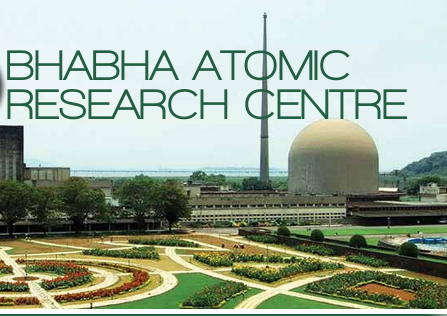
    It was the visionary Indian Scientist, Dr. Vikram Sarabhai who conceived the concept of desalination as part of his dream project Nuclear Powered Agro industrial Complex. Uranium is the input for huge amounts of energy in the nuclear reactor. Reactors are located near seawater sources for cooling. He envisaged sea water desalination for agriculture and started research groups in Bhabha Atomic research Centre. Dr M.P.S.Ramani piloted these research endeavours and brought them to industrial scale operation. World class membrane research teams were nurtured here.

    Success Story

    Chennai, the capital city of Tamil Nadu, has been grappling with acute water scarcity due to erratic monsoons and depleting groundwater reserves. The Nemmeli Desalination Plant, established in 2010, produces 100 million liters of freshwater per day, alleviating the water crisis in the city to a considerable extent. However, challenges persist, including the high energy requirements of the desalination process and potential environmental impacts.

    Gujarat with extensive coastlines, has harnessed solar power to drive desalination projects. The Solar Desalination Plant in Gandhinagar combines solar energy with the multi-effect distillation process to produce freshwater efficiently. This integration not only reduces the carbon footprint but also aligns with India’s commitment to renewable energy development

    Challenges

    Desalination processes are notorious for their high energy consumption. Breakthroughs in energy recovery devices, such as pressure exchangers, turbochargers, and isobaric chambers, are making strides in reducing energy demands. India’s desalination initiatives can benefit from adopting such innovations to make the process more sustainable.

    Disposal of concentrated brine, a byproduct of desalination, can harm marine ecosystems. The Jal Shakti Ministry’s guidelines for brine disposal, incorporating dilution techniques and monitoring mechanisms, exemplify India’s efforts to balance technological advancements with environmental protection.

    While desalination holds immense potential to address India’s water security challenges, a holistic approach is essential integrating sustainability into it.  The Indian government’s emphasis on water conservation through campaigns like Jal Shakti Abhiyan is crucial to curbing wastage and enhancing the impact of desalination efforts.

    In the relentless pursuit of SDG 6, desalination emerges as a pivotal tool to ensure water access for India’s burgeoning population. Through technological innovations and sustainable practices, the country can navigate its water security challenges while safeguarding its environment. By harnessing the power of the oceans and the brilliance of scientific advancement, India can lead the charge towards a water-secure future for all.

    In the pursuit of sustainable water solutions, the future holds a promising ally in RO. This revolutionary technology is poised to redefine freshwater production, addressing the ever-growing global water scarcity crisis.

    -Dr.A.P.Jayaraman

    Chairman, NCSC

  • LIGHTER MOMENTS

    LIGHTER MOMENTS

    Have Fun! Enjoy the Lighter Moments…

    Q: Which university does a hippopotamus go to?

    A: Hippocampus

    Q: What’s the difference between a dog and a marine biologist?

    A: One wags a tail and the other tags a whale.

    Q: What did Abacus say to the students?

    A: You can count on me!

    Q: What gas never cries? 

    A: Nitrous Oxide (Laughing Gas)

    Q: How many software engineers does it take to change a light bulb?

    A: None. That’s a hardware issue.

    -Team ScienceNow Digital


  • SCIENCE QUESTIONS

    SCIENCE QUESTIONS

    Be curious… Know the truth behind the facts…

    What’s the Colour of Mirror?

    It’s actually green. A human eye can distinguish between 10 million different colours. But to identify the colour of mirror, whether it is white or silver is very difficult. Mirror reflects the colour that is seen in it. It reflects all the images in the exact opposite direction due to angle of reflection and distance. But every mirror absorbs a very tiny amount of light within the 510 nanometre range. So, as the spectrum of visible light is green, the colour of the mirror is technically little green. 

    Where Do Permanently Deleted Files Go in Computers?

    Actually the computer doesn’t delete anything. When we delete a file, we just put it into a new address or a pointer on the hard disk where it is stored. Large files are stored in multiple locations. When we open a file, the hard drive follows the pointer to identify the data. Thus any file is never erased and is always physically present on the hard disk. The files can be retrieved using special software. The data can only be erased when the hard disk is destroyed.

    Where is the Centre of Universe?

    The universe started with a “Big Bang” about 13.7 billion years ago and it has been expanding ever since. The centre of this expansion is everywhere. No matter where you are in the universe, everything will seem to be expanding or moving away from you at the same rate. Everything looks the same in every direction. So, there’s no one particular centre of Universe, rather the Centre of Universe is everywhere. 

    Why does fish smell so strongly?

    In order to maintain fluid balance, fishes must fill their cells with amino acids and amines to remain safe from the saltiness of seawater. Ocean fish have trimethylamine oxide (TMAO) for this purpose. However once the fish is killed and bacteria and fish enzymes convert TMAO into trimethylamine, it gives off the characteristic fishy odour.

    Why do taste buds change over time?

    As we age, our taste buds actually change. Most of what we think of as taste comes from our noses’ smell receptors. As we age, it gets harder for our body to replace those receptors when they die off. As a result, people in old age are sometimes less sensitive to taste and so they gravitate toward things that have stronger, more detectable flavours.

    -Dr Siddhivinayak Barve

    Editor, ScienceNow Digital

  • SCIENCE QUIZ

    SCIENCE QUIZ

    Get ready to test your Grey Matter…

    1. The BrahMos Missile was developed by which country?
    A. India
    B. India & China
    C. Russia
    D. India & Russia

    2. What is the purest form of Iron?
    A. Wrought iron
    B. Pig iron
    C. Cast iron
    D. None of the above

    3. Which is the most abundant gas in the earth’s atmosphere?
    A. Oxygen
    B. Nitrogen
    C. Methane
    D. Hydrogen

    4. Which type of plastics can be recycled?
    A. Polyvinyl Chloride (PVC)
    B. Styrofoam
    C. Thermoplastics
    D. All of the above

    5. Which metal is a liquid at room temperature?
    A. Mercury
    B. Tin
    C. Lead
    D. Brass

    6. Which gas is found in soda water?
    A. Oxygen
    B. Argon
    C. Carbon dioxide
    D. Helium

    7. What is the speed of Earth around sun?
    A. 60 km/sec
    B. 90 km/sec
    C. 10 km/sec
    D. 30 km/sec

    8. Splitting of light into its constituent colours is known as what?
    A. Refraction
    B. Dispersion
    C. Frequency
    D. Prism

    9. Cotton fibres are made of ______.
    A. Cellulose
    B. Wax
    C. Fur
    D. Seeds

    10. Which historical victory achieved by a Spacecraft got Mars on its First try?
    A. Astrosat
    B. Chandrayaan
    C. Manglayaan
    D. Aryabhata

    11. Rate of growth of plant is measured by which instrument?
    A. Barometer
    B. Hygrometer
    C. Udometer
    D. Auxanometer

    12. The Ozone layer lies in the _______.
    A. Troposphere
    B. Biosphere
    C. Stratosphere
    D. Mesosphere

    13. Celsius and Fahrenheit show the same temperature at ______.
    A. 40
    B. 39
    C. 37
    D. 41

    14. ‘White Revolution’ is related to what?
    A. Cotton
    B. Milk
    C. Water
    D. Ice

    15. Hypertension is the term used for _______.
    A. Increase in heart rate
    B. Decrease in heart rate
    C. Decrease in blood pressure
    D. Increase in blood pressure

    16. What is the physical phase of life called?
    A. Protoplasm
    B. Cytoplasm
    C. Organelles
    D. None of the above

    17. Which among the following was first human-made plastic?
    A. Bakelite
    B. Polyethene
    C. Celluloid
    D. Nylon

    18. Amalgam’ is a term used for an alloy of a metal with ______.
    A. Copper
    B. Mercury
    C. Lead
    D. Aluminium

    19. Which is the largest blood vessel in the body?
    A. Alveoli
    B. Artery
    C. Vein
    D. Aorta

    20. The first synthetic fibre made by man was ______.
    A. Nylon
    B. Terycott
    C. Polyester
    D. Rayon

    21. Which of the below is water soluble vitamin?
    A. Vitamin C
    B. Niacin
    C. Riboflavin
    D. All of the above

    22. Radio Carbon Dating is use to estimate the age of ______.
    A. Monuments
    B. Fossils
    C. Rocks
    D. Soil

    23. The fastest growing plant is ______.
    A. Ashoka
    B. Banyan
    C. Eucalyptus
    D. Coconut

    24. Energy is measured in units called ______.
    A. Joules
    B. Newton
    C. Watts
    D. Ohm/mtr

    25. Ozone holes are more pronounced at the ______.
    A. Tropic of cancer
    B. Poles
    C. Equator
    D. Tropic of Capricorn


    -Team ScienceNow
    The answers will be posted a week later

  • India Rising

    India Rising

    Memoirs of a Scientist

    As we celebrate the Independence Day… a rare celebration in the form of a Book titled India Rising…unfolding memoirs of a Scientist none other than Dr Chidambaram has been published…

    Dr. Chidambaram is one of the tallest figures, not only in the Department of Atomic Energy but also in Science in India. He has been at the helm of many institutions and organisations including the Principal Scientific Adviser to the Government of India. It is indeed welcome that he has penned his journey in the form of this book.

    The book covers his long journey, his greatest contribution is in the Peaceful Explosion Experiment tests in 1974, and then the Nuclear tests in 1998. These two landmark events have changed the course of not only the Department of Atomic Energy, but also of the nation

    India and particularly the Department of Atomic Energy works closely with International Atomic Energy Agency, with its headquarters at Vienna. Dr. Chidambaram has held the chair of Board of Governors of IAEA. During his tenure he has not only advanced the cause of the Agency, but also taken care of India’s interest. He narrates his experience with additional inputs from Dr. Raghuraman.

    He has served as Principal Scientific Adviser to the Government of India for 17 years. During his tenure, he has initiated many projects. Of particular interest are the national knowledge network, and the Rural Technology Action Group. He is passionate about identification and development of gifted children. The book covers various aspects of science like interdisciplinary aspects of science, importance of basic science, women in science and so on. During his long tenure, he has worked with many prime ministers. There is an interesting account on his interactions with the prime ministers.

    He has played a key role in opening up of the nuclear trade with the world. Post 1998, this needed a lot of work, including understanding of the world order and India’s unique position. In the present book Ambassador D.B. Venkatesh Verma has provided a fascinating account of Dr. Chidambaram as a diplomat.

    The book encompasses the journey of science of India since Independence, is a great treasure of information that will serve as motivation to the young children and students, of not only science but also national history.

    -Dr Suresh Gangotra

    Co-Author, India Rising

  • Tree Climbing Bike

    Tree Climbing Bike

    A farmer-turned-inventor has developed a bike that can scale really tall trees up and down with ease…

    A few months back, the video of a farmer climbing the tree with the help of a machine went viral on social media. The video was of K Ganapati Bhat, a farmer from a small village of Komali in Sajipamunnur, Karnataka, who has developed a manned machine to climb the tree and to spray pesticides or pluck bunches of areca nut, without taxing any muscles or bruising arms or legs!

    The Innovator

    A Science graduate in Physics, Chemistry and Maths, Ganapati Bhat came up with the idea of developing a machine to overcome shortage of labourers in areacanut plantations. His manned machine is based on the model of a bike through which one can scale the trees up and down with ease. Ganapati Bhat said that the use of the machine was tested on his farmland on a trial basis recently, and it worked without any problem. In fact, after the video was circulated by his daughter on the social media, he has started receiving calls from across the globe for placing orders for the supply of the machine.

    The Machine

    The machine weighs 28 kg and has a two-stroke engine. It has hydraulic drum brakes, gears, double chain, seat and safety belt. Wearing safety belt, any person weighing up to 80 kg can climb the tree within 30 seconds just by the press of a button. Similarly, he/she can alight from the tree by switching off the engine with ease. The use of hydraulic drum with shock absorber in the engine ensures that there is no harm to life, even if the engine suddenly slips to the ground. The engine runs on petrol and with one litre petrol, you are able to climb around 80 trees. The engine runs on petrol. For one litre petrol, one need to use 40 ml engine oil. With one litre petrol, you can climb 80 trees, if you weigh around 50-60 kg.

    Economically Effective

    On an average, a labourer had to be paid Rs 2,000 per day for climbing and spraying pesticides. On an average, a labourer climbs 35 to 40 trees manually. But this scooter is at your disposal any time and for any number of uses. Pegged at a cost of Rs 75,000 per unit, the vehicle comes with a handle and a brake as well as a clutch for the smooth movement of the machine. Along with it, it has an indicator to show petrol and oil content. By sitting on one arecanut tree, one can spray pesticides to several trees nearby.

    Farmer Saviour 

    The machine will provide solution to problems by minimising the role of human labour in the operation of spraying pesticides and harvesting the crops. Bhat says even women can climb the tree with ease as the machine is quite safe as it has been tested on more than 2000 trees in his farmland. But he warns farmers or for that matter anybody to try this Bike machine on trees with algae, as it does not work on mushy or moisture-based surfaces. So, he is now planning to modify the machine to use it for climbing coconut trees as well.

    Many firms have started getting in touch with Bhat for manufacture of his innovative tree scooter. With further modifications, the machine will be of great help to farmers, who are facing acute shortage of labour for activities like harvesting and for spraying pesticide.

    -Manoj Mahanta

    -Team, ScienceNow Digital


  • Star Watch August

    Star Watch August

    This star chart is for early August 9 pm mid  August pm and end August  7 pm .

    To use this chart, hold the star chart vertically, face any direction in the sky.

    Turn the star chart around so that the direction you are facing is at the bottom. Now, the stars shown at the bottom in the chart are the stars you will see in the sky.

    Dots represent stars. The larger the dot the brighter the star.

    Lines between stars are imaginary and aid location .Names of constellation are  along each side. 

    Monthly phases

    Last quarter

    26 August 2024 14:55

    New moon

    04 August 2024 16:43

    First quarter

    12 August 2024 20:48

    Full moon

    19 August 2024 07:06 super moon


    -Suhas Naik-Satam

    Nehru Planetarium