science share account_circle

Category: Features

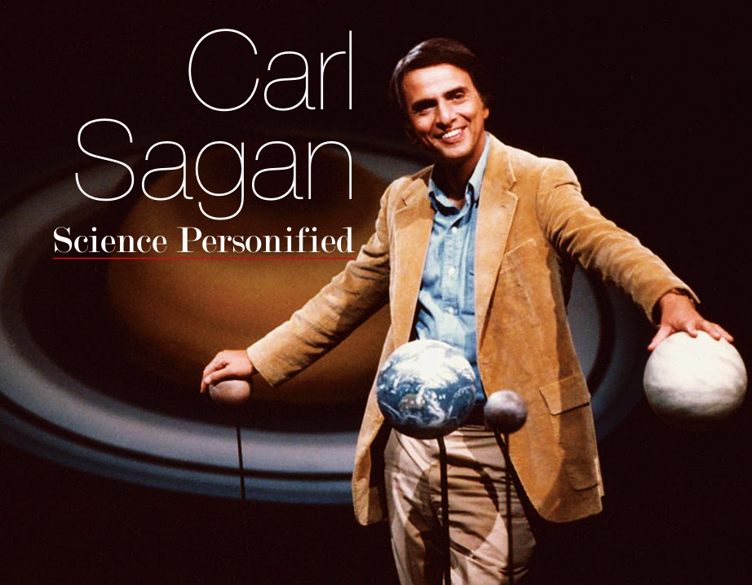
  • Carl Sagan Science Personified

    Carl Sagan Science Personified

    An ode to Carl Sagan, the man who reached the stars and unfolded the COSMOS bringing in Scientific Culture…

    ‘We live in a time dominated by science and technology and yet it sometimes seems that almost no one understands very much about science and technology….’ These are the words of Carl Sagan – the most charismatic apostle of popular science who brought the marvels of the universe and the mysteries of creation to a worldwide audience of hundreds of millions in his famous Television Series ‘Cosmos’. The Thirteen-Part Cosmos serial was first telecast on the television on September 28, 1980. The man who literally reached to the stars and unfolded COSMOS, inflicting Scientific Culture…In recognition, September 28 is celebrated world over as ‘Scientific Culture Day’

    Carl Sagan, born in Brooklyn, New York, USA on November 9, 1934 to an American mother and a Russian immigrant father was quite destined to be an astronomer… When Carl was just 12 years old, his grandfather asked him what he wanted to be when he grew up. “An astronomer,” replied the boy without hesitating. A science fiction addict from his childhood, Sagan was fascinated by astronomy and he translated the dream to the reality…

    Science Communicator

    He was a multifaceted persona…an astronomer, astrophysicist and the director of the Laboratory for Planetary Studies at Cornell University. Sagan was more popularly known as a gifted and enthusiastic storyteller and showman who described cosmic phenomena with the sense of awe and wonderment. He was science personified…

    Science Communicator

    Carl Sagan is regarded as the best public figure in science communication. For Carl Sagan, interest in science communication came early. He was frequently interviewed by the press and became a public spokesperson for astronomy on a number of Television programs. His science was publicly minded and engaged. Alongside his work as a researcher, he was engaged as an educator, public communicator and activist. The television series Cosmos is the epitome of his legacy… He strongly believed that it is important for scientists to be involved in communicating science to the public.

    The 13-part television series Cosmos was viewed by over 500 million viewers all over the world. “Cosmos,” covered the 15billion year history of the universe, from the creation to the present.

    Writer

    Carl Sagan was a prolific writer he wrote a series of essays in magazines. His essays like ‘The Gift of the Apollo’ passionately made the case to the American public for the value of space exploration. He has authored a number of books, the prominent amongst them are like ‘Pale Blue Dot’: A Vision of the Human Future in Space and ‘Demon Haunted World’: Science as a Candle in the Dark and his novel ‘Contact’ he worked to communicate the importance and values of science to the world at large. He also wrote ‘The Dragons of Eden: Speculations on the Evolution of Human Intelligence, which won a Pulitzer Prize for literature and “Broca’s Brain,” a popular book in which he traced the evolution of the human brain. His book, “Demon Haunted World,” a critique against pseudoscience is also amongst most read books.

    Researcher

    Throughout his career, Carl Sagan was engaged in basic scientific research of Solar System. He was very active in the search for extra-terrestrial life and extra-terrestrial Intelligence and worked extensively in the science of exobiology, the study of extra-terrestrial life. He was interested and was an ardent believer in the existence of intelligent civilizations in the COSMOS and in the possibility of Life beyond Earth. He estimated that there may be as many as 1 million advanced civilizations in our galaxy alone.

    Sagan was adviser on the Mariner, Voyager and Viking unmanned space missions for NASA. He has worked out the Scientific Objectives of the Voyager Mission. He designed the famous plaque on the Pioneer 10 spacecraft depicting the man and women raising their palm as a message of peace

    for the far-off intelligent civilization in the sky in case the spacecraft comes in contact with extra-terrestrial life. Pioneer-10 was the fi rst man-made object to travel beyond our Solar System.

    The Activist

    Carl Sagan was a noted Professor who taught a range of courses at Stanford, Harvard and Cornell Universities. Besides instruction for students and scientists, Sagan was also passionate about teaching non-science majors about the importance of scepticism and scientific habits of mind on critical thinking in science and non-science contexts at Cornell University.

    Sagan made direct appeals to the public on the importance of understanding and supporting science and the threats of nuclear proliferation. Those pronouncements made Sagan a champion of organizations advocating a ban on nuclear testing and a halt to development of nuclear weapons.

    ‘The Cosmos is all that is or ever was or ever will be’ tells Sagan in the opening narration of Cosmos and in the final episode covers the 15 billion years from the big bang of creation to the present, using a calendar year as a point of reference. In this scenario Sagan tells if January 1 is the Big Bang Day and the Universe is created; on this scale Dinosaurs would appear on this earth only by Christmas eve and the written record of human civilizations occupies only the final 10 Seconds of the last day of the year which is to the present….

    This is Carl Sagan, Science Personified, who inflicted the Science Culture and brought COSMOS to the people.
  • Pride of India – Bhabha Atomic Research Centre

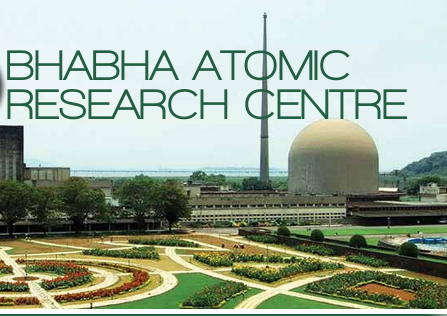
    Pride of India – Bhabha Atomic Research Centre

    Located in the hustling-bustling city of Mumbai, the Bhabha Atomic Research Centre (BARC) is the country’s leading nuclear research facility initiated by Dr. Homi Jehangir Bhabha. The centre’s huge infrastructure is a perfect platform for R&D (research and development) offering an entire gamut of nuclear science, engineering and related areas. BARC’s ideology is to use nuclear energy, basically for generation of power.

    The Centre accomplishes all facts of nuclear power generation, from theoretical design of reactors to computerised modelling and simulation, risk analysis, development and testing of new reactor fuel materials to name a few. BARC also does research in spent fuel processing, and safe disposal of nuclear waste. Other research areas for BARC are applications for isotopes in industries, medicine, agriculture, etc. The centre also operates a number of reactors across India.

    Creation of BARC

    It was on 3 January1954 that the Government of India created the Atomic Energy Establishment, Trombay (AEET). The idea behind creating AEET was to unite all the R&D activity for nuclear reactors and technology under the Atomic Energy Commission (AEC). After Dr. Homi Jehangir Bhabha’s death in 1966, the centre was renamed as the Bhabha Atomic Research Centre on 22 January 1967.

    Mega Research Hub

    On 4 June 2005, the centre started the Homi Bhabha National Institute with the goal of encouraging research in basic sciences. Research institutions affiliated to BARC include IGCAR

    (Indira Gandhi Centre for Atomic Research), RRCAT (Raja Ramanna Centre for Advanced Technology), and VECC (Variable Energy Cyclotron Centre).

    In addition to its nuclear research ideology BARC also conducts research in other state-of-the-art technology areas like accelerators, micro electron beams, materials design, supercomputers, and computer vision etc. BARC has designed and developed for its own use a series of supercomputers – ‘Anupam’ using latest technology.

  • Smiling Buddha – India’s First Nuclear Test

    Smiling Buddha – India’s First Nuclear Test

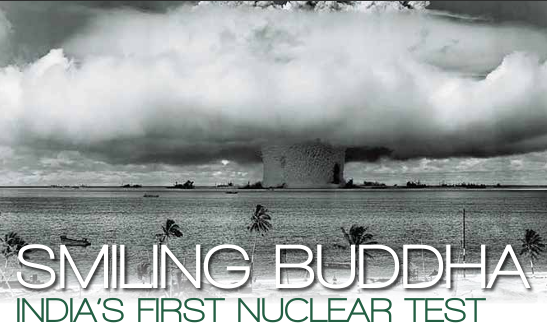
    After the war against Pakistan in 1971, the then Prime Minister, Indira Gandhi who was touring the Bhabha Atomic Research Centre (BARC) in September of 1972 approved of a nuclear test. Without any hesitation, Physicist Raja Ramanna and chief of BARC at that time, took a team of around 75 scientists to design and build the plutonium implosion device.

    The test was kept as secretive as possible and all the work on the project was carried under great secrecy. Successful test The Indian Army was given the work to dig a test shaft of about 330 feet underground at the Pokhran test site, Rajasthan. On May 18, 1974, the 1360 kilograms device exploded with a force equivalent to 8 kilotons of TNT.

    Immediately after the test was conducted, Ramanna reportedly informed Indira Gandhi of the successful test through a coded message: “The Buddha is smiling.” Although officially known as Pokhran I, the 1974 test was informally named ‘Smiling Buddha.’

    A number of countries condemned India’s nuclear test. While Canada pulled its support for the Indian nuclear program shortly afterwards; United States considered the test a violation of the Atoms for Peace program and responded with sanctions against India.

    Superpower

    After its successful nuclear test of 1974, India took more than 20 years to build a nuclear arsenal and delivery system capable of military deployment. Despite many challenges, the BARC leadership managed to construct their biggest nuclear plant till date—the Dhruva reactor at

    Trombay in 1977, which would produce most of the plutonium for India’s nuclear weapons program.

    The Indian government also approved a ballistic missile program in 1983. Over the next decade, the Defense Research and Development Laboratory (DRDL) built the short-range Prithvi missile and the long-range Agni missile.

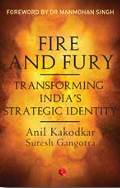
  • FIRE AND FURY

    FIRE AND FURY

    Transforming India’s Strategic Identity by Dr. Anil Kakodkar

    In March 2006, George W. Bush, President of the United States of America, visited India to finalize the landmark civil nuclear deal between the two countries. But far from the buzz of expectations, the US negotiating team was hard at work in South Block—making every possible attempt to ease the concerns raised by Dr. Anil Kakodkar, Chairman of the Atomic Energy Commission (AEC), and Secretary, Department of Atomic Energy (DAE).

    Dr. Kakodkar’s firmness paid off and the US team conceded to the demands made in the interest of India’s strategic autonomy. Little wonder then that when Dr. Kakodkar was introduced to President Bush, he asked, ‘So you are that Kakodkar? Are you happy now?’ It is this courage of conviction and firm resolve that has defined the remarkable life and times of Dr. Anil Kakodkar, one of India’s most respected nuclear scientists.

    The book “Fire and Fury” is a recollection of his profound journey—from humble beginnings in Madhya Pradesh to the highest office of the Chairman, AEC through different events and watershed moments in the country’s atomic energy programme over the past forty-five years. It chronicles the many nuance points of the programme as seen through the eyes of one of the chief architects of that journey.

  • Film Review

    Film Review

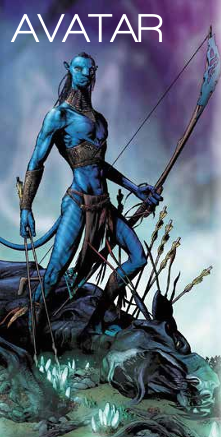
    James Cameroon’s “Avatar” is not simply a sensational entertainment; it is a technical breakthrough. The story unfolds sometime around 2154 when the earth is on the threshold of ecological doom. The only solution is a mineral called Unobtainium, found in abundance in Pandora.

    To get this mineral, the US Armed Forces’ scientific team works towards creating humanoids (human beings whose DNAs are manipulated to make them hybrids) that resemble the Na’vis—pale blue creatures with thin, elongated bodies, wide-set eyes and a flat nose and let them loose in Na’vi land, to persuade the natives to leave their land.

    The film takes us deep into Pandora with Jake Sully (Sam Worthington), a former marine who is crippled by war. As Cameron surges through the creeks, plateaus, fuming water streams and twinkling bushes with Jake, the film gathers momentum and ends in a catastrophic, morally loaded end.