science share account_circle

Category: FORUM

  • Music and Spirituality

    Music and Spirituality

    Inaudible to the human ear, Indian rishis were first to suggest that cosmic vibrations, the Svra was the origin and basis of all matter, energy and life forms in the universe. These cosmic vibrations caused the Pancha-Mahabhuttas (the five physical elements) to vibrate, and where there is vibration there is sound.

    In its purest form, the primordial sound AUM (OM) was said to be sound of the cosmos, and it gave birth to many worlds that are in existence today. Chakrapani suggested that both sound and light travelled in waves, and that light travelled at a much higher speed than sound. The wave character of sound was elaborated on by Prastapada who hypothesized that sound was an energy form and it was carried by air in increasing circles – a movement that was similar to the ripples in water. As with all Vedic physics, this was all united into a metaphysical concept of soul and mind.

    Science of Sound

    The Samaveda and Yajurveda (1200 – 1000 BC) were among the earliest testimonies of Indian music. In the physical universe, it was believed that there are seven original notes – Shadja (SA), Rishabha (RE), Gandhara (GA), Mahdhyama (MA), Panchama (PA), Dhaivata (DHA) and Nishada (NI), and these notes are representative of the seven properties related to space. All types of sound that we hear of, either from musical instruments, the nature (i.e. cloud, rains, sea, wind..), the animate (i.e. animals, birds, insects…), the inanimate (i.e. stones, metals, wood…) were considered to be expressions of the seven original notes. As basis of all music, sound was thought to be intimately related in some way to non-physical and sacred dimensions or planes of existence. Sound was also said to have its own reflection – Pratidhvani (Echo).

    The Veda, knowledge through Sound

    In ancient India, the Vedas are called Sruti, ‘that which is heard’. A reason why the Vedas were handed down generations orally, and were not taught or learned from any written text. The rishis believed that sound of the Vedas cannot be properly transcribed, and some of the sounds cannot be accurately represented in any script known to mankind and these unique sounds have to be learned by listening.

    Besides there were many Svaras of the Vedic mantras that required tonal variations and proper accentuation – ‘Udatta’ (i.e. raised syllable), ‘Anudatta (lowered syllable) and ‘Svarita’ (falling syllable). It was believed that Vedic chants with correct intonation determined the efficiency of the religious rites. The Taittiriya Samhita of the Vedas has several illustrations of how wrong chanting could produce results contrary to those intended. For example, when the wavelength of our radio shifts even minutely we start receiving the broadcast of a completely different transmitting station.   

    Music and Spirituality

    Music in India, since the Vedic era, was practiced as a spiritual science and art – a means to enlightenment. During the Vedic period, music was known to be used for all the rituals and prayers. It was believed that music of the spiritual chants and mantras recited during sacrificial homas and havanas had the power to influence course of human destiny, and even order of the universe. Only those people who could perform religious and spiritual practices, could sing or play a musical instrument. Interestingly, music in India known as ‘sangeet’ covered all three performing arts – singing (gaayan), dance (nritya) and playing the instrument (vaadan). It was unique to Indian music only, and it was mainly sung and performed in temples to attune with the Almighty. Music pitches (Sruti) were seen as caused by the magnitude and frequency of vibrations. A svara (tone) was believed to consist of a Sruti (fundamental tone) and some anuranana (harmonics).

    In India, sacred sound or Mantras were used to pierce through sensual, mental and intellectual levels of existence for the purpose of purification and spiritual enlightenment. And the vibrations of these sounds had the power through which one could achieve liberation or moksha.

    -Dr Shobha Tawade

    Team, ScienceNow Digital

  • Mysteries Salt in the Dead Sea

    At 430.5 meters below sea level, the Dead Sea is the lowest spot on Earth. The Sea bordered by Israel and Jordan has 34.2% salinity, making it one of the saltiest bodies of water in the world. This mineral- rich water and mud of the Dead Sea are believed to have numerous benefits for the body, especially for skin, respiratory and arthritic conditions. For this reason, many people visit the Dead Sea every year to get special treatments at the spas surrounding it…

    Why ‘Dead’ Sea?

    The sea is called deadbecause its high salinity prevents macroscopic aquatic organisms, such as fish and aquatic plants, from living in it. In times of flood, the salt content of the Dead Sea can drop from its usual 35% to 30% or lower. Being 8.6 times saltier than the ocean, the Dead Sea is so salty that fish cannot swim in it, boats cannot sail on it, and animals cannot survive around it.

    The Salt in the Dead Sea

    People have visited the Dead Sea for thousands of years to experience its unique healing properties and to float in its dense, buoyant waters. Much of the freshwater feeding the Dead Sea has been diverted in recent decades, lowering the sea’s water levels and making it saltier than ever. Scientists first noticed in 1979, after this process had started, that salt crystals were precipitating out of the top layer of water, “snowing” down and piling up on the lake bed. The salt layer on the lake floor has been growing about 10 centimeters thicker every year.

    Do you know?

    Scientists believe that the Dead Sea will never disappear entirely. But by 2050 it will be the tipping point when the Sea will become so salty that the minerals will block water from evaporating, leaving a small pool of slimy sludge.

    A Salty Mystery

    As the Dead Sea has become saltier in recent decades, much of that salt has become concentratednear its surface. During the summer, extra heat from the sun warms the surface of the lake and divides it into a warm top layer sitting atop a colder lower layer. As water evaporates from the top layer in the summer heat, it becomes saltier than the cooler layer below. But then how was the salt from the surface building up at the bottom of the sea?

    A new study by scientists proposes that disturbances caused by waves or other motion create tiny “salt fingers” across the surface of the lake that interact with one another as they funnel down to the lake bed, forming larger structures.

    When the top layer of the lake is disturbed by waves or other motion, tiny parcels of warm water enter the cooler pool of water below. Heat diffuses more rapidly than salt, so this warm water parcel rapidly cools. As it cools, salt precipitates out and forms crystals that sink to the bottom. The researchers created a computer simulation of the salt fingers theory. And indeed, the theory correctly predicted the downward flow of salt snow and build up of salt layers in the middle of the lake’s floor.

    -Dr Siddhivinayak Barve

    Editor, ScienceNow Digital

  •  

    Career Space Bound

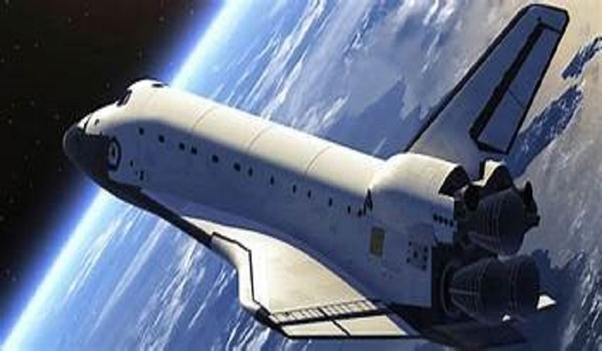
    A career in aerospace engineering will see you working with cutting-edge technology in top-notch space agencies like ISRO, NASA, ESA and more…

    In simple terms, Aerospace Engineering is the study of the complex materials and structures that are put to use under atmospheric test such as aircrafts, spacecrafts, missiles and other airborne objects. And to manufacture all these and implement them you require highly trained engineers, scientists and technicians specializing in areas such as aerospace, aeronautics, electronics, computer science, robotics, chemistry, physics and meteorology. In short, Aerospace Engineers are engaged in high tech fields such as manufacturing of aircrafts for commercial or military use, space research and spacecraft production.

    Job Profile

    The primary job of an Aerospace Engineer is to design, create prototypes of these designs, and finally test them. The work may also involve evaluating designs of other engineers to make sure that the idea meets certain ethical, safety, and environmental standards. Overlooking building process as well, ensuring that proper deadlines are met is also part of work of an Aerospace Engineer. Typically, an Aerospace Engineers specializes in either aeronautical or astronautical design, which will determine whether they work with aircraft or spacecraft.

    Work Demands

    Using high-end computers and sophisticated programs, an Aerospace Engineer spends much time in an office setting. At times, you might find an Aerospace Engineer working in a manufacturing environment to oversee the construction and implementation of a design. Aerospace Engineers work full-time on regular basis. However, managing larger projects can require overtime hours, particularly when deadlines are approaching. Also working at the forefront of technology makes long career breaks difficult, as they need to keep up-todate with industry developments.

    Skills Above average intelligence

    • Excellent academic background
    • Responsible attitude
    • Ability to put in long work hours and days in crucial assignments
    • Good analytical ability
    • Scientific acumen
    • Ability to undertake challenging assignments

    Qualification

    Students who want to build their career as Aeronautic Engineers are advised to prepare for the career path well in advance by focusing on science and mathematics in high school. Students who have successfully completed 12th or equivalent with PCM/ PCB are eligible to apply for the entrance exam for Aeronautical Engineering for B. Tech. course. The minimum percentage required for it is 60% for most of the entrance examinations. They could also go in for post graduate and doctoral studies in the particular field of interest.

    Institutions offering courses Aeronautical Engineering

    • Indian Institute of Aeronautical Engineering, Dehradun
    • Indian Institute for Aeronautical Engineering and Information Technology, Pune
    • Manipal Institute of Technology, Manipal
    • Rajasthan Institute of Technology and Engineering Science, Kota
    • The Indian Institute of Science, Bangalore


    Future Prospects

    Mostly Aeronautical Engineers get jobs at automobile or power companies, where the principles of turbines or engines come into play. Companies like BHEL, L& T, Tata Power etc. can hire aeronautical engineers. But yes, if you’re seeking purely aerospace jobs, then try to apply at ISRO, which is one of the worlds top space agencies. You can also seek jobs at DRDO (makes missiles and fighter jets), Hindustan Aeronautics Limited (HAL) or National Aeronautics Limited (NAL). However, bagging a job at either ISRO or DRDO is extremely competitive because the positions are few and there would be many applicants.

    -Team ScienceNow Digital


  • Art of Making Potable Water and the Craft of Desalination

    Art of Making Potable Water and the Craft of Desalination

     Water is life. We live in a watery world. The ocean covers more than 70 percent of the surface of our planet. It is hard to imagine, but about 97 percent of the Earth’s water can be found in our ocean. Yet paradoxically we are stressed for safe potable water. Water is a universal solvent and dissolves salts making it unfit for our consumption. Sea water has 35000 parts per million of sodium chloride in it. Making sweet water from that is the challenge for science and technology.

    Desalination has been used for thousands of years. Greek sailors  used to boil water to evaporate fresh water away from the salt. Romans used clay filters to trap salt. Simply put, desalination is the process of removing salt and other impurities from seawater or brackish water to make it suitable for consumption and other applications. The two most prevalent methods of desalination are distillation and reverse osmosis.

    Methods

    Distillation involves heating seawater to create steam, which is then condensed back into liquid form, leaving the salts behind. India’s solar-rich landscape has encouraged innovative solar desalination techniques. The Sorek Desalination Plant in Israel serves as a prime example of distillation-based desalination, providing valuable lessons for India.

    Reverse Osmosis (RO) employs a semi-permeable membrane that allows water molecules to pass through while blocking salt and other impurities. The Nemmeli Desalination Plant in Chennai, is a significant illustration of reverse osmosis technology, catering to the water needs of a water-stressed city.

    India

    There is a beautiful Indian myth that the swan can separate milk and water. Milk is mostly water with suspensions of fat and proteins and lactose.  The gross composition of cow’s milk is 87.7% water, 4.9% lactose (carbohydrate), 3.4% fat, 3.3% protein, and 0.7% minerals.  Scientific explanation is that, the Swan has got a sieve like structure, lamellae, in its mouth which separates water from mud. Which is why probably there is the belief that, swan can separate milk from water and drink just the pure milk!

    Indian Canadian scientist, Srinivasa Sourirajan is regarded as the father of RO membranes along with American-Israeli scientist, Loeb.  Their seminal work created the US$ 50 billion global membrane separation market to enrich the quality of worldwide life via providing clean water. Water, food and sanitation in their current status owe a lot to the transformative discoveries of Sourirajan. This is why Professor Menachem Elimelech asserted that “he should have received two Nobel Prizes- one for science and one for peace.

    Sarabhai Dream

     It was the visionary Indian Scientist, Dr. Vikram Sarabhai who conceived the concept of desalination as part of his dream project Nuclear Powered Agro industrial Complex. Uranium is the input for huge amounts of energy in the nuclear reactor. Reactors are located near seawater sources for cooling. He envisaged sea water desalination for agriculture and started research groups in Bhabha Atomic research Centre. Dr M.P.S.Ramani piloted these research endeavours and brought them to industrial scale operation. World class membrane research teams were nurtured here.

    Success Story

    Chennai, the capital city of Tamil Nadu, has been grappling with acute water scarcity due to erratic monsoons and depleting groundwater reserves. The Nemmeli Desalination Plant, established in 2010, produces 100 million liters of freshwater per day, alleviating the water crisis in the city to a considerable extent. However, challenges persist, including the high energy requirements of the desalination process and potential environmental impacts.

    Gujarat with extensive coastlines, has harnessed solar power to drive desalination projects. The Solar Desalination Plant in Gandhinagar combines solar energy with the multi-effect distillation process to produce freshwater efficiently. This integration not only reduces the carbon footprint but also aligns with India’s commitment to renewable energy development

    Challenges

    Desalination processes are notorious for their high energy consumption. Breakthroughs in energy recovery devices, such as pressure exchangers, turbochargers, and isobaric chambers, are making strides in reducing energy demands. India’s desalination initiatives can benefit from adopting such innovations to make the process more sustainable.

    Disposal of concentrated brine, a byproduct of desalination, can harm marine ecosystems. The Jal Shakti Ministry’s guidelines for brine disposal, incorporating dilution techniques and monitoring mechanisms, exemplify India’s efforts to balance technological advancements with environmental protection.

    While desalination holds immense potential to address India’s water security challenges, a holistic approach is essential integrating sustainability into it.  The Indian government’s emphasis on water conservation through campaigns like Jal Shakti Abhiyan is crucial to curbing wastage and enhancing the impact of desalination efforts.

    In the relentless pursuit of SDG 6, desalination emerges as a pivotal tool to ensure water access for India’s burgeoning population. Through technological innovations and sustainable practices, the country can navigate its water security challenges while safeguarding its environment. By harnessing the power of the oceans and the brilliance of scientific advancement, India can lead the charge towards a water-secure future for all.

    In the pursuit of sustainable water solutions, the future holds a promising ally in RO. This revolutionary technology is poised to redefine freshwater production, addressing the ever-growing global water scarcity crisis.


    -Dr.A.P.Jayaraman

    Chairman, NCSC

  • Start-up Ecosystem

    Start-up Ecosystem                                 

     Identifying a successful business idea for a start-up venture may require budding entrepreneurs to harness their creative energies, leverage their hands-on experiences/skills and turn their passion into a profession. Here’s how you can do it?     

    Call it an after-effect of the ‘Make in India’ and ‘Start-up India’ campaigns or the rise of a new breed of app-based tech-preneur teens who have easy access to digital online tools, entrepreneurship seems to have caught the fancy of many-a-school and college going youth. Setting breaks on the post-colonial euphoria of chasing government and high-profile corporate jobs, youth look to be at home discussing entrepreneurial issues, market dynamics, business opportunities and the challenges accompanying it. So also, B-schools and engineering colleges across the country are witnessing rising incidents of students opting out of the placement routines, at times even turning down hi-profile/high-paying job offers, only to pursue their deep inner entrepreneurial calling. In schools and colleges, ‘entrepreneurship’ is the new buzzword! 

    Now for all those youngsters who have already decided to be an entrepreneur and are guessing as to what goes on to make businesses successful, whether it’s a right product, a smart business plan, adequate finances, a team of sharp and committed staff, world-wide digital footprints…, don’t be surprised if you ever hear management gurus emphasise on selection of a ‘right business idea’. It may set the alarm bells ringing for most people who are seriously considering to start a business based on one of the two personal biases:

    • It’s a business I am already aware of: “I love food and know all about it, so I should start a restaurant,” if you feel so, better think again. Just because you are a foodie or a good chef doesn’t necessarily mean that you would successfully run a restaurant. Choosing to do so, could be a huge mistake!
    • It’s a product/service I am in love with: Again, just because you like the product or services, doesn’t necessarily make it profitable. Especially, first-time entrepreneurs ought to be conscious of the fact that running a business is a tough ask, and that things could become all the more difficult if one gets passionately attached with the product/service.

    So how does one really go about selecting a business idea that in the long-run would not only be profitable, but also yield rich dividends on scaling it up? Here’s a step-by-step approach to do so:

    1. Picking up an idea: Look for something business that fits your passion, life goals, personal strengths, real-life experiences… While you do so, look at it as a possible business idea, and don’t fall in love with it just yet.
    2. Think 3600: Evaluate the business idea as an investor would otherwise do. How big is the opportunity? Is the timing right? What will it take to execute it? Do you have adequate finances? What are the risks involved? Is the product/service marketable? How long would it take to make the venture profitable?
    3. Get Feedback: Always be conscious of the fact that the selected business idea is your baby, and it’s your gut feeling that it will work fine. Playing it safe, look for people who know the market, who understands the business model, competition, market dynamics… and try getting first-hand feedback on your business idea. Also try talking to some of the probable customers as to: whether they would buy it? If so, at what cost? What value additions they would like? How much would they be ready to pay for it? and so on.
    4. Business Plan: You should have a well thought out ‘Business Plan’ in hand prior to launch of the business. Try incorporating all your recent learnings, opinions of business experts, feedback of probable customers, learnings from market research, financial plan, marketing tools and their usage… Importantly, the business plan ought to be implementable, and it should have clearly set goals and target month-wise and year-wise.
    5. Develop a prototype: its high-time you have a market-ready product/service in place. Thereafter, consider a soft launch or pilot run of the product/service to plan to launch, just prior to the final business launch. Keep the ultimate vision and business goals in mind, and look out for feelers during the trial runs as to how you can achieve it.
    6. Test the waters: During this phase try to engage with your future customers and suppliers to figure out how to match your offerings with customer needs. To do that, test elements like pricing, branding, product/service features, customer experience, marketing strategy, etc. Measure the results and draw conclusions.
    7. Make necessary adjustments: Once you have gathered wealth of information on your product/service, market challenges, customers, competition, etc., try figuring out as to what things you got wrong and promptly fix them. The process may warrant making small or significant changes to your proposed product/service or business plan, ensure that necessary corrective steps are taken to prevent any future eventualities.
    8. Market ready: Having undergone the above mentioned process, you can be rest assured that your selected business idea is ready for a formal market launch.

    -Team ScienceNow Digital

  • The Curiosity Key…

    The basis of understanding Science is the innate curiosity. For instance, understanding the basic four elements like Hydrogen, Oxygen, Nitrogen and Carbon gives you a lot of knowledge about the science. However, the problem lies with the curiosity of the students. Curiosity leads towards understanding the basic concepts in Science. Mugging up various equations in the textbook never increase curiosity or understanding about the science.

    Bookish Approach

    From Primary level, right from the first standard whenever you learn about our planet earth. you are taught that 70% of the planet is covered by water in the oceans and only 30% is available on land. Similarly in the atmosphere around us the major part of element is nitrogen followed by oxygen. When you go beyond the atmosphere around the earth major element is different. On the land or in the ocean plants in various forms grow and they content mostly carbon in organic form. All plants absorb carbon in the form of gas and give out oxygen.

    What you are reading in this article till this moment Is very much taught and recited by each science student till he completes his 12th Science . But students never correlate this with new applied developments. To change science in application one needs curiosity…

    Understand the Concepts

    Few days back there was a news about producing hydrogen from the sea water. The process is called production of green hydrogen.  De-salination methods are known to students but they cannot explain them. Some students have even visited Middle East countries with their parents or school arranged trips. Where they can see the technologies.

    When Israeli President visited India he gifted our PM movable, mobile van mounted de-salination plant. It was in the news along with the details of the machine. Last month there was a news about capturing the atmospheric oxygen and compressing it in cylinders for industrial use.

    Make it Applied

    We are the agrarian country so India needs very big quantities of Urea as fertilizer for the agriculture or crops. Ammonia contains nitrogen and hydrogen. But producing these two elements artificially is very costly process. Learning how ammonia is produced in the laboratory or reading it in the textbook is a norm. But thinking laterally about the production methods from freely available elements in the atmosphere needs curiosity.

    Some students are very curious about the space research. China recently sent three  astronauts to a Space Station. I asked a very simple question to a student who was topper in the class in the 12th standard and was preparing for a NEET exam. I asked him simple question that How many litres of water the astronauts might have carried with them for their space journey? He started calculating the days ,the number of astronauts, as well as daily requirement of water of one person. When I told him about the recycling method of the daily consumed water he was looking at me with the great surprise.

    Popularize Science

    One of my friend went to Japan for his business trip. When he entered a classic hotel and asked bellboy for the drinking water, to his surprise the answer given by the bellboy was you can drink water from any of the taps not only in your room but anywhere in the hotel. My friend was accustomed to drink water only from Aquaguard in India. Basic principle for supply of water for domestic use is potable water for drinking.

    Another experiment of producing water from the atmosphere was very popular via a video recently. Though the quantity was not sufficient to utilise for the daily use it was ample for a family for their need of drinking water. Curious science student can easily replicate such things in the areas where water scarcity is maximum, but it is never heard or practiced even by scientific researchers. In Maharashtra there are so many small towns where tap water is provided once a week that too hardly for 2 hours. 

    The basic which is needed in science is curiosity. With curious minds not merely bookish will solve the problem of applying science for the benefit of society. Inculcating the spirit of inquiry and curiosity will be possible when science Is made popular, practicable & also affordable.

    Dr Shreeram Geet
    Sr Career Counsellor

  • Biologically Speaking…

    Take a look at the career prospects in the Subject of Biology…

    The Tenth Result is out… and  now it is the Career Time… Every parent is thinking of putting his ward in the best of the best career… lot of debate at home as to where to go… Mostly what parents think and what the ward has in his or her mind is just opposite…

    I like Biology… I love Chemistry… I also love Environmental Science and so on… I like Biotechnology…. It goes on and on….

    These are the words by so many science loving aspirants who pass 10th grade examination. Most of them want to enter into science. Their parents also insist that there ward should take up Science…

    Science of Biology                                       

    Science domain is vast, to be used to underline any such subject… and the reality is that in 11th & 12th science students need to study subjects other than that what is in their mind like all students intending to pursue Biology have to study Physics and Chemistry whether they like it, love it or not. Here a lot of conflict arises… Even the learned parents ask that if their ward can skip Maths or Physics..

    The things may change when the new education policy will be implemented. At present you need to study Physics and Chemistry if you love any of the above subjects. Basically Physics is a difficult subject to crack at 11th  and 12th  standards as it all needs good understanding of Mathematics.

    These are the minimum requirements to enjoy Biology learning. Biology and Chemistry go hand in hand because Biochemistry is needed in Biology.. Environmental science needs all subjects but mainly Biology & Chemistry.

    Career in Biology

    After completing 12th standard with Physics, Chemistry and Biology usually 3 subjects like Chemistry,  Botany and Zoology can be continued for B.Sc. Degree. Microbiology, Biotechnology, Biodiversity can also be chosen in select colleges. Studying  these subjects you can pursue your interest in Biology.

    Biology is a vast and interesting subject. Microbes, Bacteria and Viruses are part of our life. Their mutants are challenging scientist. In a benevolent way to think that these microbes and very useful in Food production, Cultivation crops. Just to understand the behaviour of domesticated animals can be of interest to animal lovers. Study of wild but endangered species can be undertaken by nature enthusiast. The study of Bird migration is a curious subject all over the world. The list is unending in terms of Drugs, Vaccines and food and beverages and the environment… The science is having enormous applied opportunities with entrepreneurial avenues.. The Medicine and Pharma field is very much sought after… The training in applied area is the need of the hour and the science of Biology is Booming with opportunities…

    Applied Approach

    However, in reality, in pure science virtually in all the streams what is observed is the lack of practical and applied approach. For example the Botany students cannot identify even the common plants.. same is for Zoology that they lack the knowledge of Fauna around them… These classical subjects need attention as they are having tremendous potential in terms of research and development

    Environmental avenues
    For all the Life Sciences the upcoming promising field is Environmental Science… In the era of global warming and climate change, the science is getting momentum… It engulfs all the branches of science. The impact of understanding harmful gases polluting the air, water and soil is a big challenge and the mitigating the impact is a great applied potential… River pollution is a big problem all over the world… There are various laws to prevent pollution but it’s implementation is neglected by the authorities. Zealously a good environmentalist can force the fellow citizens to act lawfully. Water scarcity is another a big problem… Vehicular Pollution, Loss of Biodiversity all these issues need urgent attention.

    Here I have presented what are the avenues in the Life Sciences… In fact there are many more than discussed here… and beyond these the environmental concern is prime…

    Sky is the limit to pursue your career in Biological Sciences and it a good choice to fulfil your passion if you are a Biology enthusiast…

    -Dr Shreeram Geet

    Senior Career Councillor

  • Nurturing Science Culture through SciComm : An Indian Experience

    This is an interpretative narrative of the six decade long experience of a People’s Science Movement and the creation of a cumulative scientific culture  in the southern Indian state of Kerala. Major milestones of that scientific culture are presented with a plausible correlation  with status of the state in SDG goals and HDI illustrating the creation of scientific culture value chain…

    Historically the first SciComm initiative in India started in 1947 with the formation of Bangla Vigyan Parishat by the celebrated physicist S.N. Bose of Bose Einstein condensate fame. Ten years, later similar efforts were made in the southern state of India, Kerala with the Science Literature Council. Five years later this Council was reorganized with 40-odd science writers in 1962 which evolved and metamorphed into a massive People’s Science Movement (PSM) presently with  60,000 grassroot Scicommers  in 1300 networked units with one SciCommer per 650 of population active in the field. The strategic  manifesto is ‘Science for Social Revolution’ and exclusively used the native language, Malayalam, to create and sustain scientific culture with measurable  societal impact. Mission driven, it weaponized the people with the tools of science and technology to reverse the process of monopolizing the benefits of science and technology by a privileged minority.

    Science and Culture

    Bertrand Russell while receiving the Kalinga Prize for the Popularization of Science lamented the divorce of science and culture describing the separation of science from culture as a modern phenomenon (1). He underlined the importance of science communicators, who act effectively as liaison officers between scientists and the public as performing a work which is necessary not only for human welfare but also for bare survival of the human race. Charles Snow hypothesized that  science and the humanities which signified  the western intellectual life had fissioned into “two cultures” and that this was a major handicap to both in solving the world’s problems (2). This concept had a long term damaging effect of fence building and the two cultures were not only on not speaking terms  but also revelled in making faces at each other. Culture studies scholars posit  two quite distinct cultures within science , one more inclusive, that promotes transparency of reporting and open science, and another, less inclusive, that promotes reproducibility as a remedy to the current practice of science.(3)

    Russian Revolution

    The early evolutionary history of the PSM had a distinctive critical phase in Bombay where a team of nuclear scientists planned, organized and executed a science capital development project and validated the proof of concept. A nuclear engineer MP Parameswaran, affectionately referred to as MP nationally in PSM, returned from Moscow absorbing the best practices of the Russian science popularization revolution and set off a chain reaction with a team of  100 Malayalam speaking scientists and engineers of the Atomic Energy Establishment, then Bombay. Inventing technical glossary, production of science articles, discussion meets, translation work,  type writer keyboard development and building a cadre of writers and speakers from the scientist community were the high points of this phase. Later MP moved to his home state for full time engagement in PSM.

    Trained in the Russellian thoughts and dissatisfied with the dichotomy of two cultures and influenced by Marxian thoughts, MP envisioned a scientific revolution in dialectical terms foreshadowing Stephen Gould. Science and technology in the Soviet Union served as an important part of national politics, practices, and identity. From the time of Lenin, science and technology were intimately linked to the ideology and practical functioning of the Soviet state, and were vigorously pursued. Max Weber differentiated between science as profession and science as an intensely inspired inner calling for the truth. Soviet state made it a strategy to establish a harmonious link between profession and vocation  through a cultural-ideological ‘dispositif’ with a set of Soviet specifics of science communication (4) .

    Nuclear Nexus

    MP was witness to the Soviet SciComm revolution. He had returned from Moscow after training and was fluent in Russian language. In 1966, under the project planning  ‘Let 100 flowers bloom’, he galvanized a group of Malayalee nuclear scientists and engineers in Bombay to actively consider the possibilities of producing science literature in Malayalam. The continual contacts between the Bombay group and the organizers of the Kerala Sastra Sahithya Parishad led to the formation of the Sastra Sahithya Parishad (Malayalam), Bombay in January 1966. Similar organizations were formed for other regional languages and they were sought to be coordinated through a ‘‘Federation of Indian Languages Science Associations’’ (FILSA). SSP (M), Bombay was the most active among these groups, with regular monthly discussion meetings on various science subjects in Malayalam.

    The proof of concept was developed in Bombay where a high quality, high density science capital in inter-, multi-, and trans disciplinary knowledge  areas was fortuitously available with knowledge of Malayalam.  Transformation as well as  transmutation of this science capital into Scicomm asset  was the  strategy. Tactically, an association SSP(M) was registered and preselected activities were programmed and operationalized. Every subject matter expert was persuaded to create two  SciComm articles in Malayalam and present it in a meeting and finalize the text.  One article will be technical with the principles and concepts explained and the second article will be complementary describing some practical applications. Gas Chromatography, Nuclear Fuel Reprocessing, Reverse Osmosis, Food Irradiation, Mass spectrometry, Radiocarbon Dating and similar topics came out in Malayalam. Planned production of science articles and books was the tactical  priority. Vocabulary enrichment was the first critical step taken. Around 3000 SciComm words were coined  and placed in public domain for comments by linguists and teachers contributing to the development of a scientific glossary.

    Six Decades

    A helicopter view of the scientific cultural landscape can be had by following the arrow of time in the evolutionary history of the PSM history over six decades. The first decade coincided with the golden age of capitalism. The state was experiencing a renaissance cultural  revolution shaking the core of its body- social destroying the fabric of the old order. One of the intellectual streams was a library movement and its architect was a school science teacher, PT Bhaskara Panicker who galvanized a network of concerned citizens, mainly school science teachers. In 1962 April 8, a Science writers Association was formed in Kozhikode and the 32 founding members were all technical experts. For a decade,  concentration was on science popularization and creating science awareness among the public and membership rose to 4000. Constitution  was made in in1967 and emblem created in 1971. The sixties witnessed the ascent of science spectacularly by the conquest of space and the human footprint on lunar surface. The zeitgeist of those times was unbounded optimism in science culture. Sociologically it was also the golden decade of capitalism.

    The second decade signified the oil crisis and the rising oil price created structural changes. The middle east became the Eldorado of wealth creation and epicentre of employment with the resultant working class migration to the gulf . PSM attention was shifted from the platform of protest of misuse and abuse of science and technology to the slogan of science for social revolution and reconstruction. The philosophical underpinning was that the  Indian society as one; divided into two groups: a minority, which is continually getting richer and a majority which is continuously getting impoverished or is facing the threat of degradation.  The analysis was that science and technology serve as efficient tools in the hands of the minority, the haves, in exploiting the majority, the have-nots. PSM took, on every issue, a stand partisan to this majority consequently against the minority and strove to arm the majority with the weapon of science and technology in their fight against impoverishment, against the exploiters. Educating people was enhancing their power to understand and analyze social issues in a scientific way and help them to play a more active role in transforming the society. If science and technology become a tool in the hands of this majority, it will bring about a radical change in the society. Hence the KSSP slogan Science for Social Revolution. Concurrently it paved the way for building a broad based massive movement opening up membership  to all  who are interested in science. Those who do not Reply to letters, do not Keep proper accounts, do not Accept responsibilities, do not Fulfil accepted responsibilities,  do not Understand the value of others’ time, do not have Faith in human beings  and Those who always complain about others are not admitted into the fold.

    The third decade witnessed the end of cold war as also the fall of the Soviet Union and the Socialist Block. PSM evolved into a movement studying social problems, analyzing them and critiquing them and developing alternatives and transferring the campaigns to the public. Membership became more diverse and reached 42,000 including women. During this decade the Oil crisis displayed a new social phenomenon and saw a migration of people to the middle east with changes in the economy. The fourth decade of the PSM experienced pervasive Neoliberalism including in scientific research. The ascent as well as  the descent of the influence of financial capital formation was the characteristic feature of the fifth decade. Also was luminous consequences of environmental degradation and climate change. All these changes impacted the course of science and technology (5).

    Recent advances in Information Technology,  Biotechnology and Nanotechnology have deeply impacted body social and countries have on place Science ,Technology and Innovation policies. Quark theory of matter,  Lasers that transformed communication and treatment modalities, Rapid growth of Internet, Discovery of microwave background radiation validating Big Bang theory, Human Genome Project, Gene Editing Technology, Discovery of Gravitational Waves , Exoplanets, Search for Extra-terrestrial life and diagnostic MRI scanning made a long inventory of the impact of science.  Such advancements in science generated rational optimism and great expectations among the literate masses. Several problems that remained insoluble were dissolved creating trust in science culture (6).

    The interaction between the traditional existing local culture and the scientific culture has not been an easy straightforward acceptance of the scientific culture introduced in deficit mode. Deficiency and insufficiency were evident but were not responsive to the presentation of facts and reasoned arguments alone. One successful case study is that of kitchen fireplaces. Most households used firewood and burning firewood in the confines of the kitchen was bothersome. A new improved fire place was designed with higher heat transfer efficiency and was installed in selected houses. The story spread like wildfire. The demand skyrocketed and the science activists had access to the kitchen and the woman head of the family leading to a relationship management and trust building 500,000 fire places were installed and the acceptability of PSM as a public service provider gathered momentum.(7)

    Over these decades , PSM  expanded its fields of interests and activities to almost all fields of human endeavour. In essence it remained educative, combative and constructive informating the masses. The macro vertical domains it operationalized are environment, health, education, energy, literacy, micro planning and development in general deeply embedded in the culture of science. However, a  cultural aberration a toxic concoction of tragic capitalism and antiscience attitude  is emerging in COVID19 pandemic time challenging the scientific culture. The Universal Immunization program and the principle for vaccine for all are being jettisoned by commercial considerations and distinctly discriminatory vaccination program have highlighted the fact that scientific culture needs eternal vigilance.


    SDG and HDI

    The six decade long development of Sciculture is reflected in sociological parameters and the report card of measured indices are available validating process and strategies. The Index for Sustainable Development Goals (SDGs) evaluates progress on various parameters including health, education, gender, economic growth, institutions, climate change and environment. First launched in December 2018, the index has become the primary tool for monitoring progress on the SDGs in India. The state  has retained the top rank in Niti Aayog’s SDG India Index 2020-21 for the third consecutive year, a recognition of its social, economic and environmental progress. The state bagged 75 points, an improvement from 70 and 69 in the previous years. Since its launch in December 2018, Kerala has been topping the index, which has become the primary tool for monitoring progress on the SDGs in the country. Kerala scored in segments such as ‘zero hunger’, ‘quality education’, and ‘affordable and clean energy’. Kerala’s rating of HDI is 0.790 is the highest in India, resulting mainly from the vast improvements the state has made in the fields of sanitation, health, education and poverty-reduction. A cumulative scientific culture can be created and sustained by intensive strategic science communication.


    P.Jayaraman, S. Sivadas and MPS Ramani


  • Start-up Ecosystem

    How to select a business idea?

    Identifying a successful business idea for a start-up venture may require budding entrepreneurs

    to harness their creative energies, leverage their hands-on experiences/skills and turn their passion intoa profession. Here’s how you can do it…


    Entrepreneurship

    Call it an after-effect of the ‘Make in India’ and ‘Start-up India’ campaigns or the rise of a new breed of app-based techpreneur teens who have easy access to digital online tools, entrepreneurship seems to have caught the fancy of many-a-school and college going youth. Setting breaks on the post- colonial euphoria of chasing government and high-profile corporate jobs, youth look to be at home discussing entrepreneurial issues, market dynamics, business opportunities and the challenges accompanying it.

    So also, B-schools and engineering colleges across the country are witnessing rising incidents of

    students opting out of the placement routines, at times even turning down hi-profile/high-paying job offers, only to pursue their deep inner entrepreneurial calling. In schools and colleges, ‘entrepreneurship’ is the new buzzword!

    Business Plan

    Now for all those youngsters who have already decided to be an entrepreneur and are guessing as to

    what goes on to make businesses successful, whether it’s a right product, a smart business plan,

    adequate finances, a team of sharp and committed staff, world-wide digital footprints…, don’t be

    surprised if you ever hear management gurus emphasis on selection of a ‘right business idea’. It may set the alarm bells ringing for most people who are seriously considering to start a business based on one of the two personal biases:


    -It’s a business I am already aware of: “I love food and know all about it, so I should start a

    restaurant,” if you feel so, better think again. Just because you are a foodie or a good chef doesn’t

    necessarily mean that you would successfully run a restaurant. Choosing to do so, could be a huge

    mistake!


    -It’s a product/service I am in love with: Again, just because you like the product or services,

    doesn’t necessarily make it profitable. Especially, first-time entrepreneurs ought to be conscious of

    the fact that running a business is a tough ask, and that things could become all the more difficult if

    one gets passionately attached with the product/service.


    Steps to Entrepreneurship

    So how does one really go about selecting a business idea that in the long-run would not only be

    profitable, but also yield rich dividends on scaling it up? Here’s a step-by-step approach to do so:

    1. Picking up an idea: Look for something business that fits your passion, life goals, personal

    strengths, real-life experiences… While you do so, look at it as a possible business idea, and don’t

    fall in love with it just yet.

    1. Think 3600 : Evaluate the business idea as an investor would otherwise do. How big is the

    opportunity? Is the timing right? What will it take to execute it? Do you have adequate finances?

    What are the risks involved? Is the product/service marketable? How long would it take to make the

    venture profitable?

    1. Get Feedback: Always be conscious of the fact that the selected business idea is your baby, and

    it’s your gut feeling that it will work fine. Playing it safe, look for people who know the market, who

    understands the business model, competition, market dynamics… and try getting first-hand

    feedback on your business idea. Also try talking to some of the probable customers as to: whether

    they would buy it? If so, at what cost? What value additions they would like? How much would they

    be ready to pay for it? and so on.

    1. Business Plan: You should have a well thought out ‘Business Plan’ in hand prior to launch of the

    business. Try incorporating all your recent learnings, opinions of business experts, feedback of

    probable customers, learnings from market research, financial plan, marketing tools and their

    usage… Importantly, the business plan ought to be implementable, and it should have clearly set

    goals and target month-wise and year-wise.

    1. Develop a prototype: its high-time you have a market-ready product/service in place. Thereafter,

    consider a soft launch or pilot run of the product/service to plan to launch, just prior to the final

    business launch. Keep the ultimate vision and business goals in mind, and look out for feelers

    during the trial runs as to how you can achieve it.

    1. Test the waters: During this phase try to engage with your future customers and suppliers to figure

    out how to match your offerings with customer needs. To do that, test elements like pricing,

    branding, product/service features, customer experience, marketing strategy, etc. Measure the

    results and draw conclusions.

    1. Make necessary adjustments: Once you have gathered wealth of information on your

    product/service, market challenges, customers, competition, etc., try figuring out as to what things

    you got wrong and promptly fix them. The process may warrant making small or significant changes

    to your proposed product/service or business plan, ensure that necessary corrective steps are

    taken to prevent any future eventualities.


    Having undergone the above mentioned process, you can be rest assured that your

    selected business idea is ready for a formal market launch.


    -Noel Fernandes

    Team, ScienceNow

  • Practical Balance

    Do you know that for pursuing Science Career you need to have a balance of Theory Practical understanding…

    Social Media is todays a craze amongst the younger generation. Anything new, they are attracted. May be some news, new innovation, new gadgets in the market and most importantly the streaming  videos. The content and the visuals attract youth and they are glued to it. Even the learned people are no exception.

    Fascination

    The new age terminologies drive the younger minds. The terminologies like Nanotechnology, Biotechnology, Quantum Energy,Partical physics, Bio- Medical Engineering,Genetics, Astro physics, Alternative or Green energy are the buzzword topics in career discussion. These words generate interest in the minds of youth.

    At the same time artificial intelligence, Machine learning,Robotics, Big- data, Cloud technology,are in the forefront of IT interested career discussions. The younger generation is tech savvy and most of them are on their laptops or mobile for a sizable time of the day. But just being computer savvy or getting carried away by the viral topics does not lead to the right career. However, the new age terminologies are mere words and getting carried away does not lead the youth to a proper career path.

    Understand the Basics

    For a career in science in the new age technologies, the basic is understanding pure science. In school curriculum the depth of science subject increases from secondary level.Ahost of new topics are included in the syllabus. Studying these topics and get high score is the trend today as only the marks are taken into consideration for getting admission to a science career. 

    However, to get the coveted career only the good scoresare not enough. In depth basics is required which will in term lead to understand the applications and later the new technologies. In most of the curricular teaching, emphasis is not given on understanding the basics. To understand the applied aspects the in depth knowledge of theory with its applications is very essential. The very aspect is neglected as teachers and parents are happy with the high scores.

    Introspect
    Let us see some examples of theory and its application in the day to day life.

    Potable water is the need of the life for every person.Tap water, mineral water from the sealed bottles, simple water purifier, high quality RO water purifier, distilled water, original mountain sealed water are the options available in the market. If the students are asked to explain the difference & logic behind each of them,rarely students are able to explain as the applications of technology are not taught in the curriculum.

    Another simple example is about the milk and dairy products.The dairy products like Buffalo milk, Cow milk, Whole milk,Toned milk, Curd, Yogurt, Cheese, Paneer are in use daily. The students are unable to tell thedifference between milkproducts and how milkis converted into different forms. This happens because the applications are neglected in teaching process

    Take the most simple things in the day to day activity like making Omelette, Boiling eggs, Preparing Tea, making filter Coffeeetc, and if the simple question is asked about the activity to students as to Tell the exact temperature and time required to get hard boiled eggs or why omelette pan is prefered than a steel metal?When to pour tea powder into the water and why? Weather the sugar is to be added into the water or in cup?Really speaking each action mentioned above is related to practical sciencebut the very aspect is missing in teaching as the emphasis on the practicals in not given

    The utmost fascination of the younger generation is dreaming to be an astronaut and the attraction towards astronomy, astrophysics and being curious about rocket science is seen. The students aspire to crack JEE, however if asked simple question like what is light year, parsec measurements, simple terms like escape velocity most of the students are not aware and understand these terms.

    Be Practical

    These are the few examples which I come across about the career aspiration with so many students.There are always exceptions, but to learn advance science practical aspect, understanding the applications is more important. Always think of applying the theory to what you see around.If you don’t find exact answers be curious to find it. The mere words of fascinating technologies are not the career but understanding the basicsand further knowing the applications is the key to learning modern science..

    ———————————–

    -Dr ShreeramGeet

    Senior Career Counselor