science share account_circle

Category: Innovation

  • Innovation

    Innovation

    The Serial Inventor

    Padma Shri Uddhab Bharali from Assam has over 150 inventions under his belt, and continues to make life easier for people through his machines…

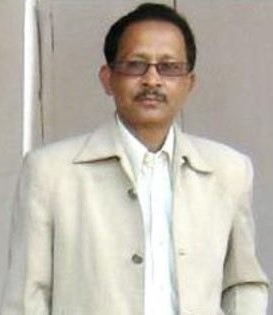
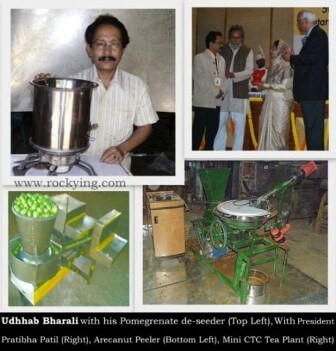
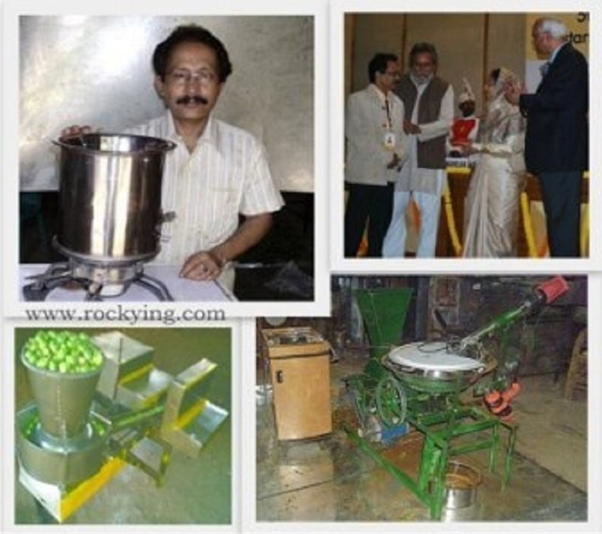
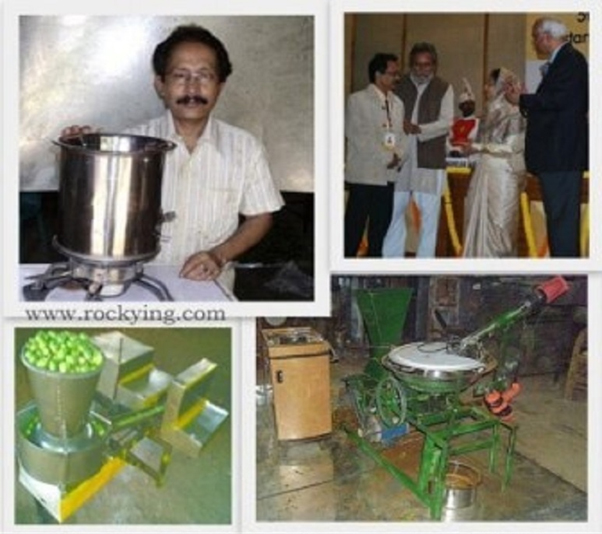
    A grassroot innovator from Assam, today Uddhab Bharali is known for more than 150 innovations to his name such as paddy thresher, cane stripping machine, pomegranate de-seeder and low-cost incinerator.

    How did it all start?

    While Bharali was good at academics, the engineering aspirant had to drop out of college during his final year owing to financial hardships. To help his father in repaying debts, he experimented with innovation and developed new tools — an interest that Bharali had, even as a child.

    However, his first innovation came in 1988, when he developed a polythene making machine for the tea industry. Till then, Lakhimpur in Assam was a zero industries district, and at the time only the tea industry was booming. They required polythene covers in bulk and instead of buying a machine which would cost him lakhs of rupees, Bharali developed his very own for about Rs 65,000.
    The beginning…

    The success of the polythene cover making machine gave him the confidence he needed. To come up with his innovative products, Bharali, like many others, relied on ‘jugaad’ where he used cheap, easy to find materials to develop products which are sustainable and efficient. By 1995, Bharali had paid-off all his father’s debt and got a job of looking after the machinery used in a hydropower project in Arunachal Pradesh. But it was short lived as he had to return back to his hometown after the news of his elder brother’s death.

    Realising he was the only bread earner for his family, Bharali had to make ends meet. Between the 1990s and mid-2000s, he developed 24 products which focused on helping farmers. Though Bharali wanted to develop or innovate for other sectors too, but the demand was huge from the farm sector. From developing different kinds of peelers, re-designing Assamese paddy grinder to cutters for tea-leaves, he took extra effort to simplify agricultural processes for the farming community.

    Identity as an inventor

    Bharali’s ultimate recognition came in 2006, but not before the serial inventor designed and prototyped an entire range of mechanical innovations. Bharali’s pomegranate seed peeling machine, which he designed, garnered accolades and appreciation not only from India but also from across the world. Truly one of its kind, the machine was designed to separate the outer skin from the thinner membrane without causing any damage to the seeds. The machine was an instant hit with orders pouring in for this unique invention from Japan, US and Turkey.

    Some of Bharali’s other inventions include: an arecanut peeling device, and the Cassava Peeler among others. The basic idea behind Bharali’s inventions was to reduce hours of back-breaking labour that farmers put in day and night; thus, making these inventions a hit with the farming community and those engaged in agricultural labour. In addition to these, he has also invented remi recortication machine, garlic peeling machine, tobacco leaf cutter, paddy thresher, cane stripping machine, brass utensil polishing machine, safed musli peeling machine, and jatropha de-seeder. These inventions are popular abroad and local authorities like the Central Silk Board, North Eastern Region Community Resource Management Project and the National Innovation Foundation have helped Bharali to install these new machines. Bharali have recently developed a red cardamom dryer for the Spice Board of India, and a seed extractor for bananas for Institute of Advanced Study in Science and Technology.

    For a cause

    Despite his clients which consist of government bodies and research institutes, Bharali spends some of his time working for the betterment of the underprivileged. Keeping with this, he has started a shelter facility in his area, as well as a feeding programme. Bharali has also developed a number of machines for the differently-abled which helps them enhance their quality of life. Apart from being an innovator, he is a guest lecturer at a number of colleges and universities in Assam and all across India. A winner of many awards and recognitions, Bharali is far from retiring as his quest for knowledge and innovation is helping in bettering the society.

    Dr Shobha Tawade

    Team, ScienceNow


  • Cultivation of Microalgae in Industrial Waste Water

    Cultivation of Microalgae in Industrial Waste Water

    The development of autotrophic green algae took place 3.5 billion years ago. From the ancient times to the present the manifold algal species remain more important than most people realize. Algae are a diverse group of photosynthetic aquatic organisms belonging to the kingdom Plantae. These organisms are present widely throughout the earth and serve as an unexplored source of beneficial applications. The innovative method of Cultivation of Microalgae is developed using the Industrial Waste water as media source. The technique will bring in sustainability as well as help in the production of Microalgae in a very cost effective manner

    Algae

    Algae present in the oceans, rivers and lakes of the world are thought to produce about half of the oxygen produced on the planet. The algal species are adapted to extreme environmental conditions and diverse habitats which has made them tolerant against elevated nutrient levels.

    Microalgae are small eukaryotic organisms which are found in a range of habitats such as marine or freshwater ecosystems and are responsible for the significant portion of ocean’s biogeochemical cycling. Microalgae and cyanobacterial species have a wide ecological role in assuring survival of life on earth. These organisms can perform photosynthesis due to the presence of a range of photosynthetic pigments. Microalgae utilize sunlight and CO2 to generate a variety of organic molecules and efficient biomass.

    Pollution

    Water pollution is a widespread problem which occurs when harmful substances such as chemicals, organic wastes, domestic wastes, xenobiotics, micro-organisms etc. are released into the water bodies. This results in deterioration of water quality and renders it to be toxic to humans and the environment. Surface water pollution has become a serious problem in India due to increasing human activities which has affected the quality of rivers and lakes. Industrialization, Civilization and the living standards of people are the factors related to water pollution.

    Industrial Waste Water

    Industrial waste water is generated by manufacturing or industrial processes. The waste water generated in specific industries can be a good source of nutrients for algal cultivation. After the treatment, this industrial effluent is let out into brooks and ditches. Even after the costly treatment processes incorporated by industries, the treated water does not meet the required standards of usable water. This adds to the amount of waste water pollution.

    Microalga

    Certain algal strains are capable of growing in industrial treated waste water as well as untreated waste water. Algal cultivation technology involves extensive usage of water resources for media preparation, washing or cleaning of bioreactors during maintenance. Incorporation of industrial waste water to satisfy the water demands of algal cultivation reduces dependency on water resources.

    Waste Water as Media

    Reuse of this waste water for cultivation of algae is a novel technology that serves the idea of conservation of natural resources and building of sustainable techniques. Reclaiming industrial waste water, treating it and reusing it can provide alternative supply in place of water requirements. Reuse and recycling of waste water enhances water security, sustainability, resilience and provides an opportunity to control the wastage of industrial water.

    Even by the expensive treatment processes followed by the industries, treated water remains far away from the parameters of usable water. Post ETP treated industrial effluent water is let out into brooks and ditches which leads to the wastage of water and resources used in the treatment process.

    Algal Culture

    Microalgae possess inbuilt mechanism to capture CO2 from the atmosphere even in smallest concentration. This mechanism is referred to as Carbon Capture Mechanism (CCM). These micro-algae have the ability to absorb and accumulate nutrients such as nitrates, phosphates, heavy metal contaminants, organic and inorganic pollutants from wastewater sources. Also, they show high nutrient removal efficiency from wastewater. Microalgal species grow rapidly and have high photosynthetic efficiency to produce various bioproducts which makes them an appropriate candidate for serving as industrial raw materials. Microalgae can be grown in Industrial waste water by capturing carbon from atmosphere.

    Novel solution

    The water needs and resources should be managed efficiently which is a very crucial step towards achieving the country’s water mission goals. Reusing and recycling our water resources is essential in attaining sustainable development. The proposed Technology will benefit production of algae in industrial waste water to produce algal biomass . The novelty even leads to Sustainable Development.

    -Swapnil Kadam


  • Innovation Conclave and Innovation Awards

    Innovation Conclave and Innovation Awards

    Kelkar Education Trust’s V G Vaze College (Autonomous), Mulund (e), Mumbai and Scientific Research Centre, Mulund (e), Mumbai organized an Innovation Conclave celebrating Excellence in Innovations.

    The Progreamme was held on 26th Jan 2024, the Republic Day on which India is entering 75th year of establishment of Indian Republic. On this auspicious occasion the Innovation Conclave is organised to celebrate Excellence in Innovation by holding a Plenary Session on Innovations in India. Noted Scientists, Industry and Media experts participated in the Plenary Session deliberating on Innovation, Incubation, VCs and Start-ups and in the conclave Innovation Excellence Awards were given to Innovators in the fields of Science and Technology.

    The Programme was jointly organised by V G Vaze College and Scientific Research Centre, when the college is entering its 40th Year of its establishment and the Scientific Research Centre is a post Silver-Jubilee Premier Research organization in the country.

    The Programme was organised by Divya Media, Thane


    Team Science Now

  • Innovation Conclave and Innovation Awards

    Innovation Conclave and Innovation Awards

    Kelkar Education Trust’s V G Vaze College (Autonomous), Mulund (e), Mumbai and Scientific Research Centre, Mulund (e), Mumbai organized an Innovation Conclave celebrating Excellence in Innovations.

    The Progreamme was held on 26th Jan 2024, the Republic Day on which India is entering 75th year of establishment of Indian Republic. On this auspicious occasion the Innovation Conclave is organised to celebrate Excellence in Innovation by holding a Plenary Session on Innovations in India. Noted Scientists, Industry and Media experts participated in the Plenary Session deliberating on Innovation, Incubation, VCs and Start-ups and in the conclave Innovation Excellence Awards were given to Innovators in the fields of Science and Technology.

    The Programme was jointly organised by V G Vaze College and Scientific Research Centre, when the college is entering its 40th Year of its establishment and the Scientific Research Centre is a post Silver-Jubilee Premier Research organization in the country.

    The Programme was organised by Divya Media, Thane

  • Tree Climbing Bike

    Innovation

    Tree Climbing Bike

    A farmer-turned-inventor has developed a bike that can scale really tall trees up and down with ease…

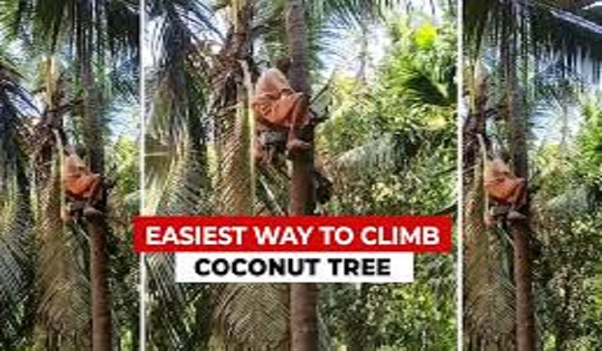
    A few months back, the video of a farmer climbing the tree with the help of a machine went viral on social media. The video was of K Ganapati Bhat, a farmer from a small village of Komali in Sajipamunnur, Karnataka, who has developed a manned machine to climb the tree and to spray pesticides or pluck bunches of areca nut, without taxing any muscles or bruising arms or legs!

    The Innovator

    A Science graduate in Physics, Chemistry and Maths, Ganapati Bhat came up with the idea of developing a machine to overcome shortage of labourers in areacanut plantations. His manned machine is based on the model of a bike through which one can scale the trees up and down with ease. Ganapati Bhat said that the use of the machine was tested on his farmland on a trial basis recently, and it worked without any problem. In fact, after the video was circulated by his daughter on the social media, he has started receiving calls from across the globe for placing orders for the supply of the machine.

    The Machine

    The machine weighs 28 kg and has a two-stroke engine. It has hydraulic drum brakes, gears, double chain, seat and safety belt. Wearing safety belt, any person weighing up to 80 kg can climb the tree within 30 seconds just by the press of a button. Similarly, he/she can alight from the tree by switching off the engine with ease. The use of hydraulic drum with shock absorber in the engine ensures that there is no harm to life, even if the engine suddenly slips to the ground. The engine runs on petrol and with one litre petrol, you are able to climb around 80 trees. The engine runs on petrol. For one litre petrol, one need to use 40 ml engine oil. With one litre petrol, you can climb 80 trees, if you weigh around 50-60 kg.

    Economically Effective

    On an average, a labourer had to be paid Rs 2,000 per day for climbing and spraying pesticides. On an average, a labourer climbs 35 to 40 trees manually. But this scooter is at your disposal any time and for any number of uses. Pegged at a cost of Rs 75,000 per unit, the vehicle comes with a handle and a brake as well as a clutch for the smooth movement of the machine. Along with it, it has an indicator to show petrol and oil content. By sitting on one arecanut tree, one can spray pesticides to several trees nearby.

    Farmer Saviour 

    The machine will provide solution to problems by minimising the role of human labour in the operation of spraying pesticides and harvesting the crops. Bhat says even women can climb the tree with ease as the machine is quite safe as it has been tested on more than 2000 trees in his farmland. But he warns farmers or for that matter anybody to try this Bike machine on trees with algae, as it does not work on mushy or moisture-based surfaces. So, he is now planning to modify the machine to use it for climbing coconut trees as well.

    Many firms have started getting in touch with Bhat for manufacture of his innovative tree scooter. With further modifications, the machine will be of great help to farmers, who are facing acute shortage of labour for activities like harvesting and for spraying pesticide.

    -Manoj Mahanta

    -Team, ScienceNow Digital

  • Innovation – The Serial Inventor

    Innovation

    The Serial Inventor

    Padma Shri Uddhab Bharali from Assam has over 150 inventions under his belt, and continues to make life easier for people through his machines…

    A grass root innovator from Assam, today Uddhab Bharali is known for more than 150 innovations to hisname such as paddy thresher, cane stripping machine, pomegranate de-seeder and low-cost incinerator.

    How did it all start?

    While Bharali was good at academics, the engineering aspirant had to drop out of college during his final year owing to financial hardships. To help his father in repaying debts, he experimented with innovation and developed new tools — an interest that Bharali had, even as a child.

    However, his first innovation came in 1988, when he developed a polythene making machine for the tea industry. Till then, Lakhimpur in Assam was a zero industries district, and at the time only the tea industry was booming. They required polythene covers in bulk and instead of buying a machine which would cost him lakhs of rupees, Bharali developed his very own for about Rs 65,000.

    The beginning…

    The success of the polythene cover making machine gave him the confidence he needed. To come upwith his innovative products, Bharali, like many others, relied on ‘jugaad’ where he used cheap, easy to find materials to develop products which are sustainable and efficient. By 1995, Bharali had paid-off all his father’s debt and got a job of looking after the machinery used in a hydropower project in Arunachal Pradesh. But it was short lived as he had to return back to his hometown after the news of his elder brother’s death.

    Realising he was the only bread earner for his family, Bharali had to make ends meet. Between the 1990s and mid-2000s, he developed 24 products which focused on helping farmers. Though Bharali wanted to develop or innovate for other sectors too, but the demand was huge from the farm sector.

    From developing different kinds of peelers, re-designing Assamese paddy grinder to cutters for tea- leaves, he took extra effort to simplify agricultural processes for the farming community. Identity as an inventor

    Bharali’s ultimate recognition came in 2006, but not before the serial inventor designed and prototyped an entire range of mechanical innovations. Bharali’s pomegranate seed peeling machine, which he designed, garnered accolades and appreciation not only from India but also from across the world.

    Truly one of its kind, the machine was designed to separate the outer skin from the thinner membrane without causing any damage to the seeds. The machine was an instant hit with orders pouring in for this unique invention from Japan, US and Turkey.

    Some of Bharali’s other inventions include: an arecanut peeling device, and the Cassava Peeler among others. The basic idea behind Bharali’s inventions was to reduce hours of back-breaking labour that farmers put in day and night; thus, making these inventions a hit with the farming community and those engaged in agricultural labour. In addition to these, he has also invented remi  recortication machine, garlic peeling machine, tobacco leaf cutter, paddy thresher, cane stripping machine, brass utensil polishing machine, safed musli peeling machine, and jatropha de-seeder. These inventions are popular abroad and local authorities like the Central Silk Board, North Eastern Region Community Resource Management Project and the National Innovation Foundation have helped Bharali to install these new machines. Bharali have recently developed a red cardamom dryer for the Spice Board of India, and a seed extractor for bananas for Institute of Advanced Study in Science and Technology.

    For a cause

    Despite his clients which consist of government bodies and research institutes, Bharali spends some of his time working for the betterment of the underprivileged. Keeping with this, he has started a shelter facility in his area, as well as a feeding programme. Bharali has also developed a number of machines for the differently-abled which helps them enhance their quality of life. Apart from being an innovator, he is a guest lecturer at a number of colleges and universities in Assam and all across India. A winner of many awards and recognitions, Bharali is far from retiring as his quest for knowledge and innovation is helping in bettering the society.

    -Dr Shobha Tawde

    Team ScienceNow Digital

  • Innovation

    The Serial Inventor

    Padma Shri Uddhab Bharali from Assam has over 150 inventions under his belt, and continues to make life easier for people through his machines…

    A grassroot innovator from Assam, today Uddhab Bharali is known for more than 150 innovations to his name such as paddy thresher, cane stripping machine, pomegranate de-seeder and low-cost incinerator.

    How did it all start?

    While Bharali was good at academics, the engineering aspirant had to drop out of college during his final year owing to financial hardships. To help his father in repaying debts, he experimented with innovation and developed new tools — an interest that Bharali had, even as a child.

    However, his first innovation came in 1988, when he developed a polythene making machine for the tea industry. Till then, Lakhimpur in Assam was a zero industries district, and at the time only the tea industry was booming. They required polythene covers in bulk and instead of buying a machine which would cost him lakhs of rupees, Bharali developed his very own for about Rs 65,000.

    The beginning…

    The success of the polythene cover making machine gave him the confidence he needed. To come up with his innovative products, Bharali, like many others, relied on ‘jugaad’ where he used cheap, easy to find materials to develop products which are sustainable and efficient. By 1995, Bharali had paid-off all his father’s debt and got a job of looking after the machinery used in a hydropower project in Arunachal Pradesh. But it was short lived as he had to return back to his hometown after the news of his elder brother’s death.

    Realising he was the only bread earner for his family, Bharali had to make ends meet. Between the 1990s and mid-2000s, he developed 24 products which focused on helping farmers. Though Bharali wanted to develop or innovate for other sectors too, but the demand was huge from the farm sector. From developing different kinds of peelers, re-designing Assamese paddy grinder to cutters for tea-leaves, he took extra effort to simplify agricultural processes for the farming community.

    Identity as an inventor

    Bharali’s ultimate recognition came in 2006, but not before the serial inventor designed and prototyped an entire range of mechanical innovations. Bharali’s pomegranate seed peeling machine, which he designed, garnered accolades and appreciation not only from India but also from across the world. Truly one of its kind, the machine was designed to separate the outer skin from the thinner membrane without causing any damage to the seeds. The machine was an instant hit with orders pouring in for this unique invention from Japan, US and Turkey.

    Some of Bharali’s other inventions include: an arecanut peeling device, and the Cassava Peeler among others. The basic idea behind Bharali’s inventions was to reduce hours of back-breaking labour that farmers put in day and night; thus, making these inventions a hit with the farming community and those engaged in agricultural labour. In addition to these, he has also invented remi recortication machine, garlic peeling machine, tobacco leaf cutter, paddy thresher, cane stripping machine, brass utensil polishing machine, safed musli peeling machine, and jatropha de-seeder. These inventions are popular abroad and local authorities like the Central Silk Board, North Eastern Region Community Resource Management Project and the National Innovation Foundation have helped Bharali to install these new machines. Bharali have recently developed a red cardamom dryer for the Spice Board of India, and a seed extractor for bananas for Institute of Advanced Study in Science and Technology.

    For a cause

    Despite his clients which consist of government bodies and research institutes, Bharali spends some of his time working for the betterment of the underprivileged. Keeping with this, he has started a shelter facility in his area, as well as a feeding programme. Bharali has also developed a number of machines for the differently-abled which helps them enhance their quality of life. Apart from being an innovator, he is a guest lecturer at a number of colleges and universities in Assam and all across India. A winner of many awards and recognitions, Bharali is far from retiring as his quest for knowledge and innovation is helping in bettering the society.

    Dr Shobha Tawade

    Team, ScienceNow

  • Innovation

    Cycling Across Rivers & Floods

    India has periodically faced severe flooding problems in several regions. During such calamities when transportation network is completely disrupted, low-cost amphibian bicycles could help people overcome tragedy and return to normalcy….  

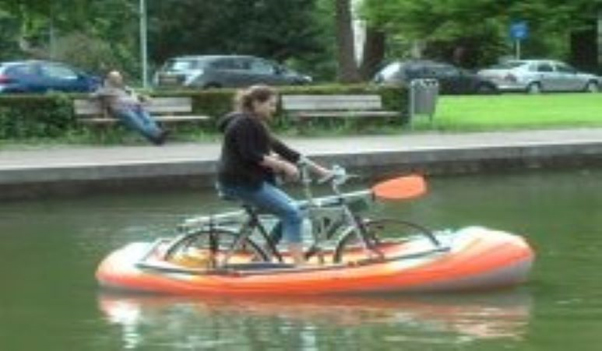
    When Mohammad Saidullah was unable to meet his wife owing to overcrowded boats, he decided to find a permanent solution to his routine problem – he invented an amphibious bicycle, the one that could be used on land and water. His ‘Noor bicycle’ (named after his wife) became the talk-of-the-town overnight with the media world happily flashing the news across channels. Even President APJ Abdul Kalam lauded his ingenuity taking a serious note of his innovation and recommending it for defence use. Subsequently, Saidullah received the National Innovation Foundation (NIF) lifetime achievement award for it, and NIF acquired the bicycle for further studies and design development on the personal instructions of President Kalam. 

    This may not have been the first time that someone passionately crossed the water hurdle against all odds to: meet his beloved, attend school, reach office or marketplace…But what makes the story unique is where others used their grit and determination Saidullah put his ingenuity to good use. Completely adhering to Greek philosopher Plato’s words, “Necessity is the mother of invention” Saidullah used his limited resources to find solution to a ‘universal’ problem. Certainly, it is this extraordinary spirit of Saidullah that motivated him to build a fan that runs without power, a mini-tractor for material transportation, a fodder cutter-operated centrifugal pump, a mini-turbine for electricity generation, etc.

    Amphibious Bicycle Design

    Majority modern-day amphibious bicycle designs proposed by several grass-root innovators in India and abroad appear to be strikingly similar. To understand more about how amphibious bicycle designs have evolved over the years, we look at some of the popular designs:

    • CYCLOMER BICYCLE: First introduced in 1932 by the French, who were then the helm of bicycle design and development across Europe, with some major structural changes in the bicycle design. Its looks were very different from those of the conventional bicycle, with front and rear buoyant bells as wheels. When in water, the bike gained its stability owing to the four smaller bells extended out from the bike’s frame.


    • NOOR BIKE: The bike uses four rectangular air-filled metal floats for buoyance, and a paddle system in the rear wheel. These floats were made from recycled metal containers and are attached directly to the bike’s main frame. Here there is no major tinkering with the bike’s conventional design expect for the attachment of paddle to the rear wheel spokes.


    • SHUTTLE BIKE: This project to build an all-weather, easy-to-carry amphibious bike was undertaken in 1992, near Milan in Italy. The Italian engineering company, SBK Engineering designed the Shuttle Bike with two inflated floats on either sides. The cyclist could carry the floats in his bag-pack while on land, and these could be inflated using pumps and then fastening it to the bicycle frame cross the water body. All the accessories and floats weighing approximately 11 kg could be easily dismantled in about 10-minutes and carried in a bag-pack.

    Designing amphibious bicycle – Critical factors

    • Buoyance: It is an upward force exerted by a fluid that opposes the weight of an immersed object. Moreover, the pressure increases with depth as a result of the weight of the overlying fluid. In short, an object experiences greater pressure at the bottom than at the top.

    Buoyance force extended by the water on the bicycle while running in the water ought to be balanced, else it will be unstable or topple. The floats attached on either sides balance the buoyance force exerted while running in the water.

    • Drag: It refers to forces acting opposite to the relative motion of the moving object with respect to a surrounding fluid. This force exists either between two different types of fluids or between a fluid and a solid surface.

    Drag force balancing is critical while moving bicycle in the water. Invariably, the shape of the front float should be such that the bicycle experiences minimum drag force while moving.  So also, the blades on the spokes of rear wheel should be designed in accordance to the drag force it experiences.

    In Conclusion:

    Designing of an affordable amphibious bicycle can help millions of poor people living in the flood prone areas across the globe overcome their day-to-day commuting problems, and probably, India stands to gain the most. The country is blessed with rich monsoon with several parts receive abundance of rain, eventually leading to flooding. During these periods of calamity, often there is a total breakdown of transportation services. People are forced to use boats, which are limited and scarce considering the population of those affected. The amphibian bicycle could prove to be an optimal solution, and its high time we dedicatedly worked on creating a truly world-class, low-cost “Indian Amphibian Bicycle’.


    -Noel Fernandez

    Team ScienceNow

  • Portable Water Filter

    Innovation Competition to encourage the Novel innovations and to promote Start-ups was convened in Mumbai by Bhanushali Chamber of Commerce, Mumbai. The Innovations were awarded with Prizes.

    In this issue we are bringing to you a novel innovation, Mobile Water Purifier which leads to sustainable development…

    Introduction

    The issue of potable water is a major concern. Especially during the scotching summer heat, the need of pure water is very eminent. The water needs to be pure and safe. The issue is very effectively and innovatively handled by Mr Rohit Shah of Kalki Ecosphere. The innovative solution is adjudged as the Best Sustainable Solution in providing easy potable drinking water at the BCOC Innovation Meet

    Need

    The Mobile water Filter is a sustainable solution for reducing dependency on packaged water bottles. Thecontribution in problem of single use plastic by bottled water is more than 12% and day by dayit’s increasing. Each second more than 20,000 bottles are produced and dumped in the landfillsand oceans. The speed is so alarming that need very urgent attention to address.

    The water consumed from the Plastic Bottles even leads to several health issues.

    Innovation

    InnovatorMr. Rohit Shah founder of Kalki Ecosphere, a DPIIT recognized start-up, observed that Government is spending huge amount on water treatment plantsto provide safe water, but this water is not fit for drinking purpose because of basic nature ofwater to attract dirt and get contaminated with bacteria and viruses.

    There is need for defence to take this water for drinking purpose. There are water Taps everywhere in publicareas, railway stations offices etc. The water from these sources is even not safe to drink.

    People have no option but to buy very expensive bottledwater just because there is absence of any Efficient, Reliable and Convenient portableor mobile water purifier which can be easily carried along and plugged to any water tap andget optimum quality of drinking water.

    It is also observed that these bottles have hazardouseffect on human health because the micro plastic get dissolved in stored water during production, distribution till it reaches to final consumer.

    The Device

    Personal device for which consumer himself isresponsible for maintenance, just like Mobile Phone, is developedwhich is  a very efficient, reliable and Convenient Mobile Water purifier which can

    be easily carried along and can be plugged to any water taps or narrow bottles mouth like soda

    bottles to get the pure water. It is very handy therefore can be used by people on the move, Hikers or trekkersand the younger generation where there are no taps available.

    Testing`

    The Devise is tested at the recognized NABL accredited laboratory and the results are miraculous with elimination of 99.9999% of Bacteria, Protozoans and 99.99% Viruse Apart frommicrobiology, it can also address the issue of  Heavy metals, Pesticides, Toxic materials, Chlorine, micro plastic and to top it bad Odour and bad taste of the water is removed effectively.

    The product is very handy and versatile to use any where that it can really helpto

    our environment and human health.

    -Team ScienceNow


  • Cultivation of Microalgae in Industrial Waste Water

    Cultivation of Microalgae in Industrial Waste Water

    Innovation Competition to encourage the Novel innovations and to promote Start-ups was convened in Mumbai by Bhanushali Chamber of Commerce, Mumbai. The Innovations were awarded with Prizes.

    In this issue we are bringing to you novel innovation on Algal Cultivation which leads to sustainable development…

    Introduction

    The development of autotrophic green algae took place 3.5 billion years ago. From the ancient times to the present the manifold algal species remain more important than most people realize. Algae are a diverse group of photosynthetic aquatic organisms belonging to the kingdom Plantae. These organisms are present widely throughout the earth and serve as an unexplored source of beneficial applications. The innovative method of Cultivation of Microalgae is developed by Swapnil Kadam using the Industrial Waste water as media source. The technique will bring in sustainability as well as help in the production of Microalgae in a very cost effective manner

    Algae

    Algae present in the oceans, rivers and lakes of the world are thought to produce about half of the oxygen produced on the planet. The algal species are adapted to extreme environmental conditions and diverse habitats which has made them tolerant against elevated nutrient levels.

    Microalgae are small eukaryotic organisms which are found in a range of habitats such as marine or freshwater ecosystems and are responsible for the significant portion of ocean’s biogeochemical cycling. Microalgae and cyanobacterial species have a wide ecological role in assuring survival of life on earth. These organisms can perform photosynthesis due to the presence of a range of photosynthetic pigments. Microalgae utilize sunlight and CO2 to generate a variety of organic molecules and efficient biomass.

    Pollution

    Water pollution is a widespread problem which occurs when harmful substances such as chemicals, organic wastes, domestic wastes, xenobiotics, micro-organisms etc. are released into the water bodies. This results in deterioration of water quality and renders it to be toxic to humans and the environment. Surface water pollution has become a serious problem in India due to increasing human activities which has affected the quality of rivers and lakes. Industrialization, Civilization and the living standards of people are the factors related to water pollution.

    Industrial Waste Water

    Industrial waste water is generated by manufacturing or industrial processes. The waste water generated in specific industries can be a good source of nutrients for algal cultivation. After the treatment, this industrial effluent is let out into brooks and ditches. Even after the costly treatment processes incorporated by industries, the treated water does not meet the required standards of usable water. This adds to the amount of waste water pollution.

    Microalga

    Certain algal strains are capable of growing in industrial treated waste water as well as untreated waste water. Algal cultivation technology involves extensive usage of water resources for media preparation, washing or cleaning of bioreactors during maintenance. Incorporation of industrial waste water to satisfy the water demands of algal cultivation reduces dependency on water resources.

    Waste Water as Media

    Reuse of this waste water for cultivation of algae is a novel technology that serves the idea of conservation of natural resources and building of sustainable techniques. Reclaiming industrial waste water, treating it and reusing it can provide alternative supply in place of water requirements. Reuse and recycling of waste water enhances water security, sustainability, resilience and provides an opportunity to control the wastage of industrial water.

    Even by the expensive treatment processes followed by the industries, treated water remains far away from the parameters of usable water. Post ETP treated industrial effluent water is let out into brooks and ditches which leads to the wastage of water and resources used in the treatment process.

    Algal Culture

    Microalgae possess inbuilt mechanism to capture CO2 from the atmosphere even in smallest concentration. This mechanism is referred to as Carbon Capture Mechanism (CCM). These micro-algae have the ability to absorb and accumulate nutrients such as nitrates, phosphates, heavy metal contaminants, organic and inorganic pollutants from wastewater sources. Also, they show high nutrient removal efficiency from wastewater. Microalgal species grow rapidly and have high photosynthetic efficiency to produce various bioproducts which makes them an appropriate candidate for serving as industrial raw materials. Microalgae can be grown in Industrial waste water by capturing carbon from atmosphere.

    Novel solution

    The water needs and resources should be managed efficiently which is a very crucial step towards achieving the country’s water mission goals. Reusing and recycling our water resources is essential in attaining sustainable development. The proposed Technology will benefit production of algae in industrial waste water to produce algal biomass . The novelty even leads to Sustainable Development.

    -Team ScienceNow Digital