
science share account_circle

Category: Latest

  • AI Moves Deeper into Biomedical Research

    AI Moves Deeper into Biomedical Research

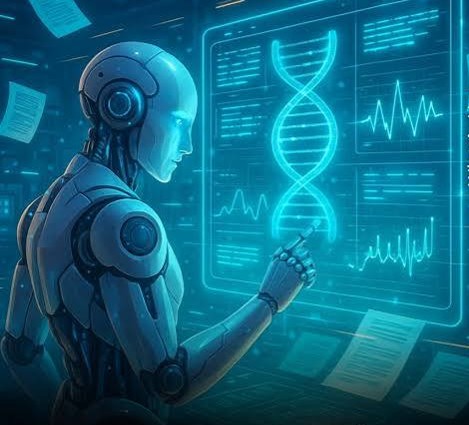
    Artificial intelligence is rapidly becoming an important tool in biomedical research, helping scientists analyse complex biological data and accelerate the search for new treatments. Modern AI systems can examine genomic sequences, protein structures, medical images and clinical datasets at a scale that would be difficult to manage manually.

    Researchers are increasingly using foundation models to identify disease-related patterns, predict how proteins interact and suggest promising drug candidates. AI can also help connect information from different areas of biology, potentially revealing relationships between genes, proteins, cells and diseases.

    The technology is beginning to move beyond prediction. Scientists are developing AI-driven “virtual cells” and digital models of biological systems that can be used to test hypotheses before laboratory experiments. Such approaches could reduce the time and cost involved in early-stage research.

    However, AI-generated predictions still require rigorous experimental validation. Questions surrounding data quality, reproducibility, privacy and bias also remain important.

    As computing power, biological datasets and experimental technologies advance, the combination of AI and laboratory science could reshape how researchers understand disease and develop new therapies.

  • India’s Space Sector Enters a New Public–Private Era

    India’s Space Sector Enters a New Public–Private Era

    India’s space programme is entering a new phase in which ISRO, government agencies, start-ups and private industry increasingly work together across the space value chain. Reforms introduced in 2020 and the Indian Space Policy 2023 opened activities such as satellite development, launch vehicles and space-based services to non-government entities. IN-SPACe was established as the nodal agency to promote, authorise and supervise private participation.

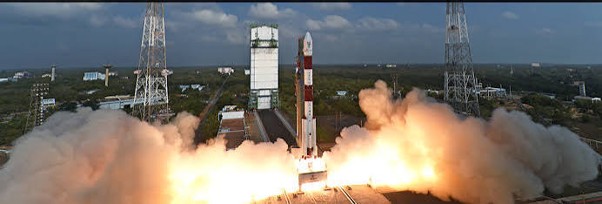
    The transition reached a significant milestone on 18 July 2026, when Skyroot Aerospace’s Vikram-I became the first privately developed Indian rocket to achieve an orbital launch from Indian soil.

    ISRO says the changing structure is intended to complement, rather than replace, its role. The organisation will continue concentrating on advanced research, strategic missions, space science and next-generation technologies, while industry can scale mature technologies and commercial services.

    With more than 440 space start-ups reported in 2026, India’s emerging public–private ecosystem is reshaping the country’s space industry and expanding opportunities for innovation, manufacturing and commercialisation.