science share account_circle

Category: Latest

  •  Science News – August

     Science News – August

    The happenings of Science and Science News during August

     Alien spaceship metal pieces found in Pacific Ocean

    A captivating discovery has emerged as a scientist recently unearthed metal fragments at the depths of the Pacific Ocean. Avi Loeb, an esteemed expert, has put forth an intriguing hypothesis, suggesting that these enigmatic pieces might have originated from outer space, traversing Earth’s atmosphere. Through meticulous investigation, Loeb has concluded that the unearthed metal fragments bear no resemblance to any earthly materials. Notably, their composition bears a striking similarity to an unidentified object that crash-landed on Earth in 2014, famously known as the fireball CNEOS 20140108 (CNEOS referring to the Center for Near Earth Object Studies).

    A separate celestial phenomenon, officially designated as 1I/2017U1 but colloquially referred to as “‘Oumuamua,” also emanated from the farthest reaches of our solar system. Scientists were captivated by its peculiar shape, although photographic evidence could not definitively ascertain its form. Clues gleaned from light reflections and rotational behavior suggested it could resemble a lengthy, slender cigar or a flat, plate-like structure when viewed from different angles. Consequently, there is a prevailing hypothesis that “‘Oumuamua” is of extraterrestrial origin. However, it is important to note that the small iron fragments discovered at the ocean floor, approximately the size of a penny, cannot be definitively attributed to a spacecraft.

    China is drilling another 10,000-metre hole

    China has begun drilling a 10,000-metre hole in the ground for the second time this year as it seeks natural gas reserves. PetroChina Southwest Oil and Gasfield Company began drilling the Shendi Chuanke-1 Well in Sichuan province, with a designed depth of 10,520 metres (6.5 miles), Xinhua News Agency reported. The Sichuan project aims to find ultra-deep reserves of natural gas, while the earlier well was described as experimental, with its primary purpose being to test drilling technologies and provide data on the Earth’s internal structure.

    Sichuan has some of China’s largest shale gas reserves. However, due to the region’s difficult terrain and complex underground geology, Chinese firms have not been able to fully explore the potential of these reserves.

    Ultra-deep wells, which are more than 9,000 metres deep, are considered to be the most technically challenging drilling projects in the oil and gas engineering industry. Drilling in ultra-deep wells is replete with severe challenges such as deep burial depth, narrow pressure window, thick gravel layer and salt bed, complex multi-pressure system, and high temperature and pressure. 

    Earth’s atmosphere can clean itself

    Researchers have found that a strong electric field between airborne water droplets and surrounding air can create a molecule called hydroxide, which breaks down pollutants. According to researchers at the University of California, Irvine (UCI), the Earth’s atmosphere can clean itself. It states that a strong electric field between airborne water droplets and surrounding air can create a molecule called hydroxide (OH) through a previously unknown process. This unique set of atmospheric conditions is able to facilitate the atmosphere’s self-purification process by neutralising greenhouse gases and chemicals – even in the absence of sunlight.

    As explained by Sergey Nizkorodov, a professor of chemistry at UCI, the presence of OH is essential to oxidise hydrocarbons and stop them from accumulating in the atmosphere. It can also trigger reactions that decompose airborne pollutants and eliminate sulphur dioxide and nitric oxide. Until recently, it was widely believed that OH is generated via photochemistry or metal catalysts, but the new findings challenge this assumption by proving that it can be created spontaneously.

    ISRO’s new rocket testing facility ‘HAVA’

    Indian Space Research Organisation chairman S Somanath on Thursday said there will be an announcement soon about the space agency’s testing facility with regard to the hypersonic air breathing vehicle ‘Hava’. The space scientist, however, emphasises that ISRO was not focused on air breathing technology because it wants to deal more with space. Air-breathing engines are those that take in air from its surroundings in order to burn fuel, such as jet engines. It is therefore not suitable for space travel as there is no air/atmosphere in space.

    ‘HAVA’ stands for Hypersonic Air Breathing Vehicle with Air Integration System. “If air is there, that is not space,” Somanath explained. “ISRO is not much into air breathing technology primarily because we don’t want to dwell in air, we want to go to space. But we develop the technology because it is a very high-end technology in terms of capabilities that we have — in terms of combustion etc. So we are testing the engine. We are testing in our Mahendragiri facility where we have established a hypersonic test facility,” he added.

    Time in early universe was five times slower

    Astronomers have peered back to the dawn of the cosmos to observe time ticking five times more slowly in the early universe than it does now — finally proving a prediction that Albert Einstein made more than a century ago. Researchers spotted the extreme slow-motion effect in data taken from bright cosmic beacons known as quasars dating to when the universe was just 1 billion years old — less than one-tenth its current age. The researchers published their findings July 3 in the journal Nature Astronomy.

    “Looking back to a time when the universe was just over a billion years old, we see time appearing to flow five times slower,” lead author Geraint Lewis, a professor of astrophysics at the University of Sydney, said in a statement. “If you were there, in this infant universe, one second would seem like one second — but from our position, more than 12 billion years into the future, that early time appears to drag.” The reason time appears to move more slowly in the early universe, at least from the perspective of observers in the present day, was first presented by Einstein in his 1915 theory of general relativity.

    First abort mission of ‘Gaganyaan’ in August-end

    With the successful launch of Chandrayaan-3, the Indian Space Research Organisation (ISRO) will now focus on the country’s first manned mission to space, Gaganyaan, and has planned to conduct the first abort mission for the ambitious project by the end of August. A modified version of ISRO’s most-reliable rocket LVM3, which successfully placed the Chandrayaan-3 spacecraft into the intended orbit on July 14, with human rating requirements will be used to launch Gaganyaan as well, ISRO scientists said.

    Through the Gaganyaan mission, ISRO wants to demonstrate its capabilities of human spaceflight by sending three crew members to a 400 km Low Earth Orbit with a mission life of three to four days. The first manned spaceflight, which is likely to take place in 2024, will also be launched from the second launchpad of the Satish Dhawan Space Center (SDSC) here.  As the first step towards the launch, ISRO plans to conduct Gaganyaan’s first abort mission in August. “The abort mission will be conducted by the end of August,” ISRO Chairman S Somnath said.

    Scientists urge European Parliament to vote for nature restoration law

    The Nature Restoration Law lives on. The European Parliament waved the proposal through with 336 votes in favour, 300 against and 13 abstentions. The European Commission, the European Parliament and the Council of the EU will now work together on the final version of the rules that will be implemented. The Nature Restoration Law would set legally binding targets to restore degraded ecosystems throughout the continent. Proposed by the European Commission in June 2022, the Nature Restoration Law would require countries to establish recovery measures for 20% of the European Union’s land and sea areas by 2030, and all ecosystems in need of restoration by 2050. It also includes targets for specific habitats and species—such as reversing the decline of pollinating insects by 2030 and restoring seagrass beds and other marine habitats.

    Several heads of natural history museums have also come out in favor of the law, and hundreds of researchers, including Claudet, signed another declaration of support launched by ocean conservationist Enric Sala, which argues that the benefits of nature restoration far exceed its costs. “To help ecosystems recover, we need to take into account scientific evidence,” says marine biologist Emma Cebrian, from the Blanes Center for Advanced Studies, who signed Sala’s statement. “If [policymakers] need us to explain, they can ask us. We’ll go where we’re needed so that decisions aren’t based on fear.” Scientists will be watching anxiously. Claudet says he hopes Europe enshrines into law some of the global biodiversity targets agreed at the United Nations in December 2022.

    Scientists revive ancient worm that had remained frozen for 46,000 years

    Researchers have successfully revived a roundworm that had been frozen for an astonishing 46,000 years. The worm, discovered 40 meters below the Siberian permafrost, is of a previously unknown species and survived in a dormant state known as cryptobiosis. The discovery of this ancient roundworm species underscores the resilience of life and the potential for survival in extreme conditions. It also highlights the significance of preserving biodiversity in our rapidly changing world.

    Five years ago, scientists from the Institute of Physicochemical and Biological Problems in Soil Science in Russia discovered two roundworm species in the Siberian permafrost. One of the researchers, Anastasia Shatilovich, revived two of the worms by rehydrating them with water. She then transported around 100 worms to labs in Germany for further analysis. Radiocarbon analysis of plant material in the sample revealed that the deposits had not thawed since between 45,839 and 47,769 years ago. Genetic analysis conducted by scientists in Dresden and Cologne identified the worms as a new species, named Panagrolaimus kolymaenis.

    Indian scientists discover ancient ocean in Himalayas

    Scientists from the Indian Institute of Science (IISc), Bengaluru, and Niigata University, Japan, have unearthed remnants of an ancient ocean in the Himalayas. The team found water droplets trapped in mineral deposits dating back approximately 600 million years, and the discovery could provide crucial insights into a significant oxygenation event in Earth’s past.

    Scientists theorise that between 700 and 500 million years ago, the Earth underwent a prolonged period of glaciation, known as the Snowball Earth glaciation. This was followed by the Second Great Oxygenation Event, which led to a surge in atmospheric oxygen levels and the evolution of complex life forms. However, the connection between these events has remained elusive due to the scarcity of well-preserved fossils and the disappearance of ancient oceans. The newly discovered marine rocks in the Himalayas could provide some answers.

    The team’s findings suggest that during the Snowball Earth glaciation, sedimentary basins experienced a prolonged calcium deficiency, likely due to reduced riverine input. This lack of calcium led to an increase in magnesium levels, with the resulting magnesium deposits trapping ancient ocean water as they crystallised.

    Two supermoons in August: Why it is a rare celestial event

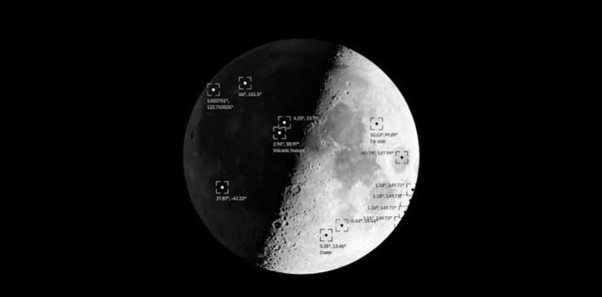
    In a celestial spectacle, August is to witness a major event as the Earth and Moon come closer in their orbits. The unique event will see not one, but two supermoons in August. The enhanced brightness and increased surface visibility of the Moon during the event will enable astronomers to study the Moon’s topography, geological features, and impact craters with greater clarity.

    What is a supermoon?

    A supermoon is a spectacular celestial event where the Moon appears larger and brighter in the sky than usual. This captivating phenomenon occurs when a full or new moon coincides with the Moon’s closest approach to Earth in its elliptical orbit, known as the perigee. During a supermoon, the Moon’s apparent size in the sky can be up to 14% larger and 30% brighter than a regular full moon. As it rises on the horizon, appearing much larger than usual, the supermoon can create an illusion that it is closer to Earth.

    When will supermoon occur?

    The first of these supermoons will rise on August 1, appearing larger and brighter than usual due to its proximity to Earth at just 3,57,530 kilometers away. The second supermoon, also known as a blue moon, will occur on the night of August 30. This moon will be even closer to Earth, at a mere 3,57,344 kilometers distant. The term ‘blue moon’ is used to describe the occurrence of two full moons within the same calendar month, a phenomenon that is quite rare.

    Pathogens frozen for millions of years are waking up

    Researchers have warned that ancient pathogens, frozen for millennia in glaciers, ice caps, and permafrost, could emerge due to global warming as the ice melts and they could pose a significant threat. In a study published in the journal PLOS Computational Biology, researchers used a software called Avida to simulate the release of one type of ancient pathogen into modern biological communities. The results were alarming: 1 per cent of simulated releases of just one dormant pathogen could cause major environmental damage and widespread loss of host organisms worldwide.

    In 2003, bacteria were revived from samples taken from an ice core drilled into an ice cap on the Qinghai-Tibetan plateau, which was over 750,000 years old. In 2014, a giant “zombie” Pithovirus sibericum virus, was revived from 30,000-year-old Siberian permafrost. More recently, in 2016, an anthrax outbreak in western Siberia, which killed thousands of reindeer and affected dozens of people, was attributed to the rapid thawing of Bacillus anthracis spores in permafrost.

    The Earth’s climate is warming at an alarming rate, up to four times faster in colder regions such as the Arctic. This could lead to the release of an estimated four sextillion microorganisms from melting ice each year, including pathogens that can potentially infect modern species.

    ‘Stunning’ discovery: Metals can heal themselves

    Scientists for the first time have witnessed pieces of metal crack, then fuse back together without any human intervention, overturning fundamental scientific theories in the process. If the newly discovered phenomenon can be harnessed, it could usher in an engineering revolution — one in which self-healing engines, bridges and airplanes could reverse damage caused by wear and tear, making them safer and longer-lasting. The research team from Sandia National Laboratories and Texas A&M University described their findings today in the journal Nature. Although scientists have created some self-healing materials, mostly plastics, the notion of a self-healing metal has largely been the domain of science fiction.

    Khalid Hattar, now an associate professor at the University of Tennessee, Knoxville, and Chris Barr, who now works for the Department of Energy’s Office of Nuclear Energy, were running the experiment at Sandia when the discovery was made. They only meant to evaluate how cracks formed and spread through a nanoscale piece of platinum using a specialized electron microscope technique they had developed to repeatedly pull on the ends of the metal 200 times per second. Surprisingly, about 40 minutes into the experiment, the damage reversed course. One end of the crack fused back together as if it was retracing its steps, leaving no trace of the former injury. Over time, the crack regrew along a different direction.

    What is causing the mysterious ‘gravity hole’ in the Indian Ocean?

    While it is easy to imagine the Earth as a perfect sphere that has uniform gravity all over, that is far from the case. But that is not the case; our planet is flat at the poles and it bulges at the equator. Also, it doesn’t have uniform gravity everywhere. For example, there is a massive “gravity hole” in the Indian Ocean and now, researchers have uncovered why that is the case. The strength of the gravitational pull at any part of the world is dependent on the mass of the Earth’s crust, mantle and core beneath that particular region.

    Interestingly, a massive region in the Indian Ocean, about 1,200 kilometres southwest of the southernmost tip of India, has such a low pull of gravity that the sea level of the Indian ocean over the “hole” is around 106 metres below the global average, according to Scientific American. After looking at computer-simulated models of the past 140 million years, they found the remains of an ancient ocean about 965 kilometres below the Earth’s crust, just under Africa, according to BBC. In all the simulations, the researchers found molten rock plumes below Africa, which could potentially have been caused by tectonic plates plunging into the mantle. They believe that these plumes could be the reason behind IOGL.

    -Team ScienceNow

  • Science News

    That happened in Science This Month… A collection of Science News

    Irrigation may be shifting Earth’s rotational axis

    Runoff from irrigation has moved so much water from land to sea that Earth’s rotation might have measurably shifted. Computer simulations suggest that from 1993 through 2010, irrigation alone nudged the North Pole by about 78 centimeters, making irrigation the second largest contributor to polar drift after the ongoing rebound of Earth’s surface following the retreat of glacier.

    Previous studies have suggested that irrigation shifted about 2 trillion metric tons of water from land-based aquifers to the oceans from 1993 through 2010 — enough to raise global sea level more than 6 millimeters. Although seemingly minuscule, that redistribution of water was enough to shift the North Pole just over four centimeters each year on average during that period, the team found. When all sources of water movement are considered — including the runoff of melt water from the Greenland and Antarctic ice sheets — the North Pole drifted about 1.6 meters toward the east coast of Greenland in that time.

    Physicists split bits of sound using quantum mechanics

    Physicists have now turned to quantum effects to split phonons, the smallest bits of sound. The achievement may one day lead to sound-based versions of quantum computers or extremely sensitive measuring devices. Phonons have much in common with photons, the tiniest chunks of light. Turning down the volume of a sound is the same as dialing back the number of phonons, much like dimming a light reduces the number of photons. The very quietest sounds of all consist of individual — and indivisible — phonons.

    Unlike photons, which can travel through empty space, phonons need a medium such as air or water. Phonons can’t be permanently broken into smaller bits. But, as the new experiment showed, they can be temporarily divided into parts using quantum mechanics.

    The feat was achieved with an acoustic beam splitter, a device that allows about half of an impinging torrent of phonons to pass through while the rest get reflected back. But when just one phonon at a time meets the beam splitter, that phonon enters a special quantum state where it goes both ways at once. The simultaneously reflected and transmitted phonon interacts with itself, in a process known as interference, to change where it ultimately ends up.

    Satellite beams solar power down to Earth

    The California Institute of Technology (Caltech) researchers have taken a small but necessary step toward realizing a long-standing dream: harvesting solar energy in space and beaming it down to Earth. A satellite launched in January has steered power in a microwave beam onto targets in space, and even sent some of that power to a detector on Earth. The transmitted power was small, just 200 milliwatts, less than that of a cellphone camera light. But the team was still able to steer the beam toward Earth and detect it with a receiver at Caltech.

    To produce as much power as a typical coal or nuclear power station, a satellite would need a collecting area kilometers across, requiring hundreds of launches and assembly in orbit. NASA planned a demonstration mission during the 1970s energy crisis. Space has changed since then. Solar cells and microwave beams are cheaper and more efficient. Robots capable of assembling structures will soon be in orbit, and companies such as SpaceX have slashed the cost of launches. Recent studies commissioned by ESA and the U.K. government suggest giant orbiting generators will soon be able to generate electricity at costs comparable to earthbound nuclear plants.

    Space shuttle Endeavour to be displayed vertically

    The 20-story tall display will show the shuttle as it would appear waiting on a launch pad. Endeavour was built as a replacement for the destroyed shuttle Challenger and flew 25 missions between 1992 and 2011. The shuttle will be moved across Exposition Park and lifted by a crane to be intricately mated to the external tank. Construction of the Air and Space Center will be completed around the full shuttle stack. The center’s foundation has raised $320 million of the $400 million goal for the project. Exposition Park is between the University of Southern California and Los Angeles Memorial Coliseum.

    When NASA’s shuttles were retired, Endeavour was flown to California atop NASA’s special Boeing 747 shuttle carrier in 2012. After landing at Los Angeles International Airport, the shuttle inched through tight city streets to the California Science Center over several days. Dec. 31 will be the last chance to see Endeavour as it has been displayed horizontally in the landing position for years since arrival at the center.

    James Webb Telescope finds most distant supermassive black hole

    The James Webb Space Telescope has made a groundbreaking discovery, revealing the most distant supermassive black hole ever observed in the universe. This enormous black hole is estimated to be 90 million times the mass of our Sun, making it a truly colossal structure. It was found to have formed 570 million years after the big bang, a significant period in cosmic history. The black hole in question resides within the galaxy CEERS 1019, where astronomers have also identified two smaller black holes that formed 1 and 1.1 billion years after the big bang. Notably, the black hole within this galaxy is comparatively less massive than others detected in the early universe.

    Utilizing the power of the world’s most advanced observatory, the James Webb Space Telescope acquired near- and mid-infrared images, as well as valuable spectral data, to uncover these remarkable findings. The telescope’s unique ability to capture high-quality observations in the darkness of space has played a crucial role in this breakthrough. Supermassive black holes represent a distinct type of black hole that resides at the cores of galaxies. They far exceed the size and mass of regular stellar black holes formed from massive star collapses. These supermassive black holes possess an incredible mass range, reaching millions to billions of times the mass of our Sun.

    IIT-Hyderabad researchers tune in to humming of the universe

    Researchers from the Indian Institute of Hyderabad (IITH) have found evidence of the humming of the universe. These results provide a hint of evidence for the relentless vibrations of the fabric of the universe, caused by ultra-low-frequency gravitational waves. The researchers were part of an international collaboration that monitored pulsars, nature’s best clocks. The team from India, Japan, and Europe used six of the world’s most sensitive radio telescopes, including India’s largest telescope uGMRT, to tune in to the vibrations coming from deep space. Astronomers call these vibrations nano-hertz gravitational waves as their wavelengths can be many lakhs of crores of kilometers.

    Gravitational waves, a phenomenon predicted by Albert Einstein’s theory of general relativity, have revolutionized our understanding of the universe. These ripples in the fabric of spacetime are generated by the most powerful cosmic events, such as the collision of black holes or the merging of neutron stars. Listening to gravitational waves opens up a new window into the cosmos, providing invaluable insights into the nature of black holes, the formation of galaxies, and the evolution of the universe itself. Gravitational wave detectors allow us to observe phenomena that were previously invisible to traditional telescopes, offering a complementary perspective on cosmic events.

    Astronauts’ entirely recycle liquid waste into drinking water

    Scientists have achieved a clear win on the International Space Station as they have managed to filter nearly all of the astronauts’ wastewater with a new system that distills sweat, urine and other moisture in the cabin into clean drinking water. NASA said 98% of the wastewater on the space station was successfully recovered. That is a 3% to 4% increase from what the previous system was able to achieve. The new system is a multistep process, according to NASA, in which urine is first distilled through the Urine Processor Assembly. The process produces water and then some leftover “urine brine.”

    The water subsystems is similar to how water is processed on land but with the challenges of microgravity. In this case, the crew isn’t drinking urine — they are drinking water that is even cleaner than Earth’s. The less water and oxygen we have to ship up, the more science that can be added to the launch vehicle. The new system is a larger step in the evolution of technology that can help sustain life in space, which could help sustain longer missions without fear of losing essential supplies.

    Time moved 5 times slower for 1st billion years after Big Bang

    Shattering previous notions and providing further confirmation of Einstein’s theory of relativity, a ground breaking study has revealed time dilation effects in quasars. These celestial objects powered by supermassive black holes exhibit fluctuations in their emitted light. Through a new sample of 190 high-redshift quasars observed over 20 years, researchers were able to detect the time dilation effect in the variability of quasar light. The observations indicated that time in these quasars appear to run five times slower than on Earth. This breakthrough in detecting time dilation effects in quasars marks a significant achievement, especially considering previous unsuccessful attempts. Researchers utilized data from the Sloan Digital Sky Survey, Pan-STARRS, and the Dark Energy Survey to conduct a comprehensive study.

    The implications of these findings go beyond confirming the existence of time dilation. They provide valuable insights into the expansion of the universe. Over the course of 12 billion years, as the universe expanded, the light emitted by these quasars finally reaches us. However, during that time, the universe underwent significant growth. Therefore, when observing these quasars, we are essentially peering back in time, witnessing them as they appeared over 12 billion years ago.

    Baby without sperm or egg?

    In a major breakthrough in the world of In Vitro Fertilisation (IVF) and human reproduction, a team of scientists in the US and the UK has developed the world’s first ever synthetic human embryo-like structures using stem cells. According to the report by The Guardian (article beyond paywall), these embryos resemble natural embryos in the earliest stages of human development. While they lack a beating heart or the beginnings of a brain, they contain cells that would give rise to the placenta, yolk sac and the embryo. These models would also help scientists understand the impact of genetic disorders and the biological reasons behind recurrent miscarriages.

    However, the research also raises major ethical and legal consequences as the use of synthetic embryos for clinical purposes is not legally imminent in the UK and most other countries. Implanting them into a patient’s womb is currently illegal, and it remains uncertain whether these structures have the potential to progress beyond the earliest stages of development. Scientists at present are allowed to cultivate embryos in the lab for duration of 14 days. Those “embryoids” showed the beginnings of a brain, heart and intestinal tract after about eight days of development, the report added.

    Euclid space telescope to target universe’s ‘dark mysteries’

    After a month-long journey through space, Euclid will join its fellow space telescope James Webb at a stable hovering spot around 1.5 million kilometers (more than 930,000 miles) from Earth called the second Lagrange Point. From there, Euclid will chart the largest-ever map of the universe, encompassing up to two billion galaxies across more than a third of the sky. By capturing light that has taken 10 billion years to reach Earth’s vicinity, the map will also offer a new view of the 13.8-billion-year-old universe’s history. Euclid, which is 4.7 meters (15 feet) tall and 3.5 meters wide, will use two scientific instruments to map the sky. Its visible light camera will let it measure the shape of galaxies, while it’s near infrared spectrometer and photometer will allow it to measure how far away they are.

    Scientists hope to use this information to find an answer to what scientist call as a “cosmic embarrassment”: that 95 percent of the universe remains unknown to humanity. Around 70 percent is thought to be dark energy, the name given to the unknown force that is causing the universe to expand at an accelerated rate. And 25 percent is dark matter, thought to bind the universe together and make up around 80 percent of its mass. So how will Euclid try to spot things that cannot be seen? By searching for their absence. The light coming from billions of light years away is slightly distorted by the mass of visible and dark matter along the way, a phenomenon known as weak gravitational lensing.

    Mountain peaks three to four times higher than Mt. Everest found near Earth’s core

    Mountains with peaks three to four times higher than Mount Everest have been discovered deep inside the Earth in Antarctica. During the study, when researchers looked at seismic waves generated by 25 earthquakes, they found these waves inexplicably slowed down when they reached a jagged patch on the core-mantle boundary. This vast, otherworldly mountain range was highly variable – some peaks stretched 40km (24.8 miles) up into the mantle, equivalent to 4.5 times the height of Everest. Meanwhile, others were just 3km (1.7 miles) high.

    According to the researchers, the mountains are parts of the lower mantle that have been superheated due to their proximity with Earth’s incandescent core. While the mantle can reach 3,700C (6,692F), this is relatively mild – the core can achieve atom-bending highs of 5,500C (9,932F) – not far off the temperature at the surface of the Sun. The deep-Earth mountains could be made from a subtly different material to the surrounding mantle, suggested the report. Incredibly, it’s thought that they could be the remains of ancient oceanic crust which disappeared into its depths, eventually sinking down over hundreds of millions of years to settle just above the core.

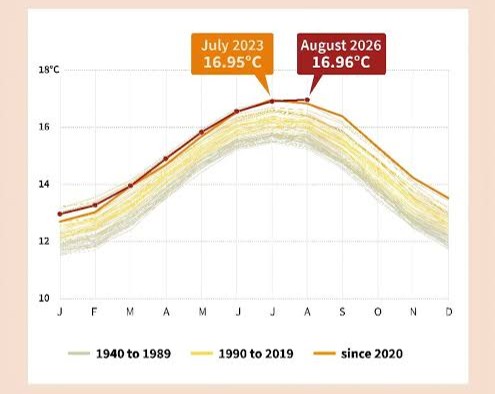
    Global warming rate speeds up at 0.2 degrees celsius per decade

    Average annual emissions over the same period hit an all-time high of 54 bn tonnes of CO2 or its equivalent in other gases — about 1,700 tonnes every second. Record-high greenhouse gas emissions and diminishing air pollution have caused an unparalleled acceleration in global warming, 50 top scientists warned. From 2013 to 2022, “human-induced warming has been increasing at an unprecedented rate of over 0.2 degrees Celsius per decade,” they reported in a peer-reviewed study aimed at policymakers.Average annual emissions over the same period hit an all-time high of 54 billion tonnes of CO2 or its equivalent in other gases — about 1,700 tonnes every second.

    World leaders will be confronted with the new data at the critical COP28 climate summit later this year in Dubai, where a “Global Stocktake” at the UN talks will assess progress toward the 2015 Paris Agreement’s temperature goals. The findings would appear to close the door on capping global warming under the Paris treaty’s more ambitious 1.5C target, long identified as a guard rail for a relatively climate-safe world, albeit one still roiled by severe impacts.

    -Team ScienceNow


  • Science News

    Take a roundup of What happened In Science…

     Brain–spine interface allows paralysed man to walk

    Twelve years ago, a cycling accident left Gert-Jan Oskam, now 40, with paralysed legs and partially paralysed arms, after his spinal cord was damaged in his neck. But these days, Oskam is back on his feet and walking, thanks to a device that creates a ‘digital bridge’ between his brain and the nerves below his injury. The device – a brain–spine interface – builds on previous work by Grégoire Courtine, a neuroscientist at the Swiss Federal Institute of Technology in Lausanne and his colleagues.

    In 2018, they demonstrated that, when combined with intensive training, technology that stimulates the lower spine with electrical pulses can help people with spinal-cord injuries to walk again. After around 40 rehabilitation sessions using the brain–spine interface, Oskam had regained the ability to voluntarily move his legs and feet.

    Will global warming hit the landmark 1.5 ºC limit?

    According to the World Meteorological Organisation report, there’s a 66% chance that the annual global average temperature will hit 1.5 ºC above pre-industrial temperatures at some time in the next five years. The famous 1.5 ºC figure, widely quoted as the desired ‘maximum’ for planetary warming, stems from the 2015 United Nations Paris agreement on Climate Change. This treaty declared the goal of keeping the global average temperature well below 2 ºC above pre-industrial levels, with a preferred limit of 1.5 ºC.

    In 2018, an IPCC special report on 1.5 ºC of warming estimated that the world would probably hit the 1.5 ºC threshold at some stage between 2030 and 2052. By 2021, using a different methodology, that had been pinned down to the early 2030s. “The time frame is getting closer and closer,” says geographer William Solecki at City University of New York, an author on the IPCC special report.

    This paragliding gecko is new to science

    There are flying squirrels, but did you know there are also flying geckos? A new species of gecko has been discovered by scientists; but more importantly, it’s a gecko that can fly. This air-borne gecko, one of genus Gekko, subgenus mizoramensis, is dubbed a parachute gecko for its ability to glide from place to place. While flying geckos are natively distributed across Bangladesh, Myanmar, Thailand, Cambodia, and Laos, this newly discovered paragliding reptile was found in India.

    Flying geckos reportedly can glide up to 200 feet, typically landing with a gentle swoop. They are infinitely restless and nocturnal, with a night-life that revolves around the use of scent-simulations for protection and gliding from one tree to another. Parachute geckos use flaps of skin along their bodies, limbs and tails to glide from tree to tree. Biologists identified the species, Gekko mizoramensis, while surveying gecko populations in northeastern India. The discovery shows that animal and plant life in the region is poorly documented.

    Indian astronomers capture Supernova in distant galaxy

    What happens when a star explodes in a galaxy? For a brief time, it outshines the galaxy, enough to be seen by telescopes from Earth, and one such event happened in May this year in a galaxy nearly 21 million light years away from Earth. The explosion dubbed SN 2023ixf was captured by amateur astronomers at the Indian Space Research Organisation (ISRO), Fahd Bin Abdul Hasis, Kiran Mohan, and VishakSasidharan from the Liquid Propulsion Systems Centre (LPSC).

    The supernova occurred in the Pinwheel Galaxy, which can be seen in the constellation Ursa Major. The galaxy is also called M101. The astronomers took two photographs of the galaxy on May 19 and May 22 to spot the brief flash of the star as it ended up exploding in the two frames. A supernova is the biggest explosion that has been observed from Earth, and it happens when a star at least five times the mass of our sun explodes as it runs out of fuel.

    Alien signal beamed to Earth from Mars

    As the search for another lifeform beyond Earth continues, an alien signal has been beamed to the planet from Mars for the first time. The European Space Agency’s ExoMars Trace Gas Orbiter (TGO) flashed an encoded message to Earth from its orbit around Mars to simulate a situation when a real signal from another civilisation is received by us.

    “Throughout history, humanity has searched for meaning in powerful and transformative phenomena. Receiving a message from an extraterrestrial civilisation would be a profoundly transformational experience for all humankind,” said Daniela de Paulis, the artist behind the ‘A Sign in Space’ project. Search for Extraterrestrial Intelligence (SETI) Institute has brought together a team of international experts, space scientists, and artists to create a project to explore the process of decoding and interpreting an extraterrestrial message.

    Virgin Galactic to launch four people to space

    Nearly two years after it launched its maiden flight to the edge of space, Virgin Galactic is all set for a big mission on Thursday. The Richard Branson-led company will launch six people into suborbital space on the final flight test.While four people will venture into space on the flight named Unity 25, two will pilot the plane after the spacecraft is dropped mid-air for a suborbital take-off. The Unity 25 mission is aimed at making the final assessment of the full manifest of space flight that aims to further strengthen tourism beyond Earth’s boundaries.

    Backed by billionaire Richard Branson, the company had in May last year delayed its commercial service to the first quarter of 2023.The spaceflight missions were delayed due to the supply-chain crisis and labor shortages. During the launch on Thursday, the aircraft will climb to an altitude of 50,000 feet, about 15 kilometers above the surface, before dropping VSS Unity in the air. Unity, once released from the mothership, will ignite its rocket engine to ascend to an altitude of 80 kilometers, acquiring a speed of Mach 3 (three times the speed of sound).

    Neuralink receives FDA approval for human trial of brain-implant device

    Neuralink, Elon Musk’s brain-implant firm, announced that the US Food and Drug Administration (FDA) had given approval for its first human clinical trial. Neuralink envisions the use of brain implants to treat a wide range of conditions, including autism, obesity, depression, and schizophrenia, while also enabling functions like web browsing and telepathy. It is part of an emerging field of brain-computer interface (BCI) technology. BCIs are systems that interpret brain signals and translate them into commands for external devices.

    Over the years, scientists have extensively studied BCI technology, and several companies have developed promising systems with hopes of bringing them to market. Despite Elon Musk’s reassurances, the FDA initially rejected Neuralink’s application in early 2022 due to various concerns that needed to be addressed before human trials could be authorised. According to current and former employees, these concerns primarily revolve around the lithium battery, the potential migration of the implant’s wires within the brain, and the challenge of safely removing the device without causing damage to the brain tissue.

    SpaceX Falcon 9 Launches Four Private Astronauts

    The Axiom Mission 2 (Ax-2), Axiom Space’s second private astronaut mission, successfully launched from NASA’s Kennedy Space Center on May 21. The Ax-2 crew will conduct over 20 scientific experiments on the International Space Station before returning to Earth. Four private astronauts are in orbit following the successful launch of Axiom Mission 2 (Ax-2), the second all-private astronaut mission to the International Space Station (ISS).

    During their time aboard the International Space Station, the Ax-2 astronauts will carry out more than 20 scientific experiments, helping us better understand space radiation, weather in low-gravity conditions, and more,” said NASA Administrator Bill Nelson. “This mission is more proof of NASA’s commitment to help our industry partners develop the next generation of space technology and support a growing commercial space economy.”

    A New Way To Manufacture Lithium-Ion Battery Electrodes

    A research group led by Yan Wang, a researcher from Worcester Polytechnic Institute (WPI), has pioneered a solvent-free methodology for the production of lithium-ion battery electrodes. This novel approach yields greener, more cost-effective, and quicker-charging electrodes compared to those presently available, potentially revolutionizing battery manufacturing for electric vehicles. The team unveiled a dry-print manufacturing technique in the journal Joule, which circumvents the use of harmful solvents and extensive drying periods inherent in traditional electrode production methods that utilize slurries.

    Moreover, the electrodes produced through this method can charge at a faster rate than those created using conventional methods. Current lithium-ion batteries charge too slowly, and manufacturers typically use flammable, toxic, and expensive solvents that increase the time and cost of production. This new solvent-free manufacturing process addresses all the disadvantages of conventional battery by producing electrodes that charge to 78 percent of capacity in 20 minutes, all without the need for solvents, slurries, and long production times.

    Massive US Spiders has a Surprising Survival Trait

    The Joro spider, despite its intimidating size and rapid spread across Southeastern U.S., is surprisingly timid according to a study from the University of Georgia. Contrary to initial speculation, the Joro spider is not aggressive but rather freezes for more than an hour when disturbed, which is significantly longer than most spiders. This spider, originally from East Asia, is believed to have arrived in Georgia around 2013 via a shipping container and has since proliferated across the state.

    Despite their intimidating appearance, the giant yellow and blue-black spiders spreading across the Southeastern U.S. owe their survival to a surprising trait: They’re rather timid. The researchers compared more than 450 spiders’ responses to a brief and harmless disturbance across 10 different species. While most spiders froze for less than a minute before resuming their normal activities, the Joro spiders remained motionless for more than an hour. In fact, Joros are relatively harmless to people, and they won’t bite unless cornered.

    A 100 Million-Year-Old Mystery Unraveled

    Roughly 100 million years ago, a pioneering group of moths began to venture out during the day instead of night, seizing the opportunity presented by flowers abundant in nectar that had evolved alongside bees. This single event sparked the evolution of the entire butterfly species. Since 2019, through extensive DNA analysis, scientists have known the precise timing of this evolutionary shift, debunking a previous theory that suggested the rise of butterflies was a result of pressure from bats following the extinction of dinosaurs.

    Now, scientists have discovered where the first butterflies originated and which plants they relied on for food. Before reaching these conclusions, researchers from dozens of countries had to create the world’s largest butterfly tree of life, assembled with DNA from more than 2,000 species representing all butterfly families and 92% of genera. Using this framework as a guide, they traced the movements and feeding habits of butterflies through time in a four-dimensional puzzle that led back to North and Central America.

    New Type of Battery – The Oxygen-Ion Battery

    Lithium-ion batteries, while commonplace in today’s world – powering everything from electric vehicles to smartphones – aren’t necessarily the optimal solution for all applications. Researchers at TU Wien have made a breakthrough by creating an oxygen-ion battery that offers several significant advantages. While it may not match the energy density of lithium-ion batteries, its storage capacity doesn’t diminish irreversibly over time, making it capable of an exceptionally long lifespan.

    These oxygen-ion batteries could provide an outstanding solution for large-scale energy storage systems, such as those required to hold electrical energy from renewable sources. The ceramic materials that the TU Wien team studied can absorb and release doubly negatively charged oxygen ions. When an electric voltage is applied, the oxygen ions migrate from one ceramic material to another, after which they can be made to migrate back again, thus generating electric current.

    -Team ScienceNow

  • Science News

    Learn the latest happenings in Science..

    Researchers Discover Massive 900-Feet-Deep Blue Hole in Mexico

    The second-deepest blue hole in the world has been discovered off the coast of the Yucatan Peninsula in Mexico. The giant, underwater cavern is about 900 feet deep and has an area of 147,000 square feet. It is located in Chetumal Bay. As per Discovery.com, blue holes are home to ancient limestone caves carved into the ocean floor. Due to an accumulation of dead bacteria from fallen trees and leaves, these lesser-known inland blue holes are black in appearance and devoid of light. From the surface, they appear as nothing more than swamps, but what lies beneath is incredible.

    Dubbed Taam ja’ – which means “deep water” in Maya, these blue hole has little oxygen and sunlight only shines on the surface. Even with these conditions, these gigantic voids are teeming with life that has adapted to the low-oxygen environment. It is the second deepest known blue hole in the world, after the Dragon Hole in the South China Sea which is believed to extend down some 980 feet, according to the study. Blue holes may offer a snapshot of what life was like thousands of years ago. It may also tell us more about life on other planets.

    An Indian Space Startup to Test Electric Propulsion for Satellites

    Bengaluru-based space startup Bellatrix Aerospace will send its experimental payload, Hall-effect thruster (HET), on Polar Satellite Launch Vehicle-C55 on April 22, 2023. The ARKA-series HET, which will demonstrate the solar electric propulsion engine for small satellites, will be flying in the PSLV Orbital Experimental Module (POEM), where the Indian Space Research Organisation (ISRO) uses the final stage of the rocket as an orbital platform to carry out experiments in orbit.

    The HET developed by Bellatrix imparts a very high specific impulse or mileage when compared with conventional rockets, reducing the dependence on traditional fuels such as hydrazine, which is very toxic and carcinogenic. With this launch, Bellatrix would be in a position to validate the indigenisation capabilities across the spectrum for all the subsystems that have gone into it. The POEM component of a PSLV derives the power from the solar panels mounted around the PS4 tank and a Li Ion battery. It navigates using four sun sensors, a magnetometer, gyros and NavIC, and carries dedicated control thrusters using a helium gas storage, and it is enabled with the telecommand feature.

    India Approves National Quantum Mission

    The government today approved the National Quantum Mission to nurture and scale up scientific and industrial research and development in quantum technology. The mission involves a cost to Rs. 6,00,365 crore from 2023-24 to 2030-31. The National Quantum Mission (NQM will accelerate quantum technology-led economic growth and nurture the ecosystem in the country. India will be the sixth country to have a dedicated quantum mission after the US, Austria, Finland, France and China.

    The new mission targets developing intermediate scale quantum computers with 50-1000 physical qubits in eight years in various platforms like superconducting and photonic technology. It will also support design and synthesis of quantum materials such as superconductors, novel semiconductor structures and topological materials for fabrication of quantum devices. It will provide a huge boost to National priorities like Digital India, Make in India, Skill India and Stand-up India, Start-up India, Self-reliant India and Sustainable Development Goals (SDG).

    Pentagon Says UFO Sightings Could Be Probes From An Alien MothershipPentagon officials said in a draft document that recent UFO sightings could be alien space probes sent to Earth from a giant ‘mothership’. The draft research is authored by Sean Kirkpatrick, the director of the Pentagon’s All-Domain Anomaly Resolution Office (AARO) and Avi Loeb, chairman of Harvard University’s astronomy department.

    Mr Loeb in the draft paper said that the interstellar objects such as the cigar-shaped “Oumuamua” that scientists spotted flying through the galaxy in 2017 “could potentially be a parent craft that releases many small probes during its close passage to Earth.” The authors then compared the probes to “dandelion seeds” that could be separated from the parent craft by the sun’s gravitational force. “Habitable planets would be particularly appealing to extra-terrestrial trans-medium probes, capable of moving between space, air and water,” the authors wrote in the paper.

    Astrophotographer Captures 60,000-Mile-Tall ‘Wall of Plasma’ On The Sun

    Argentina-based astronomer Eduardo Schaberger Poupeau captured a structure that looked like a wall of plasma on the surface of the sun. The pictures of the sun were clicked by the astrophotographer shows an enormous wall of plasma falling down toward the sun’s surface at fast speeds, according to LiveScience. Mr Poupeau used specialised camera equipment to capture the striking image. The plasma wall rose some 100,000 km (62,000 miles) above the solar surface. That is as tall as around eight Earth stacked on top of one another.

    According to reports these structures have been seen on the sun many times before. They frequently appear in rings around the sun’s poles, and are called Polar Crown Prominences (PCP). The PCPs are similar to normal solar prominences, which are loops of plasma, or ionized gas, that is ejected from the solar surface by magnetic fields. However, PCPs occur near the sun’s magnetic poles at latitudes between 60 and 70 degrees North and South, which often causes them to collapse back towards the sun because the magnetic fields near the poles are much stronger, according to NASA. This collapse back to the sun has earned them the nickname “plasma waterfalls.”

    NASA Unveils Mars Habitat On Earth For Year-Long Experiments

    Every space enthusiast wonders what a Martian house may be like. The independent space agency of the United States, the NASA has unveiled a 3D-printed housing for a future Mars expedition in an effort to partially allay that curiosity. In the house NASA created to mimic the Martian climate, volunteers rather than astronauts will reside and experience it. This is a 3D-printed Mars simulation habitat in which, in the coming months, the volunteer crew, who are not astronauts, will enter to live and experience.

    The volunteers will live inside a 1,700-square-foot home, dubbed “Mars Dune Alpha,” which includes two bathrooms, a vertical farm to grow salad, a room dedicated to medical care, an area for relaxing, and several workstations. The members of the first experiment team have yet to be named, but the agency stated that selection “will follow standard NASA criteria for astronaut candidate applicants,” with a heavy emphasis on backgrounds in science, technology, engineering, and math.

    NASA is in the early stages of preparation for a mission to Mars, though most of the agency’s focus is on the upcoming Artemis missions, which aim to return humans to the Moon for the first time in half a century.

    Scientists Use Bacteria To Convert CO2 In The Air Into Bioplastic

    Carbon dioxide emissions from the energy sector reached a new high last year, although the impact of rising coal and oil use was mitigated by the development of more eco-friendly technologies like solar energy and electric vehicles. Scientists have been involved in finding the solution to this pollution problem, and it appears that the experts have come up with an environmentally acceptable alternative.

    At the Korea Advanced Institute of Science and Technology (KAIST), a group of chemical engineers has created a prototype system in which a well-known bacterium may transform carbon dioxide from the atmosphere into a useful bioplastic, resolving two global issues simultaneously.

    This hybrid system linked the electrochemical CO2 conversion and microbial bioconversion methods together. The team developed a technology to produce bioplastics from CO2 by linking electrochemical conversion technology with a bioconversion method that uses microorganisms. This electrochemical-bio hybrid system is in the form of an electrolyzer, in which electrochemical conversion reactions occur, connected to a fermenter, in which microorganisms are cultured.

    A New Recyclable Plastic That Isn’t Derived From Crude Oil

    A new type of plastic has just been created by researchers at Boise State University in the US that, unlike other plastics, is not made from crude oil and its byproducts. Boise State University in Idaho have used ethyl cyanoacrylate -the main ingredient in super glue – to create a plastic that could replace polystyrene, which is commonly used in yoghurt pots, disposable cups, and cutlery and accounts for 6 percent of plastic waste.

    The scientists explained the process, saying ethyl cyanoacrylate can be made from formaldehyde, which in turn can be made from carbon dioxide. When super glue is exposed to moisture, ethyl cyanoacrylate molecules bond to form polymer chains, but the reaction is so fast that you only get short chains. The researchers created a way to slow that process down in order to form longer polymer chains and therefore a stronger material, known as poly (ethyl cyanoacrylate), or PECA.

    Webb Telescope Discovers Oldest Galaxies Ever Observed

    The James Webb Space Telescope has discovered the four most distant galaxies ever observed, one of which formed just 320 million years after the Big Bang when the universe was still in its infancy. The galaxies date from 300 to 500 million years after the Big Bang more than 13 billion years ago, when the universe was just two percent of its current age.

    That means the galaxies are from what is called “the epoch of reionisation,” a period when the first stars are believed to have emerged. The epoch came directly after the cosmic dark ages brought about by the Big Bang. All four galaxies are “very low in mass,” weighing roughly a hundred million solar masses. The Milky Way, in comparison, weighs 1.5 trillion solar masses by some estimations.

    The Webb telescope has unleashed a torrent of scientific discovery since becoming operational last year, peering farther than ever before into the universe’s distant reaches — which also means it is looking back in time.

    NASA, SpaceX Launches Device To Monitor Air Pollution From Space

    NASA has launched an instrument that will improve how scientists observe air quality from space. The American space agency in collaboration with Elon Musk’s launched an air-quality monitor called TEMPO or Tropospheric Emissions Monitoring of Pollution Instrument.

    The NASA-Smithsonian instrument TEMPO is the first space-based tool to monitor major air pollutants hourly in high spatial resolution – down to four square miles – in a region stretching from the Atlantic to the Pacific and from the Canadian Oil Sands to below Mexico City, encompassing the entire continental United States.”

    The American space agency said that TEMPO would provide hourly, daytime measurements of air quality in North America. It will monitor three main pollutants and reveal disparities in exposure in our cities and communities. A unique feature of TEMPO, which is about the size of a washing machine and has been described as a chemistry laboratory in space, is that it will be hosted on an Intelsat communications satellite in geostationary orbit.

    A New Non-Antibiotic Method to Cure Drug-Resistant Infections

    The effectiveness of antibiotics and antivirals has been in danger for some time as a result of the emergence of germs that are resistant to a number of antimicrobial therapies that used to work.

    But now that a novel chemical has shown promising results in treating staphylococcus infections in people with cutaneous lymphoma, researchers may have discovered the solution. This is great news for the patients and for the threat of antibiotic resistance around the world.

    Researchers from the University of Copenhagen have discovered an unique enzyme that can be used to destroy Staphylococcus aureus, sometimes known as golden staph. It is a common bacterium that grows on the skin or in the nose and has developed drug resistance. Antibiotic resistance is an increasing problem, especially on a global scale. And when you have this relatively simple infection that suddenly cannot be treated with antibiotics, the situation can turn serious, sometimes life-threatening.

    US Scientist Living Underwater for 100 Days Claims to Have Discovered “Brand New Species”

    A scientist who has been living underwater for almost a month now claims to have discovered a new species. Professor Joseph Dituri of the University of South Florida, who is also known as “Dr. Deep Sea” on social media, is attempting to break a world by spending 100 days in a habitat 30 feet (9 meters) below a Florida lagoon, and testing how the body reacts to long-term exposure to extreme pressure. However, one month into the experiment his team may have unexpectedly made a different scientific finding.

    “We found a single-cell ciliate, a single-celled organism that we believe is a brand new species to science,” Dr Dituri told The Independent. “People have dived in this area thousands and thousands of times- it’s been here, we just didn’t look,” he added.

    The specimen will continue to be examined by microbiologists to confirm that it is a new species. It is one of the many discoveries Dr Dituri is hoping to make by spending an extended amount of time beneath the waves, diving in the surrounding area and conducting experiments in a small lab set up in a 100-square-foot underwater capsule, he said.

    -Team ScienceNow Digital

  • National Science Day – 28 Feb

    Government of India designated 28 February as National Science Day (NSD) in 1986. On this day Sir C.V. Raman announced the discovery of the ‘Raman Effect’ for which he was awarded the Nobel Prize in 1930.

  • Ciia Innovation – Meet Prize Distribution

    Ciia Innovation Competition And Exhibition Is Inaugurated By Padma Vibhushan Prof M M Sharma At The Nehru Centre In Mumbai

    Ciia Is Organising The Innovation Summit For The Second Time And Purpose Of The Event Is To Promote The Spirit Of Innovation Among Students.

    Prof.M M Sharma In His Inaugural Speech Encouraged Students To Boldly Take The Challenge Of Innovation And Come Out With Solutions For The Benefit Of Our Country.

    The Event Has Participation Of Over 100 Students From Various Educational Institutions.

    The Award Presentation Will Be Held On Friday, 3rd Feb 2023 At 2.30 Pm At Nehru Centre Auditorium, Worli Mumbai.

    Following Innovations Are On Display

    Innovatiions


    Visit And Participate

    -Team Sciencenow

  • Latest – Innovation Exhibition

    CiiA Innovation Exhibition is organized with 100 Top Innovations on Display at Nehru Centre, Worli, Mumbai from 1st – 3rd Feb 2023

    As a collective Nation building responsibility, CiiA has launched an initiative to encourage innovations at grassroot level in schools, colleges, engineering, pharma & chemical technology institutions and involving incubation centres to get start-ups onboard.

    If you have an “IDEA” that can be translated into a working model or a prototype or gadget or an equipment or a demonstrable presentation-plan, which has a good functional, Industrial or a utility value.

    Then here is your lifetime opportunity, a career breakthrough, being provided by CiiA to showcase your IDEA in a popular and widely promoted CiiA – Innovations Exhibition & Competition

    Visit and Participate

    -Team ScienceNow

  • Man who Taught us Think ‘Innovation’…

    Dr. Raghunath Anant Mashelkar is one of India’s most Eminent Scientists….Known for his contributions to India’s National Chemical Laboratory and Council of Scientific & Industrial Research, multiple ‘Mashelkar Committees’, and a successful campaign against foreign Patents on Indian Traditional Knowledge.

    His mantras of ‘Inclusive Innovation‘More from Less for More’, and ‘Gandhian Engineering’ have been the  constant source of inspiration. He himself calls him the ‘Dangerous’ Optimistic…and true to the Optimism… he has heralded ‘Innovation Revolution’ in India…

    We Salute him, as On 1st Jan 2023 Dr Mashelkar turns just 80…

    Wave of Innovation

    We will no longer talk of the history of science, we will talk of the geography of science with the emergence of India’ said Dr Mashelkar in a talk at MIT

    He was futuristic then… but now India is emerging as a global platform for R&D. The man who started this wave of Innovation is RA Mashelkar.

    Childhood

    As a boy, who went barefoot to school is now India’s best-known scientist…

    promoting and defending India’s scientific interests. It is a miraculous inspiring  journey…

    Born in a place called Mashel in Goa, his father passed away when he was just six … his mother came to Mumbai in search of a livelihood and with very difficult childhood his mother raised him up…

    His mother is his constant source of inspiration, he went to a Municipal School, the School was not great but it had very great teachers.. moulding him…  In SSC examination he stood 11th in the Board without any guides and classes…

    Dr Mashelkar was awarded Sir Dorab Tata Scholarship of Rs 60 a month for six years. Which he admits that made his life… and India got a great Scientist

    Higher Education

    Motivated by the bright future for the Chemical Industry in India, he joined UDCT , now the ICT, Mumbai to pursue his Chemical Engineering. He continued his work at UDCT as a Post-Graduate student under the mentorship of Prof. MM Sharma.

    Impressed with Prof MM Sharma. He is got the guru. He completed his PhD under the guidance of Dr Sharma finishing his thesis in just three years… he was equally inspired by his mother that he would do higher studies

    He moved to the University of Salford, UK.  His outstanding work earned him a fellowship at Salford University. His guide encouraged him to work in an unrelated field of rheology. Dr. Mashelkar took up the challenge and over the time, he made a name for himself as a distinguished Indian researcher.

    Tuning Point

    While completing Post-Doc he was picked up by Dr Y Nayudamma, the then Director General of CSIR, who was sent to the UK by Mrs Indira Gandhi, to pick the best and brightest students and to offer them jobs in India.

    Dr Nayudamma talked to him about emerging India… and responding to nations call Dr Mashelkar joined NCL… this was the Turning Point in his life…and the rest is history..

    Change maker

    Dr Mashelkar Emerged as a leading  Polymer Engineer and became the Director of NCL in 1989. In India the Scientist were doing reverse Engineering , Copying the discoveries and Imitating the west. 

    He decided to transform the scenario… He dreamt that the National Chemical Lab should become International Chemical Laboratory… To be a world leader Indian Innovation should stand alone and it should be patented. NCL was established in 1950 and had not a single patent till then… 

    Mantra of Success

    Dr Mashelkar’s mantra was ‘Not Publish or Perish but Patent, Publish and Prosper’ changed the mindset…

    The fight of  the Basmati and Haldi Patents came later. Dr Mashelkar Pioneered the Pathway inculcating the new changed mindset about how to Create and Protect Knowledge in National Interest.

    Dr. Mashelkar is probably best known through his crusade against the US Patents on Turmeric, Neem and Basmati Rice. Dr. Mashelkar fought a long legal battle to revoke the Patents and emerged victorious, he is fondly called as  ‘The Warrior of Haldighati’.

    Reforms

    Dr Mashelkar propagated  ‘Skill-Based Competition’. critical part in Competition is what Skills you have, from what sources and how quickly you can put it all together to create a new product. He propagated the concept of  doing  research in a Business like Manner. Still Dr Mashelkar feels that  The change has been too slow. Hope things will move faster…

    Contributions

    Throughout his career, he has written 25 Books, 284 Research Papers, and has been awarded honorary Doctorates by 44 Universities from India and abroad. He has also actively served the Government of India by chairing 12 highly empowered ‘Mashelkar Committees’, and has been a member of the Scientific Advisory Council to the Prime Minister.

    Honours

    His contributions to the Nation and to Science at large have been honoured by a plethora of awards, the most significant being the Padma Vibhushan, the Padma Bhushan, the Padma Shri, the Business Week Star of Asia Award, and the Shanti Swaroop Bhatnagar Prize for Science and Technology.

    He is only the third Indian Engineer to be inducted as a Fellow of the Royal Society, UK and the First Indian to be elected as a Fellow of National Academy of Inventors, US.

    We wish him on his 80th Birthday…and pledge to take his Innovation Revolution ahead..

    -Dr Siddhivinayak Barve

    Editor, ‘ScienceNow’

  • November Issue Uploaded

    November Issue of Science Now Digital is Uploaded.