
Following the failure of “solar road” in France, the question arises: will such kind of technology ever work in the future? Read further to know more…
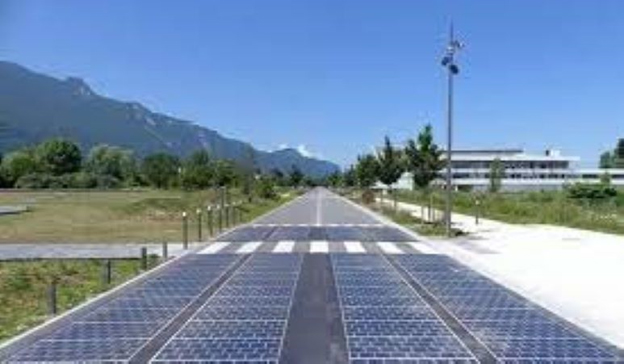
France’s dream of creating the world’s first 1000km of highways with solar panels has come to end with the failure of a trial “solar road” in Normandy, France. The 1km long test solar road that was flagged-off with much fun-fair by former French environment minister near the small town of Tourouvre-au-Perche in the Orne, have deteriorated to such an extent that it has failed to generate enough electricity as planned.
Reports say that the solar panels were unable to withstand thunderstorms and heavy vehicles and created too much of noise for the local residents. The photovoltaic panels just ripped off in many places and in some places they were beyond repairs and so had to be removed. Secondly, in the first few months, the highest amount of energy generated from the solar road hit only half their stated goal
So what is a Solar Road?
We have always been complaining about the state of our roads, even more as maintaining them has become a costly affair given the price of the construction materials touching the sky. Therefore there is an urgent need to find a solution to this conventional system. The solar road is an intelligent road that offers clean renewable energy along with safe driving conditions, electricity and enormous data for various purpose. Interestingly the solar road will fund for itself by generating electricity, and the same money can be used to maintain or rebuild new solar roads. Also, as coal-fired or nuclear power plants will no longer be used, the same money can be ploughed into making solar roads.
How do Solar Roads work?
A solar road is made up of a series of solar panels that can be driven upon. The idea is to replace asphalt roads, parking lots and driveways with solar road panels so that energy generated by them can be used by the homes and offices, while the excess energy can be stored for future use. This way renewable energy can replace use of fossil fuels such as coal, gas, etc. that are currently being used to produce electricity as this will cut down greenhouse gases and help in sustainable development.
What are the advantages of Solar Roads?
The biggest advantage solar roads have is they utilize renewable source of energy to produce power. It can reduce dependence on conventional forms of energy to a greater extent. Moreover, the lifespan of solar panels is more than 20 years, while that of asphalt road is not more than 7 years or so. Some other uses are:
- Military emergency: During military emergency or natural disaster, solar roads will provide necessary power. Since solar power is renewable it will not require external connection to an artificial power source.
- Environmental-friendly: Solar power production generates electricity from the sun, which is renewable. So, it will have limited impact on the environment as compared to other forms of electricity.
- Aesthetic look: By adding LEDs beneath the transparent panel, the road can be lightened up for safe night travel and aesthetic look.
Construction of Solar Roads
- Surface layer: The top layer used for solar panels has to be luminous and tough, yet rough enough for the vehicles to provide traction. Importantly, it has to pass through to the solar collector cells implanted inside along with LEDs and other heating components. The layer should be able to handle heavy loads and withstand any weather conditions to protect the electronics layer laid beneath the road surface.
- Electronics layer: To absorb solar energy, the electronics layer contains photovoltaic cells. The cells are attached to a microprocessor board for detecting loads on the surface and regulating a heating element along with controlling lighting, communications, monitoring, etc.
- Base layer: While the energy is collected from the sun through the electronics layer, it is the base plate layer that delivers electricity as well as data signals (phone, TV, internet, etc.) to all homes and offices linked to the solar roads. Importantly it needs to be durable to protect the electronics layer above it.
Still a long way…
So what’s holding policymakers and industry leaders from getting behind this idea? Of course! It wouldn’t be cheap to pave all of the roads in a country like India with solar roads. In fact it would be cheaper to build coal-fired power plants producing same amount of electricity as compared to solar roads since the initial cost is quite absorbent. That’s a huge investment for a concept that is yet to see the light!
Although many countries are trying to build a prototype, there are still many questions that remain to be answered: Can the solar road panels deliver the kind of energy that would make them cost-efficient? Would the roads be able to support load of the constant flow of traffic? Would the glass surfaces create any issues for drivers at high speeds in adverse weather conditions? Once these issues are sorted out, it is only a matter of time before the first solar roads become operational!
–Manoj Mahanta
Team ScienceNow
