science share account_circle

Category: Featured

  • Temples of Modern India

    Temples of Modern India

    Bhabha Atomic Research Centre

     “Research reactors are the backbone of the Nuclear Programme…” – Dr. Homi J. Bhabha

    Located in the hustling-bustling city of Mumbai, the Bhabha Atomic Research Centre (BARC) is the country’s leading nuclear research facility initiated by Dr. Homi Jehangir Bhabha. The centre’s huge infrastructure is a perfect platform for R&D (research and development) offering an entire gamut of nuclear science, engineering and related areas.

    BARC’s ideology is to use nuclear energy, basically for generation of power. The centre accomplishes all facts of nuclear power generation, from theoretical design of reactors to computerised modelling and simulation, risk analysis, development and testing of new reactor fuel materials to name a few. BARC also does research in spent fuel processing, and safe disposal of nuclear waste. Other research areas for BARC are applications for isotopes in industries, medicine, agriculture, etc. The centre also operates a number of reactors across India.

    Creation of BARC

    It was on 3 January1954 that the Government of India created the Atomic Energy Establishment, Trombay (AEET). The idea behind creating AEET was to unite all the R&D activity for nuclear reactors and technology under the Atomic Energy Commission (AEC). All scientists and engineers who were involved in various areas of reactor designing and development, instrumentation, metallurgy and material science etc., were transferred with their respective programmes from the Tata Institute of Fundamental Research (TIFR) to AEET; with TIFR retaining its original focus for fundamental research in the sciences. After Dr. Homi Jehangir Bhabha’s death in 1966, the centre was renamed as the Bhabha Atomic Research Centre on 22 January 1967.

    Mega Research Hub

    At the Gamma Gardens, BARC conducts research in biotechnology, and has developed a number of disease resistant and high-yielding crop varieties, especially groundnuts. It also conducts research in Liquid Metal Magnetohydrodynamics for power generation.

    On 4 June 2005, the centre started the Homi Bhabha National Institute with the goal of encouraging research in basic sciences. Research institutions affiliated to BARC include IGCAR (Indira Gandhi Centre for Atomic Research), RRCAT (Raja Ramanna Centre for Advanced Technology), and VECC (Variable Energy Cyclotron Centre). Power projects that have benefited from BARC expertise but which fall under the NPCIL (Nuclear Power Corporation of India Ltd) are KAPP (Kakrapar Atomic Power Project), RAPP (Rajasthan Atomic Power Project), and TAPP (Tarapur Atomic Power Project).

    The Bhabha Atomic Research Centre in addition to its nuclear research ideology also conducts research in other state-of-the-art technology areas like accelerators, micro electron beams, materials design, supercomputers, and computer vision etc. BARC has designed and developed for its own use a series of supercomputers – ‘Anupam’ using latest technology.

    -Dr Siddhivinayak Barve

    Editor, ScienceNow Digital

  • Smiling Buddha – India’s first Nuclear Test

    Smiling Buddha – India’s first Nuclear Test

    After the war against Pakistan in 1971, the then Prime Minister, Indira Gandhi who was touring the Bhabha Atomic Research Centre (BARC) in September of 1972 approved of a nuclear test. Without any hesitation, Physicist Raja Ramanna and chief of BARC at that time, took a team of around 75 scientists to design and build the plutonium implosion device. The test was kept as secret as possible and all the work on the project was carried under great secrecy.

    Successful test

    The Indian Army was given the work to dig a test shaft of about 330 feet underground at the Pokhran test site, Rajasthan. On May 18, 1974, the 1360 kilograms device exploded with a force equivalent to 8 kilotons of TNT. Immediately after the test was conducted, Ramanna reportedly informed Indira Gandhi of the successful test through a coded message: “The Buddha is smiling.” Although officially known as Pokhran I, the 1974 test was informally named ‘Smiling Buddha.’ A number of countries condemned India’s nuclear test. While Canada pulled its support for the Indian nuclear program shortly afterwards; United States considered the test a violation of the Atoms for Peace program and responded with sanctions against India.

    Superpower

    After its successful nuclear test of 1974, India took more than 20 years to build a nuclear arsenal and delivery system capable of military deployment. In the years after Smiling Buddha, India had significant difficulty procuring nuclear materials after international market refused to support its stand. Despite these challenges, the BARC leadership managed to construct their biggest nuclear plant to date—the Dhruva reactor at Trombay in 1977, which would produce most of the plutonium for India’s nuclear weapons program. The Indian government also approved a ballistic missile program in 1983. Over the next decade, the Defense Research and Development Laboratory (DRDL) built the short-range Prithvi missile and the long-range Agni missile. Both were eventually equipped with nuclear warheads.

    Operation Shakti also known as Pokhran II took place on May 11, 1998. India tested five nuclear devices, although not all of them detonated. Indian officials claimed that the bombs had a yield equivalent to 45 kilotons of TNT, but independent estimates put the number closer to 16 kilotons. “India is now a nuclear weapons state,” declared Prime Minister Vajpayee days after the tests, adding that “we have the capability of making big bombs for peaceful purpose.”

    -Dr Siddhivinayak Barve

    Editor, ScienceNow Digital

  • India Rising

    India Rising

    Memoirs of a Scientist

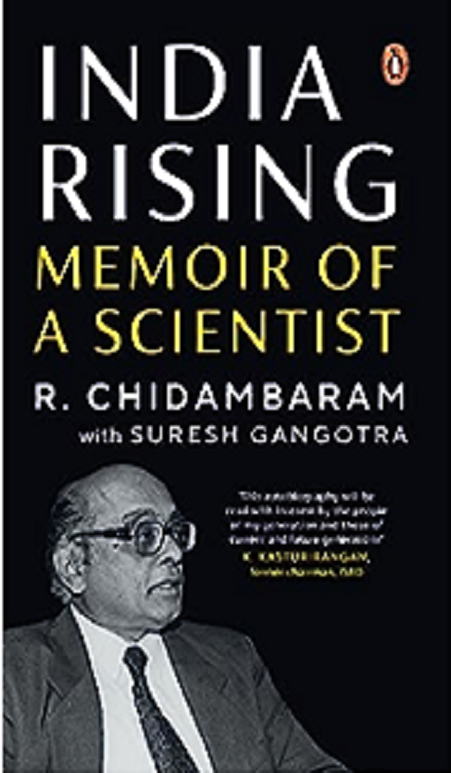
    As we celebrate the Independence Day… a rare celebration in the form of a Book titled India Rising…unfolding memoirs of a Scientist none other than Dr Chidambaram has been published…

    Dr. Chidambaram is one of the tallest figures, not only in the Department of Atomic Energy but also in Science in India. He has been at the helm of many institutions and organisations including the Principal Scientific Adviser to the Government of India. It is indeed welcome that he has penned his journey in the form of this book.

    The book covers his long journey, his greatest contribution is in the Peaceful Explosion Experiment tests in 1974, and then the Nuclear tests in 1998. These two landmark events have changed the course of not only the Department of Atomic Energy, but also of the nation

    India and particularly the Department of Atomic Energy works closely with International Atomic Energy Agency, with its headquarters at Vienna. Dr. Chidambaram has held the chair of Board of Governors of IAEA. During his tenure he has not only advanced the cause of the Agency, but also taken care of India’s interest. He narrates his experience with additional inputs from Dr. Raghuraman.

    He has served as Principal Scientific Adviser to the Government of India for 17 years. During his tenure, he has initiated many projects. Of particular interest are the national knowledge network, and the Rural Technology Action Group. He is passionate about identification and development of gifted children. The book covers various aspects of science like interdisciplinary aspects of science, importance of basic science, women in science and so on. During his long tenure, he has worked with many prime ministers. There is an interesting account on his interactions with the prime ministers.

    He has played a key role in opening up of the nuclear trade with the world. Post 1998, this needed a lot of work, including understanding of the world order and India’s unique position. In the present book Ambassador D.B. Venkatesh Verma has provided a fascinating account of Dr. Chidambaram as a diplomat.

    The book encompasses the journey of science of India since Independence, is a great treasure of information that will serve as motivation to the young children and students, of not only science but also national history.

    -Dr Suresh Gangotra

    Co-Author, India Rising

  • Tree Climbing Bike

    Tree Climbing Bike

    A farmer-turned-inventor has developed a bike that can scale really tall trees up and down with ease…

    A few months back, the video of a farmer climbing the tree with the help of a machine went viral on social media. The video was of K Ganapati Bhat, a farmer from a small village of Komali in Sajipamunnur, Karnataka, who has developed a manned machine to climb the tree and to spray pesticides or pluck bunches of areca nut, without taxing any muscles or bruising arms or legs!

    The Innovator

    A Science graduate in Physics, Chemistry and Maths, Ganapati Bhat came up with the idea of developing a machine to overcome shortage of labourers in areacanut plantations. His manned machine is based on the model of a bike through which one can scale the trees up and down with ease. Ganapati Bhat said that the use of the machine was tested on his farmland on a trial basis recently, and it worked without any problem. In fact, after the video was circulated by his daughter on the social media, he has started receiving calls from across the globe for placing orders for the supply of the machine.

    The Machine

    The machine weighs 28 kg and has a two-stroke engine. It has hydraulic drum brakes, gears, double chain, seat and safety belt. Wearing safety belt, any person weighing up to 80 kg can climb the tree within 30 seconds just by the press of a button. Similarly, he/she can alight from the tree by switching off the engine with ease. The use of hydraulic drum with shock absorber in the engine ensures that there is no harm to life, even if the engine suddenly slips to the ground. The engine runs on petrol and with one litre petrol, you are able to climb around 80 trees. The engine runs on petrol. For one litre petrol, one need to use 40 ml engine oil. With one litre petrol, you can climb 80 trees, if you weigh around 50-60 kg.

    Economically Effective

    On an average, a labourer had to be paid Rs 2,000 per day for climbing and spraying pesticides. On an average, a labourer climbs 35 to 40 trees manually. But this scooter is at your disposal any time and for any number of uses. Pegged at a cost of Rs 75,000 per unit, the vehicle comes with a handle and a brake as well as a clutch for the smooth movement of the machine. Along with it, it has an indicator to show petrol and oil content. By sitting on one arecanut tree, one can spray pesticides to several trees nearby.

    Farmer Saviour 

    The machine will provide solution to problems by minimising the role of human labour in the operation of spraying pesticides and harvesting the crops. Bhat says even women can climb the tree with ease as the machine is quite safe as it has been tested on more than 2000 trees in his farmland. But he warns farmers or for that matter anybody to try this Bike machine on trees with algae, as it does not work on mushy or moisture-based surfaces. So, he is now planning to modify the machine to use it for climbing coconut trees as well.

    Many firms have started getting in touch with Bhat for manufacture of his innovative tree scooter. With further modifications, the machine will be of great help to farmers, who are facing acute shortage of labour for activities like harvesting and for spraying pesticide.

    -Manoj Mahanta

    -Team, ScienceNow Digital


  • Indian Space Research Organization

    Indian Space Research Organization

    “The development of the nation is intimately linked with understanding and application of science and technology by its people.” – Dr. Vikram Sarabhai

    The space research activities were initiated in India during the early 1960’s. Dr. Vikram Sarabhai – the founder of the Indian space programme, envisioned that space research would help address the needs of humankind and lead the nation to progress.

    Inception of Space program

    Dr. Sarabhai summoned brilliant scientists, anthropologists, communicators, environmentalists and engineers from across the nation to build the Indian space programme that focused on building satellites for communication and remote sensing, space transportation system and application programmes.

    He set up the Thumba Equatorial Rocket Launching Station (TERLS) which pioneered the manufacturing sounding rockets in India. He also initiated Satellite Instructional Television Experiment (SITE) so as to transmit education to remote regions across India. The Government of India set up the Indian National Committee for Space Research (INCOSPAR) under the leadership of  Dr. Sarabhai and Dr. Ramanathan. The first Experimental Satellite Communication Earth Station (ESCES) that was set up in 1967 also became a training centre for Indian and international scientists and engineers.

    Setting up of ISRO

    The time was ripe to harness space technology for India’s development. In 1969, the Indian Space Research Organisation (ISRO) replaced INCOSPAR. The Satish Dhawan Space Centre was formed in Sriharikota, Andhra Pradesh in 1971. The following year, the Department of Space (DoS) was established and ISRO was brought under it. It was now crucial to set up a satellite system that can contribute to the national development. In 1980, ISRO successfully launched its own satellite Rohini-1 from Sriharikota. The launch enlisted India as the eight nation to prove its space technology prowess.

    Leap of success

    Today, space technology in India has brought immense progress and added the nation into an elite club of developed countries. India has become the sixth largest space agencies in the world. ISRO maintains one of the largest fleet of communication satellites (INSAT) and remote sensing satellites (IRS) for reliable communication, earth observation, satellite navigation, climate and environment. ISRO has also developed two satellite launch vehicles – PSLV and GSLV to place satellites in the Earth’s orbits. The vehicles have become favoured satellite carriers by other nations, thereby fostering international associations.

    Contribution towards education

    Apart from technological capability, ISRO has immensely contributed to science and education by initiating several autonomous institutions and research centres, promoting studies in astronomy, astrophysics, atmospheric sciences and space sciences. ISRO’s massive lunar missions (Chandrayaan 1 & 2) and planetary mission (Mars Orbiter Mission) has encouraged scientific study and research, further promoting valuable data to the scientific community.

    Future ready

    With technology as the key to future, ISRO adheres to optimise its development of launchers, human spaceflight projects, reusable launch vehicles, semi-cryogenic engines, orbit vehicles, development and use of composite materials for space applications etc. From the humble beginnings to the massive missions, ISRO has grown as an institution of space research.

    Manoj Mahanta

    ScienceNow Digital

  • Unravelling mysteries of Space and beyond

    Unravelling mysteries of Space and beyond

    The Indian Institute of Astrophysics has over a century long legacy… the institution is pioneer in unravelling the mysteries of Space and beyond….

    The journey of India’s premier astronomy and astrophysics research institution – The Indian Institute of Astrophysics (IIA) dates back to 1786. An officer of the East India Company, William Petrie went about setting up a private observatory over his 11 acres residence in Egmore, Chennai. Back then, the observatory was used for navigational purpose. Petrie closely observed the position of the Moon’s eclipse and satellites of Jupiter to guide ships in the high sea. In 1790, the East India Company formally took over the observatory and shifting the centre to Nungambakkam, Chennai expanded its scope of work.

    Around 1881-82, in addition to photography and spectrography of the Sun and the stars using its 20-inch telescope, the observatory was being used to measure the Sun’s heating up of the earth’s surface and its periodic variation.

    A decade later, in the aftermath of a severe famine in the Madras Presidency region around July 1893 in the U.K. Secretary meeting chaired by Lord Kelvin, it was decided to establish a solar physics observatory at Kodaikanal. Thereafter the Madras Observatory served as the only astronomical observatory of India for over a century making significant contributions in the area of astronomical science.

    Achievements of the Observatory

    Indian astronomer, C. Raghunathachary’s discovery of the light variations of variable star R. Reticuli in 1867; use of spectroscope to discover gaseous nature of the prominences during solar eclipse on August 18, 1868; British astronomer, Taylor’s completion of his ‘catalogue of places’ for 11,000 stars in 1884; Norman R. Pogson, Director of the Madras Observatory for over 30 years in 1891 catalogue of over 3000 stars; John Evershed’s discovery of the phenomenon of ‘radial motion in sunspots’ in 1909 and so on.

    While Kodaikanal Observatory continued to serve as the nodal Observatory for over a century working in the area of solar and atmospheric physics, under its shadow the country saw rise of several elite and specialised space observatory centres.

    The Vainu Bappu Observatory at Kavalur housing a 2.34 metre telescope was established in 1968 for night time astronomy, spectroscopy and photometry. The Gauribidanur Radio Observatory, equipped with a 6-meter radio telescope – a radio heliograph facility to obtain two-dimensional pictures of outer solar corona, was established in 1976 to study the Sun, galaxies and pulsars. The high-altitude Indian Astronomical Observatory at Hanle in Ladake saw installation of a 2-metre Himalayan Chandra Telescope in 2001 and later setting-up of a seven-unit High Altitude Gamma Ray (HAGAR) telescope.

    Indian Institute of Astrophysics

    As the country continues its onward journey of over two centuries (i.e. since 1786) dedicatedly working in the area of astronomy and astrophysics through its network of observatories at Kodaikanal, Kavalur, Gauribidanur and Hanle, in 1971 the Indian government decided to form the Indian Institute of Astrophysics (IIA), bringing all the observatories under a single autonomous research institute headquartered at Koramangala in Bengaluru.

    -Manoj Mahanta

    Team, ScienceNow

  • Film Review

    Film Review

    O P P E N H E I M E R

    The latest Science Movie is Oppenheimer…

    It is a biopic of J Robert Oppenheimer, the “father of the atomic bomb”.

    The film depicts the saga of the man who unleashed the tremendous destructive power of Atom.

    Oppenheimer chronicles the life of the American theoretical physicist, who became the director of the Los Alamos Laboratory during World War II and invented the first nuclear weapon that would end the war.  

    Christopher Nolan has made a biopic on the man who wanted to create the perfect bomb. The film unfurls the plots from Robert Oppenheimer’s education to the Manhattan Project which led to the creation of the ‘fat boy’ which ended the world war II,

    Later however Oppenheimer realised that the weapon he has made has limitless capacity of destruction and the realisation of the horrific creation that would change the course of history.

    Oppenheimer quotes from the Bhagavad Gita: “Now I am become Death, the destroyer of worlds…”

    The film is running in theatres…

    -Team ScienceNow

  • HARMONY FOR TOMORROW: A SUSTAINABLE SYMPHONY

    HARMONY FOR TOMORROW: A SUSTAINABLE SYMPHONY

    ENERGIZING PROGRESS: A GLOBAL ENDEAVOUR

    As we find ourselves at the intersection of environmental stewardship and economic advancement, the resonance of a sustainable symphony reverberates through our collective efforts. Today, we embark on a journey towards igniting progress in the realms of clean energy and economic growth, aligning the imperative of sustainable development with the pursuit of prosperity.

    Our mission is clear- ‘to illuminate the pathway towards a future powered by renewable energy, fostering inclusive economic growth and sustainable livelihoods for generations to come’.

    Affordable and Clean Energy

    In the grand fabric of sustainable development, India emerges as a shining example, leading the charge with bold initiatives in solar energy adoption. From the sprawling fields of rural communities to the bustling urban landscapes, India’s commitment to harnessing the power of the sun stands as a testament to the transformative potential of clean energy. Through innovative approaches in solar power generation and distribution, India not only addresses the pressing challenge of energy access but also champions environmental sustainability on a global scale.

    One notable success story lies in the village of Dharnai, Bihar. Once shrouded in darkness, Dharnai now basks in the glow of renewable energy, thanks to a micro-grid solar power system. This initiative has not only illuminated homes but also empowered the community, fostering economic growth and improving living standards. Dharnai exemplifies how solar energy can revolutionize rural life, inspiring similar endeavors across the nation.

    Decent Work and Economic Growth

    In tandem with India’s strides in clean energy, a paradigm shift unfolds in the realm of economic growth and job creation. By intertwining investments in renewable energy infrastructure with a burgeoning ecosystem of green entrepreneurship, India charts a course towards a future where economic prosperity and environmental preservation are not mutually exclusive. Through fostering inclusive economic growth, India pioneers a model where the principles of sustainability serve as the cornerstone of development, ensuring that no one is left behind in the march towards progress.

    One notable success story in this narrative is the rise of SolarTech Solutions, a startup based in Bangalore. Founded by a team of young entrepreneurs, SolarTech Solutions specializes in manufacturing affordable solar panels tailored for rural households. Through innovative financing models and community engagement, SolarTech Solutions has not only electrified remote villages but also created hundreds of jobs, particularly for women in rural areas. This success story highlights how green entrepreneurship can drive inclusive economic growth while advancing sustainability goals, setting a precedent for similar initiatives nationwide.

    Sustainable Future

    Navigating the intricate landscape of sustainable development presents us with a formidable challenge: reconciling the pressing needs of economic growth with the imperative of environmental conservation. The pursuit of affordable and clean energy, while noble in its goal, is fraught with a multitude of hurdles, ranging from technological limitations to financial constraints. Yet, amidst these challenges, lies a beacon of hope- collaborative global efforts that can surmount these obstacles and pave the way for a resilient and sustainable energy landscape.

    Advancements in renewable energy technologies serve as a testament to human ingenuity and innovation. From solar and wind power to geothermal and hydroelectric energy, these technologies offer promising alternatives to traditional fossil fuels. However, their widespread adoption requires concerted efforts on a global scale- efforts that transcend borders and ideologies. It is through collaboration, sharing knowledge and resources, that we can accelerate the transition towards a cleaner, more sustainable energy future.

    Moreover, initiatives aimed at enhancing energy efficiency play a crucial role in our quest for clean energy. By optimizing energy consumption across various sectors-  from transportation and manufacturing to residential and commercial buildings- we can reduce our carbon footprint and mitigate the adverse effects of climate change. Investing in energy-efficient technologies and practices not only conserves valuable resources but also drives economic growth by creating new markets and job opportunities.

    Simultaneously, as we embark on this journey towards a sustainable energy future, we must also address the intertwined challenge of fostering decent work and economic growth. In a world grappling with the dire consequences of climate change and environmental degradation, the imperative of sustainability cannot be overstated. It must become the cornerstone of our economic policymaking, guiding us towards a path of prosperity that is in harmony with the planet.

    Promoting green jobs is paramount in this endeavor. By investing in sectors such as renewable energy, sustainable agriculture, and conservation, we can create employment opportunities that not only provide livelihoods but also contribute to environmental stewardship. Equally important is the provision of vocational training and education, ensuring that individuals possess the skills and knowledge necessary to thrive in a green economy.

    Entrepreneurship, too, plays a pivotal role in driving the transition towards a low-carbon economy. By empowering aspiring entrepreneurs with the resources and support they need to launch sustainable businesses, we can unleash a wave of innovation and creativity. These green enterprises not only generate economic value but also catalyze positive social and environmental change, fostering inclusivity and social cohesion in the process.

    In embracing sustainability as a guiding principle, we not only safeguard the future of our planet but also cultivate a more equitable and prosperous society. By prioritizing investments in clean energy, promoting green employment opportunities, and fostering entrepreneurship, we can build a world where economic growth is synonymous with environmental preservation. Together, let us embark on this transformative journey towards a future that is not only sustainable but also inclusive and resilient.

    Conclusion:

    As we reflect on the symphony of progress orchestrated through sustainable energy and economic empowerment, one thing becomes abundantly clear: the interconnectedness of our collective endeavors. The harmonious integration of clean energy initiatives with inclusive economic growth epitomizes the transformative potential of sustainable development. It is through collaboration, innovation, and a steadfast commitment to our shared goals that we can truly harness the power of sustainability to build a better world for all.

    -Prof (Dr) Sanjay Deshmukh

    Former Vice-Chancellor

    University of Mumbai

     

  • Institutions of Eminence

    Institutions of Eminence

    Defence Research Development & Organisation

    DRDO is the Premier Defence Research Organisation.. with its network spread all over the country this organisation brings out novel technologies for the Nation…

    Defence Research & Development Organisation (DRDO) is an agency under the Ministry of Defence. Headquartered in New Delhi, DRDO was formed in 1958 by amalgamating the Defence Science Organisation and a few technical development establishments. DRDO is India’s largest research organisation. It has a network of laboratories engaged in developing defence technologies covering various fields, like aeronautics, armaments, electronics, land combat engineering, life sciences, materials, missiles, and naval systems.

    DRDO’s first project for the Indian military was in surface-to-air missiles (SAM) known as Project Indigo. However, it received little success and was therefore discontinued. Since being set up, DRDO has achieved many successes in developing major systems and critical technologies like aircraft avionics, UAVs, small arms, artillery systems, EW Systems, tanks and armoured vehicles, sonar systems, command and control systems and missile systems.

    In March 2019, DRDO developed India’s first anti-satellite system that made India one of the space superpowers. In 2016, it successfully tested its first indigenously developed heavy-duty drone, Rustom 2, which is an unmanned armed combat vehicle developed on the lines of the US’s Predator drone.

    DRDO co-developed INS Arihant, India’s first nuclear ballistic missile submarine, which became operational in 2018. Its self-eject able black box for airplanes — BSAT can help rescuers easily locate the debris in the event of a crash in water. DRDO has also developed several ballistic missiles under its Integrated Guided Missile Development Programme, which includes missiles like Prithvi, Trishul, Agni, Akash and Nag

    -Dr Siddhivinayak Barve

    Editor ScienceNow


  • DRDO’s Anti-Satellite Weapon

    Achievements

    DRDO’s Anti-Satellite Weapon

    Indian scientists successfully conducted Mission Shakti, shooting down a live satellite target in the Low Earth Orbit (LEO) India has become the fourth country after the US, Russia and China to acquire the capability of space warfare…

    A satellite in the LEO can monitor activities on the ground and water surfaces. A Low Earth Orbit refers to an altitude up to 2,000 km. Such a satellite can be used for espionage and pose serious threat to the country’s security in the instances of war.

    A-SAT can target LEO satellite

    An anti-satellite missile, the one that was fired by the scientists of the Defence Research and Development Organisation (DRDO), can target LEO satellite. The missile can incapacitate or completely destroy the satellite in the LEO range. The entire effort is indigenous.

    India possess “Building Blocks”

    Till now, only the US, Russia and China had the capability to hit a live target in space. India had been working on developing A-SAT missile capabilities for nearly a decade. Former DRDO director Dr. V. K. Saraswat had said in 2010 that India possessed “all the building blocks necessary” to integrate an anti-satellite weapon to neutralise hostile satellites in low earth and polar orbits.

    The United States was the first nation to build space warfare capability that it developed in late 1950s. The erstwhile USSR followed the US and had acquired this capability by early 1960s. China was the third country to launch A-SAT. China conducted its first A-SAT test in 2007.

    No country has used an A-SAT against another nation till date. In all the instances, the nation’s testing anti-satellite missiles have targeted one of their defunct satellites to showcase their space warfare capabilities. The target destroyed by India’s A-SAT missile  was an out of service Indian micro satellite launched by ISRO

    Dr Siddhivinayak Barve

    Editor, ScienceNow Digital