science share account_circle

Category: Featured

  • How Great is our God?

    Book Review

    How Great is our God?

    100 Indescribable Devotions about God and Science Pastor Louie Giglio has compiled 100 more devotions that invite kids to explore the wonders of the universe, from the deadliest creature on Earth (the sea wasp jellyfish) to spider rain in Australia to the Earth’s trip around the sun.

    Written for elementary-age kids who are curious about the natural world and God’s role in it, the book: “How Great Is Our God – 100 Indescribable Devotions about God and Science” is packed with amazing scientific facts, beautiful photography, and fun illustrations by the same artist who illustrated Indescribable (Nicola Anderson), covering topics such as space and time, earth and weather, the human body animals, plants and more

    -Team ScienceNow

  • Sounds of Senescence

    Sounds of Senescence

    Moving swiftly across the swamp the sparrow tentatively spreads out his territory; a phonic palisade, which he surveys with vain conviction.

    Contented in solitude, he slides into symphonic soliloquy; preening at the sumptuousness of his stereotypic performance.

    Halfway through the encore An unwanted response echoes his call. Susceptible to the vulgarity of this disturbance, he jumps down from his perch to confront his admirer; the repetition of his retort parading his position.

    Bemused by his audience’s apparition he turns his ear to the ground, shakes his head, and returns to his own self-worth: the virility of youth untroubled by  he artifice of age

    Sam Illingworth

    Manchester University, UK

  • Know the Genius

    Know the Genius..

    Charles Darwin

    Charles Robert Darwin was a British naturalist and biologist known for his theory of evolution and his understanding of the process of natural selection. In 1831, he embarked on a five-year voyage around the world on the HMS Beagle, during which time his studies of various plants led him to formulate his theories. In 1859, he published his landmark book: On the Origin of Species….

    Early Life

    Charles Darwin was born on February 12, 1809, in the tiny merchant town of Shrewsbury, England. In October 1825, at age 16, Darwin enrolled at University of Edinburgh. Two years later, he became a student at Christ’s College in Cambridge.

    HMS Beagle

    While Darwin was at Christ’s College, botany professor John Stevens Henslow became his mentor. After Darwin graduated from Christ’s College with a bachelor of arts degree in 1831, Henslow recommended him for a naturalist’s position aboard the HMS Beagle.

    The ship was to take a five-year survey trip around the world and the voyage proved to be the opportunity of a lifetime for Darwin. Over the course of the trip, Darwin collected a variety of natural specimens, including birds, plants and fossils. Through hands-on research and experimentation, he had the unique opportunity to closely observe principles of botany, geology and zoology. Darwin began to write up his findings in the Journal of Researches and began to develop a revolutionary theory about the origin of living beings that ran contrary to the popular view of other naturalists at the time.

    Theory of Evolution

    Darwin’s theory of evolution declared that species survived through a process called “natural selection,” where those that successfully adapted or evolved to meet the changing requirements of their natural habitat thrived and reproduced, while those species that failed to evolve and reproduce died off. Darwin noticed similarities among species all over the globe, along with variations based on specific locations, leading him to believe that the species we know today had gradually evolved from common ancestors.

    Darwin’s theory of evolution and the process of natural selection later became known simply as “Darwinism.” At the time, other naturalists believed that all species either came into being at the start of the world or were created over the course of natural history. In either case, they believed species remained much the same throughout time.

    ‘Origin of Species’

    In 1858, after years of scientific investigation, Darwin publicly introduced his revolutionary theory of evolution in a letter read at a meeting of the Linnean Society. On November 24, 1859, he published a detailed explanation of his theory in his best-known work, ‘On the Origin of Species by Means of Natural Selection’. In the next century, DNA studies provided scientific evidence to prove Darwin’s theory of evolution.

    -Dr Siddhivinayak Barve

    Editor, ScienceNow

  • Robots to the Rescue

    Technology

    Robots to the Rescue

    From house help to being an emotional companion, Robots have come a long way in becoming a part of our daily life and more so in this pandemic. Covid-19 has redefined the way we work. With a major part of the population working remotely and the trend still on, robots are becoming part of everyday life…

    The House Help Home robots have been in the market for decades now. No longer is just a floor-mopping machine. The newer edition gets Wi-Fi control and is enabled by Alexa. You can simply command the Roomba to begin work. It is AI-enabled to remind it of corners that need extra cleaning. And when low on energy, it can find a charging point and charge itself automatically.

    When Roomba was launched, there weren’t many takers. Post the pandemic, the sales have skyrocketed every quarter. With the shortage of domestic helps due to reverse migration, many people in the cities switched to technologies that help them in their daily chores.

    An Emotional Companion

    Many of us have been looking for a companion to bond emotionally, especially in this pandemic. Humans come with problems! That’s why Asus launched Zenbo a few years ago. This cute-looking humanoid has learnt to share your emotions. So, imagine yourself looking at firecrackers in the sky, and this robot will follow your eyes and react. When you are not home, its AI-enabled system will keep scanning your rooms and report to you about anything suspicious.

    At Your Command!

    In a world suddenly fearful of touch, voice technology is getting a fresh look. Voice activated systems such as Google Assistant, Amazon Alexa and Apple’s Siri have seen strong growth in recent years. Voice assistants are used not only for answering queries and shopping, but also for smart home control and for a range of business and medical applications which could see increased interest as people seek to limit personal contact.

    Voice has already made significant inroads into the smart home space, and voice control can mean avoiding commonly touched surfaces around the home from smartphones, to TV remotes, light switches, thermostats, door handles and more… There is  growing interest in smart locks and doorbells, along with other smart home systems, to eliminate the need for personal contact and face-to-face interaction as a result of the pandemic. It is estimated that voice control device shipments for smart home devices will grow globally by close to 30 percent, and for the broader market of voice assistants, it is estimated to have 8.4 billion devices in use by 2024, with much of the interactions on smartphones.

    Being Your Proxy

    As we keep maintaining social distance and connecting virtually, there is definitely a gap in social intimacy. GoBe Robots are ready to do it for them. This telepresence machine is a remote-controlled mobile robot that allows communication through a 21.5-inch screen that reproduces the user’s face in natural size. A zoomable 4K camera and a wide-angle front camera give the “robot pilot” a clear overview of the location.

    The new generation of GoBe Robots awaiting launch stands out with an open system that creates even more applications and allows users to maximise the potential of the technology. Users get a distinct feeling of being where the robot is as they receive live video streams of the location as the machine moves around it. This enables active collaboration and interaction between people, no matter how far they are from each other.

    -Noel Fernandis

    Team ScienceNow


  • Identifying Junk Foods

    Identifying Junk Foods

    Every individual seems to be on a fast track having little time to seek for healthy foods. Are you eating right? You do need to give it a thought! Is there a way to distinguish between junk food and healthy preparations?…

    Globalization has brought in global cuisine including fast foods, which have become a part of daily diet for many people. And this is the reason for increase in childhood obesity and adult obesity thus increasing the risk of developing chronic diseases such as Diabetes, Cardiovascular Diseases etc.

    Getting to know Junk Foods

    Junk food is staple to urban India. Fast-food restaurant chains are aplenty in the cities. These restaurants are into quick-serve mass produced meals that are high in Calories, Fat, Cholesterol, Carbohydrates, Sodium, Salt and Sugar. Your risk of adverse effects is low if you eat fast foods occasionally. But there are some hidden ingredients, which can cause health issues. The worst are the aerated fizzy drinks that go with the fast food meals.  

    How would you distinguish junk foods from healthy foods? Most important differentiation would be that fast foods contain simple Carbohydrates, refined Sugar, excess Salt, Saturated Fat, hidden additives, preservatives and low nutrition value. Some examples of these foods include, packaged food products such as Cookies, Chips, Cakes, Pastry, Fizzy Drinks, Pizza, Burger, Pasta and many more.

    The definition of junk food and healthy food is confusing for Indian people. It is true that the fast food culture has thoroughly been integrated into our food habits. Also, these foods are washed down with cans and bottles of aerated drinks. But Indian food menu also has ‘Indian Fast Foods’, such as the lip-smacking snacks– ‘Batata Vada’, ‘Samosa’,  ‘Vada’, ‘Gathiya’, all of which are deep-fried. On the other hand we are lucky to have options like ‘Pav Bhaji’, ‘Chat’, ‘Idli’,  ‘Dosa’ that cannot be called Junk Foods.

    Processed Food

    There are umpteen numbers of companies that bring out food products such as instant foods, ready-to-eat foods, flavoured Yogurts and many more. The list is endless. The companies sometimes make tall claims regarding the product’s health benefits, thus camouflaging the true nutritional status. Even after reading the label, the nutritional values are unclear. Convincing advertisements lure you into buying these foodstuffs. However, when you delve deeper into the ingredients you will know that the store-based processed foods have a lot of added Sugar and preservatives to increase their shelf life. According to food scientists, any food with preservatives, trans Fat, excess Salt, excess Sugar, excess Oil, foods with high Calorie content, high in Fat content can be included in the category of Junk Foods.

    Before you Eat…

    Read labels before you pick up foods off the shelf. Look out for certain chemicals such as Mono Sodium Glutamate (MSG) added to Chinese food preparations for flavor, Potassium bromate used to enhance the texture and rising of flour, Propylene Glycol added to soft drinks, salad dressings etc. for keeping foods moist.

    These and many other chemicals can be detrimental to your health. Added Sugars such as Corn Sweetener, Sucrose, Dextrose, Barley, Malt etc. in processed food are harmful to your overall health. To avoid confusion and be safe, it is best to opt for natural foods that have no labels.

    Fix your Cravings …

    It is not a sin to eat junk foods. You can prepare the so-called “junk” foods at home and turn them into healthy preparations by being innovative. For instance, use of whole grain Pasta and Pizza, topped with vegetables can become healthy preparations. You can choose oils such as Olive Oil, rice Bran Oil or Sunflower Oil to prepare healthy food. Baked or roasted snacks such as Popcorn, Chips, and Lotus seeds (Makhana) can be healthy. Oats, Cereal and Oatmeal cookies are full of Fibre, Calcium and Iron.

    Your choices matter

    When you visit a fast food restaurant you can always opt for healthy foods on the menu. You can try steamed, grilled, roasted or baked food items. Avoid deep-fried foods. Salads with low-fat dressing accompanying a healthy soup are good choices. A healthy meal should include Fruits, Vegetables, Whole Grains, Legumes, or Eggs, Lean Meat and Fish for non-vegetarians.

    Making junk food a part of your regular diet can be addictive and dangerous.  The foods that you order may be loaded with saturated and trans fat like Butter, Lard, Palm Oil and Vanaspati or Dalda, which are unhealthy in the long run.  Make your food choices as per your dietary requirement. Ensure that you get enough exercise to remain active. Simply burn those extra calories with yoga or any form of exercise that you prefer. Balancing your food habits is an important aspect of managing weight and keeping diseases at bay.

    Dr. Parul R. Sheth

    Freelance Writer, NCSC

  • Know Geology

    Know Geology…

    Earth’s Interior

    Our mother Earth is formed around 2.5 billion years ago.

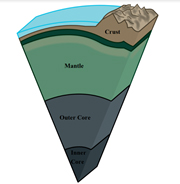
    The Earth was a hot ball of molten rocks at the time of her formation. She gradually cooled down from the surface inside, and currently is comprised of three distinct layers; the crust, mantle, and core. Let us understand each of the layer in detail.

    Crust: The Earth’s crust is the outermost layer of the Earth. Generally, the crust comprises of only first 100 km of the Earth’s interior. That is not even 2% of the total thickness of the Earth’s interior. But all the mining operations take place in this layer itself. This is becausewe do not yet possess the technology to drill deeper than even 15 km into the Earth’s interior (the deepest human interaction as of today is the Kola Superdeep Borehole, Russia (~12.3 km)). This crust can be divided into two types; continental crust and oceanic crust. As the name suggests, the continental crust carries the continents, while the oceanic crust hosts oceans. The continental crust can be further divided in three layers. The first layer is 2 km thick, and is the lightest among them, with rock density approximately 2,200 kg/m 3 . This layer mainly comprises of sedimentary rocks. Important outtake from this layer is the soil we use for agriculture. The second layer goes up to 30 km depth, and comprises mainly of silica and alumina. Thus, this layer is also called as SIAL. Third layer reaches to boundary between the crust and the mantle, and mainly consists of silica and magnesia, earning it the name SIMA. Density of the rocks in this layer increases up to 2,800-3,000 kg/m 3 . This layer mainly comprises of igneous rocks.

    Mantle: The second layer, the mantle, starts under the crust, and extends up to 2,900 km depth. The boundary between crust and mantle is called ‘Mohorivicic Discontinuity’. The mantle can be divided into two regions; upper mantle and lower mantle. The boundary between the upper and lower mantle is located approximately at 700-800 km depth. The upper mantle can even further be divided into two layers, the first being the crazy one. This layer is called ‘Asthenosphere’. Asthenosphere means a layer of week particles. The asthenosphere is in the plastic state, instead of solid state. It means that the asthenosphere changes its shape according to the forces from the crust and mantle around it. Despite of the plastic state, the asthenosphere is able to bear the load of the crust. The reason behind this is the difference in densities. In the mantle, the density of rocks increases from 3,300 kg/m 3 in the beginning to 5,700 kg/m 3 in the end. Therefore, the lighter crust floats on the denser asthenosphere. The lower mantle is in the liquid state due to extreme heat. Mantle is also the region, where the subducted continental places arrive. Due to the heat and pressure, the plates melt, and are added to the Earth’s magma supply. This magma again reaches the Earth’s surface through volcanic eruptions and forms igneous rocks. Therefore, the mantle works as a furnace, where the utilized crust materials are recycled.

    Core: The Earth’s core begins at the end of the mantle, and extends up to the center of the Earth. Boundary between the mantle and the core is called ‘Gutenberg Discontinuity’. The core can be identified by the steep increase in the rock densities. The density of rocks, which was 5,700 kg/m 3 at the conclusion of the mantle, suddenly increases to 9,900 kg/m 3 . The density keeps increasing as we go even deeper, and it maxes out at 13,000 kg/m 3 at the center of the Earth. The core is made of iron and nickel, and the movement of iron and nickel particles in the core results in the formation of convection currents. These convection currents ultimately form the Earth’s magnetic field, or magnetosphere. The core can be divided into two regions; outer core and inner core. The outer core starts its regime from 2,900 km depth, and extends up to 5,150 km depth. Inner core covers the rest of the thickness of the Earth’s interior. Inner core is in reality the hottest, but still in solid state, due to compressive pressure from surrounding crust, mantle and outer core. The difference in the rock densities throughout the Earth’s interior can be found by sudden change in the properties of seismic waves.

    -Ninad Bhagwat,

    Montana Tech University, USA


  •  ‘HARMONY FOR TOMORROW: A SUSTAINABLE SYMPHONY’

     ‘HARMONY FOR TOMORROW: A SUSTAINABLE SYMPHONY’

    “SOWING SEEDS OF WELL-BEING: NURTURING HEALTH AND MINDS”

    Introduction:

    As we progress through the journey of “Harmony for Tomorrow: A Sustainable Symphony,” our second movement resonates with the theme, “Sowing Seeds of Well-being: Nurturing Health and Minds.” This episode delves into the profound objectives of Sustainable Development Goals (SDGs) 3 and 4- cultivating well-being and fostering inclusive education.

    SDG 3

    Good Health and Well-being

    The third movement in our symphony is dedicated to SDG 3, which calls for ensuring good health and well-being for all. The 2030 deadline underscores the urgency of creating a world where everyone has access to quality healthcare, essential medicines, and disease prevention.

    In India, a success story unfolds in the realm of healthcare, demonstrating remarkable strides in accessibility and disease prevention. The narrative is one of transformation, where concerted efforts have been made to reach even the remotest corners of the nation with essential health services.

    India’s success in healthcare accessibility is multifaceted, involving a blend of policy initiatives, community engagement, and technological interventions. Mobile health units, community health workers, and telemedicine have played pivotal roles in extending healthcare services to underserved populations. These initiatives not only address existing health challenges but also lay the groundwork for proactive disease prevention.

    From the eradication of diseases like Polio to ongoing efforts in combating Malaria and Tuberculosis, India’s journey showcases a commitment to the well-being of its citizens. The success story echoes the symphonic harmony of healthcare accessibility and disease prevention, illustrating that a healthy society is the bedrock of a sustainable future.

    SDG 4

    Quality Education

    The fourth movement in our symphony focuses on SDG 4, emphasizing the significance of quality education. The 2030 deadline challenges nations to ensure inclusive and equitable education for all, breaking down barriers and fostering lifelong learning opportunities.

    In India, a transformative success story emerges from the realm of education, where digital initiatives and inclusive policies have revolutionized the learning landscape. The narrative unfolds in classrooms equipped with digital tools, reaching students in urban centers and remote villages alike.

    Digital initiatives, such as online education platforms, smart classrooms, and e-learning resources, have transcended geographical constraints, democratizing access to quality education. These initiatives not only cater to the diverse learning needs of students but also bridge gaps in educational opportunities.

    Inclusive policies, such as those promoting gender equality in education and providing support for children with special needs, ensure that no one is left behind on the journey to knowledge. The success story in India’s education sector exemplifies the harmonious integration of inclusivity and technological innovation, fostering an environment where every student has the opportunity to thrive.

    A Symphony of Well-being and Inclusive Education

    As we reflect on the success stories from India under SDG 3 and SDG 4, a harmonious integration of well-being and inclusive education unfolds. The interconnected nature of health and education becomes apparent, emphasizing that one is incomplete without the other.

    Good health is not merely the absence of disease; it is a state of complete physical, mental, and social well-being. In the educational context, quality education goes beyond the classroom, nurturing the holistic development of individuals. The symphony we aim to create involves recognizing the synergy between health and education, as both are foundational pillars for a sustainable future.

    The success stories from India under SDG 3 and SDG 4 highlight the potential for holistic solutions that address the interconnected challenges of well-being and education. It is a melody that harmonizes diverse notes- healthcare accessibility, disease prevention, digital initiatives, and inclusive policies- to create a balanced and sustainable future.

    The Urgency of Sowing Seeds of Well-being and Knowledge

    The urgency of sowing seeds of well-being and knowledge is underscored by the realization that time is of the essence. The 2030 deadline for the SDGs demands concerted efforts to ensure the well-being of societies and the empowerment of future generations through education.

    College students, as the torchbearers of the future, must recognize their role in nurturing both individual well-being and the collective wisdom of society. Their ideas, energy, and commitment are instrumental in creating the world we aspire to inhabit.

    As we progress through this sustainable symphony, the success stories from India regarding SDG 3 and SDG 4 serve as beacons of hope, illustrating that a harmonious and sustainable future is within our grasp. In the grand orchestration of “Sowing Seeds of Well-being: Nurturing Health and Minds,” let this symphony resonate in the hearts and minds of college students, inspiring them to be active participants in the creation of a better world for all. Together, we can sow the seeds that will blossom into a legacy of harmony for generations to come.

    Prof Sanjay Deshmukh

    Professor of Life Sciences

    Ex VC Univ of Mumbai

  • The Flight of Death

    The Flight of Death..

    In mysterious circumstances, hundreds of birds die at the Sambhar lake, which is a famous breeding ground for migratory birds…

    Sambhar lake, located 80 km southwest of Jaipur city in the state of Rajasthan record the mysterious phenomenon that birds were just falling dead from the sky. The officials were in action to ascertain the cause of sudden death of these flighted animals. They were foxed by the investigations as it was the Avian Botulism – a paralytic and frequently fatal disease caused by the ingestion of toxins that led to the death of hundreds of migratory birds… About Sambhar lake The lake receives water from five rivers – Medtha, Samaod, Mantha, Rupangarh, Khari and Khandela.

    The lake is an extensive saline wetland with water depth fluctuating from as few as 60 centimetres during the dry season to about 3 meters (10 feet) at the end of the monsoon season. It occupies an area of 190 to 230 square kilometers based on the season. The lake is elliptically shaped with a length of approximately 35.5 km and a breadth varying between 3 km and 11 km. The circumference of the lake is 96 km, and it is surrounded by the by the Aravali hills on all sides

    Birds that were found dead

    Every year, thousands of migratory birds flock to the Sambhar lake. According to official records, more than 83 species of water birds are found nesting in this enchanting lake. Among these, the most common ones are little grebe, great crested grebe, great white pelican, little cormorant, black stork, and darter, apart from various species of plovers, egrets, herons, and geese.

    Out of the total, about 25-30 species of birds have been found dead. It all began when tourists found a large number of dead birds on November 10, 2019. The trend continued over the next few days, until the Rajasthan government swung into action and buried almost 18,422 bird carcasses to prevent the spread of infection. The officials also rescued about 748 birds, of which around 400 were up and flying.

    The cause of death

    Finally, it was confirmed by the Indian Veterinary Research Institute (IVRI) of Bareilly that Avian botulism (bacteria which is commonly found in the soil, rivers, and seawater when consumed by birds affects their nervous system, leading to paralysis in their legs and wings) was the cause. The avian botulism that caused the mass die-off at Sambhar was caused by the climate.

    Heavy rains reduced the salinity of the lake. However, when the water evaporated, it increased the salinity around the edges of the lake bed. The low-levels of warm, saline water in the lake is further estimated by ecologists to have provided an ideal location for the manifestation of botulism.

    Why is it a cause for concern?

    Mass deaths among migratory birds are not uncommon and it is definitely a grave matter as each bird is a contributor to maintain the ecological balance. In the US, thousands of blackbirds were found dead on roads. In Gujarat, hundreds of migratory seagulls turned up dead in Jamnagar in 2005. In the case of the Sambhar Lake, it is the high mortality rate that has sparked concern. It ranks on par with the death of an estimated 750,000 migrating Lapland Longspurs in Worthington, Minnesota, US in 1904.

    The Need of the Hour

    While the IVRI, Wildlife Institute of India (WII) in Dehradun, Salim Ali Centre for Ornithology and Natural History (SACON) in Coimbatore and Bombay Natural History Society (BNHS) in Mumbai assessed the situation to understand and contain the outbreak. There is need for a long-term, sustainable solution that needs to be arrived at to safeguard not only avian but also human health.

    In the era of climate change it is more important to preserve and prevent the loss of avian wealth


    Manoj Mahanta

    Team ScienceNow

  • Know Geology in this new series ‘Know Geology’

    Know Geology…

    Earth’s Magnetic Field

    Know Geology in this new series ‘Know Geology’,,,

    We live on the planet Earth. The Earth is our provider of all of our needs. As we all know, there are various sources of radiation present on the Earth, such as Uranium, etc. There is also cosmic radiation surrounding us, although the intensity of the radiation is so low that it cannot directly harm us. However, there is a massive amount of radiation in the vast expanse of the universe. Even the Sun emits powerful ultraviolet radiation, which is able to cause fatal cancer like illnesses. Then why is this radiation not able to harm us? The answer lies with the Earth’s magnetic field.

    But how has this magnetic field generated? When the Earth was formed around 4.5 billion years ago, she was a hot ball of molten rocks. As the time passed, the Earth’s interior segregated into 3 parts: crust, mantle and core. This core is made of iron and nickel. The core can be divided into outer core and inner core. The outer core is hot, and therefore in liquid state, while the inner core is also hot, but in solid state due to the pressure from surrounding crust, mantle and outer core. Still, the iron particles present in the inner core are constantly moving. When the iron particles on the surface of the inner core get relatively cooler than the particles inside the inner core, they get denser, and move towards the center of the inner core. At the same time, the relatively warmer and lighter iron particles from the interior of the inner core tend to move towards its surface. This movement of the iron particles creates electric currents in the inner core, and the currents are formed inside the inner core. These currents are called as ‘Convection Currents’. The electric currents, combined with the magnetic properties of the iron particles, generate the Earth’s magnetic field, or the magnetosphere.

    When the solar winds reach the Earth, they interact with the Earth’s magnetic field, and the interaction causes a glow in the atmosphere. This event is called as ‘aurora’. Generally, due to the bipolar nature of the magnetic field, aurora is only visible in the north and south poles. But when the solar activity is intense, the aurora will move away from the poles, and may be visible even at lower latitudes. An excellent example of this activity was observed on April 22 and 23, 2023, when the solar activity was so intense that the aurora was visible in Ladakh in northern India.

    This magnetic field protects the Earth and her inhabitants from harmful cosmic radiation. However, this magnetic field is not completely invincible. In case of strong cosmic activity, the high solar winds can disturb the magnetic field, and geomagnetic storms can penetrate the Earth’s magnetosphere. This can result in the widespread radio and power blackouts. During the greatest solar storm ever recorded, known as the ‘Carrington Event’ in 1859, the solar activity was so intense that the northern aurora moved down to Hawaii and Cuba, while the southern aurora moved up to Santiago, capitol of Chile. This event caused severe disruption of telecommunication around the world, as the telegraph poles were fried and communication was stopped. Similar event took place in 1989, plunging the province of Quebec, Canada into 12 hours of electrical blackout.

    Due to this magnetic field, there are charged particles trapped in the atmosphere. The area where the charged particles lie is called as the ‘Van Allen Belt’. The Van Allen Belt is supposed to be uniform around the Earth, but that is not the case. In some places, the Van Allen Belt has come closer to the Earth’s surface. In these areas, conflict between the Van Allen Belt and the Earth’s magnetosphere results in the reduction of the Earth’s magnetic field. In the southern Atlantic Ocean, there is such an area, where the strength of the Earth’s magnetic field is significantly lower than that of the rest of the Earth. This anomaly known as the ‘South Atlantic Anomaly’. Apart from the interaction with Van Allen Belt, there are few other factors, which play a crucial role in the reduction of the magnetic field. These factors include global warming, climate change, use of chlorofluorocarbons, etc. Without the magnetic field, the powerful solar winds would blow away the Earth’s atmosphere, and cause fatal cancer like illnesses on the Earth. The Earth as we know her would not exist, and instead a desolate planet would remain behind, should the Earth’s magnetic field vanish.

    -Ninad Bhagwat

    Montana Technological University, USA


  • Making of  ‘Robot’ Army

    Making of  ‘Robot’ Army

    Entering the elite league of countries like Russia and Israel who are using robots to defend their international borders, India is investing heavily into creation of an Intelligent Unmanned Army Robot (IUAR) for civilian/military use. This next generation hi-tech army is expected to replace human intervention in hazardous and border patrolling missions, and also in diverse military/civilian applications like surveillance, security services, riot control, hostage situations, police/law enforcement, terrorist attack scenario, etc. The unmanned army is likely to be of several strategic use in the event of chemical, biological, radiological and explosive threats, especially at the time of a full-scale war-like scenario against heavy enemy fire.

    In 2011, the Indian army achieved its first major milestone enroute its New-Age warfare when Defence Research and Development Organisation (DRDO) handed over the first five units of Daksh – a Remote Operated Vehicle (ROV) to General Combat Engineers of Indian Army. In this article we try to map the landmark achievements of the country enroute to raising of its own robot army: 

    • Mission ‘Daksh’: In May 2002, DRDO’s Research and Development Engineers laboratory in association with some private players started work on the project to build India’s first Remotely Operated Vehicle (ROV), Daksh. This 100 percent indigenous robot was designed to handle, scan and defuse Improvised Explosive Devices (IEDs). It could navigate through difficult terrains, staircases, steep slopes, narrow corridors and even hazardous sites with great ease. Its induction into the army was seen as infusion of technology in the war against terrorism and neutralization of non-state actors.
    • Unmanned Ground Vehicle (UGV): In December 2011, DRDO set on a Rs. 500-crore UGV mission to develop a wide range of vehicles for military use, over a period of 10-years. These state-of-the-art robots were to be used in the event of counter-insurgency, urban and jungle warfare situations, surveillance and reconnaissance operations and safe handling and disposal of IEDs. However, future UGV applications will require development of more powerful technologies for autonomous navigation in unstructured terrains and harsh environmental conditions. Advances in machine learning will reduce the cognitive burden on operators and enhance efficiency of machine-human interactions, thereby enabling more advanced operations, such as manned and unmanned teaming.
    • Unmanned Aerial Vehicle (UAV): DRDO’s Pune laboratories – R&DE, has developed a battery operated UAV – Netra for aerial surveillance and recce operations so as to obtain live video feeds in case of terrorist situations. With thermal imager capabilities for night operations, Netra is currently being used by paramilitary and police force. DRDO has also created a cost-effective re-usable high subsonic aerial target system – Lakshya, which is powered by a gas turbine engine and can be launched from land or ship. It has also designed a multi-mission UAV – Nishant, for battlefield surveillance and reconnaissance, target tracking & localization, and artillery fire correction.
    • Unexploded Ordnance Handling Robot (UXO Robot): Considered to be the most dangerous category of military ammunitions, the robot is designed to detect, handle and diffuse unexploded bombs and missiles up to 1000 kg, remotely. Made exclusively for the Indian Air Force, it can manage explosive ordnance that are prepared for action, launched, placed, fired, released or accidentally dispersed in a manner that it fails to explode.
    • Multi Agent Robotics Framework (MARF): Centre for Artificial Intelligence (CAIR), a DRDO research lab has made a range of robots – wheeled robot, snake robot, humanoid robot, wall-climbing robot, sentry robot…for varying military uses. It is in the process of developing a Multi Agent Robotics Framework (MARF) to use robots in scenarios like the Pathankot Attack. This dynamic multi-layer architecture would enable a team of robots to seamlessly communicate and collaborate during the course of a live mission, much like the soldiers do in any live military action.
    • BEL robot: Scientist of defence PSU, Bharat Electronics Limited (BEL) are developing all-terrain robots equipped with sensors and programmed to communicate with the Control Centre with the primary objective of border surveillance. This AI-enabled patrol robot is being programmed using customized algorithms that will instruct the robots to perform specific tasks.
    • Directed Energy Weapons (DEWs): DRDO’s Hyderabad based lab, Centre for High Energy Systems and Sciences (CHESS) is working on next generation laser-based or microwave-based high power DEWs that can quietly disable enemy drones or missiles temporarily or permanently without a shot being fired or leaving physical debris.
    • Swarm Drones: Apart from its current fighter plane projects, the LCA and advanced medium combat aircraft or AMCA, India would look at pilotless hardware such as combat drones or UCAVs (unmanned combat air vehicles), as well as swarm drones that fly in tandem for surveillance, attack or intelligence gathering. There is every possibility of future UCAV programs using the Kaveri engine.

    DRDOs Centre for Artificial Intelligence & Robotics (CAIR) has been dedicatedly working in the field of Intelligent Unmanned Systems, Computer Vision Processing and Artificial Intelligence. It has already developed industrial grade capability robots and futuristic research oriented robotic platform. Presently, CAIR is focused on creating Artificial Intelligence (AI) technologies that could be applied in actual military missions, and is working on development of a dynamic robotic technology platform because robot soldiers would need to do a lot of communication with each other in the battlefield. Conscious of the fact that enormous amount of database and analytical intelligence would be generated, the robotic platform would require a robust Artificial Intelligence set-up to avoid collision. 

    DRDO’s Robots Action Ready

    • Robot Sentry – It is a mobile robot designed for patrolling and surveillance applications in urban campuses.
    • Snake Robot – Its 14-active joints allow lateral undulation, side winding and rolling gaits to help it navigate through difficult passages, which makes it a potent tool for reconnaissance and surveillance both during defensive and offensive plans.
    • Wall Climbing Robot – These miniature tracked robots are capable of climbing vertical walls, and they use impeller to generate suction to remain closer to the walls. The have an on-board camera for video feedback.
    • Hexapod Robot – These six legged robots akin to a reptilian leg can travel in any direction with a high degree of stability, and are equipped with ultrasonic sensors for obstacle detection and avoidance
    • Wheeled Robot – This robot uses its six actuated wheels is designed to navigate through most difficult terrains with great stability, and can negotiate steps of up to 200mm in height.

    Considering the milestones that DRDO has achieved over the last two decades and the nature of projects it is presently engaged with, sooner or later India is likely to have its own robot soldiers capable of doing multiple tasks, including fighting humans, carrying loads of ammunitions and all these controlled from remote locations. This would help the Indian Armed Forces in not deploying people in areas that are very difficult to access. Instead, the robot soldiers could be put to use in crisis situations or carrying of huge payloads for mine detection or surveillance…

    -Manoj Mahanta

    Team ScienceNow Digital