science share account_circle

Category: Featured

  • Fountainhead

    Unravelling mysteries of Space and beyond

    The journey of India’s premier astronomy and astrophysics research institution – The Indian Institute of Astrophysics dates back to 1786. An officer of the East India Company, William Petrie went about setting up a private observatory over his 11 acres residence in Egmore, Chennai. Back then, the observatory was used for navigational purpose. Petrie closely observed the position of the Moon’s eclipse and satellites of Jupiter to guide ships in the high sea. In 1790, the East India Company formally took over the observatory and shifting the centre to Nungambakkam, Chennai expanded its scope of work.

    Around 1881-82, in addition to photography and spectrography of the Sun and the stars using its 20-inch telescope, the observatory was being used to measure the Sun’s heating up of the earth’s surface and its periodic variation. A decade later, in the aftermath of a severe famine in the Madras Presidency region around July 1893 in the U.K. Secretary meeting chaired by Lord Kelvin, it was decided to establish a solar physics observatory at Kodaikanal. Thereafter the Madras Observatory served as the only astronomical observatory of India for over a century making significant contributions in the area of astronomical science. Some of the noteworthy achievements of the Madras Observatory being: Indian astronomer, C. Raghunathachary’s discovery of the light variations of variable star R. Reticuli in 1867; use of spectroscope to discover gaseous nature of the prominences during solar eclipse on August 18, 1868; British astronomer, Taylor’s completion of his ‘catalogue of places’ for 11,000 stars in 1884; Norman R. Pogson, Director of the Madras Observatory for over 30 years in 1891 catalogue of over 3000 stars; John Evershed’s discovery of the phenomenon of ‘radial motion in sunspots’ in 1909 and so on.

    While Kodaikanal Observatory continued to serve as the nodal Observatory for over a century working in the area of solar and atmospheric physics, under its shadow the country saw rise of several elite and specialised space observatory centres. The Vainu Bappu Observatory at Kavalur housing a 2.34 metre telescope was established in 1968 for night time astronomy, spectroscopy and photometry. The Gauribidanur Radio Observatory, equipped with a 6-meter radio telescope – a radio heliograph facility to obtain two-dimensional pictures of outer solar corona, was established in 1976 to study the Sun, galaxies and pulsars. The high-altitude Indian Astronomical Observatory at Hanle in Ladake saw installation of a 2-metre Himalayan Chandra Telescope in 2001 and later setting-up of a seven-unit High Altitude Gamma Ray (HAGAR) telescope.

    As the country continues its onward journey of over two centuries (i.e. since 1786) dedicatedly working in the area of astronomy and astrophysics through its network of observatories at Kodaikanal, Kavalur, Gauribidanur and Hanle, in 1971 the Indian government decided to form the Indian Institute of Astrophysics, bringing all the observatories under a single autonomous research institute headquartered at Koramangala in Bengaluru.

    -Dr Siddhivinayak Barve

    Editor, ScienceNow Digital
  • TMT: India joins the Ivy League of Astronomy

    TMT: India joins the Ivy League of Astronomy

    India will be manufacturing all the sensors, actuators and SSAs for the largest ground-based observatory – Thirty Metre Telescope (TMT), coming up on Mauna Kea Mountains of the Hawaiian island. One of the largest land based telescopes, TMT will have nine times the light-gathering power of today’s most advanced telescopes owing to its massive 30 meter mirror. Once operational, scientists across the globe are hopeful that TMT would serve as a critical general purpose telescope to help explore several unexplained mysteries haunting mankind like: the black holes at the centre of galaxies; birth and evolution of galaxies; birth, evolution, and death of stars and many more unsolved astronomical mysteries. 

    A mega international science project involving USA, Canada, Japan and China, it will put to test the ‘scientific’ and ‘precision engineering’ abilities of both Indian scientists and industries alike. Developing key hardware and software systems for the project; it is probably the first time that India has taken up such a technically demanding precision engineering astronomy project. The Department of Science and Technology (DST) and the Department of Atomic Energy (DAE) has agreed to jointly spend Rs. 1,300 crore on the project over a period of 10 years. To ensure synergistic manufacturing work, the Indian Institute of Astrophysics (IIA) is working towards setting-up a first-of-its-kind large optics manufacturing facility – India TMT Optics Fabricating Facility (ITOFF) at its campus in Hoskote, Bengaluru.

    Larsen and Toubro (L&T) has been awarded the task of manufacturing 10 SSAs (i.e. Segment Support Assembly) on a turnkey basis, involving: procurement of raw materials to manufacturing, inspection, assembly… as per the prescribed requirement. A highly complex optomechanical sub-assembly, each SSA comprising of 492 mirror segments is aligned and phased to deliver very high quality imaging at the time of observations. These optomechanical sub-assemblies of 492 mirrors comprising 82 different types would eventually make-up for the 30-meter primary mirror, the heart of this telescope. Each of these mirrors will have sensors and actuators controlled through a complex alignment and phasing software capable of detecting even minute faults in alignment, thereby ensuring that the mirror segments stay phased.

    -Dr Siddhivinayak Barve

    Editor, ScienceNow Digital
     

  • Black Hole Imaging : Opening a New Frontier in Space Science

    Black Hole Imaging : Opening a New Frontier in Space Science

    While NASA considered building a large space telescope to image black holes for a year, a coordinated effort of the eight radio telescopes from across the globe has helped achieve the milestone decades ahead of time…

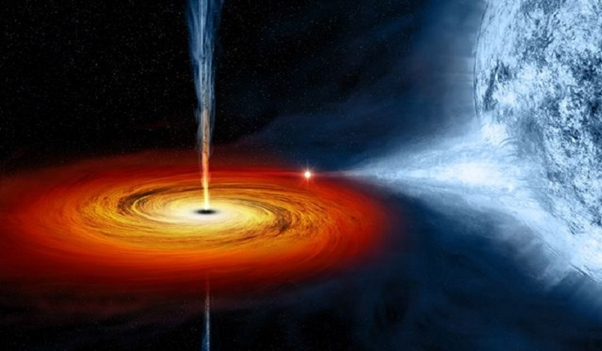
    In April 2019, the entire world was awestruck looking at the stunning images of a supermassive black hole at the center of Messier 87 (M87) – an elliptical galaxy some 53 million light-years from Earth. A team of international astronomers had achieved the impossible by imaging a black hole 6.5 billion times the mass of the Sun; considering the fact that scientists were expecting completely black images as they believed no light ever escapes it. The greatest challenge of the project was to capture hot glowing gas falling into the black hole from thousand or even millions of light-years away. Working for well over a decade, the scientists of EHT – an international network of radio telescopes called the ‘Event Horizon Telescope’ finally achieved this historic feat.

    The Challenge: Building an Earth-sized telescope

    We are all familiar with the fact that distant space objects are seen using a telescope. The ability of the telescope to see further into the space is determined by its diameter or aperture. The greater its diameter, more light it will gather and higher will be the resolution of its images.   

    Now, in order to see the black hole situated approximately 53 million light-years from Earth, the scientists were faced with a unique challenge of gathering as much light coming from it onto Earth, in very high resolution. It had to create a telescope on land with a very large aperture, preferably with a diameter as big as the planet Earth.

    How they did it?

    The scientists decided to resort to a popular technique called Very Long Baseline Interferometry (VLBI), which had been often used for imaging of far-away objects. The crux of this technique was setting up an array of smaller telescopes across locations that are synchronised to focus on the same object at the same time, acting as one giant virtual telescope. 

    The aperture of a large telescope is as large as the distance between the two farthest-apart telescope stations. In this case with stations at the South Pole and in Spain, the scientist had achieved to create an aperture of the size of Earth. So in a coordinated effort, the EHT operated from across its eight radio telescopes using different wavelengths of light in such a manner that the images it managed to capture seem to look as though taken from one huge telescope of the size of planet earth.

    Where to look for?

    ‘Sagittarius A’, a supermassive black hole was the closest to the Earth at the centre of our Milky Way galaxy at a distance of 26,000 light-years. Definitely, it was not the only black hole in our galaxy, but being closest it would appear largest of all. Being the closest to Earth and in the same Milky Way, Sagittarius A may seem a natural choice, but it had several technical challenges.

    Located in the same galaxy meant that while imaging the black hole, one had to be conscious of ‘pollution’ caused by stars and space dust, meaning that scientists would have more data and that they would have to filter it while processing it.

    Why Messier 87 (M87)?

    Located at the center of the gigantic elliptical galaxy Messier 87 or M87, is one of the largest known supermassive black hole, 53 million light-years away. It is more massive that ‘Sagittarius A’ containing 6.5 billion solar masses (i.e. one solar mass is equivalent to mass of our Sun). Importantly, it was an active black hole with matter falling into it and spewing out in the form of jets of particles. While its distance made its imaging a challenge as compared to ‘Sagittarius A’, processing the data of the image was comparatively easier.

    Mission Accomplished

    Thirteen partner institutions worked together to achieve this exceptional breakthrough, which a generation ago was presumed to be ‘impossible’, undoubtedly a rare example of ‘global teamwork’. Once again, in a joint pursuit to ‘know more about the unknown’, scientists from across the globe have managed to harness their unique technological expertise to write this innovative algorithm of ‘mankind’s triumph over matter’.

    -Manoj Mahanta

    Team ScienceNow


  • BOOK REVIEW

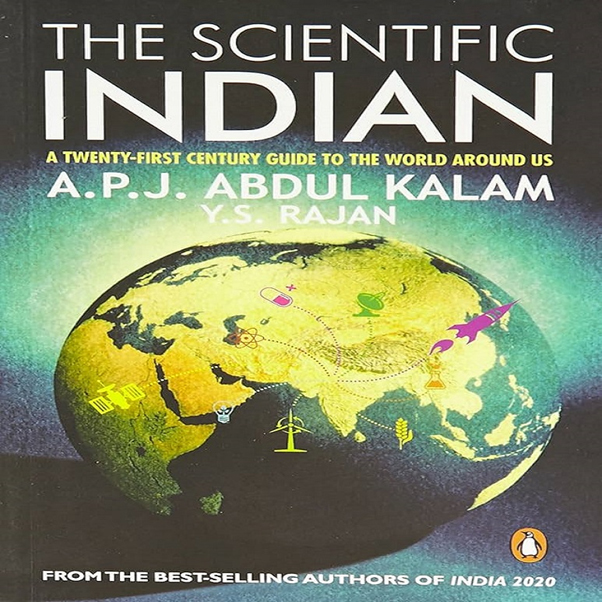
    THE SCIENTIFIC INDIAN: A 21st CENTURY GUIDE TO THE WORLD AROUND US 

    Authored by India’s missile man, Dr. A.P.J. Abdul Kalam and his associate Y. S. Rajan, ‘The Scientific Indian’ delves deep into the realization of the vision for the country’s better future. This realization will need a keen understanding of our needs and can be achieved only by modifying our research and innovations with the aim to achieve national development.

    Divided in three sections – space, earth and life.  the book answers several questions on space including how difficult it is to place satellite in orbit, how it is injected into an orbit and how satellites help to give us real-time data of natural calamities and disasters, aiding space security and defence forces. About earth, the book explains how our blue planet is unique and is located perfectly so as to use sun’s energy in order to nurture life. The book also explains the origin and evolution of Earth. The book concludes with dealing with life on Earth with the importance of food, crop production, and irrigation systems and fertilizers which can boost produce and fetch resources. The section also aims at the need for better technology, energy, electricity and water for a better India.

    -Team ScienceNow Digital

  • Know Geology…

    Earth’s Magnetic Field

    Know Geology in this new series ‘Know Geology’,,,

    We live on the planet Earth. The Earth is our provider of all of our needs. As we all know, there are various sources of radiation present on the Earth, such as Uranium, etc. There is also cosmic radiation surrounding us, although the intensity of the radiation is so low that it cannot directly harm us. However, there is a massive amount of radiation in the vast expanse of the universe. Even the Sun emits powerful ultraviolet radiation, which is able to cause fatal cancer like illnesses. Then why is this radiation not able to harm us? The answer lies with the Earth’s magnetic field.

    But how has this magnetic field generated? When the Earth was formed around 4.5 billion years ago, she was a hot ball of molten rocks. As the time passed, the Earth’s interior segregated into 3 parts: crust, mantle and core. This core is made of iron and nickel. The core can be divided into outer core and inner core. The outer core is hot, and therefore in liquid state, while the inner core is also hot, but in solid state due to the pressure from surrounding crust, mantle and outer core. Still, the iron particles present in the inner core are constantly moving. When the iron particles on the surface of the inner core get relatively cooler than the particles inside the inner core, they get denser, and move towards the center of the inner core. At the same time, the relatively warmer and lighter iron particles from the interior of the inner core tend to move towards its surface. This movement of the iron particles creates electric currents in the inner core, and the currents are formed inside the inner core. These currents are called as ‘Convection Currents’. The electric currents, combined with the magnetic properties of the iron particles, generate the Earth’s magnetic field, or the magnetosphere.

    When the solar winds reach the Earth, they interact with the Earth’s magnetic field, and the interaction causes a glow in the atmosphere. This event is called as ‘aurora’. Generally, due to the bipolar nature of the magnetic field, aurora is only visible in the north and south poles. But when the solar activity is intense, the aurora will move away from the poles, and may be visible even at lower latitudes. An excellent example of this activity was observed on April 22 and 23, 2023, when the solar activity was so intense that the aurora was visible in Ladakh in northern India.

    This magnetic field protects the Earth and her inhabitants from harmful cosmic radiation. However, this magnetic field is not completely invincible. In case of strong cosmic activity, the high solar winds can disturb the magnetic field, and geomagnetic storms can penetrate the Earth’s magnetosphere. This can result in the widespread radio and power blackouts. During the greatest solar storm ever recorded, known as the ‘Carrington Event’ in 1859, the solar activity was so intense that the northern aurora moved down to Hawaii and Cuba, while the southern aurora moved up to Santiago, capitol of Chile. This event caused severe disruption of telecommunication around the world, as the telegraph poles were fried and communication was stopped. Similar event took place in 1989, plunging the province of Quebec, Canada into 12 hours of electrical blackout.

    Due to this magnetic field, there are charged particles trapped in the atmosphere. The area where the charged particles lie is called as the ‘Van Allen Belt’. The Van Allen Belt is supposed to be uniform around the Earth, but that is not the case. In some places, the Van Allen Belt has come closer to the Earth’s surface. In these areas, conflict between the Van Allen Belt and the Earth’s magnetosphere results in the reduction of the Earth’s magnetic field. In the southern Atlantic Ocean, there is such an area, where the strength of the Earth’s magnetic field is significantly lower than that of the rest of the Earth. This anomaly known as the ‘South Atlantic Anomaly’. Apart from the interaction with Van Allen Belt, there are few other factors, which play a crucial role in the reduction of the magnetic field. These factors include global warming, climate change, use of chlorofluorocarbons, etc. Without the magnetic field, the powerful solar winds would blow away the Earth’s atmosphere, and cause fatal cancer like illnesses on the Earth. The Earth as we know her would not exist, and instead a desolate planet would remain behind, should the Earth’s magnetic field vanish.

    -Ninad Bhagwat

    Montana Technological University, USA


  • A VISIONARY IN INDIAN AGRICULTURE

    A VISIONARY IN INDIAN AGRICULTURE

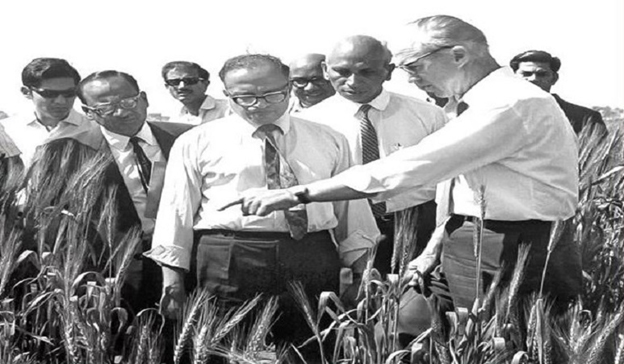
    Dr. M.S. Swaminathan, a luminary in the field of Indian agriculture, bid farewell, leaving behind a legacy that has forever transformed the nation’s farming landscape. Born on August 7, 1925, in Kumbakonam, Tamil Nadu, Dr. Swaminathan’s journey was guided by the values instilled in him by his parents, setting the stage for his remarkable contributions to agriculture.

    In 1946, inspired by Mahatma Gandhi’s vision of providing sustenance to every household, Dr. Swaminathan redirected his career from medicine to agricultural research. His academic pursuits took him to prestigious institutions worldwide, culminating in a Ph.D. in genetics from the University of Cambridge. His expertise in potato breeding, honed during a postdoctoral stint at the University of Wisconsin, became instrumental in his future endeavors.

    The turning point arrived in the early 1960s when Dr. Swaminathan learned of the high-yielding wheat varieties developed by American scientist Norman E. Borlaug in Mexico. Recognizing their potential, he forged a partnership with Dr. Borlaug, setting the stage for India’s Green Revolution.

    As a plant geneticist at the Indian Agricultural Research Institute, Dr. Swaminathan meticulously crossbred Borlaug’s strains with others, resulting in a robust wheat variety that revolutionized Indian agriculture. In 1966, he assumed the role of director at the Indian Agricultural Research Institute, successfully advocating the import of Mexican wheat seeds—an audacious move that yielded a bountiful harvest and self-sufficiency in wheat and rice production by 1974.

    Dr. Borlaug, Nobel laureate for his agricultural contributions, acknowledged Dr. Swaminathan’s pivotal role, cementing their collaboration’s significance in the Green Revolution’s success across Asia.

    Dr. Swaminathan’s impact extended globally during his tenure as Director General of the International Rice Research Institute from 1982 to 1988. His “evergreen revolution” vision emphasized water conservation, genetic diversity, and energy efficiency, setting a sustainable path for global agricultural practices.

    Dr. Swaminathan’s advocacy for India’s farming community was unwavering. As chairman of the Farmers Commission, he championed policies leading to the National Farmers Welfare Policy, ensuring fair compensation for farmers and earning their respect and gratitude.

    Dr. Swaminathan’s accolades, including the World Food Prize and Magsaysay award, underscored his exceptional dedication to agriculture and rural development. India recognized his immense contributions with the Padma Bhushan and Padma Vibhushan.

    Beyond his role as a scientist, Dr. Swaminathan emerged as a statesman dedicated to the welfare of India’s farmers. His Lab-to-Land program directly transferred agricultural technologies to farmers, bridging the gap between science and practical implementation.

    As we bid farewell to this visionary, we remember him as a meticulous planner and a revered figure. Dr. Swaminathan’s love for India’s peasants and agriculture was unwavering. His passing leaves an irreplaceable void in the agricultural scientific community.

    In conclusion, we cannot help but reflect on India’s missed opportunity to honor Dr. Swaminathan further. His contributions were nothing short of extraordinary. Dr. M.S. Swaminathan’s life’s work, which transformed India’s agricultural landscape and secured its food future, deserved the highest recognition—conferment of the “Bharat Ratna.” India’s Green Revolution remains indebted to this extraordinary son of the soil, and his memory will forever inspire us to strive for a better, more abundant future in agriculture. His legacy endures as a beacon of hope, guiding generations toward a prosperous tomorrow.

    -Prof (Dr) Sanjay Deshmukh

    Former VC, Mumbai Univ

    Close associate of  Dr Swaminathan

    at MSSRF, Chennai

  • Mission Shakti – DRDO’s Anti-satellite Weapon

    Mission Shakti – DRDO’s Anti-satellite Weapon

    India has become the fourth country after the US, Russia and China to acquire the capability of space warfare. Indian scientists successfully conducted Mission Shakti, shooting down a live satellite target in the Low Earth Orbit (LEO)

    A Low Earth Orbit refers to an altitude up to 2,000 km. A satellite in the LEO can monitor activities on the ground and water surfaces. Such a satellite can be used for espionage and pose serious threat to the country’s security in the instances of war.

    A-SAT can target LEO satellite

    An anti-satellite missile, the one that was fired by the scientists of the Defence Research and Development Organisation (DRDO), can target LEO satellite. The missile can incapacitate or completely destroy the satellite in the LEO range. India is only the 4th country to acquire such a specialised and modern capability, and the entire effort is indigenous.

    India possess “Building Blocks”

    The United States was the first nation to build space warfare capability that it developed in late 1950s. The erstwhile USSR followed the US and had acquired this capability by early 1960s. China was the third country to launch A-SAT. China conducted its first A-SAT test in 2007. No country has used an A-SAT against another nation till date. In all the instances, the nation’s testing anti-satellite missiles have targeted one of their defunct satellites to showcase their space warfare capabilities.

    -Noel Fernandez

    Team, ScienceNow Digital

  • Xenobots, the Novel Living Machines

    Xenobots, the Novel Living Machines

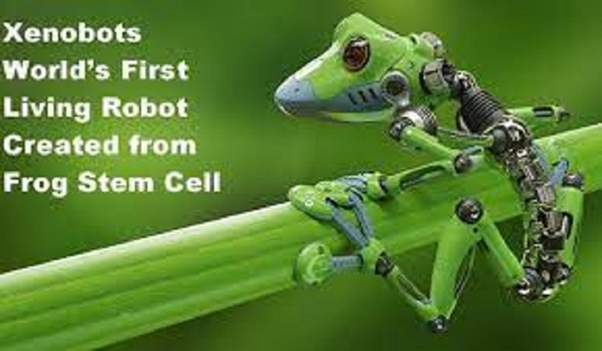
    Scientists of Tufts University and University of Vermont succeeded in creating an entirely new life-form – the Xenobots, using stem cell of an African clawed frog (Xenopus Laevis). With the creation of the world’s first living self-healing robots, these scientists have transported the entire mankind a tad closer to the
    sci-fi world of unlimited possibilities. It wouldn’t be wrong to say that mankind has inched nearer to ‘knowing the unknown’. These living machines capable of surviving in adverse conditions without food for weeks together are being looked at as a major breakthrough in robotic technology. Largely, because these millimetre-long micro-machines can walk and swim inside human bodies, and also work together in groups.

    New Living Species or Robots

    In the words of Joshua Bongard, a lead researcher on the project, “Xenobots are neither a traditional robot nor a known species of animal. They are a new class of artefact – living, programmable organisms.” Certainly, they are not the traditional robots with complex gears and machines, instead they are biological machines – tiny blob of moving pink flesh, capable of doing things that robots of steel and plastic simply cannot. And being a biological entity, the Xenobots are more environmentally friendly and safer for human health. While Xenobots could be used to carry medicine inside human bodies or even travel into our arteries to scrape out plaque or neutralise abnormal cellular growth, what makes them really special is the fact that Xenobots could also help researchers learn more about cell biology – opening the doors to future medical advancements in human health and longevity.

    A Panacea for all diseases

    When researchers cut the Xenobots into smaller entities and leave them to incubate, they multiplied and repaired themselves, and what’s more exciting is they could join together the Xenobots under a microscope. So, in near future, there is every possibility of medical professionals using Xenobots to repair birth defects, reprogram tumours into normal tissues, regenerate body parts after traumatic injury or degenerative disease, and to a great extent also reverse aging bodies. We are witnessing the beginning of a new era of ‘regenerative medicine’ whereby the affected body part or organ could be ‘regrown’ and ‘reprogrammed’ into normalcy akin to the miraculous hi-tech interventions seen in some of the recent sci-fi movies.

    Why the need for living Robots?

    Conventionally, robotic technology platforms have used steel, rubber or plastic to make robots that are strong, durable and flexible. But now, when the entire world is struggling with plastic and electronic waste, and there is a growing pressure on manufacturers to look for a ‘greener’ solution. Working with living robots has its own upside – these organisms have 4.5 billion years of evolutionary intelligence embedded that helps them regenerate and keep working for decades, which is not the case with robots made of plastic or steel that tend to break-down more often. And more importantly, whenever these living robots happen to stop working (i.e. death), they would just fall apart harmlessly without adversely impacting the environment. For instance, Xenobots are fully bio-degradable just like any dead skin cells.

    Cracking the Biological Code

    On the road to creating living robots, it’s critical that we learn about how cells communicate and connect with one another. We ought to understand the algorithms of living cells that determines form and function. There is a lot of information sharing and cooperation – organic computation going on in and between cells all the time, not just within neurons. These interactions are shaped by bioelectric, biochemical and biomechanical processes, and interestingly these processes are reconfigurable – posing a challenge for future technologists and scientists who are desirous of creating new living entities.    

    Preparing for Future Shock

    While many are worried and anxious of the possible implications when one goes about tinkering with something that is hitherto ‘unknown’ – the rapid technological changes and complex biological manipulations we are doing to the living without being fully aware about its consequences. In short, should the organisms enjoy the same level of protection that animals or humans have been assigned with, to check mischief or unwarranted experimentation.

    Ethically speaking, when we are not completely sure and/or in complete control of events whilst creating a new life form, it is good not to do things that would jeopardise the future of humanity. So it is important that we tread the path cautiously and try to engage responsibly in only technologies critical for the well-being of the planet.

    -Manoj Mahanta

    Team ScienceNow Digital

  • Moonbound: Apollo 11 and the Dream of Spaceflight

    Book Review

    Moonbound: Apollo 11 and the Dream of Spaceflight

    On a summer night in 1969, two men climbed down a ladder onto a sea of dust at the edge of an ancient dream. When Neil Armstrong and Buzz Aldrin first set foot on lunar soil, the moon ceased to be a place of mystery and myth. It became a destination. Now, on the fiftieth anniversary of that journey, Moonbound tells the monumental story of the moon and the men who went there first. With vibrant images and meticulous attention to detail, Jonathan Fetter-Vorm conjures the long history of the visionaries, stargazers, builders, and adventurers who sent Apollo 11 on its legendary voyage.

    From the wisdom of the Babylonians to the intrigues of the Cold War, from the other worldly discoveries of Galileo to the dark legacy of Nazi atrocities, from the exhilarating trajectories of astronauts―recounted in their own words―to the unsung brilliance of engineers working behind the scenes, Moonbound captures the grand arc of the Space Age in a graphic history of unprecedented scope and profound lyricism.

    -Team ScienceNow Digital

  • Film Review

    Film Review

    Dune

    A mythic and emotionally charged hero’s journey, “Dune” tells the story of Paul Atreides, a brilliant and gifted young man born into a great destiny beyond his understanding. He must travel to the most dangerous planet in the universe to ensure the future of his family and his people. As unkind forces explode into conflict over the planet’s exclusive supply of the most precious resource in existence – a commodity capable of unlocking humanity’s greatest potential…only those who can conquer their fear will survive.

    -Team ScienceNow Digital