science share account_circle

Category: Featured

  • The International Day of Scientific Culture

    The International Day of Scientific Culture

    September 28 is marked as the anniversary of the beginning of the broadcast of one of the most iconic nonfiction science-based series, “Cosmos” led by legendary Carl Sagan, “Cosmos” was one of the most influential scientific outreach programs in history. This date is chosen to celebrate the International Day of Scientific Culture (IDSC) each year.

    Importance

    The International Day of Scientific Culture (IDSC) aims to highlight the importance of scientific culture in today’s world and celebrate activities and institutions that provide spaces for people to make science a relevant part of their lives.

    With major global-scale challenges such as Climate Change, Energy Demand and the Sustainability of Societies, it is of paramount importance to engage and empower people through science, as the means to informed decision-making to address such issues. Our efforts are critical to the future of humanity and the well-being and the health of our planet.

    Goal

    The goal of IDSC is to disseminate the concept of scientific culture, highlighting its importance in today’s world; promoting the integration of science as part of citizen culture; and underscoring the need for citizens in general to be scientifically educated. The anniversary of the start of the broadcasts of the series ‘Cosmos’, is chosen to celebrate each year as International Day of Scientific Culture.

    Foundation

    The IDSC was recognized for the first time in 2020 in nine countries.

    The institutions who founded the initiative in 2020 was Mexican Society for the Communication of Science and Technology, Mouvement International pour le Loisir Scientifique Et Technique (MILSET), Youth Science and Technology Activities National Network (Mexico), Mexican Network of Science Recreation Workshops, Fibonacci Innovation and Scientific Culture (Mexico), CIENTEC Foundation (Costa Rica), Distance State University (Costa Rica), National Laboratory of Nanotechnology (Costa Rica).
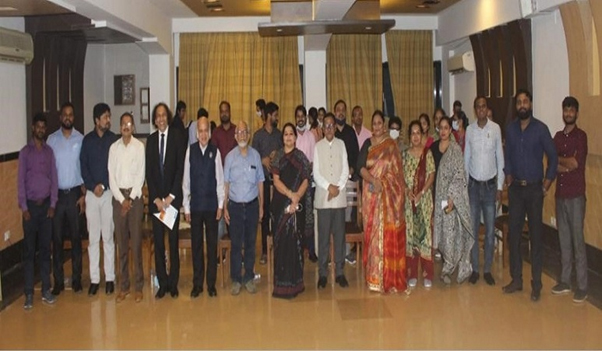
    International Day of Scientific Culture was first Celebrated in India at Guru Nanak College in Collaboration with National Centre of Science Communicators, Mumbai

    Role of Science

    Science is a powerful tool to understand reality and to use it to solve the needs and problems that are presented to us. Science is a human enterprise and in terms of Values, Knowledge and Applications. Science is the key element in the development of Society.

    People require a Scientific Culture for the general understanding of the Role of Science in the Development of Society which will lead to empowered Scientifically Cultured Citizens

    The IDSC focuses on activities and institutions that provide ways for people to appreciate science as an important part of their lives.

    COSMOS Legacy

    “Cosmos” and the IDSC share one common ideal: science is for everyone.  Ann Druyen, who co-author of “Cosmos” with her husband, Carl Sagan, the series aimed to “tear down the walls that have excluded the rest of us from the scientific enterprise.”

    This important goal creates the foundation for society’s citizens to become more educated in scientific principles, which is necessary for not only the progression of our planet’s citizenry but the continuation of the planet itself.

    Need

    Many institutions and individuals around the world contribute to strengthening scientific culture through public communication of science. But more needs to be done. Therefore, in 2020 a group of institutions launched the initiative of the International Day of Scientific Culture.

    Despite the fact that IDSC was created to contribute to strengthening scientific culture through public communication of science, more needs to be done to bring into the scientific fold the number of engaged, knowledgeable citizens needed to enact change. The more we know about the scientific principles and processes driving the changes our planet experiences and needs we uncover, the more we can encourage those who make the decisions surrounding the topics important to our survival.

    Action

    Institutions, as well as individuals, can celebrate the IDSC through one or more activities

    Disseminating the Concept of Scientific Culture,

    Highlighting its importance in today’s world,

    Promoting the Integration of Science as part of citizen Culture

    Highlighting the need for Citizens in general to be Scientifically Educated.

    India is the first and the only country to explicitly adopt Scientific Temper in its constitution. Article 51A(h) was added under the Fundamental Duties which states that ‘It shall be the Duty of every citizen of India to Develop Scientific Temper, Humanism and the Spirit of Enquiry and Reform.

    With India advancing rapidly in Science and Technology a New Scientific Culture is setting in. India is making rapid strides in every sphere of Scientific Activity. With the young dynamic population as the asset India is set to be the World Leader

    Let’s inculcate and establish Scientific Culture… Celebrate’ International Day of Scientific Culture’

    Dr Siddhivinayak Barve

    Editor, ScienceNow Digital
  • Science Personified : Carl Sagan

    Science Personified : Carl Sagan

    An ode to Carl Sagan, the man who reached the stars and unfolded the COSMOS bringing in

    Scientific Culture…

    We live in a time dominated by science and technology and yet it sometimes seems that almost no one understands very much about science and technology….

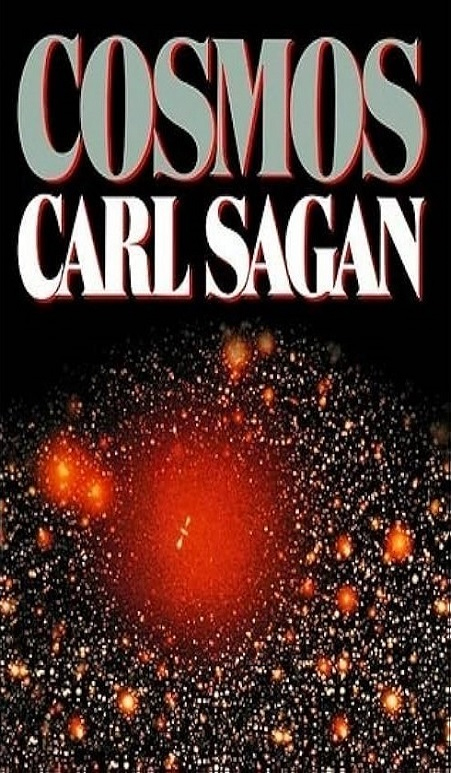
    These are the words of Carl Sagan – the most charismatic apostle of popular science who brought the marvels of the universe and the mysteries of creation to a worldwide audience of hundreds of millions in his famous Television Series ‘Cosmos’. The Thirteen Part Cosmos serial was first telecast on the television on September 28, 1980. The man who literally reached to the stars and unfolded COSMOS, inflicting Scientific Culture…In recognition, September 28 is celebrated world over as ‘Scientific Culture Day’.

    The Making of Carl Sagan

    Carl Sagan, born in Brooklyn, New York, USA on November 9, 1934 to an American mother and a Russian immigrant father was quite destined to be an astronomer… When Carl was just 12 years old, his grandfather asked him what he wanted to be when he grew up. "An astronomer," replied the boy without hesitating. A science fiction addict from his childhood, Sagan was fascinated by astronomy and he translated the dream to the reality…He was a multifaceted persona…an astronomer, astrophysicist and the director of the Laboratory for Planetary Studies at Cornell University.

    Sagan was more popularly known as a gifted and enthusiastic storyteller and showman who described cosmic phenomena with the sense of awe and wonderment. He was science personified…

    Sagan – The Science Communicator

    Carl Sagan is regarded as the best public figure in science communication. For Carl Sagan, interest in science communication came early. He was frequently interviewed by the press and became a public spokesperson for astronomy on a number of Television programs. His science was publicly minded and engaged. Alongside his work as a researcher, he was engaged as an educator, public communicator and activist. The television series Cosmos is the epitome of his legacy… He strongly believed that it is important for scientists to be involved in communicating science to the public. The 13-part television series Cosmos was viewed by over 500 million viewers all over the world.  Cosmos covered the 15billion-year history of the universe, from the creation to the present.

    Sagan – The Writer

    Carl Sagan was a prolific writer. He wrote a series of essays in magazines. His essays like ‘The Gift of the Apollo’ passionately made the case to the American public for the value of space exploration. He has authored a number of books, the prominent amongst them are like ‘Pale Blue Dot’: A Vision of the Human Future in Space and ‘Demon Haunted World’: Science as a Candle in the Dark and his novel ‘Contact’ he worked to communicate the importance and values of science to the world at large. He also wrote ‘The Dragons of Eden: Speculations on the Evolution of Human Intelligence, which won a Pulitzer Prize for literature and Brocas Brain; a popular book in which he traced the evolution of the human brain. His book, Demon Haunted World; a critique against pseudoscience is also amongst most read books.

    Sagan – The Researcher

    Throughout his career, Carl Sagan was engaged in basic scientific research of Solar System. He was very active in the search for extra-terrestrial life and extra-terrestrial Intelligence and worked extensively in the science of exobiology, the study of extra-terrestrial life. He was interested and was an ardent believer in the existence of intelligent civilizations in the COSMOS and in the possibility of Life beyond Earth. He estimated that there may be as many as 1 million advanced civilizations in our galaxy alone.

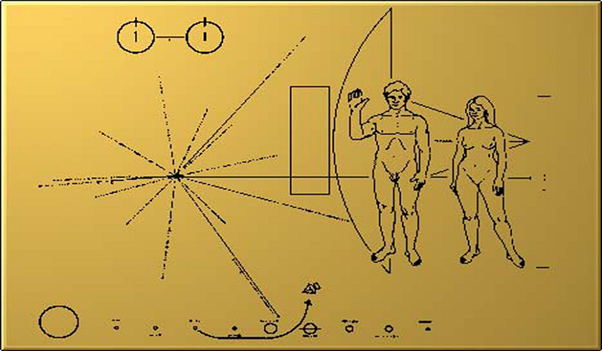
    Sagan was adviser on the Mariner, Voyager and Viking unmanned space missions for NASA. He has worked out the Scientific Objectives of the Voyager Mission. He designed the famous plaque on the Pioneer 10 spacecraft depicting the man and women raising their palm as a message of peace for the far-off intelligent civilization in the sky in case the spacecraft comes in contact with extra-terrestrial life. Pioneer-10 was the first man-made object to travel beyond our Solar System.

    Sagan – The Champion Activist

    Carl Sagan was a noted Professor who taught a range of courses at Stanford, Harvard and Cornell Universities. Besides instruction for students and scientists, Sagan was also passionate about teaching non-science majors about the importance of scepticism and scientific habits of mind on critical thinking in science and non-science contexts at Cornell University. Sagan made direct appeals to the public on the importance of understanding and supporting science and the threats of nuclear proliferation. Those pronouncements made Sagan a champion of organizations advocating a ban on nuclear testing and a halt to development of nuclear weapons.


    ‘The Cosmos is all that is or ever was or ever will be’ tells Sagan in the opening narration of Cosmos and in the final episode covers the 15 billion years from the big bang of creation to the present, using a calendar year as a point of reference. In this scenario Sagan tells if January 1 is the Big Bang day and the Universe is created, on this scale Dinosaurs would appear on this earth only by Christmas eve and the written record of human civilizations occupies only the final 10 Seconds of the last day of the year which is to the present….


    Dr Siddhivinayak Barve

    Ediator, ScienceNow Digital

  • Mission Sun : Aditya-L1

    Mission Sun : Aditya-L1

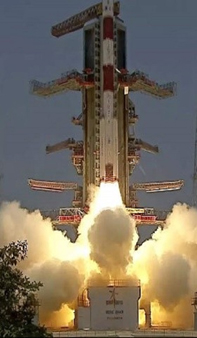
    After successful Lunar Mission Chandrayan-3, India is now leaping towards Sun. India’s Space Mission to Sun is Launched on Sept 2nd from Satish Dhawan Space Centre, Sriharikota atop PSLV rocket. The mission is called Aditya-L1

    Aditya-L1

    A spectacular launch deployed Aditya-L1 into Earth’s orbit

    The successful launch of Aditya-L1 marks the culmination of over 15 years of planning. The mission began life in January 2008 as a small 400 kg (880 lb) satellite that would remain in a low-Earth orbit. The scale of the mission grew significantly over a decade and a half of strategizing, and it was given a new name “Aditya-L1″ . 

    The Aditya-L1 spacecraft is 1475 Kg mass satellite. It is a cube-shaped satellite The Aditya-L1 when unfolded the spacecraft will have two wings with two solar panels, which will assist the spacecraft’s lithium-ion battery to provide power to Aditya-L1 with power. The craft will monitor its position with a miniaturized GPS receiver, which provides the position, velocity and time data in real time

    Solar Obervatory

    Aditya-L1 is a solar observatory operated by the Indian Space Research Organisation (ISRO). The solar observatory will monitor the sun with seven specially designed distinct scientific payloads, five of which have been developed by the ISRO. It will do so from its position at a gravitationally stable point in the Earth-sun system called Lagrange point 1,   around 1 million miles from Earth. 

    Placement at L1 will allow the spacecraft a view of the sun that is uninterrupted by eclipses or occultations. The proximity to Earth will also allow the mission to study Earth’s magnetic field. The duration of its mission, which is estimated to be around 5.2 years.

    Scientific Instruments

    The Aditya-L1 craft has a payload of 7 scientific instruments, each with distinct functions, which weigh around 244 Kg on the spacecraft’s top deck. The instruments of Aditya-L1 has are Magnetometer (MAG), Visible Emission Line Coronagraph (VELC) , High Energy L1, Orbiting X-ray Spectrometer (HEL1OS) , Solar Ultraviolet Imaging Telescope (SUIT), Solar, Low Energy X-ray Spectrometer (SoLEXS), Aditya Solar wind Particle EXperiment (ASPEX) and Plasma Analyser Package for Aditya (PAPA)

    Solve Mysteries

    The journey to L1 after launch is estimated to take around 110 days, over which time five further manoeuvres will be performed to give the spacecraft the velocity needed to reach this gravitationally stable point. When arriving at L1, Aditya-L1 will execute a further manoeuvre to “bind” itself to an orbit around the location. The orbit established around 127 days after launch will be irregularly shaped and will be in a plane approximately perpendicular to a line joining the sun and Earth.

    Indian Space Research Organisation’s Aditya-L1 mission is now orbiting Earth, studying the sun and attempting to solve pressing solar mysteries.

    -Dr Siddhivinayak Barve

    Editor, ScienceNow Digital


  • BOOK REVIEW

    How Great Is Our God? The question is borderline between Science and Spirituality…

    The Book ‘100 Indescribable Devotions about God and Science’ brings out the compilation….

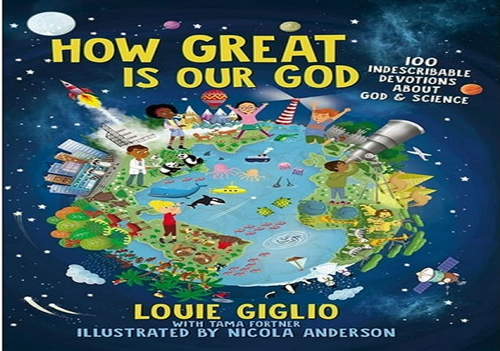
    Pastor Louie Giglio has compiled 100 more devotions that invite kids to explore the wonders of the universe, from the deadliest creature on Earth (the sea wasp jellyfish) to spider rain in Australia to the Earths trip around the sun.

    Written for elementary-age kids who are curious about the natural world and Gods role in it, the book: “How Great Is Our God – 100 Indescribable Devotions about God and Science” is packed with amazing scientific facts, beautiful photography, and fun illustrations by the same artist who illustrated Indescribable (Nicola Anderson), covering topics such as space and time, earth and weather, the human body animals, plants and more!

    -Team ScienceNow Digital

  • FILM REVIEW

    Ghostbusters : Afterlife

    Enjoy the suspense of the myth and reality screened very effectively in Ghostbusters…

    That’s right, folks, another Ghostbusters film! Only this time we are going back to the original 1980’s gang of Murray, Aykroyd, Hudson, and Weaver returning to their original roles. Joining the crew will be Paul Rudd and Stranger Things star Finn Wolfhard. The third Ghostbusters film has been in various stages of development since Ghostbuster II in 1989 and is now finally seeing the light of day released on July 10, 2020.

    Taking place thirty years after the events of the second movie, the plot follows a single mother and her two children who move to Summerville, Oklahoma after being evicted from their home and inherit property from their late grandfather, Egon Spengler. When the town experiences unexplained earthquakes; the children discover their link to the original Ghostbusters who have become something of a long-forgotten myth.

    -Team ScienceNow Digital

  • Temples of Modern India

    Temples of Modern India

    Bhabha Atomic Research Centre

     “Research reactors are the backbone of the Nuclear Programme…” – Dr. Homi J. Bhabha

    Located in the hustling-bustling city of Mumbai, the Bhabha Atomic Research Centre (BARC) is the country’s leading nuclear research facility initiated by Dr. Homi Jehangir Bhabha. The centre’s huge infrastructure is a perfect platform for R&D (research and development) offering an entire gamut of nuclear science, engineering and related areas.

    BARC’s ideology is to use nuclear energy, basically for generation of power. The centre accomplishes all facts of nuclear power generation, from theoretical design of reactors to computerised modelling and simulation, risk analysis, development and testing of new reactor fuel materials to name a few. BARC also does research in spent fuel processing, and safe disposal of nuclear waste. Other research areas for BARC are applications for isotopes in industries, medicine, agriculture, etc. The centre also operates a number of reactors across India.

    Creation of BARC

    It was on 3 January1954 that the Government of India created the Atomic Energy Establishment, Trombay (AEET). The idea behind creating AEET was to unite all the R&D activity for nuclear reactors and technology under the Atomic Energy Commission (AEC). All scientists and engineers who were involved in various areas of reactor designing and development, instrumentation, metallurgy and material science etc., were transferred with their respective programmes from the Tata Institute of Fundamental Research (TIFR) to AEET; with TIFR retaining its original focus for fundamental research in the sciences. After Dr. Homi Jehangir Bhabha’s death in 1966, the centre was renamed as the Bhabha Atomic Research Centre on 22 January 1967.

    Mega Research Hub

    At the Gamma Gardens, BARC conducts research in biotechnology, and has developed a number of disease resistant and high-yielding crop varieties, especially groundnuts. It also conducts research in Liquid Metal Magnetohydrodynamics for power generation.

    On 4 June 2005, the centre started the Homi Bhabha National Institute with the goal of encouraging research in basic sciences. Research institutions affiliated to BARC include IGCAR (Indira Gandhi Centre for Atomic Research), RRCAT (Raja Ramanna Centre for Advanced Technology), and VECC (Variable Energy Cyclotron Centre). Power projects that have benefited from BARC expertise but which fall under the NPCIL (Nuclear Power Corporation of India Ltd) are KAPP (Kakrapar Atomic Power Project), RAPP (Rajasthan Atomic Power Project), and TAPP (Tarapur Atomic Power Project).

    The Bhabha Atomic Research Centre in addition to its nuclear research ideology also conducts research in other state-of-the-art technology areas like accelerators, micro electron beams, materials design, supercomputers, and computer vision etc. BARC has designed and developed for its own use a series of supercomputers – ‘Anupam’ using latest technology.

    -Dr Siddhivinayak Barve

    Editor, ScienceNow Digital
     

  • Smiling Buddha – India’s first Nuclear Test

    Smiling Buddha – India’s first Nuclear Test

    After the war against Pakistan in 1971, the then Prime Minister, Indira Gandhi who was touring the Bhabha Atomic Research Centre (BARC) in September of 1972 approved of a nuclear test. Without any hesitation, Physicist Raja Ramanna and chief of BARC at that time, took a team of around 75 scientists to design and build the plutonium implosion device. The test was kept as secret as possible and all the work on the project was carried under great secrecy.

    Successful test

    The Indian Army was given the work to dig a test shaft of about 330 feet underground at the Pokhran test site, Rajasthan. On May 18, 1974, the 1360 kilograms device exploded with a force equivalent to 8 kilotons of TNT. Immediately after the test was conducted, Ramanna reportedly informed Indira Gandhi of the successful test through a coded message: “The Buddha is smiling.” Although officially known as Pokhran I, the 1974 test was informally named ‘Smiling Buddha.’ A number of countries condemned India’s nuclear test. While Canada pulled its support for the Indian nuclear program shortly afterwards; United States considered the test a violation of the Atoms for Peace program and responded with sanctions against India.

    Superpower

    After its successful nuclear test of 1974, India took more than 20 years to build a nuclear arsenal and delivery system capable of military deployment. In the years after Smiling Buddha, India had significant difficulty procuring nuclear materials after international market refused to support its stand. Despite these challenges, the BARC leadership managed to construct their biggest nuclear plant to date—the Dhruva reactor at Trombay in 1977, which would produce most of the plutonium for India’s nuclear weapons program. The Indian government also approved a ballistic missile program in 1983. Over the next decade, the Defense Research and Development Laboratory (DRDL) built the short-range Prithvi missile and the long-range Agni missile. Both were eventually equipped with nuclear warheads.

    Operation Shakti also known as Pokhran II took place on May 11, 1998. India tested five nuclear devices, although not all of them detonated. Indian officials claimed that the bombs had a yield equivalent to 45 kilotons of TNT, but independent estimates put the number closer to 16 kilotons. “India is now a nuclear weapons state,” declared Prime Minister Vajpayee days after the tests, adding that “we have the capability of making big bombs for peaceful purpose.”

    -Dr Siddhivinayak Barve

    Editor, ScienceNow Digital
  • India Rising

    India Rising

    Memoirs of a Scientist

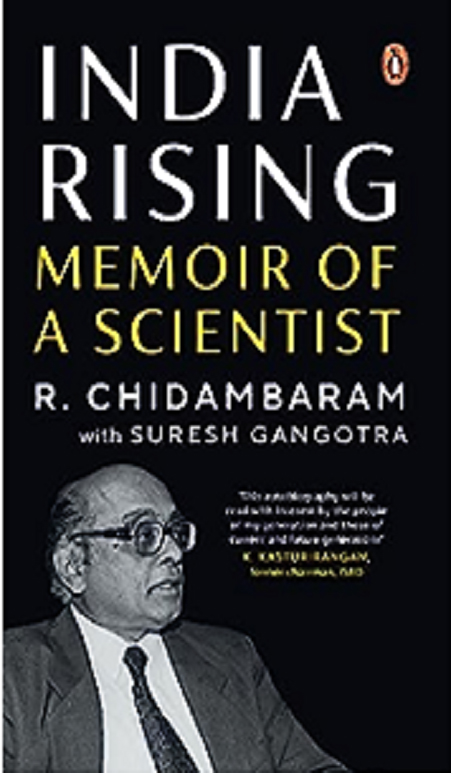
    As we celebrate the Independence Day… a rare celebration in the form of a Book titled India Rising…unfolding memoirs of a Scientist none other than Dr Chidambaram has been published…

    Dr. Chidambaram is one of the tallest figures, not only in the Department of Atomic Energy but also in Science in India. He has been at the helm of many institutions and organisations including the Principal Scientific Adviser to the Government of India. It is indeed welcome that he has penned his journey in the form of this book.

    The book covers his long journey, his greatest contribution is in the Peaceful Explosion Experiment tests in 1974, and then the Nuclear tests in 1998. These two landmark events have changed the course of not only the Department of Atomic Energy, but also of the nation

    India and particularly the Department of Atomic Energy works closely with International Atomic Energy Agency, with its headquarters at Vienna. Dr. Chidambaram has held the chair of Board of Governors of IAEA. During his tenure he has not only advanced the cause of the Agency, but also taken care of India’s interest. He narrates his experience with additional inputs from Dr. Raghuraman.

    He has served as Principal Scientific Adviser to the Government of India for 17 years. During his tenure, he has initiated many projects. Of particular interest are the national knowledge network, and the Rural Technology Action Group. He is passionate about identification and development of gifted children. The book covers various aspects of science like interdisciplinary aspects of science, importance of basic science, women in science and so on. During his long tenure, he has worked with many prime ministers. There is an interesting account on his interactions with the prime ministers.

    He has played a key role in opening up of the nuclear trade with the world. Post 1998, this needed a lot of work, including understanding of the world order and India’s unique position. In the present book Ambassador D.B. Venkatesh Verma has provided a fascinating account of Dr. Chidambaram as a diplomat.

    .The book encompasses the journey of science of India since Independence, is a great treasure of information that will serve as motivation to the young children and students, of not only science but also national history.

    -Dr Suresh Gangotra

    Co-Author, India Rising


  • Indian Space Research Organization

    Indian Space Research Organization

    “The development of the nation is intimately linked with understanding and application of science and technology by its people.” – Dr. Vikram Sarabhai

    The space research activities were initiated in India during the early 1960’s. Dr. Vikram Sarabhai – the founder of the Indian space programme, envisioned that space research would help address the needs of humankind and lead the nation to progress.

    Inception of Space program

    Dr. Sarabhai summoned brilliant scientists, anthropologists, communicators, environmentalists and engineers from across the nation to build the Indian space programme that focused on building satellites for communication and remote sensing, space transportation system and application programmes.

    He set up the Thumba Equatorial Rocket Launching Station (TERLS) which pioneered the manufacturing sounding rockets in India. He also initiated Satellite Instructional Television Experiment (SITE) so as to transmit education to remote regions across India. The Government of India set up the Indian National Committee for Space Research (INCOSPAR) under the leadership of  Dr. Sarabhai and Dr. Ramanathan. The first Experimental Satellite Communication Earth Station (ESCES) that was set up in 1967 also became a training centre for Indian and international scientists and engineers.

    Setting up of ISRO

    The time was ripe to harness space technology for India’s development. In 1969, the Indian Space Research Organisation (ISRO) replaced INCOSPAR. The Satish Dhawan Space Centre was formed in Sriharikota, Andhra Pradesh in 1971. The following year, the Department of Space (DoS) was established and ISRO was brought under it. It was now crucial to set up a satellite system that can contribute to the national development. In 1980, ISRO successfully launched its own satellite Rohini-1 from Sriharikota. The launch enlisted India as the eight nation to prove its space technology prowess.

    Leap of success

    Today, space technology in India has brought immense progress and added the nation into an elite club of developed countries. India has become the sixth largest space agencies in the world. ISRO maintains one of the largest fleet of communication satellites (INSAT) and remote sensing satellites (IRS) for reliable communication, earth observation, satellite navigation, climate and environment. ISRO has also developed two satellite launch vehicles – PSLV and GSLV to place satellites in the Earth’s orbits. The vehicles have become favoured satellite carriers by other nations, thereby fostering international associations.

    Contribution towards education

    Apart from technological capability, ISRO has immensely contributed to science and education by initiating several autonomous institutions and research centres, promoting studies in astronomy, astrophysics, atmospheric sciences and space sciences. ISRO’s massive lunar missions (Chandrayaan 1 & 2) and planetary mission (Mars Orbiter Mission) has encouraged scientific study and research, further promoting valuable data to the scientific community.

    Future ready

    With technology as the key to future, ISRO adheres to optimise its development of launchers, human spaceflight projects, reusable launch vehicles, semi-cryogenic engines, orbit vehicles, development and use of composite materials for space applications etc. From the humble beginnings to the massive missions, ISRO has grown as an institution of space research.

    Manoj Mahanta

    ScienceNow Digital


  • Unravelling mysteries of Space and beyond

    Unravelling mysteries of Space and beyond

    The Indian Institute of Astrophysics has over a century long legacy… the institution is pioneer in unravelling the mysteries of Space and beyond….

    The journey of India’s premier astronomy and astrophysics research institution – The Indian Institute of Astrophysics (IIA) dates back to 1786. An officer of the East India Company, William Petrie went about setting up a private observatory over his 11 acres residence in Egmore, Chennai. Back then, the observatory was used for navigational purpose. Petrie closely observed the position of the Moon’s eclipse and satellites of Jupiter to guide ships in the high sea. In 1790, the East India Company formally took over the observatory and shifting the centre to Nungambakkam, Chennai expanded its scope of work.

    Around 1881-82, in addition to photography and spectrography of the Sun and the stars using its 20-inch telescope, the observatory was being used to measure the Sun’s heating up of the earth’s surface and its periodic variation.

    A decade later, in the aftermath of a severe famine in the Madras Presidency region around July 1893 in the U.K. Secretary meeting chaired by Lord Kelvin, it was decided to establish a solar physics observatory at Kodaikanal. Thereafter the Madras Observatory served as the only astronomical observatory of India for over a century making significant contributions in the area of astronomical science.

    Achievements of the Observatory

    Indian astronomer, C. Raghunathachary’s discovery of the light variations of variable star R. Reticuli in 1867; use of spectroscope to discover gaseous nature of the prominences during solar eclipse on August 18, 1868; British astronomer, Taylor’s completion of his ‘catalogue of places’ for 11,000 stars in 1884; Norman R. Pogson, Director of the Madras Observatory for over 30 years in 1891 catalogue of over 3000 stars; John Evershed’s discovery of the phenomenon of ‘radial motion in sunspots’ in 1909 and so on.

    While Kodaikanal Observatory continued to serve as the nodal Observatory for over a century working in the area of solar and atmospheric physics, under its shadow the country saw rise of several elite and specialised space observatory centres.

    The Vainu Bappu Observatory at Kavalur housing a 2.34 metre telescope was established in 1968 for night time astronomy, spectroscopy and photometry. The Gauribidanur Radio Observatory, equipped with a 6-meter radio telescope – a radio heliograph facility to obtain two-dimensional pictures of outer solar corona, was established in 1976 to study the Sun, galaxies and pulsars. The high-altitude Indian Astronomical Observatory at Hanle in Ladake saw installation of a 2-metre Himalayan Chandra Telescope in 2001 and later setting-up of a seven-unit High Altitude Gamma Ray (HAGAR) telescope.

    Indian Institute of Astrophysics

    As the country continues its onward journey of over two centuries (i.e. since 1786) dedicatedly working in the area of astronomy and astrophysics through its network of observatories at Kodaikanal, Kavalur, Gauribidanur and Hanle, in 1971 the Indian government decided to form the Indian Institute of Astrophysics (IIA), bringing all the observatories under a single autonomous research institute headquartered at Koramangala in Bengaluru.

    -Manoj Mahanta

    Team, ScienceNow