
Mission Sun : Aditya-L1
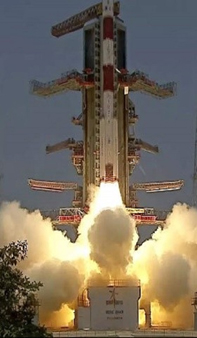
After successful Lunar Mission Chandrayan-3, India is now leaping towards Sun. India’s Space Mission to Sun is Launched on Sept 2nd from Satish Dhawan Space Centre, Sriharikota atop PSLV rocket. The mission is called Aditya-L1
Aditya-L1
A spectacular launch deployed Aditya-L1 into Earth’s orbit
The successful launch of Aditya-L1 marks the culmination of over 15 years of planning. The mission began life in January 2008 as a small 400 kg (880 lb) satellite that would remain in a low-Earth orbit. The scale of the mission grew significantly over a decade and a half of strategizing, and it was given a new name “Aditya-L1″ .
The Aditya-L1 spacecraft is 1475 Kg mass satellite. It is a cube-shaped satellite The Aditya-L1 when unfolded the spacecraft will have two wings with two solar panels, which will assist the spacecraft’s lithium-ion battery to provide power to Aditya-L1 with power. The craft will monitor its position with a miniaturized GPS receiver, which provides the position, velocity and time data in real time
Solar Obervatory
Aditya-L1 is a solar observatory operated by the Indian Space Research Organisation (ISRO). The solar observatory will monitor the sun with seven specially designed distinct scientific payloads, five of which have been developed by the ISRO. It will do so from its position at a gravitationally stable point in the Earth-sun system called Lagrange point 1, around 1 million miles from Earth.
Placement at L1 will allow the spacecraft a view of the sun that is uninterrupted by eclipses or occultations. The proximity to Earth will also allow the mission to study Earth’s magnetic field. The duration of its mission, which is estimated to be around 5.2 years.
Scientific Instruments
The Aditya-L1 craft has a payload of 7 scientific instruments, each with distinct functions, which weigh around 244 Kg on the spacecraft’s top deck. The instruments of Aditya-L1 has are Magnetometer (MAG), Visible Emission Line Coronagraph (VELC) , High Energy L1, Orbiting X-ray Spectrometer (HEL1OS) , Solar Ultraviolet Imaging Telescope (SUIT), Solar, Low Energy X-ray Spectrometer (SoLEXS), Aditya Solar wind Particle EXperiment (ASPEX) and Plasma Analyser Package for Aditya (PAPA)
Solve Mysteries
The journey to L1 after launch is estimated to take around 110 days, over which time five further manoeuvres will be performed to give the spacecraft the velocity needed to reach this gravitationally stable point. When arriving at L1, Aditya-L1 will execute a further manoeuvre to “bind” itself to an orbit around the location. The orbit established around 127 days after launch will be irregularly shaped and will be in a plane approximately perpendicular to a line joining the sun and Earth.
Indian Space Research Organisation’s Aditya-L1 mission is now orbiting Earth, studying the sun and attempting to solve pressing solar mysteries.
-Dr Siddhivinayak Barve
Editor, ScienceNow Digital
