science share account_circle

Category: Featured

  • Film Review

    O P P E N H E I M E R

    The latest Science Movie is Oppenheimer…

    It is a biopic of J Robert Oppenheimer, the “father of the atomic bomb”.

    The film depicts the saga of the man who unleashed the tremendous destructive power of Atom.

    Oppenheimer chronicles the life of the American theoretical physicist, who became the director of the Los Alamos Laboratory during World War II and invented the first nuclear weapon that would end the war.  


    Christopher Nolan has made a biopic on the man who wanted to create the perfect bomb. The film unfurls the plots from Robert Oppenheimer’s education to the Manhattan Project which led to the creation of the ‘fat boy’ which ended the world war II,

    Later however Oppenheimer realised that the weapon he has made has limitless capacity of destruction and the realisation of the horrific creation that would change the course of history.

    Oppenheimer quotes from the Bhagavad Gita: “Now I am become Death, the destroyer of worlds…”

    The film is running in theatres…

    -Team ScienceNow

  • ISRO

    The premier Research Institution – India’s Pride…

    “The development of the nation is intimately linked with understanding and application of science and technology by its people.” – Dr. Vikram Sarabhai

    The space research activities were initiated in India during the early 1960’s. Dr. Vikram Sarabhai – the founder of the Indian space programme, envisioned that space research would help address the needs of humankind and lead the nation to progress.

    Inception of Space program

    Dr. Sarabhai summoned brilliant scientists, anthropologists, communicators, environmentalists and engineers from across the nation to build the Indian space programme that focused on building satellites for communication and remote sensing, space transportation system and application programmes. He set up the Thumba Equatorial Rocket Launching Station (TERLS) which pioneered the manufacturing sounding rockets in India. He also initiated Satellite Instructional Television Experiment (SITE) so as to transmit education to remote regions across India. The Government of India set up the Indian National Committee for Space Research (INCOSPAR) under the leadership of Dr. Sarabhai and Dr. Ramanathan. The first Experimental Satellite Communication Earth Station (ESCES) that was set up in 1967 also became a training centre for Indian and international scientists and engineers.

    Setting up of ISRO

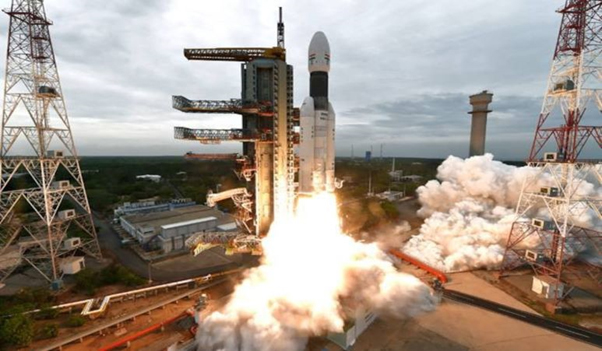
    The time was ripe to harness space technology for India’s development. In 1969, the Indian Space Research Organisation (ISRO) replaced INCOSPAR. The Satish Dhawan Space Centre was formed in Sriharikota, Andhra Pradesh in 1971. The following year, the Department of Space (DoS) was established and ISRO was brought under it. It was now crucial to set up a satellite system that can contribute to the national development. In 1980, ISRO successfully launched its own satellite Rohini-1 from Sriharikota. The launch enlisted India as the eight nation to prove its space technology prowess.

    Leap of success

    Today, space technology in India has brought immense progress and added the nation into an elite club of developed countries. India has become the sixth largest space agencies in the world. ISRO maintains one of the largest fleet of communication satellites (INSAT) and remote sensing satellites (IRS) for reliable communication, earth observation, satellite navigation, climate and environment. ISRO has also developed two satellite launch vehicles – PSLV and GSLV to place satellites in the Earth’s orbits. The vehicles have become favoured satellite carriers by other nations, thereby fostering international associations.

    Contribution towards education

    Apart from technological capability, ISRO has immensely contributed to science and education by initiating several autonomous institutions and research centres, promoting studies in astronomy, astrophysics, atmospheric sciences and space sciences. ISRO’s massive lunar missions (Chandrayaan 1 & 2) and planetary mission (Mars Orbiter Mission) has encouraged scientific study and research, further promoting valuable data to the scientific community.

    Future ready

    With technology as the key to future, ISRO adheres to optimise its development of launchers, human spaceflight projects, reusable launch vehicles, semi-cryogenic engines, orbit vehicles, development and use of composite materials for space applications etc. From the humble beginnings to the massive missions, ISRO has grown as an institution in  space research.

    -Dr Siddhivinayak Barve

    Editor, ScienceNow

  • Solar Roads – A Reality Check!

    Following the failure of “solar road” in France, the question arises: will such kind of technology ever work in the future? Read further to know more…

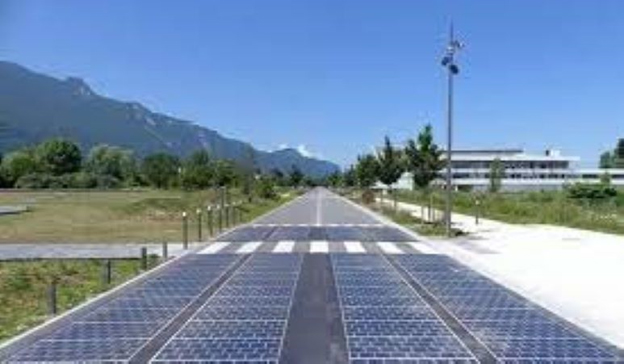
    France’s dream of creating the world’s first 1000km of highways with solar panels has come to end with the failure of a trial “solar road” in Normandy, France. The 1km long test solar road that was flagged-off with much fun-fair by former French environment minister near the small town of Tourouvre-au-Perche in the Orne, have deteriorated to such an extent that it has failed to generate enough electricity as planned.

    Reports say that the solar panels were unable to withstand thunderstorms and heavy vehicles and created too much of noise for the local residents. The photovoltaic panels just ripped off in many places and in some places they were beyond repairs and so had to be removed. Secondly, in the first few months, the highest amount of energy generated from the solar road hit only half their stated goal

    So what is a Solar Road?

    We have always been complaining about the state of our roads, even more as maintaining them has become a costly affair given the price of the construction materials touching the sky. Therefore there is an urgent need to find a solution to this conventional system. The solar road is an intelligent road that offers clean renewable energy along with safe driving conditions, electricity and enormous data for various purpose. Interestingly the solar road will fund for itself by generating electricity, and the same money can be used to maintain or rebuild new solar roads. Also, as coal-fired or nuclear power plants will no longer be used, the same money can be ploughed into making solar roads.

    How do Solar Roads work?

    A solar road is made up of a series of solar panels that can be driven upon. The idea is to replace asphalt roads, parking lots and driveways with solar road panels so that energy generated by them can be used by the homes and offices, while the excess energy can be stored for future use. This way renewable energy can replace use of fossil fuels such as coal, gas, etc. that are currently being used to produce electricity as this will cut down greenhouse gases and help in sustainable development. 

    What are the advantages of Solar Roads?

    The biggest advantage solar roads have is they utilize renewable source of energy to produce power. It can reduce dependence on conventional forms of energy to a greater extent. Moreover, the lifespan of solar panels is more than 20 years, while that of asphalt road is not more than 7 years or so. Some other uses are:

    • Military emergency: During military emergency or natural disaster, solar roads will provide necessary power. Since solar power is renewable it will not require external connection to an artificial power source.
    • Environmental-friendly: Solar power production generates electricity from the sun, which is renewable. So, it will have limited impact on the environment as compared to other forms of electricity.
    • Aesthetic look: By adding LEDs beneath the transparent panel, the road can be lightened up for safe night travel and aesthetic look.

    Construction of Solar Roads

    • Surface layer: The top layer used for solar panels has to be luminous and tough, yet rough enough for the vehicles to provide traction. Importantly, it has to pass through to the solar collector cells implanted inside along with LEDs and other heating components. The layer should be able to handle heavy loads and withstand any weather conditions to protect the electronics layer laid beneath the road surface.
    • Electronics layer: To absorb solar energy, the electronics layer contains photovoltaic cells. The cells are attached to a microprocessor board for detecting loads on the surface and regulating a heating element along with controlling lighting, communications, monitoring, etc.
    • Base layer: While the energy is collected from the sun through the electronics layer, it is the base plate layer that delivers electricity as well as data signals (phone, TV, internet, etc.) to all homes and offices linked to the solar roads. Importantly it needs to be durable to protect the electronics layer above it.

    Still a long way…

    So what’s holding policymakers and industry leaders from getting behind this idea? Of course! It wouldn’t be cheap to pave all of the roads in a country like India with solar roads. In fact it would be cheaper to build coal-fired power plants producing same amount of electricity as compared to solar roads since the initial cost is quite absorbent. That’s a huge investment for a concept that is yet to see the light!

    Although many countries are trying to build a prototype, there are still many questions that remain to be answered: Can the solar road panels deliver the kind of energy that would make them cost-efficient? Would the roads be able to support load of the constant flow of traffic? Would the glass surfaces create any issues for drivers at high speeds in adverse weather conditions? Once these issues are sorted out, it is only a matter of time before the first solar roads become operational!

    Manoj Mahanta

    Team ScienceNow

  • Book Review

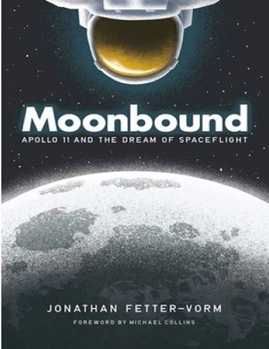
    Moonbound

    Apollo 11 and the Dream of Spaceflight….

    On a summer night in 1969, two men climbed down a ladder onto a sea of dust at the edge of an

    ancient dream. When Neil Armstrong and Buzz Aldrin first set foot on lunar soil, the moon ceased to be a place of mystery and myth. It became a destination.

    Moonbound tells the monumental story of the moon and the men who went there first. With vibrant images and meticulous attention to detail, Jonathan Fetter-Vorm conjures the long history of the visionaries, stargazers, builders, and adventurers who sent Apollo 11 on its legendary voyage.

    From the wisdom of the Babylonians to the intrigues of the Cold War, from the other worldly discoveries ‘[of Galileo to the dark legacy of Nazi atrocities, from the exhilarating trajectories of

    astronauts―recounted in their own words―to the unsung brilliance of engineers working behind the scenes, Moonbound captures the grand arc of the Space Age in a graphic history of unprecedented scope and profound lyricism.

    -Team ScienceNow

  • Heliocentrism – The Theory of the Solar System

    Through centuries science and its theories have defined and analysed numerousoccurrences right from the formation of an atom to the latest artificial intelligence. We bring to yousome of the theories that revolutionized the world of science….

    In astronomy, heliocentrism is the theory that the Sun is at the center of the Universe or the Solar System.The word is derived from the Greek word Helios meaning Sun; and kentron meaning “Center;. This theorywas a sharp contrast to the earlier understanding which placed the Earth at the center, called geocentrism.

    The theory that the Earth revolves around the Sun and rotates on its axis had been proposed as early asthe 3rd century BC by Greek astronomer, Aristarchus of Samos. This was a dangerous assertion at thetime and being denounced as against religion, could not win over supporters of the geocentric model. Sowhile the sphericity of the Earth was widely recognized in Greco-Roman astronomy from at least the 4thcentury BC, the issue did not assume any importance, however, for nearly 2,000 years. In fact, the Earthsdaily rotation and yearly orbit around the Sun was never universally debated until the CopernicanRevolution.

    The Copernican Revolution

    Nicolaus Copernicus explained that the sun is at the centre of the universe and we move around it alongwith all the other planets. This is called the Heliocentric Model which was published in his manuscript, “Onthe Revolutions of the Celestial Spheres”. His observations, confirmed the heliocentric theory byAristarchus, who attributed the annual reappearance of the constellations in the same celestial position tothe Earth orbiting the Sun. This, and periodic reappearances of Mercury, Venus, Mars, Jupiter and Saturn,in the same respective celestial places, persuaded him to proclaim that all planets orbit the Sun. However,due to fears that the publication of his theories would lead to condemnation from the church he withheld hisresearch until a year before he died. It was only in 1542, when he was near death, that he sent hismanuscript to be published. The Copernican model makes the claim of describing the physical reality of thecosmos, with the heavenly bodies in rotation around the Sun, and introduced Earths daily rotation on itsaxis.

    Like Copernicus, German scientist Johannes Kepler asserted the physical reality of a heliocentric model asopposed to a geocentric one. Kepler concluded that certain mathematical laws govern planetary motion.One of those laws discarded the assumption that planets moved in uniform circular motion, replacing it withelliptical motion. This showed that Copernicus’s basic ideas were true.

    Galileo’s Telescopic View

    Ultimately it was Italian scientist, Galileo who used his telescope to affirm the heliocentric theory. In 1610,he discovered moons orbiting Jupiter. Galileo also used his telescope to observe mountains and volcanoeson the Moon, sunspots, individual stars within the arm of the Milky Way and moon-like phases for Venus.

    This observation of Venus is what gave proof to the theory of heliocentrics. If one imagines a universe inwhich Venus is always between the sun and the Earth, it could never appear fully illuminated thanks tobasic geometry. It would always appear like a crescent moon of some sort; its fully lit side would always befacing away from Earth and toward the more distant sun. Galileo demonstrated clearly that this was not thecase. However, he was put under house arrest by the church and it was only 350 years after his death thatthe theory of heliocentrics was completely established.

    Do you know?

    In 5th century AD, the Indian astronomer Aryabhata also proposed a heliocentric Universe. However, as hiswork was not translated into Latin until after Copernicus had written De revolutionibusorbiumcoelestium,his theories were apparently unknown in the West.

    Manoj Mahanta

    Team, ScienceNow Digital

  • SpaceX : Success or Failure

    SpaceX’s Starship rocket successfully took off from a Launchpad, but exploded roughly four minutes into its flight… Chasing a dream to reach the stars, the mission ended in the ambitious rocket blowing mid-air..The questions are raised whether the launch was a success or a failure…

    For the ambitious programme of reaching the stars, the engines on the Super Heavy booster ignited in a huge cloud of fire, smoke and dust, and Starship took off. But it shortly began to tumble before it exploded

    0:51

    0:51

    This This was the tallest and most powerful rocket ever built which cleared the Launchpad before exploding during its first test flight.

    Ambitious Plans

    NASA is counting on Starship as a major component for its Artemis program, aimed at returning astronauts to the moon as a stepping stone to eventual human exploration of Mars.

    The private space agency is relying on SpaceX to build a version of Starship that will carry two astronauts from lunar orbit to the surface of the moon during its Artemis III mission.

    Programme

    The launch had no people aboard and aimed to validate the design of the rocket

    On the broader terms the flight fell short of complete success. The flight plan was that the spacecraft to reach a higher altitude of about 150 miles before splashing down in the Pacific Ocean near Hawaii about 90 minutes later.

    The experiment was aimed to test the flight of the most powerful rocket to launch the cosmonauts in space

    Explosion

    SpaceX’sStarship rocket exploded minutes after lifting off from a Launchpad. The rocket was the most powerful ever built by Elan Musk’s private space agency, but it did not reach the orbit

    Even though it blasted mid-air the SpaceX claimed that it provided important lessons for the private spaceflight company.

    The event was applauded by saying that, every great achievement throughout history has demanded some level of calculated risk, because with great risk comes great rewards.

    Questions are raised as to whether the launch was a success or failure…

    Concerns

    The blast off from the SpaceX facility, adjacent to a national wildlife refuge near Boca Chica Beach, also hurled large chunks of concrete and metal thousands of feet away.

    The rocket tumbled out of control and blew up in mid-air a few minutes into its flight.

    While the SpaceX’s new Starship rocket blowing up over the Gulf of Mexico raised the public attention, it was the explosive launch.

    Environmentalists seized the opportunity as evidence that a more in-depth study of potential hazards to public safety and wildlife should be conducted before further Starship launches.

    The event is said to be not a failure but it is a learning experience


    -Dr Siddhivinayak Barve

    Editor, ScienceNow Digital

  • The Challenge

    First Film Shot in Space

    The first feature film shot in space premiered in Russian cinemas…

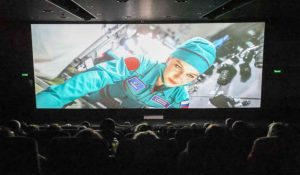
    The film “The Challenge” is about a surgeon dispatched to the International Space Station to save an injured cosmonaut. 

    Russia sent an actress and a film director for a 12-day stint on the International Space Station  in October 2021 to film scenes aboard the orbiting laboratory

    “The Challenge” is the first feature film shot in space.

    In “The Challenge” a surgeon played by 38-year-old YuliaPeresild — one of Russia’s most glamorous actresses — is sent to the ISS to save a cosmonaut injured during a spacewalk. 

    Director KlimShipenko, 39, who was in charge of camera, lighting and sound, brought back 30 hours of footage, 50 minutes of which were used in the final cut.

    Peresild and Shipenko underwent training for four months before going to space on a Soyuz spacecraft accompanied by a cosmonaut.


    -Team ScienceNow

  • Institutions of Eminence

    Defence Research Development & Organisation

    DRDO is the Premier Defence Research Organisation.. with its network spread all over the country this organisation brings out novel technologies for the Nation…

    Defence Research & Development Organisation (DRDO) is an agency under the Ministry of Defence. Headquartered in New Delhi, DRDO was formed in 1958 by amalgamating the Defence Science Organisation and a few technical development establishments. DRDO is India’s largest research organisation. It has a network of laboratories engaged in developing defence technologies covering various fields, like aeronautics, armaments, electronics, land combat engineering, life sciences, materials, missiles, and naval systems.

    DRDO’s first project for the Indian military was in surface-to-air missiles (SAM) known as Project Indigo. However, it received little success and was therefore discontinued. Since being set up, DRDO has achieved many successes in developing major systems and critical technologies like aircraft avionics, UAVs, small arms, artillery systems, EW Systems, tanks and armoured vehicles, sonar systems, command and control systems and missile systems.

    In March 2019, DRDO developed India’s first anti-satellite system that made India one of the space superpowers. In 2016, it successfully tested its first indigenously developed heavy-duty drone, Rustom 2, which is an unmanned armed combat vehicle developed on the lines of the US’s Predator drone.

    DRDO co-developed INS Arihant, India’s first nuclear ballistic missile submarine, which became operational in 2018. Its self-eject able black box for airplanes — BSAT can help rescuers easily locate the debris in the event of a crash in water. DRDO has also developed several ballistic missiles under its Integrated Guided Missile Development Programme, which includes missiles like Prithvi, Trishul, Agni, Akash and Nag

    -Dr Siddhivinayak Barve

    Editor ScienceNow


  • Achievements

    Achievements

    DRDO’s Anti-Satellite Weapon

    Indian scientists successfully conducted Mission Shakti, shooting down a live satellite target in the Low Earth Orbit (LEO) India has become the fourth country after the US, Russia and China to acquire the capability of space warfare…

    A satellite in the LEO can monitor activities on the ground and water surfaces. A Low Earth Orbit refers to an altitude up to 2,000 km. Such a satellite can be used for espionage and pose serious threat to the country’s security in the instances of war.

    A-SAT can target LEO satellite

    An anti-satellite missile, the one that was fired by the scientists of the Defence Research and Development Organisation (DRDO), can target LEO satellite. The missile can incapacitate or completely destroy the satellite in the LEO range. The entire effort is indigenous.

    India possess “Building Blocks”

    Till now, only the US, Russia and China had the capability to hit a live target in space. India had been working on developing A-SAT missile capabilities for nearly a decade. Former DRDO director Dr. V. K. Saraswat had said in 2010 that India possessed “all the building blocks necessary” to integrate an anti-satellite weapon to neutralise hostile satellites in low earth and polar orbits.

    The United States was the first nation to build space warfare capability that it developed in late 1950s. The erstwhile USSR followed the US and had acquired this capability by early 1960s. China was the third country to launch A-SAT. China conducted its first A-SAT test in 2007.

    No country has used an A-SAT against another nation till date. In all the instances, the nation’s testing anti-satellite missiles have targeted one of their defunct satellites to showcase their space warfare capabilities. The target destroyed by India’s A-SAT missile  was an out of service Indian micro satellite launched by ISRO

    Dr Siddhivinayak Barve

    Editor, ScienceNow Digital

  • How Great is our God?

    100 Indescribable Devotions about God and Science Pastor Louie Giglio has compiled 100 more devotions that invite kids to explore the wonders of the universe, from the deadliest creature on Earth (the sea wasp jellyfish) to spider rain in Australia to the Earth’s trip around the sun. Written for elementary-age kids who are curious about the natural world and God’s role in it, the book: “How Great Is Our God – 100 Indescribable Devotions about God and Science” is packed with amazing scientific facts, beautiful photography, and fun illustrations by the same artist who illustrated Indescribable (Nicola Anderson), covering topics such as space and time, earth and weather, the human body animals, plants and more

    -Team ScienceNow