
Take a roundup of What happened In Science…

Brain–spine interface allows paralysed man to walk
Twelve years ago, a cycling accident left Gert-Jan Oskam, now 40, with paralysed legs and partially paralysed arms, after his spinal cord was damaged in his neck. But these days, Oskam is back on his feet and walking, thanks to a device that creates a ‘digital bridge’ between his brain and the nerves below his injury. The device – a brain–spine interface – builds on previous work by Grégoire Courtine, a neuroscientist at the Swiss Federal Institute of Technology in Lausanne and his colleagues.
In 2018, they demonstrated that, when combined with intensive training, technology that stimulates the lower spine with electrical pulses can help people with spinal-cord injuries to walk again. After around 40 rehabilitation sessions using the brain–spine interface, Oskam had regained the ability to voluntarily move his legs and feet.
Will global warming hit the landmark 1.5 ºC limit?
According to the World Meteorological Organisation report, there’s a 66% chance that the annual global average temperature will hit 1.5 ºC above pre-industrial temperatures at some time in the next five years. The famous 1.5 ºC figure, widely quoted as the desired ‘maximum’ for planetary warming, stems from the 2015 United Nations Paris agreement on Climate Change. This treaty declared the goal of keeping the global average temperature well below 2 ºC above pre-industrial levels, with a preferred limit of 1.5 ºC.
In 2018, an IPCC special report on 1.5 ºC of warming estimated that the world would probably hit the 1.5 ºC threshold at some stage between 2030 and 2052. By 2021, using a different methodology, that had been pinned down to the early 2030s. “The time frame is getting closer and closer,” says geographer William Solecki at City University of New York, an author on the IPCC special report.
This paragliding gecko is new to science
There are flying squirrels, but did you know there are also flying geckos? A new species of gecko has been discovered by scientists; but more importantly, it’s a gecko that can fly. This air-borne gecko, one of genus Gekko, subgenus mizoramensis, is dubbed a parachute gecko for its ability to glide from place to place. While flying geckos are natively distributed across Bangladesh, Myanmar, Thailand, Cambodia, and Laos, this newly discovered paragliding reptile was found in India.
Flying geckos reportedly can glide up to 200 feet, typically landing with a gentle swoop. They are infinitely restless and nocturnal, with a night-life that revolves around the use of scent-simulations for protection and gliding from one tree to another. Parachute geckos use flaps of skin along their bodies, limbs and tails to glide from tree to tree. Biologists identified the species, Gekko mizoramensis, while surveying gecko populations in northeastern India. The discovery shows that animal and plant life in the region is poorly documented.
Indian astronomers capture Supernova in distant galaxy
What happens when a star explodes in a galaxy? For a brief time, it outshines the galaxy, enough to be seen by telescopes from Earth, and one such event happened in May this year in a galaxy nearly 21 million light years away from Earth. The explosion dubbed SN 2023ixf was captured by amateur astronomers at the Indian Space Research Organisation (ISRO), Fahd Bin Abdul Hasis, Kiran Mohan, and VishakSasidharan from the Liquid Propulsion Systems Centre (LPSC).
The supernova occurred in the Pinwheel Galaxy, which can be seen in the constellation Ursa Major. The galaxy is also called M101. The astronomers took two photographs of the galaxy on May 19 and May 22 to spot the brief flash of the star as it ended up exploding in the two frames. A supernova is the biggest explosion that has been observed from Earth, and it happens when a star at least five times the mass of our sun explodes as it runs out of fuel.

Alien signal beamed to Earth from Mars
As the search for another lifeform beyond Earth continues, an alien signal has been beamed to the planet from Mars for the first time. The European Space Agency’s ExoMars Trace Gas Orbiter (TGO) flashed an encoded message to Earth from its orbit around Mars to simulate a situation when a real signal from another civilisation is received by us.
“Throughout history, humanity has searched for meaning in powerful and transformative phenomena. Receiving a message from an extraterrestrial civilisation would be a profoundly transformational experience for all humankind,” said Daniela de Paulis, the artist behind the ‘A Sign in Space’ project. Search for Extraterrestrial Intelligence (SETI) Institute has brought together a team of international experts, space scientists, and artists to create a project to explore the process of decoding and interpreting an extraterrestrial message.
Virgin Galactic to launch four people to space
Nearly two years after it launched its maiden flight to the edge of space, Virgin Galactic is all set for a big mission on Thursday. The Richard Branson-led company will launch six people into suborbital space on the final flight test.While four people will venture into space on the flight named Unity 25, two will pilot the plane after the spacecraft is dropped mid-air for a suborbital take-off. The Unity 25 mission is aimed at making the final assessment of the full manifest of space flight that aims to further strengthen tourism beyond Earth’s boundaries.
Backed by billionaire Richard Branson, the company had in May last year delayed its commercial service to the first quarter of 2023.The spaceflight missions were delayed due to the supply-chain crisis and labor shortages. During the launch on Thursday, the aircraft will climb to an altitude of 50,000 feet, about 15 kilometers above the surface, before dropping VSS Unity in the air. Unity, once released from the mothership, will ignite its rocket engine to ascend to an altitude of 80 kilometers, acquiring a speed of Mach 3 (three times the speed of sound).

Neuralink receives FDA approval for human trial of brain-implant device
Neuralink, Elon Musk’s brain-implant firm, announced that the US Food and Drug Administration (FDA) had given approval for its first human clinical trial. Neuralink envisions the use of brain implants to treat a wide range of conditions, including autism, obesity, depression, and schizophrenia, while also enabling functions like web browsing and telepathy. It is part of an emerging field of brain-computer interface (BCI) technology. BCIs are systems that interpret brain signals and translate them into commands for external devices.
Over the years, scientists have extensively studied BCI technology, and several companies have developed promising systems with hopes of bringing them to market. Despite Elon Musk’s reassurances, the FDA initially rejected Neuralink’s application in early 2022 due to various concerns that needed to be addressed before human trials could be authorised. According to current and former employees, these concerns primarily revolve around the lithium battery, the potential migration of the implant’s wires within the brain, and the challenge of safely removing the device without causing damage to the brain tissue.
SpaceX Falcon 9 Launches Four Private Astronauts
The Axiom Mission 2 (Ax-2), Axiom Space’s second private astronaut mission, successfully launched from NASA’s Kennedy Space Center on May 21. The Ax-2 crew will conduct over 20 scientific experiments on the International Space Station before returning to Earth. Four private astronauts are in orbit following the successful launch of Axiom Mission 2 (Ax-2), the second all-private astronaut mission to the International Space Station (ISS).
During their time aboard the International Space Station, the Ax-2 astronauts will carry out more than 20 scientific experiments, helping us better understand space radiation, weather in low-gravity conditions, and more,” said NASA Administrator Bill Nelson. “This mission is more proof of NASA’s commitment to help our industry partners develop the next generation of space technology and support a growing commercial space economy.”
A New Way To Manufacture Lithium-Ion Battery Electrodes
A research group led by Yan Wang, a researcher from Worcester Polytechnic Institute (WPI), has pioneered a solvent-free methodology for the production of lithium-ion battery electrodes. This novel approach yields greener, more cost-effective, and quicker-charging electrodes compared to those presently available, potentially revolutionizing battery manufacturing for electric vehicles. The team unveiled a dry-print manufacturing technique in the journal Joule, which circumvents the use of harmful solvents and extensive drying periods inherent in traditional electrode production methods that utilize slurries.
Moreover, the electrodes produced through this method can charge at a faster rate than those created using conventional methods. Current lithium-ion batteries charge too slowly, and manufacturers typically use flammable, toxic, and expensive solvents that increase the time and cost of production. This new solvent-free manufacturing process addresses all the disadvantages of conventional battery by producing electrodes that charge to 78 percent of capacity in 20 minutes, all without the need for solvents, slurries, and long production times.
Massive US Spiders has a Surprising Survival Trait
The Joro spider, despite its intimidating size and rapid spread across Southeastern U.S., is surprisingly timid according to a study from the University of Georgia. Contrary to initial speculation, the Joro spider is not aggressive but rather freezes for more than an hour when disturbed, which is significantly longer than most spiders. This spider, originally from East Asia, is believed to have arrived in Georgia around 2013 via a shipping container and has since proliferated across the state.
Despite their intimidating appearance, the giant yellow and blue-black spiders spreading across the Southeastern U.S. owe their survival to a surprising trait: They’re rather timid. The researchers compared more than 450 spiders’ responses to a brief and harmless disturbance across 10 different species. While most spiders froze for less than a minute before resuming their normal activities, the Joro spiders remained motionless for more than an hour. In fact, Joros are relatively harmless to people, and they won’t bite unless cornered.
A 100 Million-Year-Old Mystery Unraveled
Roughly 100 million years ago, a pioneering group of moths began to venture out during the day instead of night, seizing the opportunity presented by flowers abundant in nectar that had evolved alongside bees. This single event sparked the evolution of the entire butterfly species. Since 2019, through extensive DNA analysis, scientists have known the precise timing of this evolutionary shift, debunking a previous theory that suggested the rise of butterflies was a result of pressure from bats following the extinction of dinosaurs.
Now, scientists have discovered where the first butterflies originated and which plants they relied on for food. Before reaching these conclusions, researchers from dozens of countries had to create the world’s largest butterfly tree of life, assembled with DNA from more than 2,000 species representing all butterfly families and 92% of genera. Using this framework as a guide, they traced the movements and feeding habits of butterflies through time in a four-dimensional puzzle that led back to North and Central America.
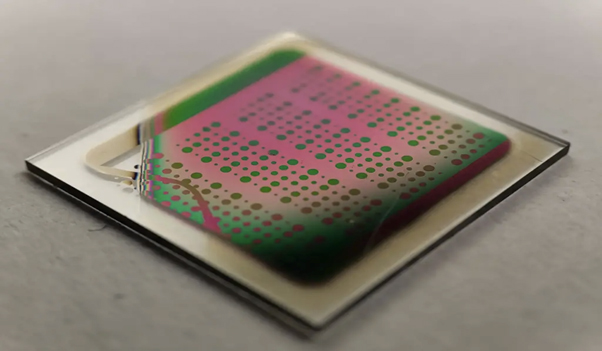
New Type of Battery – The Oxygen-Ion Battery
Lithium-ion batteries, while commonplace in today’s world – powering everything from electric vehicles to smartphones – aren’t necessarily the optimal solution for all applications. Researchers at TU Wien have made a breakthrough by creating an oxygen-ion battery that offers several significant advantages. While it may not match the energy density of lithium-ion batteries, its storage capacity doesn’t diminish irreversibly over time, making it capable of an exceptionally long lifespan.
These oxygen-ion batteries could provide an outstanding solution for large-scale energy storage systems, such as those required to hold electrical energy from renewable sources. The ceramic materials that the TU Wien team studied can absorb and release doubly negatively charged oxygen ions. When an electric voltage is applied, the oxygen ions migrate from one ceramic material to another, after which they can be made to migrate back again, thus generating electric current.
-Team ScienceNow
