
That happened in Science This Month… A collection of Science News
Irrigation may be shifting Earth’s rotational axis
Runoff from irrigation has moved so much water from land to sea that Earth’s rotation might have measurably shifted. Computer simulations suggest that from 1993 through 2010, irrigation alone nudged the North Pole by about 78 centimeters, making irrigation the second largest contributor to polar drift after the ongoing rebound of Earth’s surface following the retreat of glacier.
Previous studies have suggested that irrigation shifted about 2 trillion metric tons of water from land-based aquifers to the oceans from 1993 through 2010 — enough to raise global sea level more than 6 millimeters. Although seemingly minuscule, that redistribution of water was enough to shift the North Pole just over four centimeters each year on average during that period, the team found. When all sources of water movement are considered — including the runoff of melt water from the Greenland and Antarctic ice sheets — the North Pole drifted about 1.6 meters toward the east coast of Greenland in that time.
Physicists split bits of sound using quantum mechanics
Physicists have now turned to quantum effects to split phonons, the smallest bits of sound. The achievement may one day lead to sound-based versions of quantum computers or extremely sensitive measuring devices. Phonons have much in common with photons, the tiniest chunks of light. Turning down the volume of a sound is the same as dialing back the number of phonons, much like dimming a light reduces the number of photons. The very quietest sounds of all consist of individual — and indivisible — phonons.
Unlike photons, which can travel through empty space, phonons need a medium such as air or water. Phonons can’t be permanently broken into smaller bits. But, as the new experiment showed, they can be temporarily divided into parts using quantum mechanics.
The feat was achieved with an acoustic beam splitter, a device that allows about half of an impinging torrent of phonons to pass through while the rest get reflected back. But when just one phonon at a time meets the beam splitter, that phonon enters a special quantum state where it goes both ways at once. The simultaneously reflected and transmitted phonon interacts with itself, in a process known as interference, to change where it ultimately ends up.
Satellite beams solar power down to Earth
The California Institute of Technology (Caltech) researchers have taken a small but necessary step toward realizing a long-standing dream: harvesting solar energy in space and beaming it down to Earth. A satellite launched in January has steered power in a microwave beam onto targets in space, and even sent some of that power to a detector on Earth. The transmitted power was small, just 200 milliwatts, less than that of a cellphone camera light. But the team was still able to steer the beam toward Earth and detect it with a receiver at Caltech.
To produce as much power as a typical coal or nuclear power station, a satellite would need a collecting area kilometers across, requiring hundreds of launches and assembly in orbit. NASA planned a demonstration mission during the 1970s energy crisis. Space has changed since then. Solar cells and microwave beams are cheaper and more efficient. Robots capable of assembling structures will soon be in orbit, and companies such as SpaceX have slashed the cost of launches. Recent studies commissioned by ESA and the U.K. government suggest giant orbiting generators will soon be able to generate electricity at costs comparable to earthbound nuclear plants.
Space shuttle Endeavour to be displayed vertically

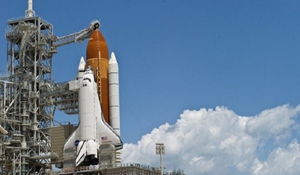
The 20-story tall display will show the shuttle as it would appear waiting on a launch pad. Endeavour was built as a replacement for the destroyed shuttle Challenger and flew 25 missions between 1992 and 2011. The shuttle will be moved across Exposition Park and lifted by a crane to be intricately mated to the external tank. Construction of the Air and Space Center will be completed around the full shuttle stack. The center’s foundation has raised $320 million of the $400 million goal for the project. Exposition Park is between the University of Southern California and Los Angeles Memorial Coliseum.
When NASA’s shuttles were retired, Endeavour was flown to California atop NASA’s special Boeing 747 shuttle carrier in 2012. After landing at Los Angeles International Airport, the shuttle inched through tight city streets to the California Science Center over several days. Dec. 31 will be the last chance to see Endeavour as it has been displayed horizontally in the landing position for years since arrival at the center.
James Webb Telescope finds most distant supermassive black hole
The James Webb Space Telescope has made a groundbreaking discovery, revealing the most distant supermassive black hole ever observed in the universe. This enormous black hole is estimated to be 90 million times the mass of our Sun, making it a truly colossal structure. It was found to have formed 570 million years after the big bang, a significant period in cosmic history. The black hole in question resides within the galaxy CEERS 1019, where astronomers have also identified two smaller black holes that formed 1 and 1.1 billion years after the big bang. Notably, the black hole within this galaxy is comparatively less massive than others detected in the early universe.
Utilizing the power of the world’s most advanced observatory, the James Webb Space Telescope acquired near- and mid-infrared images, as well as valuable spectral data, to uncover these remarkable findings. The telescope’s unique ability to capture high-quality observations in the darkness of space has played a crucial role in this breakthrough. Supermassive black holes represent a distinct type of black hole that resides at the cores of galaxies. They far exceed the size and mass of regular stellar black holes formed from massive star collapses. These supermassive black holes possess an incredible mass range, reaching millions to billions of times the mass of our Sun.
IIT-Hyderabad researchers tune in to humming of the universe
Researchers from the Indian Institute of Hyderabad (IITH) have found evidence of the humming of the universe. These results provide a hint of evidence for the relentless vibrations of the fabric of the universe, caused by ultra-low-frequency gravitational waves. The researchers were part of an international collaboration that monitored pulsars, nature’s best clocks. The team from India, Japan, and Europe used six of the world’s most sensitive radio telescopes, including India’s largest telescope uGMRT, to tune in to the vibrations coming from deep space. Astronomers call these vibrations nano-hertz gravitational waves as their wavelengths can be many lakhs of crores of kilometers.
Gravitational waves, a phenomenon predicted by Albert Einstein’s theory of general relativity, have revolutionized our understanding of the universe. These ripples in the fabric of spacetime are generated by the most powerful cosmic events, such as the collision of black holes or the merging of neutron stars. Listening to gravitational waves opens up a new window into the cosmos, providing invaluable insights into the nature of black holes, the formation of galaxies, and the evolution of the universe itself. Gravitational wave detectors allow us to observe phenomena that were previously invisible to traditional telescopes, offering a complementary perspective on cosmic events.
Astronauts’ entirely recycle liquid waste into drinking water
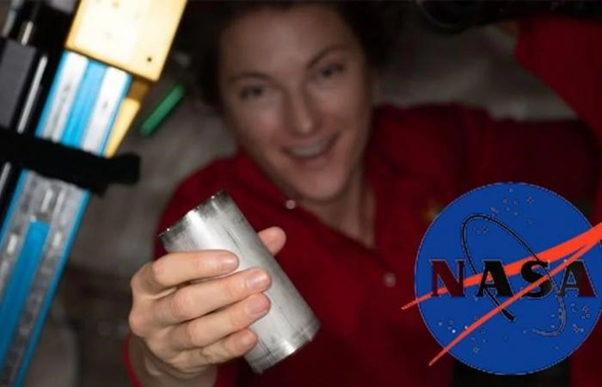
Scientists have achieved a clear win on the International Space Station as they have managed to filter nearly all of the astronauts’ wastewater with a new system that distills sweat, urine and other moisture in the cabin into clean drinking water. NASA said 98% of the wastewater on the space station was successfully recovered. That is a 3% to 4% increase from what the previous system was able to achieve. The new system is a multistep process, according to NASA, in which urine is first distilled through the Urine Processor Assembly. The process produces water and then some leftover “urine brine.”
The water subsystems is similar to how water is processed on land but with the challenges of microgravity. In this case, the crew isn’t drinking urine — they are drinking water that is even cleaner than Earth’s. The less water and oxygen we have to ship up, the more science that can be added to the launch vehicle. The new system is a larger step in the evolution of technology that can help sustain life in space, which could help sustain longer missions without fear of losing essential supplies.
Time moved 5 times slower for 1st billion years after Big Bang
Shattering previous notions and providing further confirmation of Einstein’s theory of relativity, a ground breaking study has revealed time dilation effects in quasars. These celestial objects powered by supermassive black holes exhibit fluctuations in their emitted light. Through a new sample of 190 high-redshift quasars observed over 20 years, researchers were able to detect the time dilation effect in the variability of quasar light. The observations indicated that time in these quasars appear to run five times slower than on Earth. This breakthrough in detecting time dilation effects in quasars marks a significant achievement, especially considering previous unsuccessful attempts. Researchers utilized data from the Sloan Digital Sky Survey, Pan-STARRS, and the Dark Energy Survey to conduct a comprehensive study.
The implications of these findings go beyond confirming the existence of time dilation. They provide valuable insights into the expansion of the universe. Over the course of 12 billion years, as the universe expanded, the light emitted by these quasars finally reaches us. However, during that time, the universe underwent significant growth. Therefore, when observing these quasars, we are essentially peering back in time, witnessing them as they appeared over 12 billion years ago.
Baby without sperm or egg?
In a major breakthrough in the world of In Vitro Fertilisation (IVF) and human reproduction, a team of scientists in the US and the UK has developed the world’s first ever synthetic human embryo-like structures using stem cells. According to the report by The Guardian (article beyond paywall), these embryos resemble natural embryos in the earliest stages of human development. While they lack a beating heart or the beginnings of a brain, they contain cells that would give rise to the placenta, yolk sac and the embryo. These models would also help scientists understand the impact of genetic disorders and the biological reasons behind recurrent miscarriages.
However, the research also raises major ethical and legal consequences as the use of synthetic embryos for clinical purposes is not legally imminent in the UK and most other countries. Implanting them into a patient’s womb is currently illegal, and it remains uncertain whether these structures have the potential to progress beyond the earliest stages of development. Scientists at present are allowed to cultivate embryos in the lab for duration of 14 days. Those “embryoids” showed the beginnings of a brain, heart and intestinal tract after about eight days of development, the report added.
Euclid space telescope to target universe’s ‘dark mysteries’
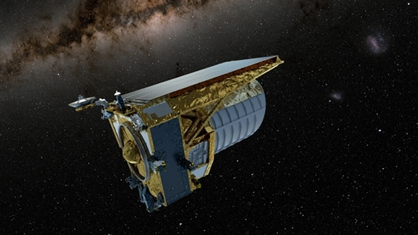
After a month-long journey through space, Euclid will join its fellow space telescope James Webb at a stable hovering spot around 1.5 million kilometers (more than 930,000 miles) from Earth called the second Lagrange Point. From there, Euclid will chart the largest-ever map of the universe, encompassing up to two billion galaxies across more than a third of the sky. By capturing light that has taken 10 billion years to reach Earth’s vicinity, the map will also offer a new view of the 13.8-billion-year-old universe’s history. Euclid, which is 4.7 meters (15 feet) tall and 3.5 meters wide, will use two scientific instruments to map the sky. Its visible light camera will let it measure the shape of galaxies, while it’s near infrared spectrometer and photometer will allow it to measure how far away they are.
Scientists hope to use this information to find an answer to what scientist call as a “cosmic embarrassment”: that 95 percent of the universe remains unknown to humanity. Around 70 percent is thought to be dark energy, the name given to the unknown force that is causing the universe to expand at an accelerated rate. And 25 percent is dark matter, thought to bind the universe together and make up around 80 percent of its mass. So how will Euclid try to spot things that cannot be seen? By searching for their absence. The light coming from billions of light years away is slightly distorted by the mass of visible and dark matter along the way, a phenomenon known as weak gravitational lensing.
Mountain peaks three to four times higher than Mt. Everest found near Earth’s core
Mountains with peaks three to four times higher than Mount Everest have been discovered deep inside the Earth in Antarctica. During the study, when researchers looked at seismic waves generated by 25 earthquakes, they found these waves inexplicably slowed down when they reached a jagged patch on the core-mantle boundary. This vast, otherworldly mountain range was highly variable – some peaks stretched 40km (24.8 miles) up into the mantle, equivalent to 4.5 times the height of Everest. Meanwhile, others were just 3km (1.7 miles) high.
According to the researchers, the mountains are parts of the lower mantle that have been superheated due to their proximity with Earth’s incandescent core. While the mantle can reach 3,700C (6,692F), this is relatively mild – the core can achieve atom-bending highs of 5,500C (9,932F) – not far off the temperature at the surface of the Sun. The deep-Earth mountains could be made from a subtly different material to the surrounding mantle, suggested the report. Incredibly, it’s thought that they could be the remains of ancient oceanic crust which disappeared into its depths, eventually sinking down over hundreds of millions of years to settle just above the core.
Global warming rate speeds up at 0.2 degrees celsius per decade
Average annual emissions over the same period hit an all-time high of 54 bn tonnes of CO2 or its equivalent in other gases — about 1,700 tonnes every second. Record-high greenhouse gas emissions and diminishing air pollution have caused an unparalleled acceleration in global warming, 50 top scientists warned. From 2013 to 2022, “human-induced warming has been increasing at an unprecedented rate of over 0.2 degrees Celsius per decade,” they reported in a peer-reviewed study aimed at policymakers.Average annual emissions over the same period hit an all-time high of 54 billion tonnes of CO2 or its equivalent in other gases — about 1,700 tonnes every second.
World leaders will be confronted with the new data at the critical COP28 climate summit later this year in Dubai, where a “Global Stocktake” at the UN talks will assess progress toward the 2015 Paris Agreement’s temperature goals. The findings would appear to close the door on capping global warming under the Paris treaty’s more ambitious 1.5C target, long identified as a guard rail for a relatively climate-safe world, albeit one still roiled by severe impacts.
-Team ScienceNow
