
Xenobots, the Novel Living Machines
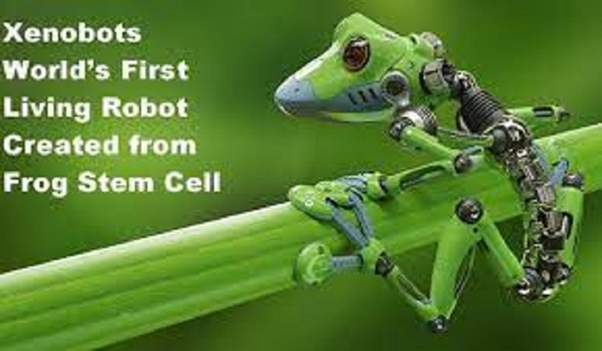
Scientists of Tufts University and University of Vermont succeeded in creating an entirely new life-form – the Xenobots, using stem cell of an African clawed frog (Xenopus Laevis). With the creation of the world’s first living self-healing robots, these scientists have transported the entire mankind a tad closer to the
sci-fi world of unlimited possibilities. It wouldn’t be wrong to say that mankind has inched nearer to ‘knowing the unknown’. These living machines capable of surviving in adverse conditions without food for weeks together are being looked at as a major breakthrough in robotic technology. Largely, because these millimetre-long micro-machines can walk and swim inside human bodies, and also work together in groups.
New Living Species or Robots
In the words of Joshua Bongard, a lead researcher on the project, “Xenobots are neither a traditional robot nor a known species of animal. They are a new class of artefact – living, programmable organisms.” Certainly, they are not the traditional robots with complex gears and machines, instead they are biological machines – tiny blob of moving pink flesh, capable of doing things that robots of steel and plastic simply cannot. And being a biological entity, the Xenobots are more environmentally friendly and safer for human health. While Xenobots could be used to carry medicine inside human bodies or even travel into our arteries to scrape out plaque or neutralise abnormal cellular growth, what makes them really special is the fact that Xenobots could also help researchers learn more about cell biology – opening the doors to future medical advancements in human health and longevity.
A Panacea for all diseases
When researchers cut the Xenobots into smaller entities and leave them to incubate, they multiplied and repaired themselves, and what’s more exciting is they could join together the Xenobots under a microscope. So, in near future, there is every possibility of medical professionals using Xenobots to repair birth defects, reprogram tumours into normal tissues, regenerate body parts after traumatic injury or degenerative disease, and to a great extent also reverse aging bodies. We are witnessing the beginning of a new era of ‘regenerative medicine’ whereby the affected body part or organ could be ‘regrown’ and ‘reprogrammed’ into normalcy akin to the miraculous hi-tech interventions seen in some of the recent sci-fi movies.
Why the need for living Robots?
Conventionally, robotic technology platforms have used steel, rubber or plastic to make robots that are strong, durable and flexible. But now, when the entire world is struggling with plastic and electronic waste, and there is a growing pressure on manufacturers to look for a ‘greener’ solution. Working with living robots has its own upside – these organisms have 4.5 billion years of evolutionary intelligence embedded that helps them regenerate and keep working for decades, which is not the case with robots made of plastic or steel that tend to break-down more often. And more importantly, whenever these living robots happen to stop working (i.e. death), they would just fall apart harmlessly without adversely impacting the environment. For instance, Xenobots are fully bio-degradable just like any dead skin cells.
Cracking the Biological Code
On the road to creating living robots, it’s critical that we learn about how cells communicate and connect with one another. We ought to understand the algorithms of living cells that determines form and function. There is a lot of information sharing and cooperation – organic computation going on in and between cells all the time, not just within neurons. These interactions are shaped by bioelectric, biochemical and biomechanical processes, and interestingly these processes are reconfigurable – posing a challenge for future technologists and scientists who are desirous of creating new living entities.
Preparing for Future Shock
While many are worried and anxious of the possible implications when one goes about tinkering with something that is hitherto ‘unknown’ – the rapid technological changes and complex biological manipulations we are doing to the living without being fully aware about its consequences. In short, should the organisms enjoy the same level of protection that animals or humans have been assigned with, to check mischief or unwarranted experimentation.
Ethically speaking, when we are not completely sure and/or in complete control of events whilst creating a new life form, it is good not to do things that would jeopardise the future of humanity. So it is important that we tread the path cautiously and try to engage responsibly in only technologies critical for the well-being of the planet.
-Manoj Mahanta
Team ScienceNow Digital
