
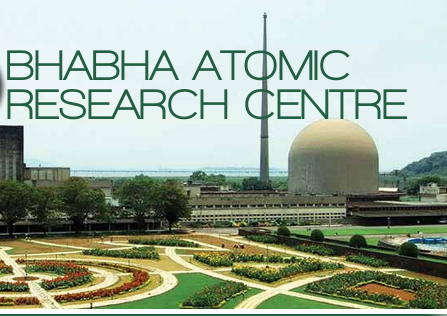
Located in the hustling-bustling city of Mumbai, the Bhabha Atomic Research Centre (BARC) is the country’s leading nuclear research facility initiated by Dr. Homi Jehangir Bhabha. The centre’s huge infrastructure is a perfect platform for R&D (research and development) offering an entire gamut of nuclear science, engineering and related areas. BARC’s ideology is to use nuclear energy, basically for generation of power.
The Centre accomplishes all facts of nuclear power generation, from theoretical design of reactors to computerised modelling and simulation, risk analysis, development and testing of new reactor fuel materials to name a few. BARC also does research in spent fuel processing, and safe disposal of nuclear waste. Other research areas for BARC are applications for isotopes in industries, medicine, agriculture, etc. The centre also operates a number of reactors across India.
Creation of BARC
It was on 3 January1954 that the Government of India created the Atomic Energy Establishment, Trombay (AEET). The idea behind creating AEET was to unite all the R&D activity for nuclear reactors and technology under the Atomic Energy Commission (AEC). After Dr. Homi Jehangir Bhabha’s death in 1966, the centre was renamed as the Bhabha Atomic Research Centre on 22 January 1967.
Mega Research Hub
On 4 June 2005, the centre started the Homi Bhabha National Institute with the goal of encouraging research in basic sciences. Research institutions affiliated to BARC include IGCAR
(Indira Gandhi Centre for Atomic Research), RRCAT (Raja Ramanna Centre for Advanced Technology), and VECC (Variable Energy Cyclotron Centre).
In addition to its nuclear research ideology BARC also conducts research in other state-of-the-art technology areas like accelerators, micro electron beams, materials design, supercomputers, and computer vision etc. BARC has designed and developed for its own use a series of supercomputers – ‘Anupam’ using latest technology.