science share account_circle

Author: sn_admin

  • Test Your IQ

    Test Your IQ

    Try this Science Teaser….

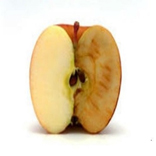
    Nisha’s mother was packing her lunch box. She tried to put an apple in it. But the fruit was big. So, she cut it into two halves and placed it inside. At lunch time, when Nisha opened the box, she found that the apple had turned brown in colour. She thought, “Now I know why mummy says that apples contain iron.” How did Nisha come to that conclusion?

    Solution:

    The apple was cut open. So, the pulp inside was exposed to air. It had turned brown. Obviously, some ingredient in the apple pulp had undergone a chemical reaction with constituents of air. Oxygen which is a major component of air reacts easily with substances and forms oxides. The brown colour of the apple was due to iron oxide. It was thus easy for Nisha to conclude that the apple contains iron.

    -Team ScienceNow

  • The Space Graveyard

    The Space Graveyard

    According to the latest report, there are more than 200 million pieces of debris orbiting around the Earth, putting our working satellites at risk…This is space junk…

    At present there are hundreds of man-made objects circulating our planet Earth. These objects – which move at a speed of over 22,300 mph, faster than a speeding bullet can put our working satellites in grave danger. And these small fragments can leave huge dents in several satellites, telescopes, and other objects orbiting our planet.

    As of January 2019, more than 128 million pieces of debris smaller than 1 cm, about 900,000 pieces of debris 1–10 cm, and around 34,000 of pieces larger than 10 cm were estimated to be in orbit around the Earth. Most of these debris float within 1,250 miles of Earth’s surface in what is known as low Earth orbit, home to a number of satellites, such as NASA’s Earth Observing System fleet and the International Space Station (ISS). And while space is big, this space junk can be problematic for active earth satellites because of their swift speeds.

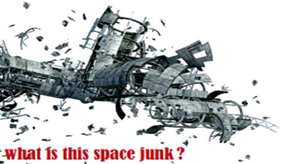
    So, what is this space junk?

    Space debris began to amass in Earth’s orbit immediately with the first launch of an artificial satellite (Sputnik 1) into orbit in 1957. Immediately after that the North American Aerospace Defense Command (NORAD) began compiling a database of all known rocket launches and objects reaching orbit: satellites, protective shields and upper- and lower-stage booster rockets. Although it heralded a new beginning in the Space Age, with over 8,900 satellites from more than 40 countries launched so far, it left a mark in space in the form of junk.

    And this space junk mostly comprises of stages from rockets that put satellites into orbit and satellites itself after it becomes dysfunctional. In addition, it includes small pieces of junk lost to space which includes nuts and bolts, screwdriver, garbage bags and more. But the number has increased significantly recently with China and India testing their anti-satellite missile, creating at least 400 pieces of debris, which have further increased the risk of impacts to the ISS and other satellites orbiting the space.

    With our skies becoming overcrowded with scientific and commercial satellites, it is high time countries need to work towards curbing the growing problem.

    Why is it a cause for concern?

    There is all possibility that some of the junk will lose altitude over time and burn up in the Earth’s atmosphere. Despite this, there is still a lot of junk up there. Even without launching new satellites or major explosions, the space debris in Earth’s low orbit is so huge that it will continue to create problem over the centuries.

    Reports suggest that over the next 200 years or so, debris larger than about 8 inches will increase by 1.5 times. And smaller trash will increase even more! Junk between 4 inches and 8 inches is expected to multiply 3.2 times and debris less than 4 inches will grow by a factor of 13 to 20. And this is likely to increase in future as more space programs have already been planned by various nations.

    What precautions are we taking?

    Although many space agencies and private space firms have come out with various concepts, it still seems to be a distant dream. For example: JAXA, Japan’s space agency, is testing an electronic space whip that stretches six football fields long, known as the electrodynamic tether (EDT). The electrified line, nearly 2,300 feet long, is capped with a 44-pound weight. When deployed, it is intended to knock debris out of orbit, sending it to burn up in Earth’s atmosphere.

    Other options include giant magnets, harpoons, and nets to safely cut down the growing debris cloud. Many countries are also developing plans to ensure that any future man-made satellites sent into space have an appropriate “end-of-life plan” to stop the growing menace of debris that float above our planet.

    -Noel Fernandez

    Team, ScienceNow

  • The Curiosity Key…

    The Curiosity Key…

    The basis of understanding Science is the innate curiosity. For instance, understanding the basic four elements like Hydrogen, Oxygen, Nitrogen and Carbon gives you a lot of knowledge about the science. However, the problem lies with the curiosity of the students. Curiosity leads towards understanding the basic concepts in Science. Mugging up various equations in the textbook never increase curiosity or understanding about the science.

    Bookish Approach

    From Primary level, right from the first standard whenever you learn about our planet earth. you are taught that 70% of the planet is covered by water in the oceans and only 30% is available on land. Similarly in the atmosphere around us the major part of element is nitrogen followed by oxygen. When you go beyond the atmosphere around the earth major element is different. On the land or in the ocean plants in various forms grow and they content mostly carbon in organic form. All plants absorb carbon in the form of gas and give out oxygen.

    What you are reading in this article till this moment Is very much taught and recited by each science student till he completes his 12th Science . But students never correlate this with new applied developments. To change science in application one needs curiosity…

    Understand the Concepts

    Few days back there was a news about producing hydrogen from the sea water. The process is called production of green hydrogen.  De-salination methods are known to students but they cannot explain them. Some students have even visited Middle East countries with their parents or school arranged trips. Where they can see the technologies.

    When Israeli President visited India he gifted our PM movable, mobile van mounted de-salination plant. It was in the news along with the details of the machine. Last month there was a news about capturing the atmospheric oxygen and compressing it in cylinders for industrial use.

    Make it Applied

    We are the agrarian country so India needs very big quantities of Urea as fertilizer for the agriculture or crops. Ammonia contains nitrogen and hydrogen. But producing these two elements artificially is very costly process. Learning how ammonia is produced in the laboratory or reading it in the textbook is a norm. But thinking laterally about the production methods from freely available elements in the atmosphere needs curiosity.

    Some students are very curious about the space research. China recently sent three  astronauts to a Space Station. I asked a very simple question to a student who was topper in the class in the 12th standard and was preparing for a NEET exam. I asked him simple question that How many litres of water the astronauts might have carried with them for their space journey? He started calculating the days ,the number of astronauts, as well as daily requirement of water of one person. When I told him about the recycling method of the daily consumed water he was looking at me with the great surprise.

    Popularize Science

    One of my friend went to Japan for his business trip. When he entered a classic hotel and asked bellboy for the drinking water, to his surprise the answer given by the bellboy was you can drink water from any of the taps not only in your room but anywhere in the hotel. My friend was accustomed to drink water only from Aquaguard in India. Basic principle for supply of water for domestic use is potable water for drinking.

    Another experiment of producing water from the atmosphere was very popular via a video recently. Though the quantity was not sufficient to utilise for the daily use it was ample for a family for their need of drinking water. Curious science student can easily replicate such things in the areas where water scarcity is maximum, but it is never heard or practiced even by scientific researchers. In Maharashtra there are so many small towns where tap water is provided once a week that too hardly for 2 hours. 

    The basic which is needed in science is curiosity. With curious minds not merely bookish will solve the problem of applying science for the benefit of society. Inculcating the spirit of inquiry and curiosity will be possible when science Is made popular, practicable & also affordable.

    Dr Shreeram Geet
    Sr Career Counsellor

  • Film Review

    Film Review

    O P P E N H E I M E R

    The latest Science Movie is Oppenheimer…

    It is a biopic of J Robert Oppenheimer, the “father of the atomic bomb”.

    The film depicts the saga of the man who unleashed the tremendous destructive power of Atom.

    Oppenheimer chronicles the life of the American theoretical physicist, who became the director of the Los Alamos Laboratory during World War II and invented the first nuclear weapon that would end the war.  

    Christopher Nolan has made a biopic on the man who wanted to create the perfect bomb. The film unfurls the plots from Robert Oppenheimer’s education to the Manhattan Project which led to the creation of the ‘fat boy’ which ended the world war II,

    Later however Oppenheimer realised that the weapon he has made has limitless capacity of destruction and the realisation of the horrific creation that would change the course of history.

    Oppenheimer quotes from the Bhagavad Gita: “Now I am become Death, the destroyer of worlds…”

    The film is running in theatres…

    -Team ScienceNow

  • Believe it or Not!

    Believe it or Not!

    The incredible but true…believe it or not….

    • Sunglasses were invented by the Chinese as a way for judges to hide their emotions in the courtroom!

    • Molecular Biology Prof. Rany Lewis transplanted spider DNA into goats that allows them to produce milk with an extra protein than can be extracted and spun into spider silk!
    • The CIA uses board games to train its officers!

    With a melting point of 85-degree Fahrenheit, you can turn a solid cube of Gallium into a liquid just by holding it in your hand!

      • Located in the Sahara Desert, the world’s longest conveyor belt system is 98 kilometres long – and can be seen from space!

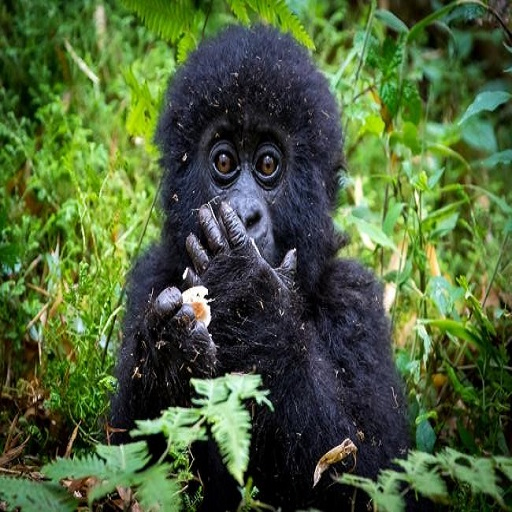
    • Gorillas can catch colds from humans!
    • Consuming an excessive amount of water in a short period of time can lead to Hyponatremia or water intoxication!
    • After examining samples of a 15,000-year-old Tibetan glacier collected in 1992 and 2015, scientists discovered 28 never before seen virus groups!
    • The venom from a Golden Lancehead bite is so potent that it’s capable of melting human flesh!

    -Team ScienceNow


  • RIDDLES

    RIDDLES

    Just for Fun… Riddles for you!

    What is neither water nor land, and is always soaking wet?

    Wetlands


    Which two periodic elements, when combined, heal?

    Helium and Aluminium (HE + AL)


    Which four periodic elements, when combined, make up something that terrifies criminals?

    Carbon, Oxygen, Phosphorous and Sulphur (C+O+P+S)


    I can rush, I can be still, I can be hot, I can be cold, I can be hard, I can slip through almost

    anything. What am I?

    Water


    It is impossible for me to be created, and I can never be destroyed, I can only change form. What

    am I?

    Energy


    -Team ScienceNow

  • What If?

    What If?

    Ocean Currents Stops?

    Ocean currents play a significant role in controlling climate around the globe. These currents act like a giant conveyor belt, warming and cooling parts of the Earth as water circulates. Melting ice caps, which can happen due to global warming, can cause ocean waters to circulate and have a drastic effect on climate.

    What are Ocean Currents?

    Around the world, there are a number of ocean currents which have a serious impact on climate. For instance: The Gulf Stream in the Atlantic transports warm water with a high level of salinity and low density from equatorial regions further north on the ocean’s surface, warming countries such as the United Kingdom. The further north the water travels, the cooler it gets. Cold water becomes denser, falls further towards the bottom of the ocean and is carried back further south. This causes a continual ocean current in the North Atlantic.

    Global Warming

    Polar ice caps are beginning to melt due to global warming. Since ice caps are composed of freshwater, and if they continue to melt, it would bring down the level of salinity in the surrounding ocean waters. Changes in salinity levels could affect thermohaline currents by preventing water from achieving enough density to sink to the bottom of the ocean. More seriously, ocean currents could stop completely.

    Effects of Ocean Currents

    If ocean currents were to stop, climate could change drastically, especially in Europe and countries in the North Atlantic. In these countries, temperatures would drop, affecting humans as well as plants and animals. In turn, economies could also be affected, particularly those that involve agriculture. If these effects were to continue, Europe, North Atlantic countries and parts of North America could experience long periods of freezing conditions. Also, if ocean currents stopped because of climate change it will have many other affects associated with the global-warming phenomenon.

    Earlier Phenomena

    Earlier evidence of rocks and ice have shown that ocean currents have indeed stopped for periods of time in history. One example can be found around 13,000 years ago when the warmth experienced at end of an ice age caused large masses of ice to melt into the sea. The resulting changes in water density stopped ocean currents from flowing and caused freezing conditions in some parts of the world for over 1,000 years.

    -Dr Siddhivinayak Barve

    Editor, ScienceNow Digital


  • Innovation

    Innovation

    The Serial Inventor

    Padma Shri Uddhab Bharali from Assam has over 150 inventions under his belt, and continues to make life easier for people through his machines…

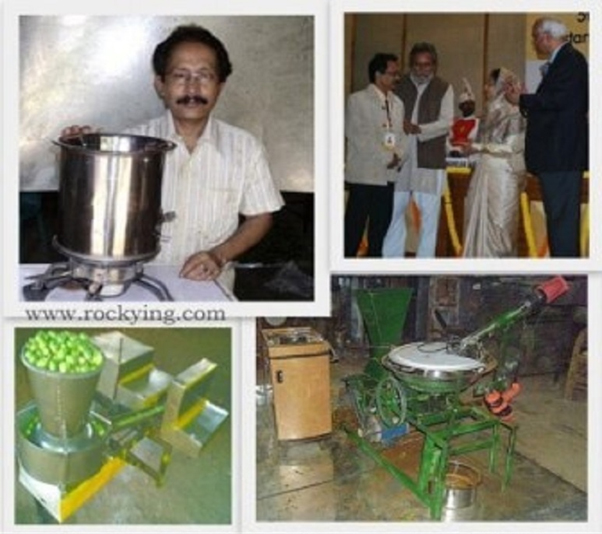
    A grassroot innovator from Assam, today Uddhab Bharali is known for more than 150 innovations to his name such as paddy thresher, cane stripping machine, pomegranate de-seeder and low-cost incinerator.

    How did it all start?

    While Bharali was good at academics, the engineering aspirant had to drop out of college during his final year owing to financial hardships. To help his father in repaying debts, he experimented with innovation and developed new tools — an interest that Bharali had, even as a child.

    However, his first innovation came in 1988, when he developed a polythene making machine for the tea industry. Till then, Lakhimpur in Assam was a zero industries district, and at the time only the tea industry was booming. They required polythene covers in bulk and instead of buying a machine which would cost him lakhs of rupees, Bharali developed his very own for about Rs 65,000.

    The beginning…

    The success of the polythene cover making machine gave him the confidence he needed. To come up with his innovative products, Bharali, like many others, relied on ‘jugaad’ where he used cheap, easy to find materials to develop products which are sustainable and efficient. By 1995, Bharali had paid-off all his father’s debt and got a job of looking after the machinery used in a hydropower project in Arunachal Pradesh. But it was short lived as he had to return back to his hometown after the news of his elder brother’s death.

    Realising he was the only bread earner for his family, Bharali had to make ends meet. Between the 1990s and mid-2000s, he developed 24 products which focused on helping farmers. Though Bharali wanted to develop or innovate for other sectors too, but the demand was huge from the farm sector. From developing different kinds of peelers, re-designing Assamese paddy grinder to cutters for tea-leaves, he took extra effort to simplify agricultural processes for the farming community.

    Identity as an inventor

    Bharali’s ultimate recognition came in 2006, but not before the serial inventor designed and prototyped an entire range of mechanical innovations. Bharali’s pomegranate seed peeling machine, which he designed, garnered accolades and appreciation not only from India but also from across the world. Truly one of its kind, the machine was designed to separate the outer skin from the thinner membrane without causing any damage to the seeds. The machine was an instant hit with orders pouring in for this unique invention from Japan, US and Turkey.

    Some of Bharali’s other inventions include: an arecanut peeling device, and the Cassava Peeler among others. The basic idea behind Bharali’s inventions was to reduce hours of back-breaking labour that farmers put in day and night; thus, making these inventions a hit with the farming community and those engaged in agricultural labour. In addition to these, he has also invented remi recortication machine, garlic peeling machine, tobacco leaf cutter, paddy thresher, cane stripping machine, brass utensil polishing machine, safed musli peeling machine, and jatropha de-seeder. These inventions are popular abroad and local authorities like the Central Silk Board, North Eastern Region Community Resource Management Project and the National Innovation Foundation have helped Bharali to install these new machines. Bharali have recently developed a red cardamom dryer for the Spice Board of India, and a seed extractor for bananas for Institute of Advanced Study in Science and Technology.

    For a cause

    Despite his clients which consist of government bodies and research institutes, Bharali spends some of his time working for the betterment of the underprivileged. Keeping with this, he has started a shelter facility in his area, as well as a feeding programme. Bharali has also developed a number of machines for the differently-abled which helps them enhance their quality of life. Apart from being an innovator, he is a guest lecturer at a number of colleges and universities in Assam and all across India. A winner of many awards and recognitions, Bharali is far from retiring as his quest for knowledge and innovation is helping in bettering the society.

    Dr Shobha Tawade

    Team, ScienceNow


  • QUIZ

    QUIZ

    Test your grey matter…

    1.  In which month will the Gulmohar tree be at its peak of blossoms, filled with red flowers?

    (A) December

    (B) January

    (C) June

    (D) September


    1. For which of the following tasks will an artificial satellite not be used?

    (A) To measure the forests on earth

    (B) To transport goods

    (V) To telecast TV programmes

    (D) To obtain information about weather


    1. Public Health Department appeals to observe ‘A Dry Day’ once in a week __________.

    (A) to prevent mosquito reproduction

    (B) to clean up polluted water supply

    (C) to tackle water shortage

    (D) to make the area disinfectant


    1.  According to the time of sunrise, starting with the earliest, arrange the cities – Kolkata, Delhi, Mumbai and Shillong in the correct order.

    (A) Kolkata, Mumbai, Delhi, Shillong

    (B) Shillong, Kolkata, Delhi, Mumbai

    (C) Mumbai, Delhi, Kolkata, Shillong

    (D) Delhi, Kolkata, Mumbai, Shillong


    1. Which of the following characteristic of a surface helps to form an image?

    (A) Hardness

    (B) Transparency

    (C) Opacity

    (D) Smoothness


    1. What is the shape of galaxy Mandakini?

    (A) Spiral

    (B) Elliptical

    (C) Barred Spiral

    (D) Irregular


    1.  For avoiding pollution, which method of disposing wet garbage should be followed?

    (A) To throw garbage in the dumping ground.

    (B) To burn the garbage.

    (C) To throw the garbage in stream water.

    (D) To put earthworms in the garbage.


    1. In which organ does mixing of inhaled Oxygen in the blood and exhaling of Carbon dioxide from the blood take place?

    (A) Lungs

    (B) Windpipe/Trachea

    (C) Air-sacs

    (D) Diaphragm


    1. Soyabean mixed wheat flour used for making rotis provides more ________ to the body.

    (A) carbohydrates

    (B) fats

    (C) proteins

    (D) salt


    1. Guess who am I? I am formed out of ice and dust particles. I am seen after certain years. My identity is my long feathery tail.

    (A) Asteroid

    (B) Dwarf planet

    (C) Meteor

    (D) Comet


    1. On which tree-leaves, does a female tiger butterfly lay eggs?

    (A) Cotton (Rui)

    (B) Mango

    (C) Mulberry

    (D) Banyan


    1. The colour of soil in Maharashtra state is different in various regions, as ____.

    (A) the temperature of each region is different

    (B) the proportion of minerals is different in the stone from which the soil is formed

    (C) there is a difference in rainfall

    (D) different crops are grown on the soil


    1. Which of the following animals is a vertebrate?

    (A) Toad

    (B) Cockroach

    (C) Earthworm

    (D) Snail


    1. When grain was stored in a closed tin, there were no maggots in it. But when opened after some months, there were maggots in the tin. From where they could have entered the tin?

    (A) They must have entered the tin from the gaps

    (B) They were hidden in the gaps

    (C) There must be maggot eggs in the grain, when the grain was filled in the tin

    (D) Maggots were born automatically


    1. Which vehicle will require minimum energy to carry equal mass at equal distance?

    (A) Ship

    (B) Aeroplane

    (C) Truck

    (D) Railway


    1. Raju sowed coriander seeds in a pot. After a few days, he noticed that the saplings from the pot had rotted. Find the reason.

    (A) Got more sunlight

    (B) Less use of manure

    (C) More water was supplied than required

    (D) Less sunlight and more manure were supplied than needed.


    1. Smoking is prohibited in public place by law because.

    (A) it causes diseases to breathing organs

    (B) It causes lungs cancer

    (c) persons who come in contact with the smokers, have to face bad effects of smoking.

    (D) lips turn black.


    1. Which of the following is an example of uniform linear motion?

    (A) A girl coming down a slide

    (B) A ball thrown in upward direction

    (C) An arrow sent at its aim by the archer

    (C) A train starting from station


    1. Density of planet ________ is less than water.

    (A) Earth

    (B) Mars

    (C) Saturn

    (D) Mercury


    1. A 10 cm long pencil is placed vertically in front of a mirror at a distance of 5 cm. If we join both ends of the pencil and its image to make a rectangle, what will be its area?

    (A) 200 cm2

     (B) 50 cm2

    (C) 100 cm2

    (D) 25 cm2


    1. What is the principle behind functioning of a pinhole camera?

    (A) Light rays travel in a straight line

    (B) Light gets reflected

    (C) White light is made up of seven colours

    (D) While travelling through the hole, light changes its path


    1. A boy weighing 50 kg is sitting on a see-saw 3 m away from its support. On how many meters a girl should sit, whose weight is 25 kg to balance the see-saw?

    (A) 1 m

    (B) 2m

    (C) 3m

    (D) 6 m


    1. Which astronomical incident takes place when the Sun, the Mercury and the Earth come in a straight line?

    (A) Mercury eclipse

    (B) Solar eclipse

    (C) Transit of mercury

    (D) Earth eclipse


    1. Which year was a leap-year after 1897?

    (A) 1898

    (B) 1900

    (C) 1902

    (D) 1904


    1. Where on Earth can we not have ‘Zero’ shadow day?

    (A) Equator

    (B) Equator to the tropic of Capricorn

    (C) Equator to the tropic of cancer

    (D) Both poles


    -Team ScienceNow


    ANSWERS

    1. C 2. B 3. A  4. B  5. D 6. C 7. D  8. C  9. C  10. D  11. A 12. B  13. A 14.

    C  15. A 16. C 17. C 18. C 19. C 20. C  21. A 22. D 23. C 24. D 25. D

  • Solve This

    Solve This

    A king once condemned a prisoner and wanted to give him a very harsh punishment. He keeps a glass containing some hydrochloric acid and another containing an equal amount of sodium hydroxide before the prisoner and asks him to drink both of them. The prisoner knows that the acid is highly corrosive and will destroy the mucous lining, as well as his oesophagus. The other solution is equally bad and will cause him to collapse. But he goes ahead and obeys the order. The king finds that the prisoner has survived without any ill effects.

    How did he manage it?

    Answer:

    The prisoner understood the chemical reactions well. He knew that an acid is always neutralized by an alkali. So he poured the liquids in the two glasses into a third empty glass. When they thus got mixed, they reacted producing salt and water. These were harmless, except for the salty taste!

    HCl + NaOH = H 2 O + NaCl

    -Team ScienceNow