science share account_circle

Author: sn_admin

  • Bharat – Ek Khoj : Vigyanik

    Bharat – Ek Khoj : Vigyanik

    Acharya Kanad

    India has been the cradle of many scientific discoveries. Here we profile an Indian scientist and one ancient Indian technology….

    Acharya Kanad was the Indian sage who developed Atomic theory 2,600 years ago. One of the most notable scientists of ancient India, Kanad is said to have devised the atomic theory centuries before John Dalton was born. He speculated the existence of anu or a small indestructible particle, much like an atom.

    Kanad was born as Kashyap in 600 B.C. at Dwarka in Gujarat. He was the son of a philosopher named Ulka. From his childhood, Kashyap had a keen sense of observation. Minute things attracted his attention.  Once he went on a pilgrimage, he saw thousands of pilgrims littered the town roads and the banks of river Ganga with flowers and rice grains which they offered at the temple. He started collecting the grains of rice and made the people around him realize the importance of each grain or kan of rice. Since then people started calling him Kanad, as “Kan” in Sanskrit means “Smallest particle“.

    Kanad was the first person in the world to discuss atoms and molecules. He was the one who first propounded that the Parmanu (Atoms) was an indestructible particle of matter. The theory occurred to Kanad while he was walking with food in his hand and he was breaking it into small pieces. He nibbled at the food in his hand until he was no longer able to break it down into smaller pieces. It was then that he realized that he could not divide the food into further parts and conceptualized the idea of a particle that could not be divided any further. He called that indivisible particle “Parmanu,” or “Anu,” which literally means atom. Though his theory of the atom was abstract and leaned towards philosophy and logic than experimentation, it is still considered even in modern times as a brilliant and imaginative explanation of the physical structure of the world and for largely agreeing with the discoveries of modern physics.

    -Dr Shobha Tawade

    Team ScienceNow Digital

  • Bharat – Ek Khoj : Ancient Vigyan

    Bharat – Ek Khoj : Ancient Vigyan

    Portraying ancient science of shipbuilding…

    Ships

    When Portuguese sailor, Vasco de Gama’s ship was about to collapse when it reached India, it was the Indian marine engineers who repaired that ship and made it worthy again for sea travel. The skill of the Indians in ship-building has been seen from centuries. The timber used by the Indians was so strong that it would not ‘crack’ even by the force of a bullet.

    The Rig Veda mentions ships with 100 oars. Such ships sailed over seven oceans and returned to India. Visitors to India from Greece and Rome during the pre-Christian times wrote that the Brahmins of India knew that the earth is in the form of a globe and one can reach the same place after sailing through the seven oceans. The Buddhist Jataka stories wrote about large Indian ships carrying seven hundred people. The second item exported by the erst while British East India Company was Indian ship. A few of these ships are still in service, and are used for training cadets of the British Navy. During World War II, Maharajas of India have lent some hundreds of their ships to the British for use as hospital ships!

    -Dr Shobha Tawade

    Team ScienceNow Digital


  • Fountainhead

    Unravelling mysteries of Space and beyond

    The journey of India’s premier astronomy and astrophysics research institution – The Indian Institute of Astrophysics dates back to 1786. An officer of the East India Company, William Petrie went about setting up a private observatory over his 11 acres residence in Egmore, Chennai. Back then, the observatory was used for navigational purpose. Petrie closely observed the position of the Moon’s eclipse and satellites of Jupiter to guide ships in the high sea. In 1790, the East India Company formally took over the observatory and shifting the centre to Nungambakkam, Chennai expanded its scope of work.

    Around 1881-82, in addition to photography and spectrography of the Sun and the stars using its 20-inch telescope, the observatory was being used to measure the Sun’s heating up of the earth’s surface and its periodic variation. A decade later, in the aftermath of a severe famine in the Madras Presidency region around July 1893 in the U.K. Secretary meeting chaired by Lord Kelvin, it was decided to establish a solar physics observatory at Kodaikanal. Thereafter the Madras Observatory served as the only astronomical observatory of India for over a century making significant contributions in the area of astronomical science. Some of the noteworthy achievements of the Madras Observatory being: Indian astronomer, C. Raghunathachary’s discovery of the light variations of variable star R. Reticuli in 1867; use of spectroscope to discover gaseous nature of the prominences during solar eclipse on August 18, 1868; British astronomer, Taylor’s completion of his ‘catalogue of places’ for 11,000 stars in 1884; Norman R. Pogson, Director of the Madras Observatory for over 30 years in 1891 catalogue of over 3000 stars; John Evershed’s discovery of the phenomenon of ‘radial motion in sunspots’ in 1909 and so on.

    While Kodaikanal Observatory continued to serve as the nodal Observatory for over a century working in the area of solar and atmospheric physics, under its shadow the country saw rise of several elite and specialised space observatory centres. The Vainu Bappu Observatory at Kavalur housing a 2.34 metre telescope was established in 1968 for night time astronomy, spectroscopy and photometry. The Gauribidanur Radio Observatory, equipped with a 6-meter radio telescope – a radio heliograph facility to obtain two-dimensional pictures of outer solar corona, was established in 1976 to study the Sun, galaxies and pulsars. The high-altitude Indian Astronomical Observatory at Hanle in Ladake saw installation of a 2-metre Himalayan Chandra Telescope in 2001 and later setting-up of a seven-unit High Altitude Gamma Ray (HAGAR) telescope.

    As the country continues its onward journey of over two centuries (i.e. since 1786) dedicatedly working in the area of astronomy and astrophysics through its network of observatories at Kodaikanal, Kavalur, Gauribidanur and Hanle, in 1971 the Indian government decided to form the Indian Institute of Astrophysics, bringing all the observatories under a single autonomous research institute headquartered at Koramangala in Bengaluru.

    -Dr Siddhivinayak Barve

    Editor, ScienceNow Digital

  • TMT: India joins the Ivy League of Astronomy

    TMT: India joins the Ivy League of Astronomy

    India will be manufacturing all the sensors, actuators and SSAs for the largest ground-based observatory – Thirty Metre Telescope (TMT), coming up on Mauna Kea Mountains of the Hawaiian island. One of the largest land based telescopes, TMT will have nine times the light-gathering power of today’s most advanced telescopes owing to its massive 30 meter mirror. Once operational, scientists across the globe are hopeful that TMT would serve as a critical general purpose telescope to help explore several unexplained mysteries haunting mankind like: the black holes at the centre of galaxies; birth and evolution of galaxies; birth, evolution, and death of stars and many more unsolved astronomical mysteries. 

    A mega international science project involving USA, Canada, Japan and China, it will put to test the ‘scientific’ and ‘precision engineering’ abilities of both Indian scientists and industries alike. Developing key hardware and software systems for the project; it is probably the first time that India has taken up such a technically demanding precision engineering astronomy project. The Department of Science and Technology (DST) and the Department of Atomic Energy (DAE) has agreed to jointly spend Rs. 1,300 crore on the project over a period of 10 years. To ensure synergistic manufacturing work, the Indian Institute of Astrophysics (IIA) is working towards setting-up a first-of-its-kind large optics manufacturing facility – India TMT Optics Fabricating Facility (ITOFF) at its campus in Hoskote, Bengaluru.

    Larsen and Toubro (L&T) has been awarded the task of manufacturing 10 SSAs (i.e. Segment Support Assembly) on a turnkey basis, involving: procurement of raw materials to manufacturing, inspection, assembly… as per the prescribed requirement. A highly complex optomechanical sub-assembly, each SSA comprising of 492 mirror segments is aligned and phased to deliver very high quality imaging at the time of observations. These optomechanical sub-assemblies of 492 mirrors comprising 82 different types would eventually make-up for the 30-meter primary mirror, the heart of this telescope. Each of these mirrors will have sensors and actuators controlled through a complex alignment and phasing software capable of detecting even minute faults in alignment, thereby ensuring that the mirror segments stay phased.

    -Dr Siddhivinayak Barve

    Editor, ScienceNow Digital


  • Black Hole Imaging : Opening a New Frontier in Space Science

    Black Hole Imaging : Opening a New Frontier in Space Science

    While NASA considered building a large space telescope to image black holes for a year, a coordinated effort of the eight radio telescopes from across the globe has helped achieve the milestone decades ahead of time…

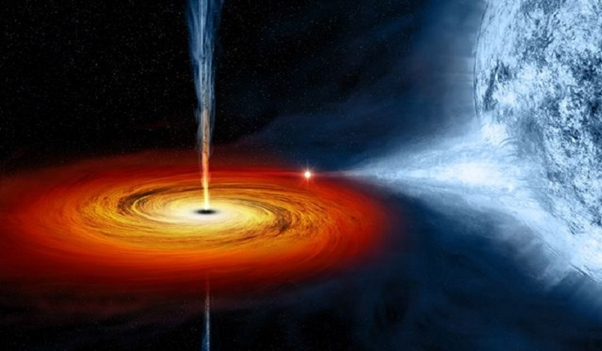
    In April 2019, the entire world was awestruck looking at the stunning images of a supermassive black hole at the center of Messier 87 (M87) – an elliptical galaxy some 53 million light-years from Earth. A team of international astronomers had achieved the impossible by imaging a black hole 6.5 billion times the mass of the Sun; considering the fact that scientists were expecting completely black images as they believed no light ever escapes it. The greatest challenge of the project was to capture hot glowing gas falling into the black hole from thousand or even millions of light-years away. Working for well over a decade, the scientists of EHT – an international network of radio telescopes called the ‘Event Horizon Telescope’ finally achieved this historic feat.

    The Challenge: Building an Earth-sized telescope

    We are all familiar with the fact that distant space objects are seen using a telescope. The ability of the telescope to see further into the space is determined by its diameter or aperture. The greater its diameter, more light it will gather and higher will be the resolution of its images.   

    Now, in order to see the black hole situated approximately 53 million light-years from Earth, the scientists were faced with a unique challenge of gathering as much light coming from it onto Earth, in very high resolution. It had to create a telescope on land with a very large aperture, preferably with a diameter as big as the planet Earth.

    How they did it?

    The scientists decided to resort to a popular technique called Very Long Baseline Interferometry (VLBI), which had been often used for imaging of far-away objects. The crux of this technique was setting up an array of smaller telescopes across locations that are synchronised to focus on the same object at the same time, acting as one giant virtual telescope. 

    The aperture of a large telescope is as large as the distance between the two farthest-apart telescope stations. In this case with stations at the South Pole and in Spain, the scientist had achieved to create an aperture of the size of Earth. So in a coordinated effort, the EHT operated from across its eight radio telescopes using different wavelengths of light in such a manner that the images it managed to capture seem to look as though taken from one huge telescope of the size of planet earth.

    Where to look for?

    ‘Sagittarius A’, a supermassive black hole was the closest to the Earth at the centre of our Milky Way galaxy at a distance of 26,000 light-years. Definitely, it was not the only black hole in our galaxy, but being closest it would appear largest of all. Being the closest to Earth and in the same Milky Way, Sagittarius A may seem a natural choice, but it had several technical challenges.

    Located in the same galaxy meant that while imaging the black hole, one had to be conscious of ‘pollution’ caused by stars and space dust, meaning that scientists would have more data and that they would have to filter it while processing it.

    Why Messier 87 (M87)?

    Located at the center of the gigantic elliptical galaxy Messier 87 or M87, is one of the largest known supermassive black hole, 53 million light-years away. It is more massive that ‘Sagittarius A’ containing 6.5 billion solar masses (i.e. one solar mass is equivalent to mass of our Sun). Importantly, it was an active black hole with matter falling into it and spewing out in the form of jets of particles. While its distance made its imaging a challenge as compared to ‘Sagittarius A’, processing the data of the image was comparatively easier.

    Mission Accomplished

    Thirteen partner institutions worked together to achieve this exceptional breakthrough, which a generation ago was presumed to be ‘impossible’, undoubtedly a rare example of ‘global teamwork’. Once again, in a joint pursuit to ‘know more about the unknown’, scientists from across the globe have managed to harness their unique technological expertise to write this innovative algorithm of ‘mankind’s triumph over matter’.

    -Manoj Mahanta

    Team ScienceNow


  • HARMONY FOR TOMORROW : A SUSTAINABLE ODYSSEY

    EMPOWERING LIVES

    Introducing a new series ‘Harmony for Tomorrow’ for deeper understanding for striking the balance  towards achieving Sustainable Development Goals….

    The title reflects the overarching theme of unity and balance embedded in the harmonious progression towards achieving the Sustainable Development Goals (SDGs) by 2030. As we step into the third decade of the 21st century, the call for a sustainable future resounds louder than ever. At the core of this odyssey lies the commitment to achieving the Sustainable Development Goals (SDGs) by 2030.

    Our journey commences with the exploration of two pivotal goals: SDG 1- No Poverty and  SDG 2- Zero Hunger. These goals set the stage for a balanced and sustainable future, highlighting the imperative need to uplift marginalized communities and pioneer sustainable agriculture practices.

    SDG 1: No PovertyEmpowering Marginalized Communities through Micro-Enterprises

    SDG 1 stands as a clarion call to eradicate poverty in all its forms. The deadline, set for 2030, underscores the urgency of the mission. The scope of SDG 1 goes beyond mere economic considerations; it seeks to address the multifaceted nature of poverty, encompassing issues of education, health, and social well-being.

    In the vast tapestry of India, a success story unfolds that resonates with the essence of SDG 1. The transformative power of micro-enterprises has emerged as a shining beacon, illuminating the path towards poverty eradication. These enterprises, characterized by their modest scale and community-centric nature, have proven to be formidable instruments in empowering marginalized communities.

    By providing opportunities for entrepreneurship, skill development, and access to financial resources, micro-enterprises have become catalysts for change. The success story from India demonstrates that localized solutions can have a profound impact. Empowering individuals to be self-sufficient not only lifts them out of poverty but also fosters resilient communities capable of withstanding the challenges of the future.

    As we embark on this sustainable odyssey, the micro-enterprise success story from India serves as a testament to the efficacy of community-centric approaches in achieving the broader goals of SDG 1. It highlights the potential for scalable, grassroots solutions that address the root causes of poverty.

    SDG 2: Zero HungerPioneering Sustainable Agriculture Practices in Rural India

    The second movement in our symphony is dedicated to SDG 2- Zero Hunger, a goal that envisions a world where every individual has access to sufficient, safe, and nutritious food. The 2030 deadline underscores the pressing need to address the paradox of abundance and scarcity in the global food landscape.

    India, with its rich agricultural heritage, offers an inspiring success story within the realm of sustainable agriculture practices. The narrative unfolds in rural landscapes, where innovative approaches have been pioneered to ensure food security while preserving the delicate ecological balance.

    The success story in sustainable agriculture is a testament to the harmonious marriage of tradition with technology. From precision farming to organic cultivation, India’s agricultural renaissance stands as a beacon of possibility. The emphasis on sustainable practices not only addresses hunger but also mitigates the environmental impact of conventional agricultural methods.

    In our sustainable odyssey, SDG 2 takes centre stage, emphasizing the importance of balancing the need for food production with ecological preservation. The success story from rural India showcases the transformative potential of sustainable agriculture in achieving not only food security but also environmental sustainability.

    Harmonizing SDG 1 and SDG 2: A Symphony of Empowerment

    As we reflect on the success stories emanating from the Indian subcontinent, it becomes evident that the objectives of SDG 1 and SDG 2 are interconnected. Poverty and hunger are not isolated challenges; they are intertwined components of a broader systemic issue that requires holistic solutions.

    The micro-enterprise success story under SDG 1 contributes not only to poverty eradication but also to food security by creating economically empowered communities capable of securing their nutritional needs. Similarly, sustainable agriculture practices under SDG 2 contribute to poverty alleviation by providing livelihood opportunities and economic stability to rural communities.

    In our sustainable odyssey, the harmonious integration of these goals reflects the interconnected nature of the challenges we face. The symphony we aim to create involves recognizing the synergy between different aspects of sustainable development. It is a melody that harmonizes diverse notes- economic, social, and environmental- to create a balanced and sustainable future.

    The Urgency of Our Sustainable Odyssey

    The urgency of our sustainable odyssey is underscored by the realization that time is of the essence. The 2030 deadline for the SDGs looms large, and our actions today will determine the harmony or discord of tomorrow. As we embark on this sustainable odyssey to empower lives, let us remember that our actions today shape the world of tomorrow. The success stories from India regarding SDG 1 and SDG 2 serve as beacons of hope, illustrating that a harmonious and sustainable future is within our grasp.

    In Conclusion, “Harmony for Tomorrow: A Sustainable Symphony” sets the stage for a transformative journey. The interplay of SDG 1 and SDG 2 showcases the potential for holistic solutions that address the root causes of poverty and hunger.

    Let this symphony resonate in our hearts and minds to be an active participant in the grand orchestration of a better world for all. Together, we can create a legacy of harmony that reverberates through the ages, leaving behind a sustainable and empowered tomorrow.

    Prof (Dr) Sanjay Deshmukh

    Professor of Life Sciences,

    Ex VC, University of Mumbai

  • BOOK REVIEW

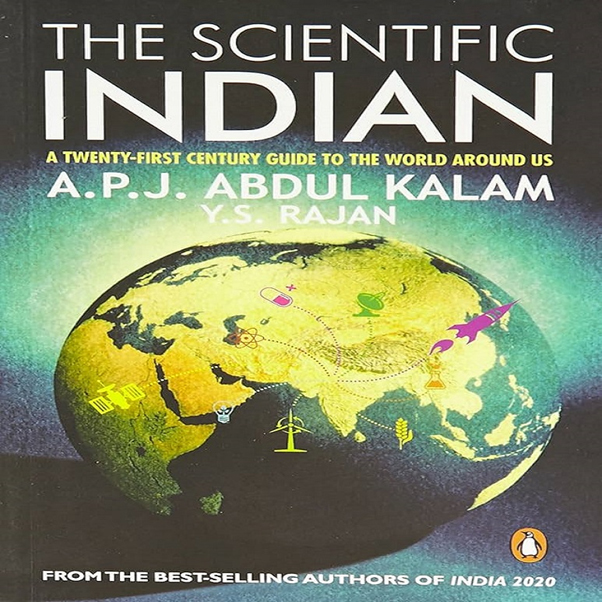
    THE SCIENTIFIC INDIAN: A 21st CENTURY GUIDE TO THE WORLD AROUND US 

    Authored by India’s missile man, Dr. A.P.J. Abdul Kalam and his associate Y. S. Rajan, ‘The Scientific Indian’ delves deep into the realization of the vision for the country’s better future. This realization will need a keen understanding of our needs and can be achieved only by modifying our research and innovations with the aim to achieve national development.

    Divided in three sections – space, earth and life.  the book answers several questions on space including how difficult it is to place satellite in orbit, how it is injected into an orbit and how satellites help to give us real-time data of natural calamities and disasters, aiding space security and defence forces. About earth, the book explains how our blue planet is unique and is located perfectly so as to use sun’s energy in order to nurture life. The book also explains the origin and evolution of Earth. The book concludes with dealing with life on Earth with the importance of food, crop production, and irrigation systems and fertilizers which can boost produce and fetch resources. The section also aims at the need for better technology, energy, electricity and water for a better India.

    -Team ScienceNow Digital

  • MOVIE REVIEW

    THE MARTIAN

    Adapted from Andy Weir’s novel of the same name, Ridley Scott’s, ‘The Martian’ depicts a tale of extreme optimism, courage, determination and imagination. Astronaut and botanist Mark Watney along with the Ares 3 crew led by Commander Melissa Lewis is collecting samples from the Martian surface. A sudden windstorm wreaks havoc on the crew and sweeps Watney away. Assuming Watney to have been killed by the falling debris, the crew abandons the planet and begin their journey back to Earth. But as the storm settles, Watney is injured and finds himself stranded alone on the red planet.

    As he struggles to survive with limited resources, Watney wanders around the Martian surface and tries to establish contact with folks back home. Though NASA reports about Watney’s death and aborts the mission, the crew is shocked to know about Watney being alive and thus contemplates a rescue plan to bring him back. The movie brilliantly illustrates loneliness, uncertainty, hope and survival. The application of scientific knowledge to his situation helps Watney survive. The movie reinstates human faith in science and evolution. The Martian brings us close to the possibilities of science and human potential for survival.

    -Team ScienceNow Digital

  • Know Geology…

    Earth’s Magnetic Field

    Know Geology in this new series ‘Know Geology’,,,

    We live on the planet Earth. The Earth is our provider of all of our needs. As we all know, there are various sources of radiation present on the Earth, such as Uranium, etc. There is also cosmic radiation surrounding us, although the intensity of the radiation is so low that it cannot directly harm us. However, there is a massive amount of radiation in the vast expanse of the universe. Even the Sun emits powerful ultraviolet radiation, which is able to cause fatal cancer like illnesses. Then why is this radiation not able to harm us? The answer lies with the Earth’s magnetic field.

    But how has this magnetic field generated? When the Earth was formed around 4.5 billion years ago, she was a hot ball of molten rocks. As the time passed, the Earth’s interior segregated into 3 parts: crust, mantle and core. This core is made of iron and nickel. The core can be divided into outer core and inner core. The outer core is hot, and therefore in liquid state, while the inner core is also hot, but in solid state due to the pressure from surrounding crust, mantle and outer core. Still, the iron particles present in the inner core are constantly moving. When the iron particles on the surface of the inner core get relatively cooler than the particles inside the inner core, they get denser, and move towards the center of the inner core. At the same time, the relatively warmer and lighter iron particles from the interior of the inner core tend to move towards its surface. This movement of the iron particles creates electric currents in the inner core, and the currents are formed inside the inner core. These currents are called as ‘Convection Currents’. The electric currents, combined with the magnetic properties of the iron particles, generate the Earth’s magnetic field, or the magnetosphere.

    When the solar winds reach the Earth, they interact with the Earth’s magnetic field, and the interaction causes a glow in the atmosphere. This event is called as ‘aurora’. Generally, due to the bipolar nature of the magnetic field, aurora is only visible in the north and south poles. But when the solar activity is intense, the aurora will move away from the poles, and may be visible even at lower latitudes. An excellent example of this activity was observed on April 22 and 23, 2023, when the solar activity was so intense that the aurora was visible in Ladakh in northern India.

    This magnetic field protects the Earth and her inhabitants from harmful cosmic radiation. However, this magnetic field is not completely invincible. In case of strong cosmic activity, the high solar winds can disturb the magnetic field, and geomagnetic storms can penetrate the Earth’s magnetosphere. This can result in the widespread radio and power blackouts. During the greatest solar storm ever recorded, known as the ‘Carrington Event’ in 1859, the solar activity was so intense that the northern aurora moved down to Hawaii and Cuba, while the southern aurora moved up to Santiago, capitol of Chile. This event caused severe disruption of telecommunication around the world, as the telegraph poles were fried and communication was stopped. Similar event took place in 1989, plunging the province of Quebec, Canada into 12 hours of electrical blackout.

    Due to this magnetic field, there are charged particles trapped in the atmosphere. The area where the charged particles lie is called as the ‘Van Allen Belt’. The Van Allen Belt is supposed to be uniform around the Earth, but that is not the case. In some places, the Van Allen Belt has come closer to the Earth’s surface. In these areas, conflict between the Van Allen Belt and the Earth’s magnetosphere results in the reduction of the Earth’s magnetic field. In the southern Atlantic Ocean, there is such an area, where the strength of the Earth’s magnetic field is significantly lower than that of the rest of the Earth. This anomaly known as the ‘South Atlantic Anomaly’. Apart from the interaction with Van Allen Belt, there are few other factors, which play a crucial role in the reduction of the magnetic field. These factors include global warming, climate change, use of chlorofluorocarbons, etc. Without the magnetic field, the powerful solar winds would blow away the Earth’s atmosphere, and cause fatal cancer like illnesses on the Earth. The Earth as we know her would not exist, and instead a desolate planet would remain behind, should the Earth’s magnetic field vanish.

    -Ninad Bhagwat

    Montana Technological University, USA


  • CAREER

    ENVIRONMENTAL TECHNOLOGY

    Earth is the only planet to sustain several technologies innovated by humans. Many of these technologies have been either treating the environment positively or impacting it with negative impacts. Environmental technology has by far been the prime tool to deal with the altering environment….

    What is Environmental Technology?

    Often referred to as green technology, Environmental technology is basically the application of environmental sciences for the betterment of environment. These sciences help in the development of new technologies that observe, protect or reduce the harm caused due to the excessive use of natural resources. Environmental technology aims for development that benefits the environment and slows down the depletion of natural resources and reduce the amount of pollution.

    How can it be pursued as a career?

    Environmental technology is a broad field. It includes anything and everything related to technology that would benefit the environment. In short, it is technology that would help sustain the environment in its natural form.  The field has multiple aspects that can be termed as specializations or individual careers. Each of these aspects of the field brings in various ways and methods to conserve the environment. Let’s learn about a few careers that the field offers –

    Environmental technician

    These technologists inspect and maintain tools, manage waste and look after waste operations by collecting samples and studying them in testing laboratories. They monitor the environment to find the sources of pollution that affect human health and often work under the guidance of an environmental scientist.

    Environmental scientist

    A scientist collects data from air, soil, water, food samples and perform detailed research. On the basis of their findings, they develop plans to prevent, control or fix environmental problems. They prepare technical reports and presentations to explain their findings.

    Environmental engineer

    An engineer designs systems or tools and implements measures to prevent, control or fix environmental dangers. They often work on recycling and treating all kinds of waste after studying the data collected by technicians and researched by scientists.

    Environmental manager

    A manager often supervises environmental activities in private and public organisations. He/she work on plans and observes various strategies to promote environment sustainability. A manager also sees to it that the necessary changes are applied.

    Environmental Consultant

    A consultant conducts desk-based research. He/she understands data collected by field surveys to check the pollution levels or contamination caused in an area. Through the interpretation, he/she writes reports with the help of software to share the survey findings.

    What educational requirements do careers in Environmental Technology offer?

    A career in environmental technology usually needs formal education with a bachelor’s degree for entry-level work. To pursue a career in Environmental technology, one needs to hold a bachelor’s degree from science stream. One can enrol for B.Sc. in Environmental sciences or enrol for a B.E. in Environmental technology. He/she would need a study of chemistry, biology, geology and hydrology. To study environmental technology on a post-graduate level, one can enrol for M.Sc or M.Tech. Students can also enrol for two-year skill based degree programs which enable them on-the-job training. Many institutes also offer certificate programmes for undergraduate or post-graduate candidates.

    What personal attributes does one need to opt a career in environmental technology?

    Careers in environmental technology need technical skills and abilities. One needs to possess excellent reading skills to understand data and survey. He/she also needs to have critical thinking skills. Often one needs to possess good communication skills as one may need to be working as a team member. One thus needs to have strong listening, speaking and writing skills. One must also have good social skills in order to convey facts correctly and clearly. Above everything, one needs to have very good observational skills. He/she must be able to recognise and identify possible environmental issues and try to find appropriate solutions.  Candidates should also have excellent maths, science and computing skills so as to plan and design systems and understand the data. He/she should also have a passion for working towards a better environment and conserve natural resources. One should be able to learn new techniques and adapt to newer technologies.

    -Noel Fernandez

    Team ScienceNow Digital