science share account_circle

Author: sn_admin

  • Meditation

    Meditation

    Think of indulging in Meditation to get Mindfulness…

    Human curiosity has propelled extensive exploration, yielding remarkable insights into the understanding of the mind and techniques to enhance our mastery over it. The stresses of contemporary life have intensified interest in wellness practices, particularly mindfulness and meditation. Although often used synonymously, mindfulness and meditation are distinct concepts.

    Secular meditation, a practice open to all regardless of individual beliefs or religions, can be described as a formal exercise in focused attention. This may involve concentrating on the breath, hands, feet, body contact points, or undergoing a body scan meditation, where attention moves from head to toe, observing sensations with equanimity. Such practices not only induce physiological changes in the brain, such as strengthening the prefrontal cortex through increased neural connections but also lead to behavioral transformations like improved self-regulation.

    The efficacy of meditation is supported by a wealth of scientific literature within neuroscience and psychology. These findings are synthesized in several seminal books, including ‘Altered Traits’ and ‘The Science of Meditation: How to Change Your Brain, Mind, and Body’ by Daniel Goleman and Richard Davidson.

    A consistent meditation practice fosters an objective perspective, offering individuals and potentially the world a pathway to enduring health, peace, joy, and contentment.

    – Dr Tushar Bhagat

    MBSR Facilitator, USA

  • Believe it or Not

    Just incredible facts to make you believe…

    • You are taller in the morning than you are at night! The reason being when you sleep, your spine is no longer subjected to the pressures of gravity.
    • Scientists can locate colonies of penguins from space just by looking for dark ice patches of penguin poop!
    • After a year in space, astronaut Scott Kellys genetic makeup changed so drastically that his DNA no longer matches his twin brother’s!
    • Albert Einstein’s eyes are in a safe deposit box in New York city!
    • Firefighters in Dubai tackle blazes in high-rise buildings and bridges wearing jetpacks!
    • The US Military is developing Robotic Horses to carry heavy equipment into battle!
    • Solar flare explosions of energy on the surface of the sun can be 100,000 times more powerful than all the nuclear weapons on Earth!

    -Team ScienceNow Digital

  • DO YOU KNOW?

    Read the astonishing facts to know more…

    • Unless food is mixed with saliva you can’t taste it.
    • The average person falls asleep in 7 minutes.
    • Lemons contain more sugar than strawberries.
    • 8% of people have an extra rib.
    • An asteroid about the size of a car enters Earth’s atmosphere roughly once a year – but it burns up before it reaches us. Phew!
    • 85% of plant life is found in the ocean.
    • The first computer of the world, the ENIAC weighed around 27 tonnes and occupied an entire hall.
    • Like humans, plants recognize their siblings and give them special treatment.

    -Team ScienceNow Digital

  • Fun with Science

    Fun with Science

    SCIENCE QUESTIONS

    What’s the Colour of Mirror?

    It’s actually green. A human eye can distinguish between 10 million different colours. But to identify the colour of mirror, whether it is white or silver is very difficult. Mirror reflects the colour that is seen in it. It reflects all the images in the exact opposite direction due to angle of reflection and distance. But every mirror absorbs a very tiny amount of light within the 510 nanometre range. So, as the spectrum of visible light is green, the colour of the mirror is technically little green. 

    Where Do Permanently Deleted Files Go in Computers?

    Actually the computer doesn’t delete anything. When we delete a file, we just put it into a new address or a pointer on the hard disk where it is stored. Large files are stored in multiple locations. When we open a file, the hard drive follows the pointer to identify the data. Thus any file is never erased and is always physically present on the hard disk. The files can be retrieved using special software. The data can only be erased when the hard disk is destroyed.

    Where is the Centre of Universe?

    The universe started with a “Big Bang” about 13.7 billion years ago and it has been expanding ever since. The centre of this expansion is everywhere. No matter where you are in the universe, everything will seem to be expanding or moving away from you at the same rate. Everything looks the same in every direction. So, there’s no one particular centre of Universe, rather the Centre of Universe is everywhere. 

    Why does fish smell so strongly?

    In order to maintain fluid balance, fishes must fill their cells with amino acids and amines to remain safe from the saltiness of seawater. Ocean fish have trimethylamine oxide (TMAO) for this purpose. However once the fish is killed and bacteria and fish enzymes convert TMAO into trimethylamine, it gives off the characteristic fishy odour.

    Why do taste buds change over time?

    As we age, our taste buds actually change. Most of what we think of as taste comes from our noses’ smell receptors. As we age, it gets harder for our body to replace those receptors when they die off. As a result, people in old age are sometimes less sensitive to taste and so they gravitate toward things that have stronger, more detectable flavours.

    -Team ScienceNow Digital

  • Quiz

    Test your grey matter….

    1. Which of the following is a large blood vessel that carries blood away from the heart?
    A. Vein
    B. Artery
    C. Capillary
    D. Nerve

    2. Which of the following is not a member of the Vitamin B complex?
    A. Thiamine
    B. Riboflavin
    C. Folic acid
    D. Ascorbic acid

    3. Fungi are plants that lack:
    A. Oxygen
    B. Carbon dioxide
    C. Chlorophyll
    D. None of these

    4. What makes a reptile a reptile?
    A. Cold blooded
    B. Warm Blooded
    C. Non-Hearing
    D. Egg-laying

    5. Which blood vessels have the smallest diameter?
    A. Capillaries
    B. Arterioles
    C. Venules
    D. Lymphatic

    6. Tell the composition of soap?
    A. Sodium salt with fatty acids.
    B. Potassium salt with fatty acids
    C. Both a & b
    D. Sodium and Potassium salt mixed with chemicals

    7. Which of the following compound is not used as an alkali?
    A. Sodium hydroxide
    B. Potassium hydroxide
    C. Carbon hydroxide
    D. Nitrogen hydroxide

    8. Which acid is present in lemon?
    A. marlic acid
    B. citric acid
    C. lactic acid
    D. tartaric acid

    9. Natural rubber is a ________ which is having high elasticity.
    A. Substance
    B. Material
    C. Elastomer
    D. Chemical using carbon as main compound

    10. Which of the following is not a type of elements?
    A. Metals
    B. Non Metals
    C. Metalloids
    D. Gases

    11. What is the full form of ASLV?
    (A) Augmented Satellite Launch Vehicle
    (B) Automatic Satellite Launch Vehicle
    (C) Aero Space Launch Vehicle
    (D) Area Satellite Launch Vehicle

    12. Which is India’s first experimental satellite launch vehicle?
    (A) ASLV
    (B) GSLV
    (C) SLV 3
    (D) None of these

    13. When was the Indian Space Research Organisation (ISRO) was set up?
    (A) 1962
    (B) 1969
    (C) 1972
    (D) 1952

    14. Where is the Headquarter of ISRO?
    (A) Chandipur
    (B) Bengaluru
    (C) Mahendragiri
    (D) Chennai

    15. The weight of an Object on planet Mars is 348 N. Then what will be the mass of the object?
    (A) 100 Kg
    (B) 100 Gm
    (C) 3.48 Kg
    (D) 348 Kg

    16. A boy standing at a distance of 172.5 meter from the base of tower shouted ‘Hello’. After what time can the boy hear the echo if the speed of sound is 345 meter per second?
    (A) 0.5 sec.
    (B) 1 sec.
    (C) 1.5 sec.
    (D) 2 sec.

    17. On what principle is the construction of submarine based on?
    (A) Law of gravitation
    (B) Law of Inertia
    (C) Pascal’s law
    (D) Archimedes’ principle

    18. A car travels 500 m distance in 3 minutes. What will be its speed in kilometre per hour?
    (A) 120
    (B) 100
    (C) 15
    (D) 30

    19. Find the power of an engine working at the rate of 60 Joule/min?
    (A) 60 watts
    (B) 10 watts
    (C) 0.1 watt
    (D) 1 watt

    20. When an object is kept between two plane mirrors making a certain angle, 5 images are formed. What is the measure of an angle between the plane mirrors?
    (A) 60 degree
    (B) 90 degree
    (C) 120 degree
    (D) 72 degree

    21. In which pair, units of given physical quantities are different?
    (A) speed, velocity
    (B) energy, work
    (C) density, volume
    (D) weight, force

    22. The fluorescent tubes and neon sign bulbs glow because of ___________
    (A) High density of gases
    (B) High temperature of gases
    (C) High applied voltage
    (D) Presence of charged particles

    23. The ratio of the masses of moving objects X and Y having equal momentum is 1:2. Determine the ratio of their velocities.
    (A) 2:1
    (B) 1:2
    (C) 4:1
    (D) 1:4

    24. Which of the following does not have methane as a major component?
    (A) LPG
    (B) LNG
    (C) CNG
    (D) Biogas

    25. The batteries in the satellite are recharged by _____________
    (A) Changing chemicals in the batteries
    (B) Changing electrodes in the batteries
    (C) Solar panels when there is sunlight
    (D) Photo electric cell at any time when necessary

    -Team ScienceNow Digital

    Answer
    1 Ans. B 2 Ans. D 3 Ans. C 4 Ans. D 5 Ans. A 6 Ans: C 7 Ans: D 8 Ans: B 9 Ans: C 10 Ans: D 11 Ans: A 12 Ans: C 13 Ans: B 14 Ans: B 15 Ans: A 16 Ans: B 17 Ans: D 18 Ans: B 19 Ans: D 20 Ans: A 21 Ans: C 22 Ans: D 23 Ans: A 24 Ans: A 25 Ans: D

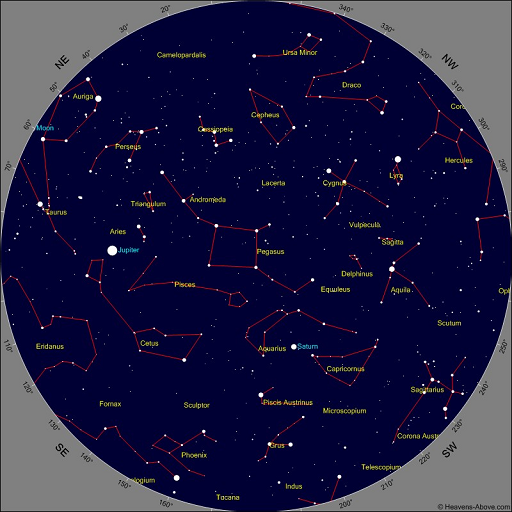
     

  • SKY WATCH – January 24

    Look up at the wonder in the sky…

    This star chart is for early Jan 9 pm mid Jan 8 pm and end Jan 7 pm .

    To use this chart, hold the star chart vertically, face any direction in the sky.

    Turn the star chart around so that the direction you are facing is at the bottom.

    Now, the stars shown at the bottom in the chart are the stars you will see in the sky .

    Dots represent stars. The larger the dot the brighter the star.

    Lines between stars are imaginary and aid location .

    Names of constellation are along each side .


    Moon Phases.

    Last quarter

    04 JAN 24

    New moon

    11 JAN 24 11.57

    First quarter

    18 JAN 24

    Full moon

    25 JAN 24 17.53


    -Mr Suhas Naik-Satam

    Nehru Planeterium


  • This is what happened in Science… This Month.. That Year….

    January 3

    1967 — Harry Thomason received a patent for an apparatus for cooling and heating a house using solar energy.

    January 10

    1893 — Thomas Laine patented the electric gas lighter.

    January 14

    1890 — George Cooke received a patent for a gas burner.

    January 17

    1882 — Leroy Firman received a patent for the telephone switchboard.

    January 20

    1857 — William Kelly patented the blast furnace for manufacturing steel.

    January 21

    1954 — The first atomic submarine, the USS Nautilus, was launched. It was christened by First Lady Mamie Eisenhower.

    January 26

    1875 — The first electric dental drill was patented by George Green.

    January 27

    1880 — Patent was granted to Thomas A. Edison for “an electric lamp for giving light by incandescence.”

    January 29

    1924 — Carl Taylor of Cleveland patented a machine that made ice cream cones.

    January 31

    1851 — Gail Borden announced his invention of evaporated milk.

    -Team ScienceNow Digital

  • Pandemic again??

    The mysterious lung disease is reported in parts of China.

    There has been a spike in reported incidents of respiratory illnesses. The illnesses has caused a surge in hospitalisations. Infections have reported from China’s north-eastern regions. Cases among children are especially high, schools in Beijing are reporting high levels of absenteeism.

    Apart from children, the elderly and pregnant women are also vulnerable.

    Chinese authorities have asked the public to step up vigilance.

    WHO has given the advisory for keeping distance from people who are ill, Staying home when ill Getting tested and medical care as needed Wearing masks as appropriate, Ensuring good ventilation and regular hand-washing

    Authorities have warned of the risk of a rebound in Covid-19 infections, and asked for strengthening the reporting process. China has ramped up testing and surveillance. Given the experience of the pandemic a couple of years back, authorities are likely to be doubly cautious.

    It time to be vigilant again

    Till the Date no case is reported from India. It is observed that the incidence of illness is affecting the children as no case is reported in the elders, Therefore it is implied that the kids are getting infected because they are not vaccinated. The disease is similar to Pneumonia and it is said that the rise is infection is due to cold in the region.

    Whatever be the case it should not be the deadly Pandemic again…

    -Dr Siddhivinayak Barve

    Editor, ScienceNow Digital

  • Editorial

    Editorial

    Greetings from Science Now Digital….

    Times passes by… this year too is coming to an end…

    ScienceNow Digital is gaining momentum… many of you are giving positive suggestions for what you want to see in the Digital Version of Science Now… We are taking a very positive note of it… and the changes will be seen in the new year issue.. with your input we are revamping the contents.. Now it will be still a more power packed material in the coming months… and that’s the promise!

    As the year comes to an end, the world saw renewed hope of saving our planet earth. COP 28 concluded in Dubai with a historic agreement to transition away from fossil fuels . The declaration calls for more decisive climate action in the face of rapidly accelerating climate change …

    The month will even see the award of Nobel Ceremony… This issue contains special cover story on the Nobel 23 prizes in Science.

    Science Now is all geared up for the year ahead with commitment to bring Science to you. Besides regular features several new features will be introduced…

    Science Now with its commitment to bring Science and Technology, will leap forward beyond 2023, keeping up the promise of bringing excellence in Science…

    Scientifically yours


    Dr Siddhivinayak Barve

    Editor,

    ScienceNow Digital

  • Editorial

    Editorial

    Greetings from Siddhant Edubridge Media!

    Greetings of the Festive Season.

    Wishing you all a very Happy Diwali!

    Dear Friends as the Festive Season unfolds, India’s Strides in the Space continues… This is perhaps the most momentous year in Science for India.

    Mission Gaganyan is launched with the aim of putting Indian in space… with Mission Moon, Mission Sun now India is aiming at landing man on moon..

    The Science and Technology in India is rapidly progressing… Gaganyan is launched for testing the safe ejaculation of the space module.. The test flight is aimed at testing the safety of spacecraft for the safe return of the astronauts…  

    The overall progress in Science in India is due to the meticulous efforts of the Scientific fraternity. The progress in Science is due to the luminaries in Science who have contributed immensely towards the progress of the country. The country is made self reliant in many areas.. and as we march ahead, the progress of Science is spectacular…

    Our endeavour through ScienceNow Digital is to bring glorious developments in Science and Technology for the benefit of Indian Youth. The digital magazine is a sincere attempt to bring the world of Science to the Masses, sensitize the young creative minds towards the subject and bring science communities together to work towards nation building

    The Magazine is catering to the Youth in Schools, Colleges, Research Centres and Research Institutes projecting Science and Technological developments in India and the World. The Magazine is the means to ignite the young minds in India Redefining the Future of our country…. Setting in the Scientific Culture…

    It is a Mission… Science Mission… The mission is to take Science Ahead… To Build Science of Future… …and that’s the Promise of Science Now!

    Scientifically yours,

    Dr Siddhivinayak Barve

    Editor, ScienceNow Digital
