science share account_circle

Author: sn_admin

  • NOBEL ‘23

    NOBEL ‘23

    The Royal Swedish Academy of Sciences announced 2023 Nobel Prizes. 

    Nobel Prize, one of the worlds top honors, has been declared for the year 2023 in designated Science categories such as Medicine, Physics and Chemistry.

    The Nobel Prizes are five separate prizes awarded as per the will of Alfred Nobel to those who have conferred the greatest benefit to humankind. 

    Nobel Prizes are awarded in the fields of Physics, Chemistry, Physiology or Medicine, Literature, and Peace. In 1968, Swedish Central Bank funded the establishment of the Prize in Economic Sciences in Memory of Alfred Nobel….

    The announcement of Nobel Prize winners is one of the most awaited moments for people associated with fields ranging from Literature to Science, here is a look at this year’s winners…

  • Mission Gaganyaan: Tested Successfully

    ISRO has yet another feather in its Crown..

    ISRO has carried out the first Tests Flights to take astronauts into space by 2025.

    The glorious Space Odyssey continues…

  • Editorial

    Editorial

    Greetings from Siddhant Edubridge Media!

    Greetings of the Festive Season.

    With a lot much happening around as India’s strides in the Space continue further… with Mission Moon, Mission Sun now India is aiming at landing man on moon.. Mission Gaganyan is launched with the aim of putting Indian in space…

    The Science and Technology in India is rapidly progressing… In sports too India has shown its metal at Asian Games.. The overall progress is due to the meticulous efforts of the Scientific fraternity.

    The progress in Science is due to the luminaries in Science who have contributed immensely towards the progress of the country. The country is made self reliant in many areas.. one such is very critical in providing the food security to the country. When the country was starving the man who brought green revolution by making India self reliant in Food Grain Production is visionary scientist Dr M S Swaminathan. Recently this farmers Scientist left for heavenly abode. We salute the visionary scientist who transformed Indian Agriculture…

    Our endeavour through ScienceNow Digital is to bring glorious developments in Science and Technology for the benefit of Indian Youth. The digital magazine is a sincere attempt to bring the world of Science to the Masses, sensitize the young creative minds towards the subject and bring science communities together to work towards nation building

    The Magazine is catering to the Youth in Schools, Colleges, Research Centres and Research Institutes projecting Science and Technological developments in India and the World. The Magazine is the means to ignite the young minds in India Redefining the Future of our country…. Setting in the Scientific Culture…

    It is a Mission… Science Mission… The mission is to take Science Ahead… To Build Science of Future…

    …and that’s the Promise of Science Now!

    Scientifically yours,

    Dr Siddhivinayak Barve

    Editor, ScienceNow Digital

  • A VISIONARY IN INDIAN AGRICULTURE

    A VISIONARY IN INDIAN AGRICULTURE

    Dr. M.S. Swaminathan, a luminary in the field of Indian agriculture, bid farewell, leaving behind a legacy that has forever transformed the nation’s farming landscape. Born on August 7, 1925, in Kumbakonam, Tamil Nadu, Dr. Swaminathan’s journey was guided by the values instilled in him by his parents, setting the stage for his remarkable contributions to agriculture.

    In 1946, inspired by Mahatma Gandhi’s vision of providing sustenance to every household, Dr. Swaminathan redirected his career from medicine to agricultural research. His academic pursuits took him to prestigious institutions worldwide, culminating in a Ph.D. in genetics from the University of Cambridge. His expertise in potato breeding, honed during a postdoctoral stint at the University of Wisconsin, became instrumental in his future endeavors.
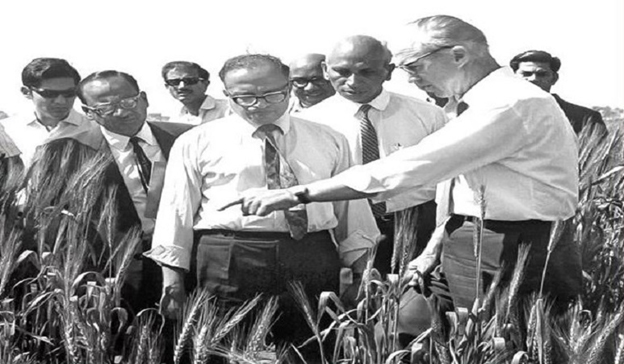
    The turning point arrived in the early 1960s when Dr. Swaminathan learned of the high-yielding wheat varieties developed by American scientist Norman E. Borlaug in Mexico. Recognizing their potential, he forged a partnership with Dr. Borlaug, setting the stage for India’s Green Revolution.

    As a plant geneticist at the Indian Agricultural Research Institute, Dr. Swaminathan meticulously crossbred Borlaug’s strains with others, resulting in a robust wheat variety that revolutionized Indian agriculture. In 1966, he assumed the role of director at the Indian Agricultural Research Institute, successfully advocating the import of Mexican wheat seeds—an audacious move that yielded a bountiful harvest and self-sufficiency in wheat and rice production by 1974.

    Dr. Borlaug, Nobel laureate for his agricultural contributions, acknowledged Dr. Swaminathan’s pivotal role, cementing their collaboration’s significance in the Green Revolution’s success across Asia.

    Dr. Swaminathan’s impact extended globally during his tenure as Director General of the International Rice Research Institute from 1982 to 1988. His “evergreen revolution” vision emphasized water conservation, genetic diversity, and energy efficiency, setting a sustainable path for global agricultural practices.

    Dr. Swaminathan’s advocacy for India’s farming community was unwavering. As chairman of the Farmers Commission, he championed policies leading to the National Farmers Welfare Policy, ensuring fair compensation for farmers and earning their respect and gratitude.

    Dr. Swaminathan’s accolades, including the World Food Prize and Magsaysay award, underscored his exceptional dedication to agriculture and rural development. India recognized his immense contributions with the Padma Bhushan and Padma Vibhushan.

    Beyond his role as a scientist, Dr. Swaminathan emerged as a statesman dedicated to the welfare of India’s farmers. His Lab-to-Land program directly transferred agricultural technologies to farmers, bridging the gap between science and practical implementation.

    As we bid farewell to this visionary, we remember him as a meticulous planner and a revered figure. Dr. Swaminathan’s love for India’s peasants and agriculture was unwavering. His passing leaves an irreplaceable void in the agricultural scientific community.

    In conclusion, we cannot help but reflect on India’s missed opportunity to honor Dr. Swaminathan further. His contributions were nothing short of extraordinary. Dr. M.S. Swaminathan’s life’s work, which transformed India’s agricultural landscape and secured its food future, deserved the highest recognition—conferment of the “Bharat Ratna.” India’s Green Revolution remains indebted to this extraordinary son of the soil, and his memory will forever inspire us to strive for a better, more abundant future in agriculture. His legacy endures as a beacon of hope, guiding generations toward a prosperous tomorrow.

    -Prof (Dr) Sanjay Deshmukh

    Former VC, Mumbai Univ

    Close associate of  Dr Swaminathan

    at MSSRF, Chennai

  • Agri Tech – Farming Drones

    Agri Tech

    Farming Drones

    For centuries, India’s agriculture-based economy has been predominantly driven by farmers who toiled hard to feed themselves and society. Fighting against all odds – unpredictable rains, depleting water sources, changing climate, depleting soil condition, pest attacks… staking their meagre fortune, they always remained hopeful of a bountiful harvest. Living in abject poverty and straddled with generations-old farming techniques, they continued to be susceptible, ill-prepared and ill-equipped in the face of the emerging challenges. Often at the mercy of nature and completely dependent on the benevolent rain God, they continued their eternal struggle to break-free from the stifling noose of poverty and starvation….

    Over the last 3-4 decades, dwindling farm income has forced several farmers to seek employment in industries in some urban locale. As for those farmers who stayed back in their villages, they had to adopt/adapt to technology-intensive farming taking real-time actions based on real-time soil/crop information. ‘Modern’ or ‘precision’ farming methods are gradually transforming how agriculture is done, thereby leading to improved crop yields, better land utilisation and resources management, and also optimisation of time and finances.

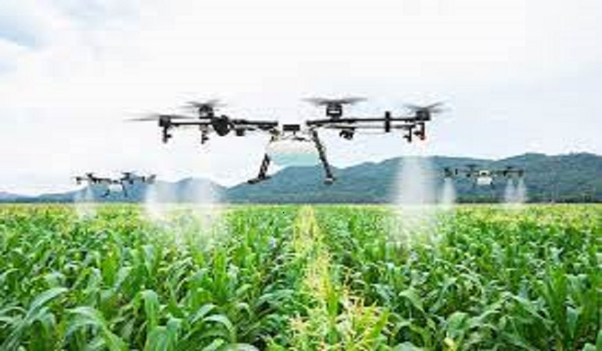
    Of the several tech-gadgets presently being deployed in precision farming to collect data and initiate timely actions, the drone technology is fast emerging as the new favourite. Let’s look at how drone technology is transforming agriculture practices in the country:

    Drones in Agriculture

    On a day-to-day basis, a farmer is required to be watchful of a variety of factors that influence the success of his farm. Whether it be: timely watering of plants or adding fertilisers to soil or promptly responding to climatic changes or maintaining of soil health or tackling of weed and insect problems, etc., farmers are resorting to use of high-tech drone technology. Drones equipped with a wide range of technologies like propulsion systems, infrared cameras, GPS and navigation systems, programmable controllers, automated flight planning… are now providing fast and efficient solutions to farmers. In short, the use of drones in agriculture is helping farmers meet the changing and growing demands of the future. Here are some of the critical areas where drones are being popularly used:

    • Soil and Field Analysis: Using drone technology, it is now possible for farmers to collect useful soil data at the beginning, middle, and end of crop cycle. Using 3D maps of soil, farmers would be able to check issues concerning soil quality, nutrient management and identify soil dead zones. This information is helping farmers to not only optimally use water resources, but also effectively manage crop nutrient levels.
    • Seed Planting: It’s a relatively new agriculture area of application, but some companies and research institutions have successfully used drones for planting seeds over large geographic areas. Minimising the need for on-the-ground planting, drones have been used to shoot seed pods into prepared soil, in the process helping to save on cost, time and long strenuous work.
    • Crop Spraying and Spot Spraying: In order to maintain high yields, often crops are required to be sprayed with nutrients after short intervals. Traditionally, it was done manually involving huge labour force or mechanically using costly hi-tech machines, which only added to the overall farm costs. Drones are now being used to spray fertilizers, herbicides or pesticides, and they are working out to be much safer and cost-effective. Now, it is also possible to identify specific problem zones in the farm and undertake spot spraying using drones in less time, with reduced finances and negligible damage to the environment.
    • Crop Mapping and Surveying: One of the biggest advantages of using drone technology is the ease and effectiveness of monitoring crops aerially over large expanses. Using drone mapping and surveying technology, it is now possible to get real-time data of the crop using real-time visual footage. With Near Infrared drone sensors, the farmer can now actually understand the plant health based upon light absorption, thereby getting a bird’s eye view of the overall farm health.
    • Irrigation Monitoring and Management: Irrigation of vast farmland is a tricky business, especially when the farmer has to water miles and miles of standing crop. Drones equipped with thermal cameras are now able to spot areas in the farm with irrigation issues – receiving too little or excessive moisture. Using this information, the farmer will be able to take timely measures – maximise drainage, adhere to natural land runoff, avoid water pooling, etc. so as to prevent damage to sensitive crops. With drone surveying, these issues can now be spotted in real-time before they become troublesome.
    • Real-time Livestock Monitoring: It is now possible for farmers to keep track of livestock at regular intervals, using less farm labour and making optimal use of time. Drones are being used to closely monitor the animal herd and see if there are injured or missing livestock, as well as see which animal is likely to give birth to young ones. Thermal imaging now helps farmers to keep an eye on the livestock predators, and track abnormal herd movements.

    While there is so much happening in agriculture drone technology, yet it is believed that the work is still in its infancy. As drones continue to maximise yields, minimise costs and future-proof farms, the biggest limiting factor to the growth of fields is the lack of trained pilots. With safety guidelines, drone best practices, insurance policies, drone camera and sensor technologies continuing to evolve and improve, the application of drones at the hands of highly-trained pilots is likely to revolutionise agriculture practices in the country.  

    -Manoj Mahanta

    Team, ScienceNow Digital

  • Pride of India : Defence Research & Development Organisation

    Pride of India : Defence Research & Development Organisation

    Defence Research & Development Organisation (DRDO) is an agency under the Ministry of Defence. Headquartered in New Delhi, DRDO was formed in 1958 by amalgamating the Defence Science Organisation and a few technical development establishments. DRDO is India’s largest research organisation. It has a network of laboratories engaged in developing defence technologies covering various fields, like aeronautics, armaments, electronics, land combat engineering, life sciences, materials, missiles, and naval systems.

    DRDO’s first project for the Indian military was in surface-to-air missiles (SAM) known as Project Indigo. However, it received little success and was therefore discontinued. Since being set up, DRDO has achieved many successes in developing major systems and critical technologies like aircraft avionics, UAVs, small arms, artillery systems, EW Systems, tanks and armoured vehicles, sonar systems, command and control systems and missile systems.

    In March 2019, DRDO developed India’s first anti-satellite system that made India one of the space superpowers. In 2016, it successfully tested its first indigenously developed heavy-duty drone, Rustom 2, which is an unmanned armed combat vehicle developed on the lines of the US’s Predator drone. DRDO co-developed INS Arihant, India’s first nuclear ballistic missile submarine, which became operational in 2018. Its self-eject able black box for airplanes — BSAT can help rescuers easily locate the debris in the event of a crash in water. DRDO has also developed several ballistic missiles under its Integrated Guided Missile Development Programme, which includes missiles like Prithvi, Trishul, Agni, Akash and Nag.

    -Noel Fernandes

    Team ScienceNow Digital


  • Mission Shakti – DRDO’s Anti-satellite Weapon

    Mission Shakti – DRDO’s Anti-satellite Weapon

    India has become the fourth country after the US, Russia and China to acquire the capability of space warfare. Indian scientists successfully conducted Mission Shakti, shooting down a live satellite target in the Low Earth Orbit (LEO)

    A Low Earth Orbit refers to an altitude up to 2,000 km. A satellite in the LEO can monitor activities on the ground and water surfaces. Such a satellite can be used for espionage and pose serious threat to the country’s security in the instances of war.

    A-SAT can target LEO satellite

    An anti-satellite missile, the one that was fired by the scientists of the Defence Research and Development Organisation (DRDO), can target LEO satellite. The missile can incapacitate or completely destroy the satellite in the LEO range. India is only the 4th country to acquire such a specialised and modern capability, and the entire effort is indigenous.

    India possess “Building Blocks”

    The United States was the first nation to build space warfare capability that it developed in late 1950s. The erstwhile USSR followed the US and had acquired this capability by early 1960s. China was the third country to launch A-SAT. China conducted its first A-SAT test in 2007. No country has used an A-SAT against another nation till date. In all the instances, the nation’s testing anti-satellite missiles have targeted one of their defunct satellites to showcase their space warfare capabilities.

    -Noel Fernandez

    Team, ScienceNow Digital

  • Bharat Ek Khoj – Vaigyanik

    Bharat Ek Khoj – Vaigyanik

    Acharya Nagarjuna

    Nagarjuna was a well-known metallurgist and alchemist of the 10th century. His dedicated research for twelve years produced maiden discoveries and inventions in the faculties of chemistry and metallurgy. The main aim of his experiments was to transform base elements into gold. But even though he was not successful in his goal, he succeeded in making an element with gold-like shine. Till date, this technology is used in making imitation jewellery.

    In his research book, Rasaratnakara, he has discussed methods for the extraction of metals like gold, silver, tin and copper. Nagarjuna was the first to use mercury and Kharpar (antimony) as medicine, making them insoluble. He found five types of mercury. As the author of medical books like “Arogyamanjari” and “Yogasar,” he also made significant contributions to the field of curative medicine. Because of his versatile knowledge, he was appointed as Chancellor of the famous University of Nalanda.

    -Dr Shobha Tawade

    Team, ScienceNow Digital

  • Bharat Ek Khoj – Ancient Vigyan

    Bharat Ek Khoj – Ancient Vigyan

    The Rust-Resistant Iron Pillar

    The Iron Pillar at Mehrauli in Delhi standing tall for the past 1600 years has attracted the attention of archaeologists and material scientists across the world because of its high resistance to corrosion. The base of the Pillar rests on a grid of iron bars soldered and is estimated to weigh more than 5,000 kilograms. The 23 feet 8 inches high Pillar made of 98 per cent wrought iron stands testimony to the high level of skill achieved by the ancient Indian metallurgists in the extraction and processing of iron.

    According to researchers, the corrosion resistance results from an even layer of crystalline iron hydrogen phosphate film that serves to protect the Iron Pillar from corrosion. The presence of second-phase particles (slag and unreduced iron oxides) in the microstructure of the iron, that of high amounts of phosphorus in the metal, and the alternate wetting and drying existing under atmospheric conditions are the three main factors in the three-stage formation of that protective passive film.

    -Dr Shobha Tawade

    Team, ScienceNow Digital

  • Xenobots, the Novel Living Machines

    Xenobots, the Novel Living Machines

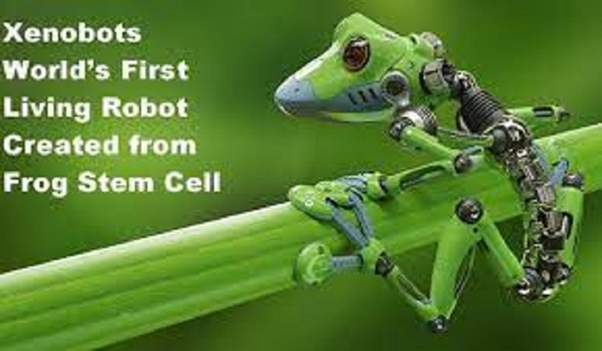
    Scientists of Tufts University and University of Vermont succeeded in creating an entirely new life-form – the Xenobots, using stem cell of an African clawed frog (Xenopus Laevis). With the creation of the world’s first living self-healing robots, these scientists have transported the entire mankind a tad closer to the
    sci-fi world of unlimited possibilities. It wouldn’t be wrong to say that mankind has inched nearer to ‘knowing the unknown’. These living machines capable of surviving in adverse conditions without food for weeks together are being looked at as a major breakthrough in robotic technology. Largely, because these millimetre-long micro-machines can walk and swim inside human bodies, and also work together in groups.

    New Living Species or Robots

    In the words of Joshua Bongard, a lead researcher on the project, “Xenobots are neither a traditional robot nor a known species of animal. They are a new class of artefact – living, programmable organisms.” Certainly, they are not the traditional robots with complex gears and machines, instead they are biological machines – tiny blob of moving pink flesh, capable of doing things that robots of steel and plastic simply cannot. And being a biological entity, the Xenobots are more environmentally friendly and safer for human health. While Xenobots could be used to carry medicine inside human bodies or even travel into our arteries to scrape out plaque or neutralise abnormal cellular growth, what makes them really special is the fact that Xenobots could also help researchers learn more about cell biology – opening the doors to future medical advancements in human health and longevity.

    A Panacea for all diseases

    When researchers cut the Xenobots into smaller entities and leave them to incubate, they multiplied and repaired themselves, and what’s more exciting is they could join together the Xenobots under a microscope. So, in near future, there is every possibility of medical professionals using Xenobots to repair birth defects, reprogram tumours into normal tissues, regenerate body parts after traumatic injury or degenerative disease, and to a great extent also reverse aging bodies. We are witnessing the beginning of a new era of ‘regenerative medicine’ whereby the affected body part or organ could be ‘regrown’ and ‘reprogrammed’ into normalcy akin to the miraculous hi-tech interventions seen in some of the recent sci-fi movies.

    Why the need for living Robots?

    Conventionally, robotic technology platforms have used steel, rubber or plastic to make robots that are strong, durable and flexible. But now, when the entire world is struggling with plastic and electronic waste, and there is a growing pressure on manufacturers to look for a ‘greener’ solution. Working with living robots has its own upside – these organisms have 4.5 billion years of evolutionary intelligence embedded that helps them regenerate and keep working for decades, which is not the case with robots made of plastic or steel that tend to break-down more often. And more importantly, whenever these living robots happen to stop working (i.e. death), they would just fall apart harmlessly without adversely impacting the environment. For instance, Xenobots are fully bio-degradable just like any dead skin cells.

    Cracking the Biological Code

    On the road to creating living robots, it’s critical that we learn about how cells communicate and connect with one another. We ought to understand the algorithms of living cells that determines form and function. There is a lot of information sharing and cooperation – organic computation going on in and between cells all the time, not just within neurons. These interactions are shaped by bioelectric, biochemical and biomechanical processes, and interestingly these processes are reconfigurable – posing a challenge for future technologists and scientists who are desirous of creating new living entities.    

    Preparing for Future Shock

    While many are worried and anxious of the possible implications when one goes about tinkering with something that is hitherto ‘unknown’ – the rapid technological changes and complex biological manipulations we are doing to the living without being fully aware about its consequences. In short, should the organisms enjoy the same level of protection that animals or humans have been assigned with, to check mischief or unwarranted experimentation.

    Ethically speaking, when we are not completely sure and/or in complete control of events whilst creating a new life form, it is good not to do things that would jeopardise the future of humanity. So it is important that we tread the path cautiously and try to engage responsibly in only technologies critical for the well-being of the planet.

    -Manoj Mahanta

    Team ScienceNow Digital