science share account_circle

Author: sn_admin

  • Exoskeleton –Power-packed Performance

    Exoskeleton –Power-packed Performance

    Imagine a worker in the construction or industrial sector, routinely doing heavy physical work, and one fine day meets up with an accident or wakes up to an ailment that makes him completely/partially immobile for life.

    Or

    An army man on a mission in the treacherous mountain terrains or dense equatorial jungles, carrying loads of food supplies, arms and ammunition, watchfully moving in an unknown enemy territory. Imagine the physical exhaustion!

    Or

    A differently-abled person, living indoors for years, unable to move his hands and feet. Always dependent on family members for anything and everything, wanting to break-free and live independent as a free bird.

    All the above instances are beautifully summed up in a quote by motivational speaker Rashida Rowe, “Life is unpredictable and usually never goes the way we plan it or would like it to go, but we have it and with life anything is possible.” It is this hope of overcoming challenges that makes, us humans, different from all other living beings on this planet.

    Undoubtedly, over the centuries, the strong urge to overcome challenges led to ‘human’ evolution into an intellectually superior species! Interestingly, the evolution continues unabated to transform into an elite race of ‘super-humans’. The expression of collective evolutionary dreams and aspirations have been time-and-again visibly projected through the several iconic superhuman characters in the sci-fi movies, who possess fascinating super-powers. It is through the marriage of ‘man’ and ‘machine’ that humans can be empowered with fascinating ‘qualities’ and ‘features’ that hitherto were selectively gifted to some amazing creatures of this planet. For instance, possess the power of the ants who effortlessly carry 10-50 times their body weight or those of dung beetles who pull over things 1,000 times their body weight!

    Certainly, in the near future, it may be possible for the humans to do so and much more. Using the prevailing technology tools – robotics, artificial intelligence, virtual/augmented reality, machine learning, high-definition sensors…, scientists have succeeded in developing an exoskeleton that mimics the unique capabilities of ants and dung beetles. This ground-breaking mechanical suit, the exoskeletons – a wearable device that augments you physically through mechanical interaction with the body and help multiply strength far beyond that of normal humans. A technology that would not only reduce the amount of rigour that soldiers have to endure in the warzones, but also help those workers and physically challenged who are in need of support to walk, stand up and carry heavy objects.

    How do they work?
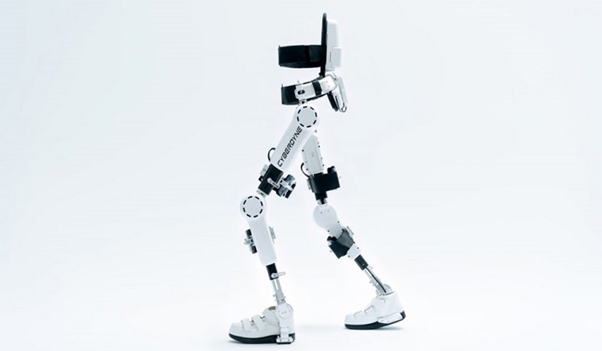
    These exoskeletons use an advanced nerve-sensing system that mimic working of nerves in the human legs. Normally, when a person moves a limb, an electrical impulse is sent from the brain to the muscle. The exoskeleton’s in-built intelligence is able to detect these impulses on the surface of the skin, and its specially developed chips are able to digitize those signals and send the information in the form of commands to different parts of the exoskeleton. The centrally networked system powered by a system of electric motors, pneumatics, levers, hydraulics and combination of technologies make the necessary limb movement with increased strength and endurance.

    Where can it be used?

    The marketplace is witnessing introduction of a wide range of exoskeletons for diverse functions – lightweight comfortable exoskeletons for safe and repetitive assembly work, single-joint exoskeletons to assist a limb for specific tasks, full-body powered suits for handling heavy loads in industrial settings, and so on. Here are some areas where their use is increasing in popularity:

    Safety: In addition to improving worker safety and efficiency, exoskeletons can considerably reduce (by more than 20%) the incidence of back injury by ensuring and encouraging proper body posture. This can affect millions of workers throughout the world. 

    Medical: Wearable exoskeleton technology holds a lot of potential in the medical realm. Studies have shown that the faster a patient gets up and moving, the faster he recovers, and using exoskeleton it is possible. Exoskeletons can optimise weight shift and ensure the proper alignment and synchronization of both sides of the body.

    Work: In addition to ensuring worker safety, exoskeletons could help check fatigue and increase productivity.  Many tasks may appear to be simple, but they cause a person to be exhausted. Wearable exoskeletons could be the answer to help address issues associated with tasks that cause a quick build-up in fatigue and which lead to work errors and accidents,

    Military: Beyond making a combat ready powered exoskeleton for use in active combat zone, there are still many other applications that are being considered. One of the more obvious ones is logistics. Many field bases do not have the cranes and forklifts. Here exoskeletons can assist soldiers with loading or unloading supplies.

    In conclusion

    Even if the current exoskeleton suits don’t bestow superhuman powers, they could be used for doing heavy physical jobs without pain or injuries, and in a safer way. Exoskeletons could also allow injured and disabled people get an opportunity to perform tasks that they thought they might never be able to do, thus giving them the opportunity to enter and stay employed in physically demanding occupations. Governments also could empower fire-fighter, disaster personnel and combat troops with protective exoskeletons. In short, exoskeleton technology has the potential to impact lives for the better.

    -Dr Siddhivinayak Barve

    Editor, ScienceNow Digital

  • Tree Climbing Bike

    Innovation

    Tree Climbing Bike

    A farmer-turned-inventor has developed a bike that can scale really tall trees up and down with ease…

    A few months back, the video of a farmer climbing the tree with the help of a machine went viral on social media. The video was of K Ganapati Bhat, a farmer from a small village of Komali in Sajipamunnur, Karnataka, who has developed a manned machine to climb the tree and to spray pesticides or pluck bunches of areca nut, without taxing any muscles or bruising arms or legs!

    The Innovator

    A Science graduate in Physics, Chemistry and Maths, Ganapati Bhat came up with the idea of developing a machine to overcome shortage of labourers in areacanut plantations. His manned machine is based on the model of a bike through which one can scale the trees up and down with ease. Ganapati Bhat said that the use of the machine was tested on his farmland on a trial basis recently, and it worked without any problem. In fact, after the video was circulated by his daughter on the social media, he has started receiving calls from across the globe for placing orders for the supply of the machine.

    The Machine

    The machine weighs 28 kg and has a two-stroke engine. It has hydraulic drum brakes, gears, double chain, seat and safety belt. Wearing safety belt, any person weighing up to 80 kg can climb the tree within 30 seconds just by the press of a button. Similarly, he/she can alight from the tree by switching off the engine with ease. The use of hydraulic drum with shock absorber in the engine ensures that there is no harm to life, even if the engine suddenly slips to the ground. The engine runs on petrol and with one litre petrol, you are able to climb around 80 trees. The engine runs on petrol. For one litre petrol, one need to use 40 ml engine oil. With one litre petrol, you can climb 80 trees, if you weigh around 50-60 kg.

    Economically Effective

    On an average, a labourer had to be paid Rs 2,000 per day for climbing and spraying pesticides. On an average, a labourer climbs 35 to 40 trees manually. But this scooter is at your disposal any time and for any number of uses. Pegged at a cost of Rs 75,000 per unit, the vehicle comes with a handle and a brake as well as a clutch for the smooth movement of the machine. Along with it, it has an indicator to show petrol and oil content. By sitting on one arecanut tree, one can spray pesticides to several trees nearby.

    Farmer Saviour 

    The machine will provide solution to problems by minimising the role of human labour in the operation of spraying pesticides and harvesting the crops. Bhat says even women can climb the tree with ease as the machine is quite safe as it has been tested on more than 2000 trees in his farmland. But he warns farmers or for that matter anybody to try this Bike machine on trees with algae, as it does not work on mushy or moisture-based surfaces. So, he is now planning to modify the machine to use it for climbing coconut trees as well.

    Many firms have started getting in touch with Bhat for manufacture of his innovative tree scooter. With further modifications, the machine will be of great help to farmers, who are facing acute shortage of labour for activities like harvesting and for spraying pesticide.

    -Manoj Mahanta

    -Team, ScienceNow Digital

  • Moonbound: Apollo 11 and the Dream of Spaceflight

    Book Review

    Moonbound: Apollo 11 and the Dream of Spaceflight

    On a summer night in 1969, two men climbed down a ladder onto a sea of dust at the edge of an ancient dream. When Neil Armstrong and Buzz Aldrin first set foot on lunar soil, the moon ceased to be a place of mystery and myth. It became a destination. Now, on the fiftieth anniversary of that journey, Moonbound tells the monumental story of the moon and the men who went there first. With vibrant images and meticulous attention to detail, Jonathan Fetter-Vorm conjures the long history of the visionaries, stargazers, builders, and adventurers who sent Apollo 11 on its legendary voyage.

    From the wisdom of the Babylonians to the intrigues of the Cold War, from the other worldly discoveries of Galileo to the dark legacy of Nazi atrocities, from the exhilarating trajectories of astronauts―recounted in their own words―to the unsung brilliance of engineers working behind the scenes, Moonbound captures the grand arc of the Space Age in a graphic history of unprecedented scope and profound lyricism.

    -Team ScienceNow Digital

  • Film Review

    Film Review

    Dune

    A mythic and emotionally charged hero’s journey, “Dune” tells the story of Paul Atreides, a brilliant and gifted young man born into a great destiny beyond his understanding. He must travel to the most dangerous planet in the universe to ensure the future of his family and his people. As unkind forces explode into conflict over the planet’s exclusive supply of the most precious resource in existence – a commodity capable of unlocking humanity’s greatest potential…only those who can conquer their fear will survive.

    -Team ScienceNow Digital


  • Soil Saviour

    Soil Saviour

    If you have a passion for knowing more about the soil and want to seek answers to problems relating to the environment, then a career as a Soil Scientist will be apt for you

    Soil Science plays an important role in the life of a human being. It is not only the resource for food production, but it also helps us on waste disposal, to maintain playgrounds, to distribute and store water and nutrients, and support our environment.

    What does a Soil Scientist do?

    A soil scientist is a person who is qualified to evaluate and interpret soils and soil-related data to provide information about its quality and structure. Information about the composition of soil is required to assist with planning and surveying for land development purposes; to assess the effect of agrochemicals used in farming; to aid land restoration and reclamation projects; to gauge drainage and irrigation requirements; or to investigate environmental, climatic and pollution issues.

    What attributes will you require?

    Aspiring soil scientists usually have a passion for nature and are enthusiastic about working outdoors. They should also have the willingness to communicate their knowledge to others, a hunger to learn and seek answers to problems relating to the environment. Since soil scientists often serve as consultants for landowners, farmers, and environmentalists, it is crucial that they have excellent communication skills – both written and oral.

    He/she must also possess good observation and concentration skills to be capable to examine and verify the properties of different soils. Physical fitness is also a prerequisite because of the manual work that is involved. Many soils are very complicated and a soil scientist must analyse diverse locations before plantation. Therefore, they must be willing to face various challenges and adapt to different working conditions.

    What are the qualifications required?

    A four-year bachelor’s degree in soil science, either environmental or agricultural science is necessary to qualify. Students interested in pursuing a career in soil science should have a strong background in subjects like mathematics and science in high school. Some employers favour a master’s degree or a doctorate from an agricultural university. Those who wish to teach at universities and colleges or conduct research will need to obtain a PhD degree. In addition to formal education, internships can be very important in securing good positions because they provide on-the-job training.

    What is the scope of work?

    Soil science is a relatively small field and the demand for soil scientists is anticipated to grow in the coming years, given the government’s initiatives. That being said, a significant number of soil scientists with advanced training and strong educational backgrounds will be required to improve the quality of farm soil. In addition, they will also be needed to help urban and regional development as well as for ecological preservation. Therefore, employment opportunities for highly educated and trained scientists will continue to be plentiful.

    What are the opportunities available?

    Soil scientists usually begin as helpers or subordinates to senior soil scientists. Those who gain enough experience or perform exceptionally are generally promoted to more advanced positions with greater responsibilities, such as project heads or supervisors. Positions in management are secured by those who have a graduate degree or an MBA.

    Institutes offering courses in Soil Science

    • Sher-e-Kashmir University of Agriculture Science and Technology of Kashmir
    • Punjab Agricultural University, Ludhiana
    • Bihar Agricultural University, Sabour
    • AKS University, MP
    • Chaudhary Charan Singh Haryana Agricultural University, Hisar
    • Banaras Hindu University, Varanasi

    -Team ScienceNow Digital

  • Music and Spirituality

    Music and Spirituality

    Inaudible to the human ear, Indian rishis were first to suggest that cosmic vibrations, the Svra was the origin and basis of all matter, energy and life forms in the universe. These cosmic vibrations caused the Pancha-Mahabhuttas (the five physical elements) to vibrate, and where there is vibration there is sound.

    In its purest form, the primordial sound AUM (OM) was said to be sound of the cosmos, and it gave birth to many worlds that are in existence today. Chakrapani suggested that both sound and light travelled in waves, and that light travelled at a much higher speed than sound. The wave character of sound was elaborated on by Prastapada who hypothesized that sound was an energy form and it was carried by air in increasing circles – a movement that was similar to the ripples in water. As with all Vedic physics, this was all united into a metaphysical concept of soul and mind.

    Science of Sound

    The Samaveda and Yajurveda (1200 – 1000 BC) were among the earliest testimonies of Indian music. In the physical universe, it was believed that there are seven original notes – Shadja (SA), Rishabha (RE), Gandhara (GA), Mahdhyama (MA), Panchama (PA), Dhaivata (DHA) and Nishada (NI), and these notes are representative of the seven properties related to space. All types of sound that we hear of, either from musical instruments, the nature (i.e. cloud, rains, sea, wind..), the animate (i.e. animals, birds, insects…), the inanimate (i.e. stones, metals, wood…) were considered to be expressions of the seven original notes. As basis of all music, sound was thought to be intimately related in some way to non-physical and sacred dimensions or planes of existence. Sound was also said to have its own reflection – Pratidhvani (Echo).

    The Veda, knowledge through Sound

    In ancient India, the Vedas are called Sruti, ‘that which is heard’. A reason why the Vedas were handed down generations orally, and were not taught or learned from any written text. The rishis believed that sound of the Vedas cannot be properly transcribed, and some of the sounds cannot be accurately represented in any script known to mankind and these unique sounds have to be learned by listening.

    Besides there were many Svaras of the Vedic mantras that required tonal variations and proper accentuation – ‘Udatta’ (i.e. raised syllable), ‘Anudatta (lowered syllable) and ‘Svarita’ (falling syllable). It was believed that Vedic chants with correct intonation determined the efficiency of the religious rites. The Taittiriya Samhita of the Vedas has several illustrations of how wrong chanting could produce results contrary to those intended. For example, when the wavelength of our radio shifts even minutely we start receiving the broadcast of a completely different transmitting station.   

    Music and Spirituality

    Music in India, since the Vedic era, was practiced as a spiritual science and art – a means to enlightenment. During the Vedic period, music was known to be used for all the rituals and prayers. It was believed that music of the spiritual chants and mantras recited during sacrificial homas and havanas had the power to influence course of human destiny, and even order of the universe. Only those people who could perform religious and spiritual practices, could sing or play a musical instrument. Interestingly, music in India known as ‘sangeet’ covered all three performing arts – singing (gaayan), dance (nritya) and playing the instrument (vaadan). It was unique to Indian music only, and it was mainly sung and performed in temples to attune with the Almighty. Music pitches (Sruti) were seen as caused by the magnitude and frequency of vibrations. A svara (tone) was believed to consist of a Sruti (fundamental tone) and some anuranana (harmonics).

    In India, sacred sound or Mantras were used to pierce through sensual, mental and intellectual levels of existence for the purpose of purification and spiritual enlightenment. And the vibrations of these sounds had the power through which one could achieve liberation or moksha.

    -Dr Shobha Tawade

    Team, ScienceNow Digital

  • Mysteries – Migration of Animals

    Mysteries

    Migration of Animals

    English swallows know the route to their winter feeding grounds in South Africa located 6,000 miles away and then manage to find their way back again in spring to breed, often to the very same place where they nested in the previous year!

    Baby green turtles that have hatched on the beaches of Ascension Island in the middle of the Atlantic, find their way across the ocean to the ancestral feeding grounds off the Brazilian coast. Years later, when the time comes for them to lay their eggs, they then make their way back to Ascension Island over 1,400 miles away, with no land in between!

    Every summer, the ‘painted lady’ butterfly arrives in Britain from North Africa to breed – a non-stop journey of 1,000 miles. On arrival, they reproduce immediately and it is this second generation that will make the return journey to Africa in autumn – new ones which have not travelled the route before, but nevertheless know the way!

    The above instances are a few amazing examples that illustrate the extraordinary navigational skills of migratory animals – a mystery that scientists have been trying to decode for centuries.

    What is animal migration?

    Animal migration is a behavioural adaptation that has evolved over time to help animals survive. Sometimes animals move relatively short distances to find food or more favourable living or breeding conditions. Some migrate when the weather changes, while some animals migrate to breed.

    How do animals know to migrate?

    The hypothesis currently accepted by most biologists is that these migrating animals use some of these ways to migrate either short distances or across continents:

    • Genetics—Some scientists believe that migratory animals genetically inherit migratory routes from their parents.
    • Mental maps—Animals carry a mental map that includes known landmarks, such as rivers, trees, and mountains.
    • Instinct—Animals use their instincts for simple migrations. For example, dolphins follow the topography of the ocean floor.
    • Sun and Moon—Some animals follow the sun as it crosses the sky from east to west. Starlings orient themselves using the path of the sun.
    • Stars—Like how explorers used the stars to navigate their course as they travelled over land and sea, animals also use stars, such as Betelgeuse and the North Star to move.
    • Smell—Scents can help animals find their way over small distances, or at specific locations on a migratory path. For example, salmon use scents in rivers to find spawning areas to lay their own eggs in the same area where they were hatched.
    • Magnetic field—Though humans usually cannot detect the earth’s magnetic field without a compass, some animals have the ability to detect and use it for their migrations. It helps them know which way is north.
    • Communication in groups—Some animals that migrate in groups communicate as they travel to help with navigation. For example, whales use sound to tell each other where they are and where they are headed.
    • Ocean currents—Some animals can use ocean currents to navigate to and from breeding or feeding grounds. Some eggs, larvae, and young fish drift passively with ocean currents.

    Although there have been successful experiments to show that all these factors play a part, it is not entirely satisfactory. For instance, heavenly bodies are not always visible, either due to cloudy conditions or, in the case of fish or marine turtles, because they are underwater. Another is that the Earth’s magnetic field is constantly varying and therefore cannot be relied upon. As for the sense of smell, this may help when an animal is nearing its destination, but not when it is thousands of miles away. Moreover, birds like the albatross do not follow a set route and are able to return home from anywhere.

    Thus the phenomena of animal migration still continues to mystify us, and we continue to seek answers…

    Do you know?

    The world record for the longest animal migration is held by a bird called the Arctic tern. Every six months they travel for 40 days from the northern Arctic all the way across the planet to Antarctica and back again six months later. The round trip distance is close to 50,000 miles!

    -Dr Siddhivinayak Barve

    Editor, ScienceNow Digital
     

  • Believe it or Not!

    Believe it or Not!

    • Time passes slower the faster you move!
    • You can see without your glasses! All you have to do is make a pinhole with your hand, which will help you focus the light coming into your retina. Sure, it won’t give you 20/20 vision, but it’s a good start if you’ve left your glasses at home!
    • There is enough DNA in the average person’s body to stretch from the sun to Pluto and back 17 times!
    • Except for identical twins, each person on Earth has a unique smell!
    • By the time you go to bed at night you are about 1 cm shorter than when you woke up that morning! This is because the cartilage between your bones is compressed throughout the day.

    -Team ScienceNow Digital

  • Do you know?

    Do you know?

    Why do we get PINS and NEEDLES?

    Most of us have gone through the phenomenon of legs turning numb as a consequence of sitting in a particular posture for a long time. The sciatic nerve controls and provides sensation to the muscles of our thighs, feet and legs. This nerve runs down from the hips to the legs. Anything that puts pressure on this nerve with prolonged sitting can hinder the nerve function or sensation of the lower legs. This hindering of the nerve function due to compression leads to feeling of pins and needles.

    Why do CLOUDS have weight?

    According to scientists, the weight of the average cumulus cloud or puffy clouds that sometimes look like pieces of floating cotton is an incredible 500,000 kg! Think about that for a moment. This means that at any given moment, there are millions of litres of water floating above your head. That is equivalent to 100 elephants.

    Why are AIRPLANE windows round in shape?

    By curving the window, the stress that would eventually crack the window corner is distributed and the likelihood of it breaking is reduced. Circular shapes are also stronger and resist deformation, and can thus survive the extreme differences in pressure between the inside and outside of the aircraft.

    Why are TUNNELS round in shape?

    Digging round tunnels are not only convenient engineering-wise, but when you line them with concrete, it forms an arch, which is a strong shape to hold back the pressure from the surrounding dirt. Also, the machine that bores the holes are large boring-machines that uses a rotating mechanism. So, the holes they bore – like most drilled holes tend to be circular in shape.

    -Team, ScienceNow Digital


  • Solve This

    Solve This

    A king once condemned a prisoner and wanted to give him a very harsh punishment. He keeps a glass containing some hydrochloric acid and another containing an equal amount of sodium hydroxide before the prisoner and asks him to drink both of them. The prisoner knows that the acid is highly corrosive and will destroy the mucous lining, as well as his oesophagus. The other solution is equally bad and will cause him to collapse. But he goes ahead and obeys the order. The king finds that the prisoner has survived without any ill effects. How did he manage it?

    Answer:

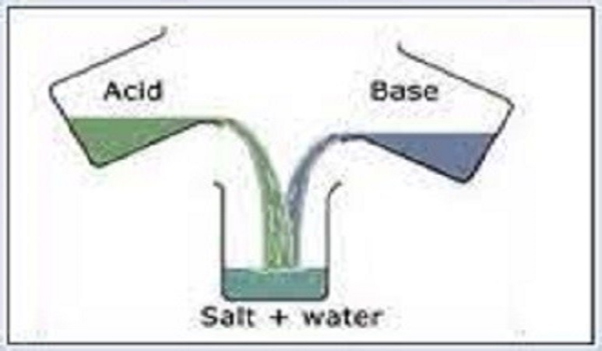
    The prisoner understood the chemical reactions well. He knew that an acid is always neutralized by an alkali. So he poured the liquids in the two glasses into a third empty glass. When they thus got mixed, they reacted producing salt and water. These were harmless, except for the salty taste!

    HCl + NaOH à H2O + NaCl

    -Team ScienceNow Digital