science share account_circle

Author: sn_admin

  • QUIZ

    QUIZ

    1) When you stand on the ground, what is the distance of the horizon from you?

    1. A) 500 km B) 5 km C) 15 km    D) 50 km


    2) If we ever make contact with aliens, which of our fundamental units is likely to match them?

    1. A) Kelvin B) Light year C) Atomic Mass Unit   D) None of these


    3) If a person beats drum on the Earth and an astronaut beats an identical drum in space, what will be the differences in the effects?

    1. A) There will be no vibration in the drum in space
    2. B) There will be vibration in space but no sound.
    3. C) The drum on Earth will vibrate for a longer time then the one in space.
    4. D) There will be no difference in terms of the vibrations or sound.


    4) A student fails to complete a presentation. The angry team leader launches him into a rocket far into space and then throws him out. The student just grazes the upper edge of the atmosphere during his trajectory. He will…

    1. A) Go around the Earth
    2. B) Crash on the Moon
    3. C) Get lost into deep space
    4. D) Reach the same place venue again.


    5) A star is seen rising from Kolkata (23.5-degree N 92-degree E) at 7:00 pm IST, at what time IST will it be seen to rise from Mumbai (19-degree N 72-degree E)?

    1. A) 5;40 pm B) 7:00 pm C) 7:20 pm   D) 8:20 pm


    6) Which of the following physical quantity is useful to determine the purity of an element?

    1. A) Mass B) Volume C) Density    D) Weight


    7) In the polar region in winter the aquatic creatures remain alive under water. For this which mode of transmission occur?

    1. A) Conduction B) Radiation C) Convection   D) Above all three


    8) In which range of age human can hear sound up to 25,000 Hz from the following?

    1. A) 1 to 4 years B) 10 to 50 years C) 60 to 90 years    D) 90 to 100 years


    9) Which of the following pair is not correct?

    1. A) Baking soda – Sodium bicarbonate
    2. B) Calamine – Zinc Carbonate
    3. C) Slaked lime – Calcium hydroxide
    4. D) Blue vitriol – Copper sulphate


    10) Which of the following has three chambered heart?

    1. A) Owl B) Shark fish C) Rat    D) Toad


    11) Which of the following group is improper to make the magnet?

    (A) Iron, Cobalt, Nickel

    (B) Titanium, Nickel, Iron, Aluminium

    (C) Titanium, Bronze, Nickel

    (D) Aluminium, Nickel, Cobalt


    12) A lamp of 100 W was used 4 hours daily in February 2016. Then find out how many units of electricity was consumed in that month

    1. A) 11.6 B) 1.16 C) 116    D) 0.116


    13) Find odd one out according to pH value.

    1. A) Vinegar B) Black coffee C) Blood   D) Urine


    14) The fluorescent tubes and neon sign bulbs glow because of ________

    1. A) High density of gases
    2. B) High temperature of gases
    3. C) High applied voltage
    4. D) Presence of charged particles


    15) Name the gas which turns moist lead acetate solution silvery black.

    1. A) SO2 B) H2 C) CO2    D) H2S


    16) Who am I? I am clean and pollution – free energy. I provide uninterrupted energy to the space shuttles.

    1. A) Solar energy B) Wind energy C) Atomic energy   D) Tidal Energy


    17) Germs in water can be killed by __________

    1. A) Condensation B) Boiling C) Filtration   D) Decantation


    18) Ban on plastic bags is justified because…

    1. P) Ground water table will be improved
    2. Q) Air pollution will be restricted
    3. R) There will not be water logging during rainy season
    4. S) Soil pollution will be reduced
    5. A) P & Q B) Q & R C) P & S     D) R & S


    19) Which of the following stringed instruments are played by using ring of wire in the finger (nakhi)?

    1. A) Bulbul B) Extari C) Tambora     D) Sitar


    20) Which natural phenomenon is responsible to produce ozone gas?

    1. A) Water cycle B) Hail storm C) Lightning      D) Earthquake


    21) Leaf of which plant of the following is a reproductive organ?

    1. A) Brahma Kamal B) Cactus C) Sugarcane       D) Aloe vera


    22) _____________ component of air is formed from coal.

    1. A) Sulphur dioxide B) Nitrogen dioxide   C) carbon dioxide   D) Nitrous oxide

    23) From where one can see the sun rising from the west?

    1. A) Saturn B) Venus C) Mars     D) Mercury


    24) Select the alternative that has third type of lever

    1. A) Betelnut cracker B) Stapler C) Opener   D) Beam balance


    25) What oil is used in toothpaste?

    1. A) Ginger oil B) Clove oil C) Eucalyptus oil   D) Coconut oil

    -Team ScienceNow Digital


    ANSWER

    1) B, 2) D, 3) B, 4) A, 5) D, 6) C, 7) C, 8) A, 9) B, 10)  D, 11) C, 12) A,  13) C,

    14) D, 15) D, 16) A, 17) B, 18) D, 19) D, 20) C, 21) A, 22) C, 23) A, 24) B, 25) D
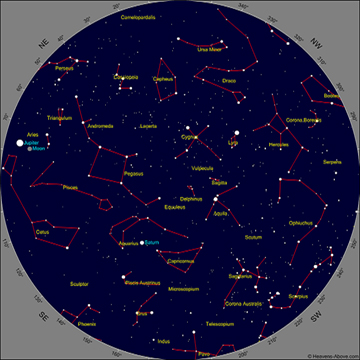
     

  • Star Watch OCT

    Star Watch OCT

    This star chart is for early October 9 pm mid October  8 pm and end October  7 pm .

    To use this chart, hold the star chart vertically, face any direction in the sky. Turn the star chart around so that the direction you are facing is at the bottom.

    Now, the stars shown at the bottom in the chart are the stars you will see in the sky . Dots represent stars.

    The larger the dot the brighter the star.

    Lines between stars are imaginary and aid location .

    Names of constellation are  along each side .

    Monthly  phases 

    Last quarter

    06 October 2023 19:18

    New moon

    14 October 2023 23:25

    First quarter

    22 October 2023 09:00

    Full moon

    29 October 2023 01:54


    -Suhas Naik-Satam

    Nehru Planetarium, Mumbai


  • Science Calendar : October

    The events in Science for the month of October…

    October 1

    Otto Frisch was a noted Austrian physicist born 1904, worked on the Manhattan Project as part of the team that built the atomic bomb.

    October 2

    William Ramsay, a British chemist born 1852, discovered neon gas.

    October 3

    William Crawford Gorgas born 1854, served as the American Surgeon-General who invented treatment for yellow fever

    October 4

    William Griggs born 1832, invented photo-chromo lithography

    October 5

    Louis Lumiere born 1864 made the first motion picture in 1895

    October 6

    Reginald Fessenden born 1866 who broadcast the first program of voice and music

    October 7

    Louis S. B. Leakey born 1903 was a famous archaeologist and anthropologist pioneered the search for evidence of human origins

    October 8

    Rodney Robert Porter born 1917, an English biochemist who shared the Nobel Prize for Medicine or Physiology for determining the chemical structure of an antibody

    October 9

    Karl Schwarzschild was a German physicist born 1873 gave first exact solution to the Einstein general relativity

    October 10

    Erik Acharius, a Swedish botanist born 1757 is regarded as father of lichenology

    October 11

    Friedrich C. R. Bergius born 1884, a German who derived benzine from brown coal won the Nobel Prize

    October 12

    Elmer Sperry born 1860 inventor of the gyrocompass

    October 13

    Rudolf Virchow was a German scientist born 1821 is regarded as  “Father of Pathology”

    October 14

    Elwood Haynes born 1857, an auto pioneer who built earliest American automobiles

    October 15

    Anthony Hopkins born 1937, a neurologist who served as the Director of the Research Unit at the Royal College of Physicians

    October 16

    Albrecht von Haller was a Swiss scientist born in 1708 focused on experimental physiology at the Academy of Science

    October 17

    Alphonse L.P.P. de Candolle a Swiss botanist born 1806 compiled data from the scientific expeditions taking place at the time.

    October 18

    Solomon A. Andree born 1854, a Swedish engineer, balloonist, and Arctic explorer

    October 19

    Subrahmanyan Chandrasekhar born 1910, an Indian-American astrophysicist won the Nobel Prize in 1983 for his work on evolution of stars

    October 20

    James Chadwick, English physicist born 1891 discovered the neutron

    October 21

    Alfred Nobel born 1833, the Swedish scientist invented the dynamite and after whom the Nobel Prize was named.

    October 22

    Charles Glenn King born 1896 discovered vitamin C

    October 23

    Anita Roddick, English manufacturer born 1942 founded the Body Shop.

    October 24

    Antony van Leeuwenhoek born in 1632 is regarded as the father of microscopy because he invented microscope

    October 25

    Robert Stirling, Scottish inventor born in  1790 created the Sterling engine.

    October 26

    Felix the Cat was a famous cartoon cat who first made his debut in 1917

    October 27

    Issac Singer born in 1811 invented the home sewing machine

    October 28

    Jonas Salk, American born 1914 invented the polio vaccine.

    October 29

    Edmond Halley, English scientist born in 1656 showed the  orbit for Halley’s Comet

    October 30

    Daniel Nathans was an American scientist born in 1928 won the 1978 Nobel Prize in Physiology or Medicine for the discovery of restriction enzymes.

    October 31

    1. F. W. Adolf Ritter von Baeyer, a German chemist born in 1835 won the Nobel Prize in 1905

    -Team, ScienceNow Digital

  • Editorial

    Editorial

    Greetings from Siddhant Edubridge Media!

    ISROs historic Mission Moon, Chandrayaan 3 has made history.. India has achieved the coveted honour of being only the fourth country in the world to do such a grand marvel.. It exhibits the triumph of India’s Indigenous Technology aiming at Atmanirbhar Bharat and achieving Make in India… Prime Minister Narendra Modi said that ‘India is on Moon’… Indeed.. and to further that the site of landing is named as ‘ShivSakti Point’ and the site where Chandrayan 2 dashed is named as ‘Tiranga Point’ by the Prime Minister..

    The Science and Technology in India is rapidly progressing… especially the Space Technology is one of the Best in the World.. It is the success of the Legacy of Dr Vikram Sarabhai, the founding father of India’s Space Programme.

    It is like his dream realised by the grand effort by generations of Indian Scientists showcasing to the world India’s Supremacy in Space.

    After the successful launch of Chandrayan, now the ISRO Scientist have their eyes on Sun.. An ambitious Solar Observatory in the form of Aditya-L1 is successfully Launched. The project will find data of Sun’s Surface and its atmosphere.. with Lunar and Solar Missions all eyes are on ISRO to see when India launched its first Manned Mission…

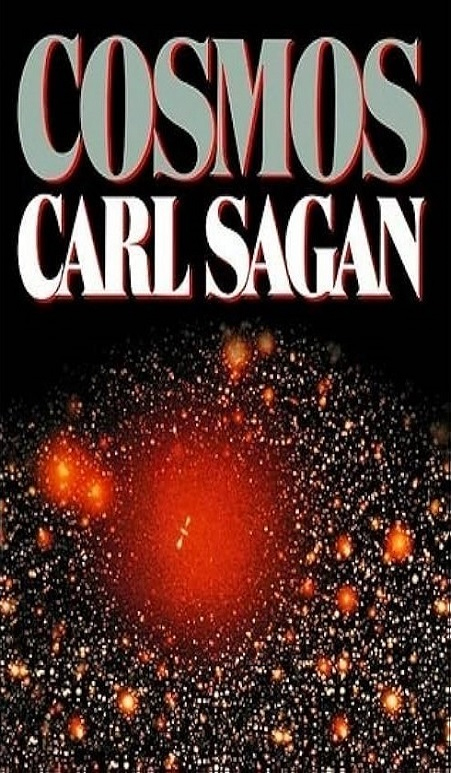
    The Month of September is also special in that ‘International Day of Scientific Culture’ is being observed on 28th Sept… on the day commemorating the first broadcast of the Iconic Science Television Programme COSMOS by the legendary scientist Carl Sagan. The day is observed with the goal to inculcate Scientific Temper in the Citizens of the world, thereby making them Cultured to get the benefits of Science for the benevolence of the Mankind..

    Our endeavour through ScienceNow Digital is to bring glorious developments in Science and Technology for the benefit of Indian Youth. The digital magazine is a sincere attempt to bring the world of Science to the Masses, sensitize the young creative minds towards the subject and bring science communities together to work towards nation building

    The Magazine is catering to the Youth in Schools, Colleges, Research Centres and Research Institutes projecting Science and Technological developments in India and the World. The Magazine is the means to ignite the young minds in India Redefining the Future of our country…. Setting in the Scientific Culture…

    It is a Mission… Science Mission… The mission is to take Science Ahead… To Build Science of Future…

    …and that’s the Promise of Science Now!

    Scientifically yours,

    Dr Siddhivinayak Barve

    Editor, ScienceNow Digital


  • The International Day of Scientific Culture

    The International Day of Scientific Culture

    September 28 is marked as the anniversary of the beginning of the broadcast of one of the most iconic nonfiction science-based series, “Cosmos” led by legendary Carl Sagan, “Cosmos” was one of the most influential scientific outreach programs in history. This date is chosen to celebrate the International Day of Scientific Culture (IDSC) each year.

    Importance

    The International Day of Scientific Culture (IDSC) aims to highlight the importance of scientific culture in today’s world and celebrate activities and institutions that provide spaces for people to make science a relevant part of their lives.

    With major global-scale challenges such as Climate Change, Energy Demand and the Sustainability of Societies, it is of paramount importance to engage and empower people through science, as the means to informed decision-making to address such issues. Our efforts are critical to the future of humanity and the well-being and the health of our planet.

    Goal

    The goal of IDSC is to disseminate the concept of scientific culture, highlighting its importance in today’s world; promoting the integration of science as part of citizen culture; and underscoring the need for citizens in general to be scientifically educated. The anniversary of the start of the broadcasts of the series ‘Cosmos’, is chosen to celebrate each year as International Day of Scientific Culture.

    Foundation

    The IDSC was recognized for the first time in 2020 in nine countries.

    The institutions who founded the initiative in 2020 was Mexican Society for the Communication of Science and Technology, Mouvement International pour le Loisir Scientifique Et Technique (MILSET), Youth Science and Technology Activities National Network (Mexico), Mexican Network of Science Recreation Workshops, Fibonacci Innovation and Scientific Culture (Mexico), CIENTEC Foundation (Costa Rica), Distance State University (Costa Rica), National Laboratory of Nanotechnology (Costa Rica).

    International Day of Scientific Culture was first Celebrated in India at Guru Nanak College in Collaboration with National Centre of Science Communicators, Mumbai

    Role of Science

    Science is a powerful tool to understand reality and to use it to solve the needs and problems that are presented to us. Science is a human enterprise and in terms of Values, Knowledge and Applications. Science is the key element in the development of Society.

    People require a Scientific Culture for the general understanding of the Role of Science in the Development of Society which will lead to empowered Scientifically Cultured Citizens

    The IDSC focuses on activities and institutions that provide ways for people to appreciate science as an important part of their lives.

    COSMOS Legacy

    “Cosmos” and the IDSC share one common ideal: science is for everyone.  Ann Druyen, who co-author of “Cosmos” with her husband, Carl Sagan, the series aimed to “tear down the walls that have excluded the rest of us from the scientific enterprise.”

    This important goal creates the foundation for society’s citizens to become more educated in scientific principles, which is necessary for not only the progression of our planet’s citizenry but the continuation of the planet itself.

    Need

    Many institutions and individuals around the world contribute to strengthening scientific culture through public communication of science. But more needs to be done. Therefore, in 2020 a group of institutions launched the initiative of the International Day of Scientific Culture.

    Despite the fact that IDSC was created to contribute to strengthening scientific culture through public communication of science, more needs to be done to bring into the scientific fold the number of engaged, knowledgeable citizens needed to enact change. The more we know about the scientific principles and processes driving the changes our planet experiences and needs we uncover, the more we can encourage those who make the decisions surrounding the topics important to our survival.

    Action

    Institutions, as well as individuals, can celebrate the IDSC through one or more activities

    Disseminating the Concept of Scientific Culture,

    Highlighting its importance in today’s world,

    Promoting the Integration of Science as part of citizen Culture

    Highlighting the need for Citizens in general to be Scientifically Educated.

    India is the first and the only country to explicitly adopt Scientific Temper in its constitution. Article 51A(h) was added under the Fundamental Duties which states that ‘It shall be the Duty of every citizen of India to Develop Scientific Temper, Humanism and the Spirit of Enquiry and Reform.

    With India advancing rapidly in Science and Technology a New Scientific Culture is setting in. India is making rapid strides in every sphere of Scientific Activity. With the young dynamic population as the asset India is set to be the World Leader

    Let’s inculcate and establish Scientific Culture… Celebrate’ International Day of Scientific Culture’

    Dr Siddhivinayak Barve

    Editor, ScienceNow Digital

  • Science Personified : Carl Sagan

    Science Personified : Carl Sagan

    An ode to Carl Sagan, the man who reached the stars and unfolded the COSMOS bringing in

    Scientific Culture…

    We live in a time dominated by science and technology and yet it sometimes seems that almost no one understands very much about science and technology….

    These are the words of Carl Sagan – the most charismatic apostle of popular science who brought the marvels of the universe and the mysteries of creation to a worldwide audience of hundreds of millions in his famous Television Series ‘Cosmos’. The Thirteen Part Cosmos serial was first telecast on the television on September 28, 1980. The man who literally reached to the stars and unfolded COSMOS, inflicting Scientific Culture…In recognition, September 28 is celebrated world over as ‘Scientific Culture Day’.

    The Making of Carl Sagan

    Carl Sagan, born in Brooklyn, New York, USA on November 9, 1934 to an American mother and a Russian immigrant father was quite destined to be an astronomer… When Carl was just 12 years old, his grandfather asked him what he wanted to be when he grew up. "An astronomer," replied the boy without hesitating. A science fiction addict from his childhood, Sagan was fascinated by astronomy and he translated the dream to the reality…He was a multifaceted persona…an astronomer, astrophysicist and the director of the Laboratory for Planetary Studies at Cornell University.

    Sagan was more popularly known as a gifted and enthusiastic storyteller and showman who described cosmic phenomena with the sense of awe and wonderment. He was science personified…

    Sagan – The Science Communicator

    Carl Sagan is regarded as the best public figure in science communication. For Carl Sagan, interest in science communication came early. He was frequently interviewed by the press and became a public spokesperson for astronomy on a number of Television programs. His science was publicly minded and engaged. Alongside his work as a researcher, he was engaged as an educator, public communicator and activist. The television series Cosmos is the epitome of his legacy… He strongly believed that it is important for scientists to be involved in communicating science to the public. The 13-part television series Cosmos was viewed by over 500 million viewers all over the world.  Cosmos covered the 15billion-year history of the universe, from the creation to the present.

    Sagan – The Writer

    Carl Sagan was a prolific writer. He wrote a series of essays in magazines. His essays like ‘The Gift of the Apollo’ passionately made the case to the American public for the value of space exploration. He has authored a number of books, the prominent amongst them are like ‘Pale Blue Dot’: A Vision of the Human Future in Space and ‘Demon Haunted World’: Science as a Candle in the Dark and his novel ‘Contact’ he worked to communicate the importance and values of science to the world at large. He also wrote ‘The Dragons of Eden: Speculations on the Evolution of Human Intelligence, which won a Pulitzer Prize for literature and Brocas Brain; a popular book in which he traced the evolution of the human brain. His book, Demon Haunted World; a critique against pseudoscience is also amongst most read books.

    Sagan – The Researcher

    Throughout his career, Carl Sagan was engaged in basic scientific research of Solar System. He was very active in the search for extra-terrestrial life and extra-terrestrial Intelligence and worked extensively in the science of exobiology, the study of extra-terrestrial life. He was interested and was an ardent believer in the existence of intelligent civilizations in the COSMOS and in the possibility of Life beyond Earth. He estimated that there may be as many as 1 million advanced civilizations in our galaxy alone.

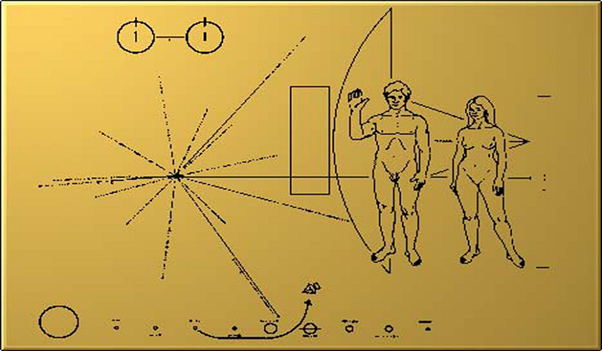
    Sagan was adviser on the Mariner, Voyager and Viking unmanned space missions for NASA. He has worked out the Scientific Objectives of the Voyager Mission. He designed the famous plaque on the Pioneer 10 spacecraft depicting the man and women raising their palm as a message of peace for the far-off intelligent civilization in the sky in case the spacecraft comes in contact with extra-terrestrial life. Pioneer-10 was the first man-made object to travel beyond our Solar System.

    Sagan – The Champion Activist

    Carl Sagan was a noted Professor who taught a range of courses at Stanford, Harvard and Cornell Universities. Besides instruction for students and scientists, Sagan was also passionate about teaching non-science majors about the importance of scepticism and scientific habits of mind on critical thinking in science and non-science contexts at Cornell University. Sagan made direct appeals to the public on the importance of understanding and supporting science and the threats of nuclear proliferation. Those pronouncements made Sagan a champion of organizations advocating a ban on nuclear testing and a halt to development of nuclear weapons.


    ‘The Cosmos is all that is or ever was or ever will be’ tells Sagan in the opening narration of Cosmos and in the final episode covers the 15 billion years from the big bang of creation to the present, using a calendar year as a point of reference. In this scenario Sagan tells if January 1 is the Big Bang day and the Universe is created, on this scale Dinosaurs would appear on this earth only by Christmas eve and the written record of human civilizations occupies only the final 10 Seconds of the last day of the year which is to the present….


    Dr Siddhivinayak Barve

    Ediator, ScienceNow Digital

  •  India on Moon 

     India on Moon 

    Vikram has landed!

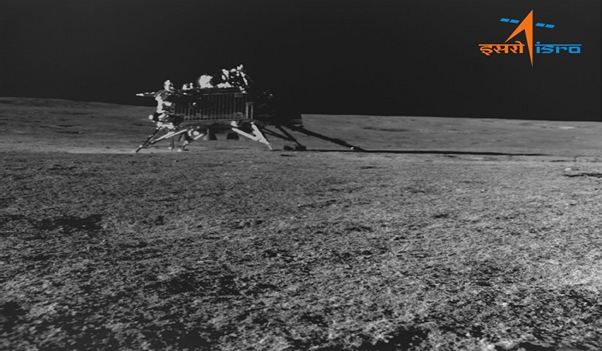
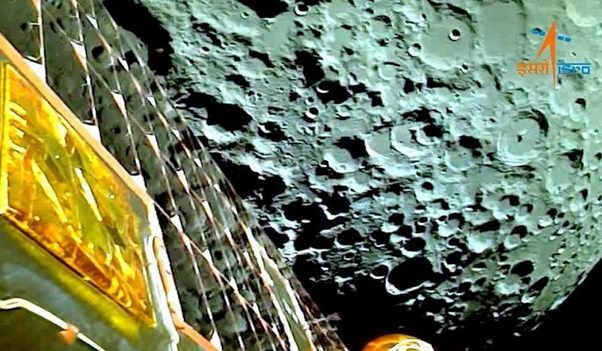
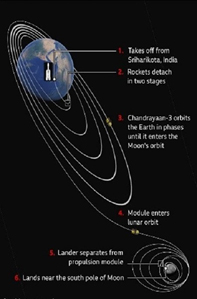
    These resounding words mark the historic moments for Indian Space Programme India has made history as its Moon mission becomes the first to land in the lunar South Pole.

    Moon-landing

    India is amongst the few countries which have reached the moon. India joins an elite club of countries to achieve a soft landing on the Moon being only the fourth in the world after the US, the former Soviet Union and China.

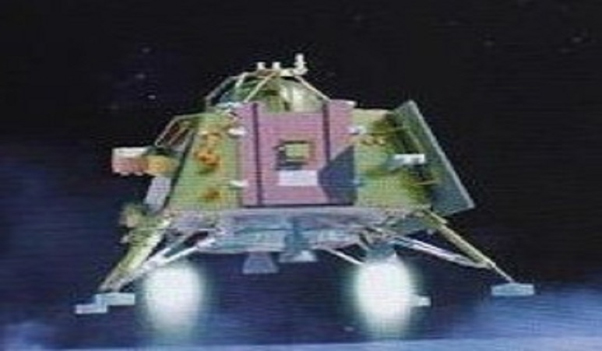
    Vikram the lander from Chandrayaan-3 successfully touched down on August 23rd when the entire nation was glued to Television watching this historic moment. It is the proud moment for the country when its science has reached the stars.

    Celebrations and Success

    Celebrating the occasion ISRO Chief has said ‘We have reached where no other country could reach’ and the Prime Minister Narendra Modi has said that “India is now on the Moon”.

    Indeed true.. it is work of generation of ISRO Scientists and the dream come true achievement for Vikram Sarabhai who pioneered India’s space programme

    The achievement is very special as no country in the world could achieve it and India is the first nation to soft land on the South Pole of the Moon. It is very difficult to land on the South Pole of the moon as the surface is uneven and it has huge craters. Russian Spacecraft Luna has crash landed just earlier to our successful moon landing. Prior to this India’s earlier attempt to land on the south pole of the moon missed by margin in 2019

    Perfect Touchdown

    Everything went with clockwork precision.. as the lander Vikram after ISRO founder Vikram Sarabhai – began its precarious descent, carrying within 26kg rover named Pragyaan. The speed of the spacecraft was progressively reduced to make the soft landing on the lunar surface.

    The moment came and at the touchdown the entire country was in celebration. The live simulation was shown on huge screens at every nook and corner where the people cheered the remarkable fete.

    In a few hours the six-wheeled rover crawled out of the lander’s belly and started roaming roam around the Moon’s surface

    Mapping Moon

    The Chandrayan -3 mission’s major goal is to hunt for water-based ice which, scientists say, could support human habitation on the Moon in future. It could also be used for supplying propellant for spacecraft headed to Mars and other distant destinations.

    The lander and the rover were equipped with five scientific instruments which has sent the vital data of moons measurements.

    Physical characteristics of the surface of the Moon, the atmosphere close to the surface and the tectonic activity of the moon is studied in details.

    Future

    Chandrayaan-3 is India’s third lunar mission, has come 15 years after Chandrayaan-1, the  first Moon mission in 2008, which discovered the presence of water molecules on lunar surface

    Chandrayaan-2 has missed the landing however the Chandrayan -2  orbiter is still orbiting the Moon

    The lander and rover will function for 15 days and later will be kept on sleep mode and will be awakened on the advent of moons new dawn after 15 days

    India is looking for the substantial success by achieving vital data from moon which will help to further India’s Space Programme.

    -Dr Siddhivinayak Barve

    Editor, ScienceNow Digital

  • Mission Sun : Aditya-L1

    Mission Sun : Aditya-L1

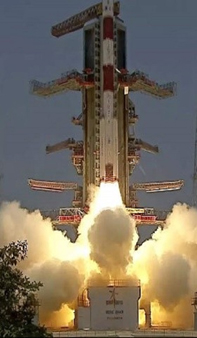
    After successful Lunar Mission Chandrayan-3, India is now leaping towards Sun. India’s Space Mission to Sun is Launched on Sept 2nd from Satish Dhawan Space Centre, Sriharikota atop PSLV rocket. The mission is called Aditya-L1

    Aditya-L1

    A spectacular launch deployed Aditya-L1 into Earth’s orbit

    The successful launch of Aditya-L1 marks the culmination of over 15 years of planning. The mission began life in January 2008 as a small 400 kg (880 lb) satellite that would remain in a low-Earth orbit. The scale of the mission grew significantly over a decade and a half of strategizing, and it was given a new name “Aditya-L1″ . 

    The Aditya-L1 spacecraft is 1475 Kg mass satellite. It is a cube-shaped satellite The Aditya-L1 when unfolded the spacecraft will have two wings with two solar panels, which will assist the spacecraft’s lithium-ion battery to provide power to Aditya-L1 with power. The craft will monitor its position with a miniaturized GPS receiver, which provides the position, velocity and time data in real time

    Solar Obervatory

    Aditya-L1 is a solar observatory operated by the Indian Space Research Organisation (ISRO). The solar observatory will monitor the sun with seven specially designed distinct scientific payloads, five of which have been developed by the ISRO. It will do so from its position at a gravitationally stable point in the Earth-sun system called Lagrange point 1,   around 1 million miles from Earth. 

    Placement at L1 will allow the spacecraft a view of the sun that is uninterrupted by eclipses or occultations. The proximity to Earth will also allow the mission to study Earth’s magnetic field. The duration of its mission, which is estimated to be around 5.2 years.

    Scientific Instruments

    The Aditya-L1 craft has a payload of 7 scientific instruments, each with distinct functions, which weigh around 244 Kg on the spacecraft’s top deck. The instruments of Aditya-L1 has are Magnetometer (MAG), Visible Emission Line Coronagraph (VELC) , High Energy L1, Orbiting X-ray Spectrometer (HEL1OS) , Solar Ultraviolet Imaging Telescope (SUIT), Solar, Low Energy X-ray Spectrometer (SoLEXS), Aditya Solar wind Particle EXperiment (ASPEX) and Plasma Analyser Package for Aditya (PAPA)

    Solve Mysteries

    The journey to L1 after launch is estimated to take around 110 days, over which time five further manoeuvres will be performed to give the spacecraft the velocity needed to reach this gravitationally stable point. When arriving at L1, Aditya-L1 will execute a further manoeuvre to “bind” itself to an orbit around the location. The orbit established around 127 days after launch will be irregularly shaped and will be in a plane approximately perpendicular to a line joining the sun and Earth.

    Indian Space Research Organisation’s Aditya-L1 mission is now orbiting Earth, studying the sun and attempting to solve pressing solar mysteries.

    -Dr Siddhivinayak Barve

    Editor, ScienceNow Digital


  • Bharat Ek Khoj :Vaigyanik

    Baudhayana

    Baudhayana was a mathematician who lived around 800 BCE. He is the author of Baudhayana Sulbasutra which was more like a pocket dictionary, full of formulae and results for quick references. He is credited with calculating pi, and the square root of 2. The most creditable achievement is that Baudhayana introduced the Pythagoras theorem1000 years before Pythagoras had developed it!

    In Baudhayana Sulbasutra, there are several mathematical formulae or results that told how to precisely construct an altar. He was a man of very considerable learning and probably wrote the Sulbasutra to provide rules for religious rites. The mathematics given in the Sulbasutra-s enables the accurate construction of altars needed for sacrifices. It is clear from the writing that Baudhayana, as well as being a Vedic priest, must have been a skilled craftsman. He was skilled in the practical use of the mathematics and construction of sacrificial altars of the highest quality.

    Dr Shoba Tawade

    -Team ScienceNow Digital

  • Bharat Ek Khoj :Vigyan

    Gol Gumbaz

    Gol Gumbaz, situated in Bijapur district of Karnataka, is the largest dome in India built by Sultan Muhammad Adil Shah in the year 1656. About 20 years were spent for the complete construction of this large tomb. The unique thing about the Gol Gumbaz is that ‘even the softest sound can be heard on the other side of the tomb due to the acoustics of the space’. This circular whispering gallery of the tomb is a great combination of sound and civil engineering.

    The tomb is built in such a way that a small whisper gets amplified and is carried across a distance of more than 40 meters in the vast dome and can be heard clearly. Even the slightest whisper is heard from side to side; and a conversation can be most easily carried on across the full diameter of the dome in the lowest undertone. Even if you are 110 meters apart, on the far end of the floor, each whisper, each clap and each shift of your garment will be heard at the other end, as if they were speaking to you over your shoulders.

    Dr Shobha Tawade

    -Team ScienceNow Digital