Science News – August
The happenings of Science and Science News during August
Alien spaceship metal pieces found in Pacific Ocean
A captivating discovery has emerged as a scientist recently unearthed metal fragments at the depths of the Pacific Ocean. Avi Loeb, an esteemed expert, has put forth an intriguing hypothesis, suggesting that these enigmatic pieces might have originated from outer space, traversing Earth’s atmosphere. Through meticulous investigation, Loeb has concluded that the unearthed metal fragments bear no resemblance to any earthly materials. Notably, their composition bears a striking similarity to an unidentified object that crash-landed on Earth in 2014, famously known as the fireball CNEOS 20140108 (CNEOS referring to the Center for Near Earth Object Studies).

A separate celestial phenomenon, officially designated as 1I/2017U1 but colloquially referred to as “‘Oumuamua,” also emanated from the farthest reaches of our solar system. Scientists were captivated by its peculiar shape, although photographic evidence could not definitively ascertain its form. Clues gleaned from light reflections and rotational behavior suggested it could resemble a lengthy, slender cigar or a flat, plate-like structure when viewed from different angles. Consequently, there is a prevailing hypothesis that “‘Oumuamua” is of extraterrestrial origin. However, it is important to note that the small iron fragments discovered at the ocean floor, approximately the size of a penny, cannot be definitively attributed to a spacecraft.
China is drilling another 10,000-metre hole

China has begun drilling a 10,000-metre hole in the ground for the second time this year as it seeks natural gas reserves. PetroChina Southwest Oil and Gasfield Company began drilling the Shendi Chuanke-1 Well in Sichuan province, with a designed depth of 10,520 metres (6.5 miles), Xinhua News Agency reported. The Sichuan project aims to find ultra-deep reserves of natural gas, while the earlier well was described as experimental, with its primary purpose being to test drilling technologies and provide data on the Earth’s internal structure.
Sichuan has some of China’s largest shale gas reserves. However, due to the region’s difficult terrain and complex underground geology, Chinese firms have not been able to fully explore the potential of these reserves.
Ultra-deep wells, which are more than 9,000 metres deep, are considered to be the most technically challenging drilling projects in the oil and gas engineering industry. Drilling in ultra-deep wells is replete with severe challenges such as deep burial depth, narrow pressure window, thick gravel layer and salt bed, complex multi-pressure system, and high temperature and pressure.
Earth’s atmosphere can clean itself
Researchers have found that a strong electric field between airborne water droplets and surrounding air can create a molecule called hydroxide, which breaks down pollutants. According to researchers at the University of California, Irvine (UCI), the Earth’s atmosphere can clean itself. It states that a strong electric field between airborne water droplets and surrounding air can create a molecule called hydroxide (OH) through a previously unknown process. This unique set of atmospheric conditions is able to facilitate the atmosphere’s self-purification process by neutralising greenhouse gases and chemicals – even in the absence of sunlight.
As explained by Sergey Nizkorodov, a professor of chemistry at UCI, the presence of OH is essential to oxidise hydrocarbons and stop them from accumulating in the atmosphere. It can also trigger reactions that decompose airborne pollutants and eliminate sulphur dioxide and nitric oxide. Until recently, it was widely believed that OH is generated via photochemistry or metal catalysts, but the new findings challenge this assumption by proving that it can be created spontaneously.
ISRO’s new rocket testing facility ‘HAVA’
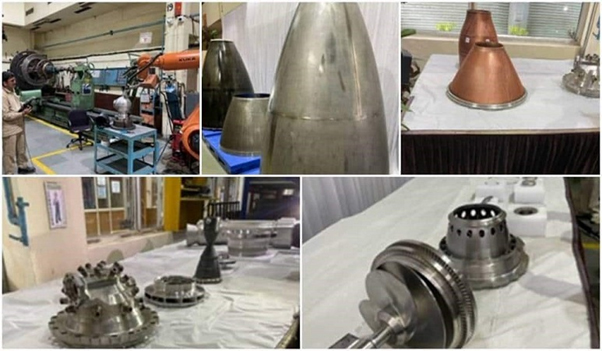
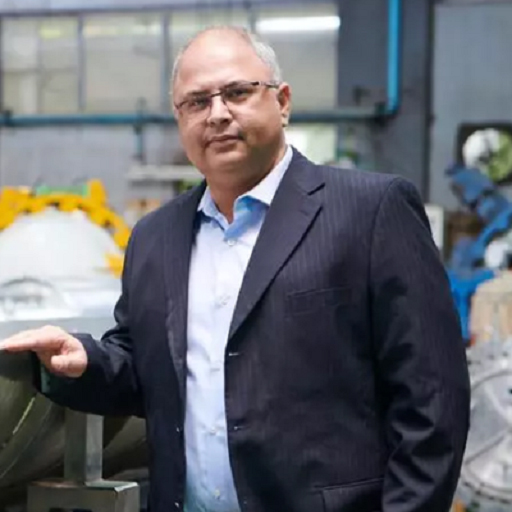
Indian Space Research Organisation chairman S Somanath on Thursday said there will be an announcement soon about the space agency’s testing facility with regard to the hypersonic air breathing vehicle ‘Hava’. The space scientist, however, emphasises that ISRO was not focused on air breathing technology because it wants to deal more with space. Air-breathing engines are those that take in air from its surroundings in order to burn fuel, such as jet engines. It is therefore not suitable for space travel as there is no air/atmosphere in space.
‘HAVA’ stands for Hypersonic Air Breathing Vehicle with Air Integration System. “If air is there, that is not space,” Somanath explained. “ISRO is not much into air breathing technology primarily because we don’t want to dwell in air, we want to go to space. But we develop the technology because it is a very high-end technology in terms of capabilities that we have — in terms of combustion etc. So we are testing the engine. We are testing in our Mahendragiri facility where we have established a hypersonic test facility,” he added.
Time in early universe was five times slower
Astronomers have peered back to the dawn of the cosmos to observe time ticking five times more slowly in the early universe than it does now — finally proving a prediction that Albert Einstein made more than a century ago. Researchers spotted the extreme slow-motion effect in data taken from bright cosmic beacons known as quasars dating to when the universe was just 1 billion years old — less than one-tenth its current age. The researchers published their findings July 3 in the journal Nature Astronomy.
“Looking back to a time when the universe was just over a billion years old, we see time appearing to flow five times slower,” lead author Geraint Lewis, a professor of astrophysics at the University of Sydney, said in a statement. “If you were there, in this infant universe, one second would seem like one second — but from our position, more than 12 billion years into the future, that early time appears to drag.” The reason time appears to move more slowly in the early universe, at least from the perspective of observers in the present day, was first presented by Einstein in his 1915 theory of general relativity.
First abort mission of ‘Gaganyaan’ in August-end
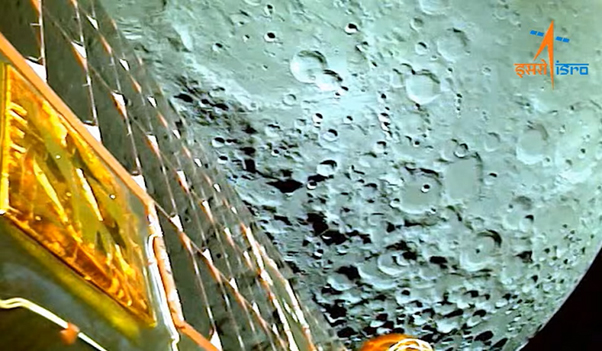
With the successful launch of Chandrayaan-3, the Indian Space Research Organisation (ISRO) will now focus on the country’s first manned mission to space, Gaganyaan, and has planned to conduct the first abort mission for the ambitious project by the end of August. A modified version of ISRO’s most-reliable rocket LVM3, which successfully placed the Chandrayaan-3 spacecraft into the intended orbit on July 14, with human rating requirements will be used to launch Gaganyaan as well, ISRO scientists said.
Through the Gaganyaan mission, ISRO wants to demonstrate its capabilities of human spaceflight by sending three crew members to a 400 km Low Earth Orbit with a mission life of three to four days. The first manned spaceflight, which is likely to take place in 2024, will also be launched from the second launchpad of the Satish Dhawan Space Center (SDSC) here. As the first step towards the launch, ISRO plans to conduct Gaganyaan’s first abort mission in August. “The abort mission will be conducted by the end of August,” ISRO Chairman S Somnath said.
Scientists urge European Parliament to vote for nature restoration law
The Nature Restoration Law lives on. The European Parliament waved the proposal through with 336 votes in favour, 300 against and 13 abstentions. The European Commission, the European Parliament and the Council of the EU will now work together on the final version of the rules that will be implemented. The Nature Restoration Law would set legally binding targets to restore degraded ecosystems throughout the continent. Proposed by the European Commission in June 2022, the Nature Restoration Law would require countries to establish recovery measures for 20% of the European Union’s land and sea areas by 2030, and all ecosystems in need of restoration by 2050. It also includes targets for specific habitats and species—such as reversing the decline of pollinating insects by 2030 and restoring seagrass beds and other marine habitats.
Several heads of natural history museums have also come out in favor of the law, and hundreds of researchers, including Claudet, signed another declaration of support launched by ocean conservationist Enric Sala, which argues that the benefits of nature restoration far exceed its costs. “To help ecosystems recover, we need to take into account scientific evidence,” says marine biologist Emma Cebrian, from the Blanes Center for Advanced Studies, who signed Sala’s statement. “If [policymakers] need us to explain, they can ask us. We’ll go where we’re needed so that decisions aren’t based on fear.” Scientists will be watching anxiously. Claudet says he hopes Europe enshrines into law some of the global biodiversity targets agreed at the United Nations in December 2022.
Scientists revive ancient worm that had remained frozen for 46,000 years
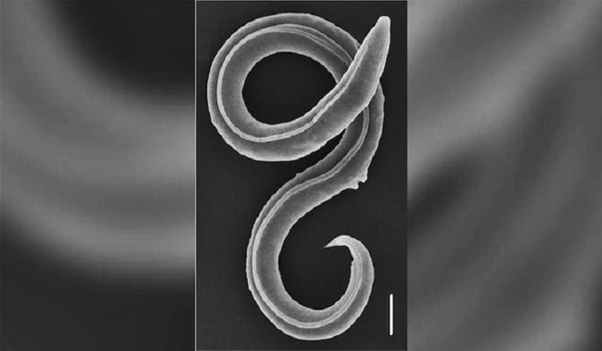
Researchers have successfully revived a roundworm that had been frozen for an astonishing 46,000 years. The worm, discovered 40 meters below the Siberian permafrost, is of a previously unknown species and survived in a dormant state known as cryptobiosis. The discovery of this ancient roundworm species underscores the resilience of life and the potential for survival in extreme conditions. It also highlights the significance of preserving biodiversity in our rapidly changing world.
Five years ago, scientists from the Institute of Physicochemical and Biological Problems in Soil Science in Russia discovered two roundworm species in the Siberian permafrost. One of the researchers, Anastasia Shatilovich, revived two of the worms by rehydrating them with water. She then transported around 100 worms to labs in Germany for further analysis. Radiocarbon analysis of plant material in the sample revealed that the deposits had not thawed since between 45,839 and 47,769 years ago. Genetic analysis conducted by scientists in Dresden and Cologne identified the worms as a new species, named Panagrolaimus kolymaenis.
Indian scientists discover ancient ocean in Himalayas
Scientists from the Indian Institute of Science (IISc), Bengaluru, and Niigata University, Japan, have unearthed remnants of an ancient ocean in the Himalayas. The team found water droplets trapped in mineral deposits dating back approximately 600 million years, and the discovery could provide crucial insights into a significant oxygenation event in Earth’s past.
Scientists theorise that between 700 and 500 million years ago, the Earth underwent a prolonged period of glaciation, known as the Snowball Earth glaciation. This was followed by the Second Great Oxygenation Event, which led to a surge in atmospheric oxygen levels and the evolution of complex life forms. However, the connection between these events has remained elusive due to the scarcity of well-preserved fossils and the disappearance of ancient oceans. The newly discovered marine rocks in the Himalayas could provide some answers.
The team’s findings suggest that during the Snowball Earth glaciation, sedimentary basins experienced a prolonged calcium deficiency, likely due to reduced riverine input. This lack of calcium led to an increase in magnesium levels, with the resulting magnesium deposits trapping ancient ocean water as they crystallised.
Two supermoons in August: Why it is a rare celestial event
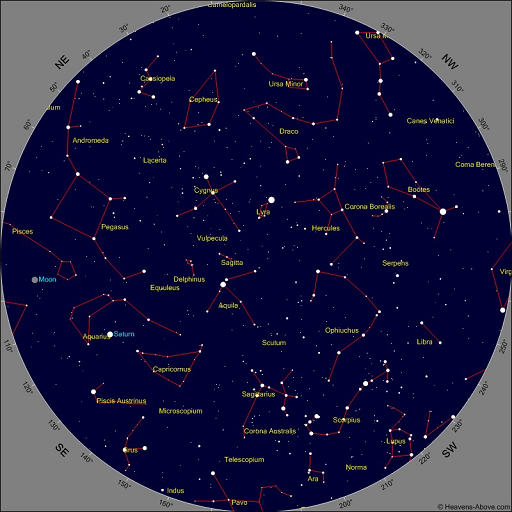
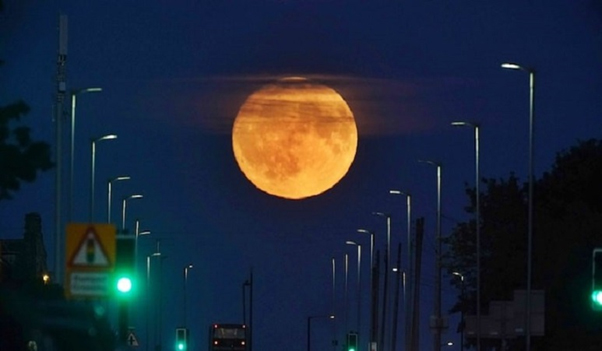
In a celestial spectacle, August is to witness a major event as the Earth and Moon come closer in their orbits. The unique event will see not one, but two supermoons in August. The enhanced brightness and increased surface visibility of the Moon during the event will enable astronomers to study the Moon’s topography, geological features, and impact craters with greater clarity.
What is a supermoon?
A supermoon is a spectacular celestial event where the Moon appears larger and brighter in the sky than usual. This captivating phenomenon occurs when a full or new moon coincides with the Moon’s closest approach to Earth in its elliptical orbit, known as the perigee. During a supermoon, the Moon’s apparent size in the sky can be up to 14% larger and 30% brighter than a regular full moon. As it rises on the horizon, appearing much larger than usual, the supermoon can create an illusion that it is closer to Earth.
When will supermoon occur?
The first of these supermoons will rise on August 1, appearing larger and brighter than usual due to its proximity to Earth at just 3,57,530 kilometers away. The second supermoon, also known as a blue moon, will occur on the night of August 30. This moon will be even closer to Earth, at a mere 3,57,344 kilometers distant. The term ‘blue moon’ is used to describe the occurrence of two full moons within the same calendar month, a phenomenon that is quite rare.
Pathogens frozen for millions of years are waking up
Researchers have warned that ancient pathogens, frozen for millennia in glaciers, ice caps, and permafrost, could emerge due to global warming as the ice melts and they could pose a significant threat. In a study published in the journal PLOS Computational Biology, researchers used a software called Avida to simulate the release of one type of ancient pathogen into modern biological communities. The results were alarming: 1 per cent of simulated releases of just one dormant pathogen could cause major environmental damage and widespread loss of host organisms worldwide.
In 2003, bacteria were revived from samples taken from an ice core drilled into an ice cap on the Qinghai-Tibetan plateau, which was over 750,000 years old. In 2014, a giant “zombie” Pithovirus sibericum virus, was revived from 30,000-year-old Siberian permafrost. More recently, in 2016, an anthrax outbreak in western Siberia, which killed thousands of reindeer and affected dozens of people, was attributed to the rapid thawing of Bacillus anthracis spores in permafrost.
The Earth’s climate is warming at an alarming rate, up to four times faster in colder regions such as the Arctic. This could lead to the release of an estimated four sextillion microorganisms from melting ice each year, including pathogens that can potentially infect modern species.
‘Stunning’ discovery: Metals can heal themselves
Scientists for the first time have witnessed pieces of metal crack, then fuse back together without any human intervention, overturning fundamental scientific theories in the process. If the newly discovered phenomenon can be harnessed, it could usher in an engineering revolution — one in which self-healing engines, bridges and airplanes could reverse damage caused by wear and tear, making them safer and longer-lasting. The research team from Sandia National Laboratories and Texas A&M University described their findings today in the journal Nature. Although scientists have created some self-healing materials, mostly plastics, the notion of a self-healing metal has largely been the domain of science fiction.
Khalid Hattar, now an associate professor at the University of Tennessee, Knoxville, and Chris Barr, who now works for the Department of Energy’s Office of Nuclear Energy, were running the experiment at Sandia when the discovery was made. They only meant to evaluate how cracks formed and spread through a nanoscale piece of platinum using a specialized electron microscope technique they had developed to repeatedly pull on the ends of the metal 200 times per second. Surprisingly, about 40 minutes into the experiment, the damage reversed course. One end of the crack fused back together as if it was retracing its steps, leaving no trace of the former injury. Over time, the crack regrew along a different direction.
What is causing the mysterious ‘gravity hole’ in the Indian Ocean?
While it is easy to imagine the Earth as a perfect sphere that has uniform gravity all over, that is far from the case. But that is not the case; our planet is flat at the poles and it bulges at the equator. Also, it doesn’t have uniform gravity everywhere. For example, there is a massive “gravity hole” in the Indian Ocean and now, researchers have uncovered why that is the case. The strength of the gravitational pull at any part of the world is dependent on the mass of the Earth’s crust, mantle and core beneath that particular region.
Interestingly, a massive region in the Indian Ocean, about 1,200 kilometres southwest of the southernmost tip of India, has such a low pull of gravity that the sea level of the Indian ocean over the “hole” is around 106 metres below the global average, according to Scientific American. After looking at computer-simulated models of the past 140 million years, they found the remains of an ancient ocean about 965 kilometres below the Earth’s crust, just under Africa, according to BBC. In all the simulations, the researchers found molten rock plumes below Africa, which could potentially have been caused by tectonic plates plunging into the mantle. They believe that these plumes could be the reason behind IOGL.
-Team ScienceNow