science share account_circle

Author: sn_admin

  • Science and Technology in Independent India

    Science and Technology in Independent India

    As India celebrating 75 years of Independence, we encapsulate some defining moments of the nation’s journey in the field of science and technology

    Today, seventy-five years after India’s independence, the country is considered as one of the top five superpowers on the planet, with Indian scientists contributing enormously to facilitating the country’s rapid development and progress. While it was the Prime Minister Pandit Jawaharlal Nehru who initiated several reforms in higher education and set up pioneering science and technology institutions like TIFR, DRDO, BARC, IITs, DST… the policies of subsequent governments ensured that we continued to stay on the growth and development track. The present-day government under Prime Minister Shri Narendra Modi is giving significant emphasis to creation of an ‘Atmanirbhar Bharat’ focusing on creation of a strong indigenous R&D and manufacturing infrastructure across the country.

    At India’s ‘Amrit Mahotsav’, we look back in history at some of the major milestones achieved by the country in the area of science and technology:

    1945: Tata Institute of Fundamental Research (TIFR) – Dr. Homi Jehangir Bhabha asked Sir Dorabji Tata Trust for help and cooperation to begin nuclear research program in India. In 1945, Tata Institute of Fundamental Research (TIFR) was born, and thus started India’s journey in the world of nuclear energy development.

    1954: India’s first Atomic Establishment at Trombay – Under the leadership of Dr. Homi Bhabha, the Atomic Energy Establishment, Trombay (AEET) was established in 1954. Later, the institution was renamed as BARC in 1967 to help consolidate all research and technology activities. Today, BARC is India’s premier research and development facility in nuclear science and engineering, giving the country a strategic edge in nuclear power.

    1956: India’s first atomic reactor ‘Apsara’– This first nuclear reactor was designed by BARC and built with assistance from United Kingdom. Apsara is a light water swimming pool-type reactor with a maximum power output of one megawatt thermal (MWt), and it first went critical on August 4, 1956. The reactor is utilised for various experiments including neutron activation analysis, radiation damage studies, forensic research, neutron radiology, and shielding experiments.

    1958: Formation of Defence Research and Development Organisation – DRDO was formed in 1958 from the amalgamation of the then already functioning Technical Development Establishment (TEDs) of the Indian Army and the Directorate of Technical Development & Production (DTDP) with the Defence Science Organisation (DSO). It has a network of laboratories engaged in developing defence technologies covering various fields like aeronautics, armaments, electronics, land combat engineering, life science, materials, missiles and naval systems.

    1959: Launch of Television – Television was introduced in India on September 15, 1959 in Delhi, and the programs were broadcasted twice a week for an hour a day. Initially, the topics covered were community health, citizen’s duties and rights, and traffic and road sense, but in 1961 the broadcasts were expanded to include school educational television project. The first major expansion began in 1972, when a second television station was opened in Bombay, and it was followed by stations in Srinagar, Amritsar, Calcutta, Madras and Lucknow.

    1964: The first Indian jet trainer – The two seat intermediate jet trainer HAL HJT-16 Kiran (Ray of Light) were built by Hindustan Aeronautics Limited (HAL) on September 4, 1964. The jet called Kiran-I was powered by the Rolls Royce Viper Mk 11 delivered to the Indian Air Force in March 1968. Later the trainer jet was upgraded with hardpoints under each wing for weapon training and redesignated as the Kiran-IA.

    1969: Indian Space Research Organisation (ISRO) – Established in 1969, ISRO is India’s pioneer space exploration agency with a vision to develop and harness space technology in national development. Over the years, ISRO has gained place among the elite space agencies in the world owing to its unique and cost effective technologies. Recently, it conducted several remarkable space probes like Chandrayaan – 1 lunar orbiter, Mars Orbiter Mission (Mangalyaan – 1) and ASTROSAT space observatory.

    1974: Pokhran – India’s first successful nuclear bomb – After Indira Gandhi had authorised scientists at BARC to design nuclear device in September 1972, it took nearly two-years of preparation to conduct the first nuclear test. Code named ‘Smiling Buddha’ the test was conducted on May 18, 1974 in the deserts of Pokhran, Rajasthan. This made India the world’s sixth nuclear power country.

    1975: Launch of Aryabhata – Named after the ancient Indian astronomer – Aryabhata, the country launched its first satellite into space on April 19, 1975. The satellite was constructed by the Indian Space Research Organisation (ISRO) and was launched into space aboard a Kosmos-3M launch vehicle from Kapustin Yar, the then Soviet Union’s rocket launch and development site.

    1978: India’s first test-tube baby – On October 3, 1978, Ms. Bela Agrawal delivered India’s first test-tube baby under the medical care and supervision of Dr. Subhash Mukhopadhyay. The child later named ‘Durga’ was conceived via in-vitro fertilisation, and the event took place just 67 days after the world’s first test-tube baby – Marie Brown, was born.

    1982: Launch of India’s first satellite – Insat-1A was a multi-purpose satellite system designed to provide two high power TV broadcast and twelve telecommunications national coverage transponders, in addition to providing meteorological services. The Insat-1A was launched by a Delta 3910 launch vehicle on April 10, 1982 but was abandoned on September 6, 1983 when its attitude control propellant was exhausted.

    1983: Research base at the South Pole – The country established its first scientific base station in Antarctica named Dakshin Gangotri. The station was built in record time of eight weeks by an 81-member team, and was powered by solar energy. The base was used to conduct scientific tests on radio transmission, physical oceanography, chemical analyse of freshwater lakes in the areas, geomagnetism, geology and glaciology.

    1984: First Indian in Space – The Indian Air Force Squadron Leader Rakesh Sharma spent eight days aboard the Salyut 7 space station along with two Soviet Cosmonauts. They had departed on April 2, 1984 in a Soyuz T-11 spacecraft. This manned mission saw Sharma conduct several scientific and technical studies in the area of biomedicine, remote sensing and construction of hydro-electric power station in the Himalayas.

    1988: Launch of C-DAC – In 1987, when US President Ronald Reagan refused to sell their supercomputers CRAY, India decided to develop it indigenously. In 1988, the Centre for Development of Advanced Computing or C-DAC was launched under the leadership of Dr. Vijay Bhatkar. With a deadline of three years and a budget of around Rs. 30 crore, India’s first super computer PARAM 800 was developed in 1991.

    1991: DNA Finger Printing – During his study of evolution of sex chromosomes in a species of snake, Dr. Lalji Singh observed and recorded specific pattern in the DNA sequences, which he named the ‘Bkm sequences’. He made use of this technique to identify people based on specific characteristic of their DNA, and was able to solve several court cases over disputed paternity and criminal cases. He pioneered the concept of ‘DNA fingerprinting’ in India.

    1993: Launch of Pentium Chip – Vinod Dham is popularly known as the ‘Father of the Pentium Chip’ for his contribution to the development of highly successful Pentium processors from Intel. Responding to consumer’s demand of computers with faster processing speed, Intel changed the game with the launch of its breakthrough chip – the Pentium.

    1994: India’s first heart transplant surgery – On August 3, 1994 a team of 20 surgeons led by Dr. Panangipalli Venugopal performed India’s first successful human to human heart transplant at the All Indian Institute of Medical Sciences (AIIMS), New Delhi. The entire operation took nearly 59 minutes and the patient lived for at least 15 more years.

    1998: Pokhran – II – Operation Shakti stunned the world community as India conducted a series of five nuclear weapons tests – one fusion or thermonuclear weapon, two fission devices and two sub-kiloton devices, which proved to the world India’s capability in development of nuclear arsenal. Pokhran – II was the first Indian test of a nuclear weapon after 1974.

    2000: Launch of indigenous fighter jet – Tejas, the single seat, single-engine, lightweight, high-agility supersonic fighter aircraft made its first maiden test flight aboard Indian Navy’s aircraft carrier INS Vikramaditya in January 2000. The aircraft’s design and development program was led by Aeronautical Development Agency (ADA) under the supervision of Hindustan Aeronautical Limited (HAL).

    2002: The Simputer – A low cost alternative to conventional computers, the Simputer was a self-contained, open hardware Linux-based handheld computer. It was devised to bridge the digital divide, but it did not succeed in taking off. Launched in 2002, it was the brainchild of seven scientists from the Indian Institute of Science, and was led by Dr. Swami Manohar. While it did not succeed, it remains an important home-grown development in computer manufacturing.

    2003: Kalpana Chawla space disaster – Kalpana Chawla, was the first Indian-origin woman to go space on a 16-day mission aboard NASA space shuttle Columbia. On the morning of February 1, 2003, the space shuttle was to return to Earth. At the time of launch, a briefcase-sized piece of insulation had broken off and damaged the thermal protection system of the shuttle’s wing. On its entry into the Earth’s atmosphere, the hot gas caused the break-up of the wing and the shuttle leading into an explosion killing all seven astronauts on board.

    2008: Chandrayaan – 1 – The country’s first unmanned mission into space became a reality with Chandrayaan -1’s moon mission. The mission launched on October 22, 2008 from the Satish Dhawan Space Centre – Sriharikota, Andhra Pradesh, included a lunar orbiter and an impactor. The goals of the mission included high-resolution mapping of the moon’s surface; near infrared, low energy X-ray and high-energy X-ray spectra, and preparation of a three-dimensional atlas of regions of scientific interest.

    2009: INS Arihant – After five decades of hard work, on July 26, 2009 India formally launched its first indigenously designed and constructed ballistic missile submarine (SSBN) – the INS Arihant. Powered by ISROs nuclear reactor, the submarine is designed to span the ocean depths at high speed and launch ballistic missiles and nuclear weapons in the range of over 3,000 km.

    2013: Mangalyaan – On November 5, 2013 India’s Mars Orbiter Mission lifted off from Sriharikota powered by PSLV C-25. After spending about a month in orbit around the Earth, the spacecraft Mangalyaan began its journey unto Mars. Almost a month later, the spacecraft entered the Mars’ orbit, putting India in the elite club of five countries which have successfully sent missions to Mars. At a cost of Rs. 450 crore, it was the cheapest mission to Mars, and India had succeeded in the very first attempt.

    2017: ISRO tests its first cryogenic engine – ISRO successfully tested its indigenously developed Cryogenic Upper Stage (CUS) for GSLV MkIII on February 17, 2017. It was tested for a flight duration of 640 seconds at ISRO Propulsion Complex (IPRC) in Mahendragiri, this test was carried out after a similar successful test for 50 seconds on January 25, 2017. The test is a significant milestone as it is the last in series of engine before the first flight of GSLV MkIII.

    2019: Chandrayaan – 2 Moon mission – India made a failed attempt to make a soft landing on to the lunar surface, and missed out on the opportunity of being the fourth country to successfully land on the moon, after erstwhile USSR, US and China. While the spacecraft has successfully entered the lunar orbit, the lander Vikram missed the primary landing site and went for the second. Thereafter, the visuals went missing as it had a crash landing.

    ..and Now with Mission Moon – Chandrayaan 3, we are just a step away from creating a history by soft landing on moon and being the first country to explore the south pole of the moon..

    While each of the above scientific events have contributed in transforming India into a global superpower, there have been some major scientific revolutions based on government policies that have also played a strategic role in taking the benefits of these developmental changes to the masses:

    The Green Revolution – Post-independence, India was going through its worst agriculture disaster owing to re-occurrence of famines as the country was witnessing wide spread poverty and hunger. In 1960, the government made a policy decision to initiate the ‘Green Revolution’ under the guidance of Dr. M.S. Swaminathan. The country resorted to the use of modern agricultural methods and technology – high yielding variety (HYV) seeds, tractors, irrigation facilities, pesticides and fertilisers. This Green Revolution led to increase in food production and resulted in India becoming one of the world’s biggest agricultural producers.

    The White Revolution – After the huge success of the Green Revolution, the Indian government initiated ‘Operation Flood’ also known as the ‘While Revolution’ aimed at increasing milk production. It helped create a nationwide milk grid linking producers to consumers by eliminating the middlemen. The mission was to make India self-dependent nation in milk production. Pioneered by Dr. Verghese Kurien the revolution was a huge success, making India one of the largest producers of milk in the world.

    The Yellow Revolution – It started in 1986- 87, to multiply the production of vegetable oils, especially mustard and sesame seeds. During the Yellow Revolution, nine oil hybrid seeds – peanuts, mustard, soyabeans, saffron, sesame, sunflower, niger, flaxseeds and castor seeds were planted. Within 10-years of the launch of the program, India’s oil production doubled from 12 million tons in 1986 to 24 million tons in 1997. The Yellow Revolution also offered farmers several support incentives associated to processing equipment, irrigation equipment, fertizers, pesticides, etc.

    The Blue Revolution – Also known as ‘Neel Kranti Mission’, the Blue Revolution was launched in the year 1985 with the objective of developing, managing and promoting fisheries so as to increase farmer’s income and sustain livelihood. This revolution tripled the production of fish in India – both island and marine sector by 2020, transformed the fish and aqua industry into a modern industry using technology and processes, increased income through development of innovative marketing platforms and also ensured food security in India. Dr. Arun Kishnan and Dr. Hirlal Chaudhuri are known as Father of ‘Blue Revolution’ in India.

    The Golden Revolution – The period between 1991-2003 is known as the period of India’s ‘Golden Revolution’, as the country saw a phenomenal rise in production of honey and horticulture products under the supervision of Nirpakh Tutej, who is considered to be the father of the ‘Golden Revolution’ in India. During this period India became the world leader in the production of a variety of fruits like coconut, mangoes, cashew nuts and the second largest producer of vegetables and fruits in the world

    Conclusion Since ancient times, Science and Technology have always been an integral part of India’s culture, and Indian intellectuals have pursued higher education vigorously and engaged relentlessly in development and innovation activities. While the government of India has played a key role in creating conducive environment, it is Indian scientists like Chandrasekhara Venkata Raman, Har Gobind Khorana, Subrahmanyan Chandrasekhar, Venkatraman, Shanti Swarup Bhatnagar, Homi Bhabha… who have made the country proud with their extraordinary vision and work. India has evolved from humble beginnings into being a ‘Global Superpower’ and is all set to play a leadership role in all spheres of science and technology..

    -Manoj Mahanta

    -Team,ScienceNow
  • Self-Driving Cars: Fact or Fiction 

    Self-Driving Cars: Fact or Fiction 

    With technology evolving quite rapidly, the role of science cannot be ignored which is helping us experience a whole new world of comfort: autonomous cars being one among them…

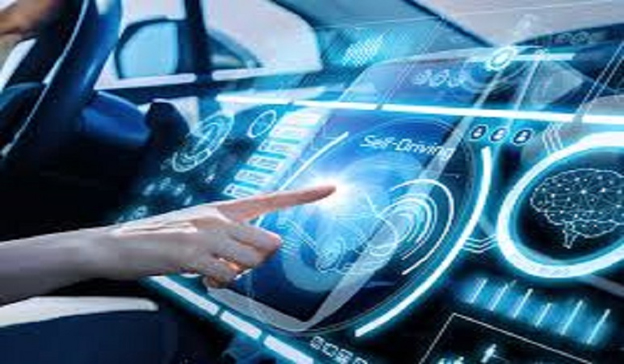
     With technology evolving quite rapidly, the role of science cannot be ignored which is helping us experience a whole new world of comfort. And the latest advancement is in transportation in the form of self-driving or autonomous cars. What was once considered unreasonable or impossible by many is soon becoming a reality. For sure, self-driving cars are fast changing gears from science fiction to reality? 

    With companies like Tesla, Google, Nissan, and Ford already coming into the fray with their dedicated platforms and technology to develop self-driving cars, it wouldn’t be long before we have to just strap up, sit back and relax!

    How do Autonomous Cars work?

    Most of the cars available in the market today are partially autonomous with features like hands-free parking, self-braking systems, GPS assistance, etc. But since they have limited software capabilities, they require human intervention to make certain decisions. However it is not the case with self-driving car as several systems (mentioned below) work in tandem with each other to control a driverless car.

    The Eye –There are a number of hi-tech sensors available today which make self-driving cars a reality. Sensors for forward collision warning, blind spot monitoring, radar, camera, LIDAR, and ultrasonic all of them come together to form an eye of the vehicle and make self-driving car possible. 

     The Ears –Self-driving cars use cloud computing to know about adjacent cars, traffic data, maps, weather, surface conditions, etc. This helps them to monitor their surroundings better and make informed decisions. However internet connectivity is a must for the self-driving cars all-the-time even though computing hardware can solve small computing tasks locally.

    The Brain–The main function of the software algorithms is that all the data collected by the car from the sensors (eye) and connectivity (ears) needs to be analyzed in no time to determine the best course of action. It is necessary for self-driving cars to make quick decisions without any error, otherwise it can be disastrous.

    Software algorithms is supposed to seize and integrate all the data from sensors and connectivity tools to make correct decisions on when to speed-up, turn, brake,  and map a route for guidance.

    But the biggest invention in technology for the self-driving cars has come in the form of Light Detection and Ranging (LiDAR) system. This technology works by sending light pulses that reflect off objects. This helps it to create a 3D image of the vehicle’s surroundings which include the size, shape and distance of the objects.

    Other Inputs – Likewise, in order to know if these objects are still or moving deterrents, a radar is used. This complex radar, like LiDAR, sends out sound waves that bounce off objects around the car and anything in its trail. Simultaneously it also gauges the objects in which way it is moving along with their range and speed. And to know what’s happening on the road like street signs, traffic lights, etc., self-driving cars use a high-definition video camera. It also helps the computer in knowing movable obstacles like pedestrians, bicyclists, or any other obstacles.

    Finally, a simple GPS is used for navigation, helping in reaching the destination accurately. Scientists say that the data collected from the hardware is more reliable than what people or humans can collect with their primitive senses, and is not affected by the driver’s fatigue.

    Strictly speaking, it is the processing that makes these self-driving cars special and not the way they gather the information. The computer processes the real-time inputs from the laser scanner, radar, and video camera, which is then combined with mapping and navigational data from the GPS to control vehicle’s steering wheel and pedals. It makes these decisions by relying on algorithms based on complex mathematical models.

    In a nutshell

    According to studies, human error is seen behind 93% of the accidents that take place on the roads. And self-driven cars can be the answer to bringing down collisions and accidents. Inventions like these can bring down healthcare costs and also reduce the overall stress on emergency response teams.

    The two major companies – Google and Tesla – have taken a leap in the development of autonomous cars. Google is using LiDAR to develop cars that will have no foot pedals or a steering wheel, while Tesla on the other hand is using Autopilot – a software that uses advanced camera sensors acting as the car’s eye.

    With evolving technology likely to make autonomous cars a reality soon, at present these cars are made legal only in the US and few other countries. Finally it is how such vehicles interact with other objects and persons will see its acceptability in many more countries.

    -Dr Siddhivinayak Barve

    Editor, ScienceNow Digital


  • Know Geology…

    Know Geology…

    Earth’s Magnetic Field

    Earth is surrounded by Magnetic Field.. Let’s understand it…

    We live on the planet Earth. The Earth is our provider of all of our needs. As we all know, there are various sources of radiation present on the Earth, such as Uranium, etc. There is also cosmic radiation surrounding us, although the intensity of the radiation is so low that it cannot directly harm us. However, there is a massive amount of radiation in the vast expanse of the universe. Even the Sun emits powerful ultraviolet radiation, which is able to cause fatal cancer like illnesses. Then why is this radiation not able to harm us? The answer lies with the Earth’s magnetic field.

    How magnetic field is generated?

    When the Earth was formed around 4.5 billion years ago, she was a hot ball of molten rocks. As the time passed, the Earth’s interior segregated into 3 parts: crust, mantle and core. This core is made of iron and nickel. The core can be divided into outer core and inner core. The outer core is hot, and therefore in liquid state, while the inner core is also hot, but in solid state due to the pressure from surrounding crust, mantle and outer core. Still, the iron particles present in the inner core are constantly moving. When the iron particles on the surface of the inner core get relatively cooler than the particles inside the inner core, they get denser, and move towards the center of the inner core. At the same time, the relatively warmer and lighter iron particles from the interior of the inner core tend to move towards its surface. This movement of the iron particles creates electric currents in the inner core, and the currents are formed inside the inner core. These currents are called as ‘Convection Currents’. The electric currents, combined with the magnetic properties of the iron particles, generate the Earth’s magnetic field, or the magnetosphere.

    Aurora

    When the solar winds reach the Earth, they interact with the Earth’s magnetic field, and the interaction causes a glow in the atmosphere. This event is called as ‘aurora’. Generally, due to the bipolar nature of the magnetic field, aurora is only visible in the north and south poles. But when the solar activity is intense, the aurora will move away from the poles, and may be visible even at lower latitudes. An excellent example of this activity was observed on April 22 and 23, 2023, when the solar activity was so intense that the aurora was visible in Ladakh in northern India.

    Effects of Magnetic Field

    This magnetic field protects the Earth and her inhabitants from harmful cosmic radiation. However, this magnetic field is not completely invincible. In case of strong cosmic activity, the high solar winds can disturb the magnetic field, and geomagnetic storms can penetrate the Earth’s magnetosphere. This can result in the widespread radio and power blackouts. During the greatest solar storm ever recorded, known as the ‘Carrington Event’ in 1859, the solar activity was so intense that the northern aurora moved down to Hawaii and Cuba, while the southern aurora moved up to Santiago, capitol of Chile. This event caused severe disruption of telecommunication around the world, as the telegraph poles were fried and communication was stopped. Similar event took place in 1989, plunging the province of Quebec, Canada into 12 hours of electrical blackout.

    Due to this magnetic field, there are charged particles trapped in the atmosphere. The area where the charged particles lie is called as the ‘Van Allen Belt’. The Van Allen Belt is supposed to be uniform around the Earth, but that is not the case. In some places, the Van Allen Belt has come closer to the Earth’s surface. In these areas, conflict between the Van Allen Belt and the Earth’s magnetosphere results in the reduction of the Earth’s magnetic field. In the southern Atlantic Ocean, there is such an area, where the strength of the Earth’s magnetic field is significantly lower than that of the rest of the Earth. This anomaly known as the ‘South Atlantic Anomaly’. Apart from the interaction with Van Allen Belt, there are few other factors, which play a crucial role in the reduction of the magnetic field. These factors include global warming, climate change, use of chlorofluorocarbons, etc. Without the magnetic field, the powerful solar winds would blow away the Earth’s atmosphere, and cause fatal cancer like illnesses on the Earth. The Earth as we know her would not exist, and instead a desolate planet would remain behind, should the Earth’s magnetic field vanish.

    -Ninad Bhagwat

    MTU, USA


  • DO YOU KNOW?

    DO YOU KNOW?

    Enjoy the incredible facts…

    • Unless food is mixed with saliva you can’t taste it.
    • The average person falls asleep in 7 minutes.
    • Lemons contain more sugar than strawberries.
    • 8% of people have an extra rib.
    • An asteroid about the size of a car enters Earth’s atmosphere roughly once a year – but it burns up before it reaches us. Phew!
    • 85% of plant life is found in the ocean.
    • The first computer of the world, the ENIAC weighed around 27 tonnes and occupied an entire hall.
    • Like humans, plants recognize their siblings and give them special treatment.


    -Team ScienceNow

  • Solve This

    Solve This

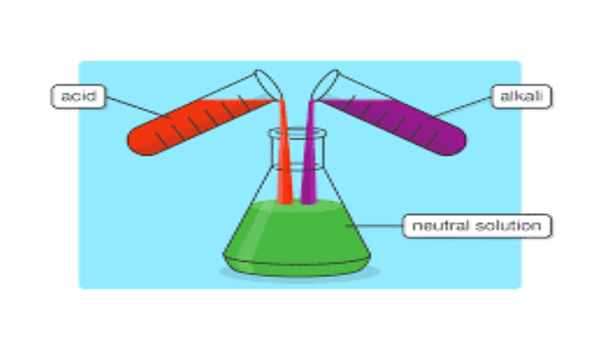
     A king once condemned a prisoner and wanted to give him a very harsh punishment. He keeps a glass containing some hydrochloric acid and another containing an equal amount of sodium hydroxide before the prisoner and asks him to drink both of them. The prisoner knows that the acid is highly corrosive and will destroy the mucous lining, as well as his oesophagus. The other solution is equally bad and will cause him to collapse. But he goes ahead and obeys the order. The king finds that the prisoner has survived without any ill effects.

    How did he manage it?

    Answer:

    The prisoner understood the chemical reactions well. He knew that an acid is always neutralized by an alkali. So he poured the liquids in the two glasses into a third empty glass. When they thus got mixed, they reacted producing salt and water. These were harmless, except for the salty taste!

    HCl + NaOH = H 2 O + NaCl

    -Team ScienceNow

  • Art of Making Potable Water and the Craft of Desalination

    Art of Making Potable Water and the Craft of Desalination

     Water is life. We live in a watery world. The ocean covers more than 70 percent of the surface of our planet. It is hard to imagine, but about 97 percent of the Earth’s water can be found in our ocean. Yet paradoxically we are stressed for safe potable water. Water is a universal solvent and dissolves salts making it unfit for our consumption. Sea water has 35000 parts per million of sodium chloride in it. Making sweet water from that is the challenge for science and technology.

    Desalination has been used for thousands of years. Greek sailors  used to boil water to evaporate fresh water away from the salt. Romans used clay filters to trap salt. Simply put, desalination is the process of removing salt and other impurities from seawater or brackish water to make it suitable for consumption and other applications. The two most prevalent methods of desalination are distillation and reverse osmosis.

    Methods

    Distillation involves heating seawater to create steam, which is then condensed back into liquid form, leaving the salts behind. India’s solar-rich landscape has encouraged innovative solar desalination techniques. The Sorek Desalination Plant in Israel serves as a prime example of distillation-based desalination, providing valuable lessons for India.

    Reverse Osmosis (RO) employs a semi-permeable membrane that allows water molecules to pass through while blocking salt and other impurities. The Nemmeli Desalination Plant in Chennai, is a significant illustration of reverse osmosis technology, catering to the water needs of a water-stressed city.

    India

    There is a beautiful Indian myth that the swan can separate milk and water. Milk is mostly water with suspensions of fat and proteins and lactose.  The gross composition of cow’s milk is 87.7% water, 4.9% lactose (carbohydrate), 3.4% fat, 3.3% protein, and 0.7% minerals.  Scientific explanation is that, the Swan has got a sieve like structure, lamellae, in its mouth which separates water from mud. Which is why probably there is the belief that, swan can separate milk from water and drink just the pure milk!

    Indian Canadian scientist, Srinivasa Sourirajan is regarded as the father of RO membranes along with American-Israeli scientist, Loeb.  Their seminal work created the US$ 50 billion global membrane separation market to enrich the quality of worldwide life via providing clean water. Water, food and sanitation in their current status owe a lot to the transformative discoveries of Sourirajan. This is why Professor Menachem Elimelech asserted that “he should have received two Nobel Prizes- one for science and one for peace.

    Sarabhai Dream

     It was the visionary Indian Scientist, Dr. Vikram Sarabhai who conceived the concept of desalination as part of his dream project Nuclear Powered Agro industrial Complex. Uranium is the input for huge amounts of energy in the nuclear reactor. Reactors are located near seawater sources for cooling. He envisaged sea water desalination for agriculture and started research groups in Bhabha Atomic research Centre. Dr M.P.S.Ramani piloted these research endeavours and brought them to industrial scale operation. World class membrane research teams were nurtured here.

    Success Story

    Chennai, the capital city of Tamil Nadu, has been grappling with acute water scarcity due to erratic monsoons and depleting groundwater reserves. The Nemmeli Desalination Plant, established in 2010, produces 100 million liters of freshwater per day, alleviating the water crisis in the city to a considerable extent. However, challenges persist, including the high energy requirements of the desalination process and potential environmental impacts.

    Gujarat with extensive coastlines, has harnessed solar power to drive desalination projects. The Solar Desalination Plant in Gandhinagar combines solar energy with the multi-effect distillation process to produce freshwater efficiently. This integration not only reduces the carbon footprint but also aligns with India’s commitment to renewable energy development

    Challenges

    Desalination processes are notorious for their high energy consumption. Breakthroughs in energy recovery devices, such as pressure exchangers, turbochargers, and isobaric chambers, are making strides in reducing energy demands. India’s desalination initiatives can benefit from adopting such innovations to make the process more sustainable.

    Disposal of concentrated brine, a byproduct of desalination, can harm marine ecosystems. The Jal Shakti Ministry’s guidelines for brine disposal, incorporating dilution techniques and monitoring mechanisms, exemplify India’s efforts to balance technological advancements with environmental protection.

    While desalination holds immense potential to address India’s water security challenges, a holistic approach is essential integrating sustainability into it.  The Indian government’s emphasis on water conservation through campaigns like Jal Shakti Abhiyan is crucial to curbing wastage and enhancing the impact of desalination efforts.

    In the relentless pursuit of SDG 6, desalination emerges as a pivotal tool to ensure water access for India’s burgeoning population. Through technological innovations and sustainable practices, the country can navigate its water security challenges while safeguarding its environment. By harnessing the power of the oceans and the brilliance of scientific advancement, India can lead the charge towards a water-secure future for all.

    In the pursuit of sustainable water solutions, the future holds a promising ally in RO. This revolutionary technology is poised to redefine freshwater production, addressing the ever-growing global water scarcity crisis.


    -Dr.A.P.Jayaraman

    Chairman, NCSC

  • Start-up Ecosystem

    Start-up Ecosystem                                 

     Identifying a successful business idea for a start-up venture may require budding entrepreneurs to harness their creative energies, leverage their hands-on experiences/skills and turn their passion into a profession. Here’s how you can do it?     

    Call it an after-effect of the ‘Make in India’ and ‘Start-up India’ campaigns or the rise of a new breed of app-based tech-preneur teens who have easy access to digital online tools, entrepreneurship seems to have caught the fancy of many-a-school and college going youth. Setting breaks on the post-colonial euphoria of chasing government and high-profile corporate jobs, youth look to be at home discussing entrepreneurial issues, market dynamics, business opportunities and the challenges accompanying it. So also, B-schools and engineering colleges across the country are witnessing rising incidents of students opting out of the placement routines, at times even turning down hi-profile/high-paying job offers, only to pursue their deep inner entrepreneurial calling. In schools and colleges, ‘entrepreneurship’ is the new buzzword! 

    Now for all those youngsters who have already decided to be an entrepreneur and are guessing as to what goes on to make businesses successful, whether it’s a right product, a smart business plan, adequate finances, a team of sharp and committed staff, world-wide digital footprints…, don’t be surprised if you ever hear management gurus emphasise on selection of a ‘right business idea’. It may set the alarm bells ringing for most people who are seriously considering to start a business based on one of the two personal biases:

    • It’s a business I am already aware of: “I love food and know all about it, so I should start a restaurant,” if you feel so, better think again. Just because you are a foodie or a good chef doesn’t necessarily mean that you would successfully run a restaurant. Choosing to do so, could be a huge mistake!
    • It’s a product/service I am in love with: Again, just because you like the product or services, doesn’t necessarily make it profitable. Especially, first-time entrepreneurs ought to be conscious of the fact that running a business is a tough ask, and that things could become all the more difficult if one gets passionately attached with the product/service.

    So how does one really go about selecting a business idea that in the long-run would not only be profitable, but also yield rich dividends on scaling it up? Here’s a step-by-step approach to do so:

    1. Picking up an idea: Look for something business that fits your passion, life goals, personal strengths, real-life experiences… While you do so, look at it as a possible business idea, and don’t fall in love with it just yet.
    2. Think 3600: Evaluate the business idea as an investor would otherwise do. How big is the opportunity? Is the timing right? What will it take to execute it? Do you have adequate finances? What are the risks involved? Is the product/service marketable? How long would it take to make the venture profitable?
    3. Get Feedback: Always be conscious of the fact that the selected business idea is your baby, and it’s your gut feeling that it will work fine. Playing it safe, look for people who know the market, who understands the business model, competition, market dynamics… and try getting first-hand feedback on your business idea. Also try talking to some of the probable customers as to: whether they would buy it? If so, at what cost? What value additions they would like? How much would they be ready to pay for it? and so on.
    4. Business Plan: You should have a well thought out ‘Business Plan’ in hand prior to launch of the business. Try incorporating all your recent learnings, opinions of business experts, feedback of probable customers, learnings from market research, financial plan, marketing tools and their usage… Importantly, the business plan ought to be implementable, and it should have clearly set goals and target month-wise and year-wise.
    5. Develop a prototype: its high-time you have a market-ready product/service in place. Thereafter, consider a soft launch or pilot run of the product/service to plan to launch, just prior to the final business launch. Keep the ultimate vision and business goals in mind, and look out for feelers during the trial runs as to how you can achieve it.
    6. Test the waters: During this phase try to engage with your future customers and suppliers to figure out how to match your offerings with customer needs. To do that, test elements like pricing, branding, product/service features, customer experience, marketing strategy, etc. Measure the results and draw conclusions.
    7. Make necessary adjustments: Once you have gathered wealth of information on your product/service, market challenges, customers, competition, etc., try figuring out as to what things you got wrong and promptly fix them. The process may warrant making small or significant changes to your proposed product/service or business plan, ensure that necessary corrective steps are taken to prevent any future eventualities.
    8. Market ready: Having undergone the above mentioned process, you can be rest assured that your selected business idea is ready for a formal market launch.

    -Team ScienceNow Digital

  • LIGHTER MOMENTS

    Have Fun! Enjoy the Lighter Moments…

    Q: Which university does a hippopotamus go to?

    A: Hippocampus

    Q: What’s the difference between a dog and a marine biologist?

    A: One wags a tail and the other tags a whale.

    Q: What did Abacus say to the students?

    A: You can count on me!

    Q: What gas never cries? 

    A: Nitrous Oxide (Laughing Gas)

    Q: How many software engineers does it take to change a light bulb?

    A: None. That’s a hardware issue.

    -Team ScienceNow Digital


  • SCIENCE QUESTIONS

    SCIENCE QUESTIONS

    Be curious… Know the truth behind the facts…

    What’s the Colour of Mirror?

    It’s actually green. A human eye can distinguish between 10 million different colours. But to identify the colour of mirror, whether it is white or silver is very difficult. Mirror reflects the colour that is seen in it. It reflects all the images in the exact opposite direction due to angle of reflection and distance. But every mirror absorbs a very tiny amount of light within the 510 nanometre range. So, as the spectrum of visible light is green, the colour of the mirror is technically little green. 

    Where Do Permanently Deleted Files Go in Computers?

    Actually the computer doesn’t delete anything. When we delete a file, we just put it into a new address or a pointer on the hard disk where it is stored. Large files are stored in multiple locations. When we open a file, the hard drive follows the pointer to identify the data. Thus any file is never erased and is always physically present on the hard disk. The files can be retrieved using special software. The data can only be erased when the hard disk is destroyed.

    Where is the Centre of Universe?

    The universe started with a “Big Bang” about 13.7 billion years ago and it has been expanding ever since. The centre of this expansion is everywhere. No matter where you are in the universe, everything will seem to be expanding or moving away from you at the same rate. Everything looks the same in every direction. So, there’s no one particular centre of Universe, rather the Centre of Universe is everywhere. 

    Why does fish smell so strongly?

    In order to maintain fluid balance, fishes must fill their cells with amino acids and amines to remain safe from the saltiness of seawater. Ocean fish have trimethylamine oxide (TMAO) for this purpose. However once the fish is killed and bacteria and fish enzymes convert TMAO into trimethylamine, it gives off the characteristic fishy odour.

    Why do taste buds change over time?

    As we age, our taste buds actually change. Most of what we think of as taste comes from our noses’ smell receptors. As we age, it gets harder for our body to replace those receptors when they die off. As a result, people in old age are sometimes less sensitive to taste and so they gravitate toward things that have stronger, more detectable flavours.

    -Dr Siddhivinayak Barve

    Editor, ScienceNow Digital

  • SCIENCE QUIZ

    Get ready to test your Grey Matter…

    1. The BrahMos Missile was developed by which country?
    A. India
    B. India & China
    C. Russia
    D. India & Russia

    2. What is the purest form of Iron?
    A. Wrought iron
    B. Pig iron
    C. Cast iron
    D. None of the above

    3. Which is the most abundant gas in the earth’s atmosphere?
    A. Oxygen
    B. Nitrogen
    C. Methane
    D. Hydrogen

    4. Which type of plastics can be recycled?
    A. Polyvinyl Chloride (PVC)
    B. Styrofoam
    C. Thermoplastics
    D. All of the above

    5. Which metal is a liquid at room temperature?
    A. Mercury
    B. Tin
    C. Lead
    D. Brass

    6. Which gas is found in soda water?
    A. Oxygen
    B. Argon
    C. Carbon dioxide
    D. Helium

    7. What is the speed of Earth around sun?
    A. 60 km/sec
    B. 90 km/sec
    C. 10 km/sec
    D. 30 km/sec

    8. Splitting of light into its constituent colours is known as what?
    A. Refraction
    B. Dispersion
    C. Frequency
    D. Prism

    9. Cotton fibres are made of ______.
    A. Cellulose
    B. Wax
    C. Fur
    D. Seeds

    10. Which historical victory achieved by a Spacecraft got Mars on its First try?
    A. Astrosat
    B. Chandrayaan
    C. Manglayaan
    D. Aryabhata

    11. Rate of growth of plant is measured by which instrument?
    A. Barometer
    B. Hygrometer
    C. Udometer
    D. Auxanometer

    12. The Ozone layer lies in the _______.
    A. Troposphere
    B. Biosphere
    C. Stratosphere
    D. Mesosphere

    13. Celsius and Fahrenheit show the same temperature at ______.
    A. 40
    B. 39
    C. 37
    D. 41

    14. ‘White Revolution’ is related to what?
    A. Cotton
    B. Milk
    C. Water
    D. Ice

    15. Hypertension is the term used for _______.
    A. Increase in heart rate
    B. Decrease in heart rate
    C. Decrease in blood pressure
    D. Increase in blood pressure

    16. What is the physical phase of life called?
    A. Protoplasm
    B. Cytoplasm
    C. Organelles
    D. None of the above

    17. Which among the following was first human-made plastic?
    A. Bakelite
    B. Polyethene
    C. Celluloid
    D. Nylon

    18. Amalgam’ is a term used for an alloy of a metal with ______.
    A. Copper
    B. Mercury
    C. Lead
    D. Aluminium

    19. Which is the largest blood vessel in the body?
    A. Alveoli
    B. Artery
    C. Vein
    D. Aorta

    20. The first synthetic fibre made by man was ______.
    A. Nylon
    B. Terycott
    C. Polyester
    D. Rayon
    21. Which of the below is water soluble vitamin?
    A. Vitamin C
    B. Niacin
    C. Riboflavin
    D. All of the above

    22. Radio Carbon Dating is use to estimate the age of ______.
    A. Monuments
    B. Fossils
    C. Rocks
    D. Soil

    23. The fastest growing plant is ______.
    A. Ashoka
    B. Banyan
    C. Eucalyptus
    D. Coconut

    24. Energy is measured in units called ______.
    A. Joules
    B. Newton
    C. Watts
    D. Ohm/mtr

    25. Ozone holes are more pronounced at the ______.
    A. Tropic of cancer
    B. Poles
    C. Equator
    D. Tropic of Capricorn
    -Team ScienceNow
    The answers will be posted a week later