science share account_circle

Author: sn_admin

  • Unravelling mysteries of Space and beyond

    Unravelling mysteries of Space and beyond

    The Indian Institute of Astrophysics has over a century long legacy… the institution is pioneer in unravelling the mysteries of Space and beyond….

    The journey of India’s premier astronomy and astrophysics research institution – The Indian Institute of Astrophysics (IIA) dates back to 1786. An officer of the East India Company, William Petrie went about setting up a private observatory over his 11 acres residence in Egmore, Chennai. Back then, the observatory was used for navigational purpose. Petrie closely observed the position of the Moon’s eclipse and satellites of Jupiter to guide ships in the high sea. In 1790, the East India Company formally took over the observatory and shifting the centre to Nungambakkam, Chennai expanded its scope of work.

    Around 1881-82, in addition to photography and spectrography of the Sun and the stars using its 20-inch telescope, the observatory was being used to measure the Sun’s heating up of the earth’s surface and its periodic variation.

    A decade later, in the aftermath of a severe famine in the Madras Presidency region around July 1893 in the U.K. Secretary meeting chaired by Lord Kelvin, it was decided to establish a solar physics observatory at Kodaikanal. Thereafter the Madras Observatory served as the only astronomical observatory of India for over a century making significant contributions in the area of astronomical science.

    Achievements of the Observatory

    Indian astronomer, C. Raghunathachary’s discovery of the light variations of variable star R. Reticuli in 1867; use of spectroscope to discover gaseous nature of the prominences during solar eclipse on August 18, 1868; British astronomer, Taylor’s completion of his ‘catalogue of places’ for 11,000 stars in 1884; Norman R. Pogson, Director of the Madras Observatory for over 30 years in 1891 catalogue of over 3000 stars; John Evershed’s discovery of the phenomenon of ‘radial motion in sunspots’ in 1909 and so on.

    While Kodaikanal Observatory continued to serve as the nodal Observatory for over a century working in the area of solar and atmospheric physics, under its shadow the country saw rise of several elite and specialised space observatory centres.

    The Vainu Bappu Observatory at Kavalur housing a 2.34 metre telescope was established in 1968 for night time astronomy, spectroscopy and photometry. The Gauribidanur Radio Observatory, equipped with a 6-meter radio telescope – a radio heliograph facility to obtain two-dimensional pictures of outer solar corona, was established in 1976 to study the Sun, galaxies and pulsars. The high-altitude Indian Astronomical Observatory at Hanle in Ladake saw installation of a 2-metre Himalayan Chandra Telescope in 2001 and later setting-up of a seven-unit High Altitude Gamma Ray (HAGAR) telescope.

    Indian Institute of Astrophysics

    As the country continues its onward journey of over two centuries (i.e. since 1786) dedicatedly working in the area of astronomy and astrophysics through its network of observatories at Kodaikanal, Kavalur, Gauribidanur and Hanle, in 1971 the Indian government decided to form the Indian Institute of Astrophysics (IIA), bringing all the observatories under a single autonomous research institute headquartered at Koramangala in Bengaluru.

    -Manoj Mahanta

    Team, ScienceNow
  • MoonStruck

    Earth has two moons! Yes, you have heard it right. Our planet has captured a mini-moon the size of a car…

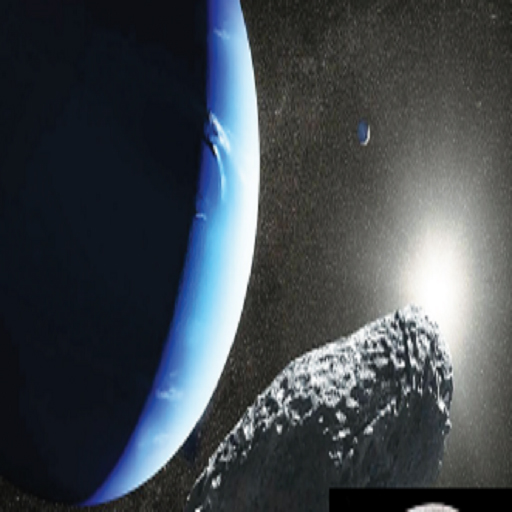
    The Minor Planet Center (MPC) had discovered that Earth has two moons – this second satellite is tiny and temporary. The new moon, labelled 2020 CD3, measures between 6.2 and 11.5 feet wide in size as compared to our Moon’s huge 3,474 km diameter.

    The discovery was made by US astronomers Theodore Pruyne and Kacper Wierzchos on February 15, 2020, using a 60-inch telescope at Mount Lemmon Observatory near Tuscon, Arizona.

    The astronomers tracked the space rock for many days and found that it was orbiting Earth..

    There are few other instances…The first was an object known as 2006 RH120, which looped around Earth a few times between September 2006 and June 2007 before being ejected. Other claimed moons are more common, but these would be-satellites technically orbit the Sun – they just happen to share the same path as Earth. For instance, 2016 HO3 was discovered a few years ago trailing behind Earth about 13.6 times farther than the Moon.

    The second moon, 2020 CD3 was orbiting Earth as a mini-moon for a short time. While it is gravitationally bound to Earth it is subject to gravitational pushes from Earth, the Moon and even the Sun, which has thrown the little rock free of orbit to drift off into space.

    Astronomers are keeping a close watch on our tiny orbiting companion… The second moon, which is expected to return in 2040…

    -Team ScienceNow

  • The Space Graveyard

    The Space Graveyard

    According to the latest report, there are more than 200 million pieces of debris orbiting around the Earth, putting our working satellites at risk…This is space junk…

    At present there are hundreds of man-made objects circulating our planet Earth. These objects – which move at a speed of over 22,300 mph, faster than a speeding bullet can put our working satellites in grave danger. And these small fragments can leave huge dents in several satellites, telescopes, and other objects orbiting our planet.

    As of January 2019, more than 128 million pieces of debris smaller than 1 cm, about 900,000 pieces of debris 1–10 cm, and around 34,000 of pieces larger than 10 cm were estimated to be in orbit around the Earth. Most of these debris float within 1,250 miles of Earth’s surface in what is known as low Earth orbit, home to a number of satellites, such as NASA’s Earth Observing System fleet and the International Space Station (ISS). And while space is big, this space junk can be problematic for active earth satellites because of their swift speeds.

    So, what is this space junk?

    Space debris began to amass in Earth’s orbit immediately with the first launch of an artificial satellite (Sputnik 1) into orbit in 1957. Immediately after that the North American Aerospace Defense Command (NORAD) began compiling a database of all known rocket launches and objects reaching orbit: satellites, protective shields and upper- and lower-stage booster rockets. Although it heralded a new beginning in the Space Age, with over 8,900 satellites from more than 40 countries launched so far, it left a mark in space in the form of junk.

    And this space junk mostly comprises of stages from rockets that put satellites into orbit and satellites itself after it becomes dysfunctional. In addition, it includes small pieces of junk lost to space which includes nuts and bolts, screwdriver, garbage bags and more. But the number has increased significantly recently with China and India testing their anti-satellite missile, creating at least 400 pieces of debris, which have further increased the risk of impacts to the ISS and other satellites orbiting the space.

    With our skies becoming overcrowded with scientific and commercial satellites, it is high time countries need to work towards curbing the growing problem.

    Why is it a cause for concern?

    There is all possibility that some of the junk will lose altitude over time and burn up in the Earth’s atmosphere. Despite this, there is still a lot of junk up there. Even without launching new satellites or major explosions, the space debris in Earth’s low orbit is so huge that it will continue to create problem over the centuries.

    Reports suggest that over the next 200 years or so, debris larger than about 8 inches will increase by 1.5 times. And smaller trash will increase even more! Junk between 4 inches and 8 inches is expected to multiply 3.2 times and debris less than 4 inches will grow by a factor of 13 to 20. And this is likely to increase in future as more space programs have already been planned by various nations.

    What precautions are we taking?

    Although many space agencies and private space firms have come out with various concepts, it still seems to be a distant dream. For example: JAXA, Japan’s space agency, is testing an electronic space whip that stretches six football fields long, known as the electrodynamic tether (EDT). The electrified line, nearly 2,300 feet long, is capped with a 44-pound weight. When deployed, it is intended to knock debris out of orbit, sending it to burn up in Earth’s atmosphere.

    Other options include giant magnets, harpoons, and nets to safely cut down the growing debris cloud. Many countries are also developing plans to ensure that any future man-made satellites sent into space have an appropriate “end-of-life plan” to stop the growing menace of debris that float above our planet.

    -Noel Fernandez

    Team, ScienceNow

  • Do you know?

    Some candid facts that will amaze you…

    Why is DIAMOND the hardest substance on Earth?

    Diamonds are incredibly hard because they have crystallized in a particular atomic shape after being subject to the effect of heat and pressure on Earth at a depth of 140 to 150 kilometres. This makes diamond the hardest mineral on earth and cannot be broken or cut easily. It is only possible by using another diamond.

    Why do NEWSPAPERS turn yellow over time?

    Paper is made from wood, which is made up mainly of white cellulose. Wood also has a lot of a dark substance in it called lignin, which ends up in the paper, too, along with the cellulose. The exposure of lignin to air and sunlight is what turns paper yellow.

    Why do we get HEATSTROKE?

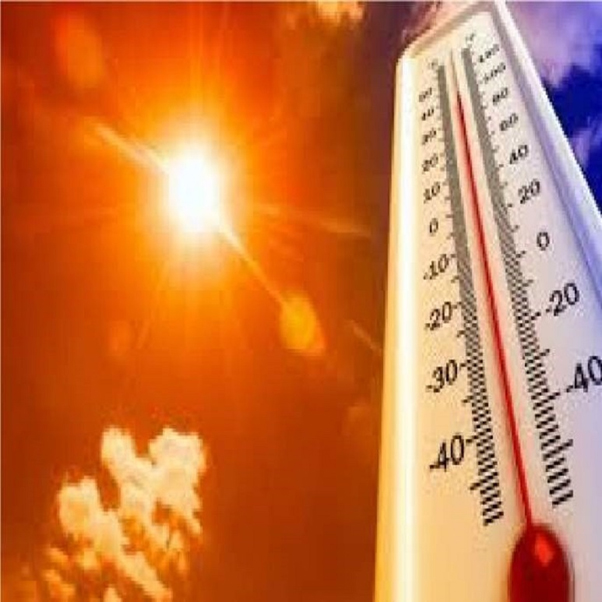
    Heatstroke is a condition caused by your body overheating, usually as a result of prolonged exposure to or physical exertion in high temperatures. This most serious form of heat injury – heatstroke, can occur if your body temperature rises to 104 F (40 C) or higher.

    Why do FORMULA 1 driver lose weight?

    The F1 drivers can lose up to three kgs weight after a race due to extreme heat in the cockpit of the vehicle. Hence, the drivers take in large amounts of water before the race, even if they do not feel thirsty, to avoid dehydration through sweating.

    Why is SUN harsh in summer?

    In the early morning and late evening, UV (ultraviolet) radiation is less strong because the rays have farther to travel to get to the Earth. But throughout the year, the sun’s angle varies with the seasons, so the strength of UV rays change, too. UV rays are strongest in the summer months.

    -Team ScienceNow

  • Science Teaser

    Try this Science Teaser….

    Nisha’s mother was packing her lunch box. She tried to put an apple in it. But the fruit was big. So, she cut it into two halves and placed it inside. At lunch time, when Nisha opened the box, she found that the apple had turned brown in colour. She thought, “Now I know why mummy says that apples contain iron.” How did Nisha come to that conclusion?

    Solution:

    The apple was cut open. So, the pulp inside was exposed to air. It had turned brown. Obviously, some ingredient in the apple pulp had undergone a chemical reaction with constituents of air. Oxygen which is a major component of air reacts easily with substances and forms oxides. The brown colour of the apple was due to iron oxide. It was thus easy for Nisha to conclude that the apple contains iron.

    -Team ScienceNow

  • The Curiosity Key…

    The basis of understanding Science is the innate curiosity. For instance, understanding the basic four elements like Hydrogen, Oxygen, Nitrogen and Carbon gives you a lot of knowledge about the science. However, the problem lies with the curiosity of the students. Curiosity leads towards understanding the basic concepts in Science. Mugging up various equations in the textbook never increase curiosity or understanding about the science.

    Bookish Approach

    From Primary level, right from the first standard whenever you learn about our planet earth. you are taught that 70% of the planet is covered by water in the oceans and only 30% is available on land. Similarly in the atmosphere around us the major part of element is nitrogen followed by oxygen. When you go beyond the atmosphere around the earth major element is different. On the land or in the ocean plants in various forms grow and they content mostly carbon in organic form. All plants absorb carbon in the form of gas and give out oxygen.

    What you are reading in this article till this moment Is very much taught and recited by each science student till he completes his 12th Science . But students never correlate this with new applied developments. To change science in application one needs curiosity…

    Understand the Concepts

    Few days back there was a news about producing hydrogen from the sea water. The process is called production of green hydrogen.  De-salination methods are known to students but they cannot explain them. Some students have even visited Middle East countries with their parents or school arranged trips. Where they can see the technologies.

    When Israeli President visited India he gifted our PM movable, mobile van mounted de-salination plant. It was in the news along with the details of the machine. Last month there was a news about capturing the atmospheric oxygen and compressing it in cylinders for industrial use.

    Make it Applied

    We are the agrarian country so India needs very big quantities of Urea as fertilizer for the agriculture or crops. Ammonia contains nitrogen and hydrogen. But producing these two elements artificially is very costly process. Learning how ammonia is produced in the laboratory or reading it in the textbook is a norm. But thinking laterally about the production methods from freely available elements in the atmosphere needs curiosity.

    Some students are very curious about the space research. China recently sent three  astronauts to a Space Station. I asked a very simple question to a student who was topper in the class in the 12th standard and was preparing for a NEET exam. I asked him simple question that How many litres of water the astronauts might have carried with them for their space journey? He started calculating the days ,the number of astronauts, as well as daily requirement of water of one person. When I told him about the recycling method of the daily consumed water he was looking at me with the great surprise.

    Popularize Science

    One of my friend went to Japan for his business trip. When he entered a classic hotel and asked bellboy for the drinking water, to his surprise the answer given by the bellboy was you can drink water from any of the taps not only in your room but anywhere in the hotel. My friend was accustomed to drink water only from Aquaguard in India. Basic principle for supply of water for domestic use is potable water for drinking.

    Another experiment of producing water from the atmosphere was very popular via a video recently. Though the quantity was not sufficient to utilise for the daily use it was ample for a family for their need of drinking water. Curious science student can easily replicate such things in the areas where water scarcity is maximum, but it is never heard or practiced even by scientific researchers. In Maharashtra there are so many small towns where tap water is provided once a week that too hardly for 2 hours. 

    The basic which is needed in science is curiosity. With curious minds not merely bookish will solve the problem of applying science for the benefit of society. Inculcating the spirit of inquiry and curiosity will be possible when science Is made popular, practicable & also affordable.

    Dr Shreeram Geet
    Sr Career Counsellor

  • Film Review

    O P P E N H E I M E R

    The latest Science Movie is Oppenheimer…

    It is a biopic of J Robert Oppenheimer, the “father of the atomic bomb”.

    The film depicts the saga of the man who unleashed the tremendous destructive power of Atom.

    Oppenheimer chronicles the life of the American theoretical physicist, who became the director of the Los Alamos Laboratory during World War II and invented the first nuclear weapon that would end the war.  


    Christopher Nolan has made a biopic on the man who wanted to create the perfect bomb. The film unfurls the plots from Robert Oppenheimer’s education to the Manhattan Project which led to the creation of the ‘fat boy’ which ended the world war II,

    Later however Oppenheimer realised that the weapon he has made has limitless capacity of destruction and the realisation of the horrific creation that would change the course of history.

    Oppenheimer quotes from the Bhagavad Gita: “Now I am become Death, the destroyer of worlds…”

    The film is running in theatres…

    -Team ScienceNow

  • Believe it or Not!

    The incredible but true…believe it or not….

    • Sunglasses were invented by the Chinese as a way for judges to hide their emotions in the courtroom!
    • Molecular Biology Prof. Rany Lewis transplanted spider DNA into goats that allows them to produce milk with an extra protein than can be extracted and spun into spider silk!
    • The CIA uses board games to train its officers!

    With a melting point of 85-degree Fahrenheit, you can turn a solid cube of Gallium into a liquid just by holding it in your hand!

      • Located in the Sahara Desert, the world’s longest conveyor belt system is 98 kilometres long – and can be seen from space!

    • Gorillas can catch colds from humans!
    • Consuming an excessive amount of water in a short period of time can lead to Hyponatremia or water intoxication!
    • After examining samples of a 15,000-year-old Tibetan glacier collected in 1992 and 2015, scientists discovered 28 never before seen virus groups!
    • The venom from a Golden Lancehead bite is so potent that it’s capable of melting human flesh!

    -Team ScienceNow


  • RIDDLES

    Just for Fun… Riddles for you!

    What is neither water nor land, and is always soaking wet?

    Wetlands


    Which two periodic elements, when combined, heal?

    Helium and Aluminium (HE + AL)


    Which four periodic elements, when combined, make up something that terrifies criminals?

    Carbon, Oxygen, Phosphorous and Sulphur (C+O+P+S)


    I can rush, I can be still, I can be hot, I can be cold, I can be hard, I can slip through almost

    anything. What am I?

    Water


    It is impossible for me to be created, and I can never be destroyed, I can only change form. What

    am I?

    Energy


    -Team ScienceNow

  • What If?

    Ocean Currents Stops?

    Ocean currents play a significant role in controlling climate around the globe. These currents act like a giant conveyor belt, warming and cooling parts of the Earth as water circulates. Melting ice caps, which can happen due to global warming, can cause ocean waters to circulate and have a drastic effect on climate.

    What are Ocean Currents?

    Around the world, there are a number of ocean currents which have a serious impact on climate. For instance: The Gulf Stream in the Atlantic transports warm water with a high level of salinity and low density from equatorial regions further north on the ocean’s surface, warming countries such as the United Kingdom. The further north the water travels, the cooler it gets. Cold water becomes denser, falls further towards the bottom of the ocean and is carried back further south. This causes a continual ocean current in the North Atlantic.

    Global Warming

    Polar ice caps are beginning to melt due to global warming. Since ice caps are composed of freshwater, and if they continue to melt, it would bring down the level of salinity in the surrounding ocean waters. Changes in salinity levels could affect thermohaline currents by preventing water from achieving enough density to sink to the bottom of the ocean. More seriously, ocean currents could stop completely.

    Effects of Ocean Currents

    If ocean currents were to stop, climate could change drastically, especially in Europe and countries in the North Atlantic. In these countries, temperatures would drop, affecting humans as well as plants and animals. In turn, economies could also be affected, particularly those that involve agriculture. If these effects were to continue, Europe, North Atlantic countries and parts of North America could experience long periods of freezing conditions. Also, if ocean currents stopped because of climate change it will have many other affects associated with the global-warming phenomenon.

    Earlier Phenomena

    Earlier evidence of rocks and ice have shown that ocean currents have indeed stopped for periods of time in history. One example can be found around 13,000 years ago when the warmth experienced at end of an ice age caused large masses of ice to melt into the sea. The resulting changes in water density stopped ocean currents from flowing and caused freezing conditions in some parts of the world for over 1,000 years.

    -Dr Siddhivinayak Barve

    Editor, ScienceNow Digital