science share account_circle

Author: sn_admin

  • Innovation

    The Serial Inventor

    Padma Shri Uddhab Bharali from Assam has over 150 inventions under his belt, and continues to make life easier for people through his machines…

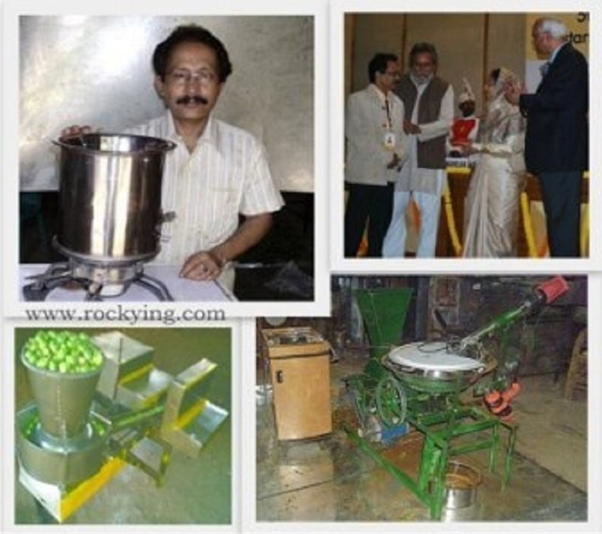
    A grassroot innovator from Assam, today Uddhab Bharali is known for more than 150 innovations to his name such as paddy thresher, cane stripping machine, pomegranate de-seeder and low-cost incinerator.

    How did it all start?

    While Bharali was good at academics, the engineering aspirant had to drop out of college during his final year owing to financial hardships. To help his father in repaying debts, he experimented with innovation and developed new tools — an interest that Bharali had, even as a child.

    However, his first innovation came in 1988, when he developed a polythene making machine for the tea industry. Till then, Lakhimpur in Assam was a zero industries district, and at the time only the tea industry was booming. They required polythene covers in bulk and instead of buying a machine which would cost him lakhs of rupees, Bharali developed his very own for about Rs 65,000.

    The beginning…

    The success of the polythene cover making machine gave him the confidence he needed. To come up with his innovative products, Bharali, like many others, relied on ‘jugaad’ where he used cheap, easy to find materials to develop products which are sustainable and efficient. By 1995, Bharali had paid-off all his father’s debt and got a job of looking after the machinery used in a hydropower project in Arunachal Pradesh. But it was short lived as he had to return back to his hometown after the news of his elder brother’s death.

    Realising he was the only bread earner for his family, Bharali had to make ends meet. Between the 1990s and mid-2000s, he developed 24 products which focused on helping farmers. Though Bharali wanted to develop or innovate for other sectors too, but the demand was huge from the farm sector. From developing different kinds of peelers, re-designing Assamese paddy grinder to cutters for tea-leaves, he took extra effort to simplify agricultural processes for the farming community.

    Identity as an inventor

    Bharali’s ultimate recognition came in 2006, but not before the serial inventor designed and prototyped an entire range of mechanical innovations. Bharali’s pomegranate seed peeling machine, which he designed, garnered accolades and appreciation not only from India but also from across the world. Truly one of its kind, the machine was designed to separate the outer skin from the thinner membrane without causing any damage to the seeds. The machine was an instant hit with orders pouring in for this unique invention from Japan, US and Turkey.

    Some of Bharali’s other inventions include: an arecanut peeling device, and the Cassava Peeler among others. The basic idea behind Bharali’s inventions was to reduce hours of back-breaking labour that farmers put in day and night; thus, making these inventions a hit with the farming community and those engaged in agricultural labour. In addition to these, he has also invented remi recortication machine, garlic peeling machine, tobacco leaf cutter, paddy thresher, cane stripping machine, brass utensil polishing machine, safed musli peeling machine, and jatropha de-seeder. These inventions are popular abroad and local authorities like the Central Silk Board, North Eastern Region Community Resource Management Project and the National Innovation Foundation have helped Bharali to install these new machines. Bharali have recently developed a red cardamom dryer for the Spice Board of India, and a seed extractor for bananas for Institute of Advanced Study in Science and Technology.

    For a cause

    Despite his clients which consist of government bodies and research institutes, Bharali spends some of his time working for the betterment of the underprivileged. Keeping with this, he has started a shelter facility in his area, as well as a feeding programme. Bharali has also developed a number of machines for the differently-abled which helps them enhance their quality of life. Apart from being an innovator, he is a guest lecturer at a number of colleges and universities in Assam and all across India. A winner of many awards and recognitions, Bharali is far from retiring as his quest for knowledge and innovation is helping in bettering the society.

    Dr Shobha Tawade

    Team, ScienceNow

  • QUIZ

    Test your grey matter…

    1. 1. In which month will the Gulmohar tree be at its peak of blossoms, filled with red flowers?

    (A) December

    (B) January

    (C) June

    (D) September


    1. 2. For which of the following tasks will an artificial satellite not be used?

    (A) To measure the forests on earth

    (B) To transport goods

    (V) To telecast TV programmes

    (D) To obtain information about weather


    1. 3. Public Health Department appeals to observe ‘A Dry Day’ once in a week __________.

    (A) to prevent mosquito reproduction

    (B) to clean up polluted water supply

    (C) to tackle water shortage

    (D) to make the area disinfectant


    1. 4. According to the time of sunrise, starting with the earliest, arrange the cities – Kolkata, Delhi, Mumbai and Shillong in the correct order.

    (A) Kolkata, Mumbai, Delhi, Shillong

    (B) Shillong, Kolkata, Delhi, Mumbai

    (C) Mumbai, Delhi, Kolkata, Shillong

    (D) Delhi, Kolkata, Mumbai, Shillong


    1. 5. Which of the following characteristic of a surface helps to form an image?

    (A) Hardness

    (B) Transparency

    (C) Opacity

    (D) Smoothness


    1. 6. What is the shape of galaxy Mandakini?

    (A) Spiral

    (B) Elliptical

    (C) Barred Spiral

    (D) Irregular


    1. 7. For avoiding pollution, which method of disposing wet garbage should be followed?

    (A) To throw garbage in the dumping ground.

    (B) To burn the garbage.

    (C) To throw the garbage in stream water.

    (D) To put earthworms in the garbage.


    1. 8. In which organ does mixing of inhaled Oxygen in the blood and exhaling of Carbon dioxide from the blood take place?

    (A) Lungs

    (B) Windpipe/Trachea

    (C) Air-sacs

    (D) Diaphragm


    1. 9. Soyabean mixed wheat flour used for making rotis provides more ________ to the body.

    (A) carbohydrates

    (B) fats

    (C) proteins

    (D) salt


    1. 10. Guess who am I? I am formed out of ice and dust particles. I am seen after certain years. My identity is my long feathery tail.

    (A) Asteroid

    (B) Dwarf planet

    (C) Meteor

    (D) Comet


    1. 11. On which tree-leaves, does a female tiger butterfly lay eggs?

    (A) Cotton (Rui)

    (B) Mango

    (C) Mulberry

    (D) Banyan


    1. 12. The colour of soil in Maharashtra state is different in various regions, as ____.

    (A) the temperature of each region is different

    (B) the proportion of minerals is different in the stone from which the soil is formed

    (C) there is a difference in rainfall

    (D) different crops are grown on the soil


    1. 13. Which of the following animals is a vertebrate?

    (A) Toad

    (B) Cockroach

    (C) Earthworm

    (D) Snail


    1. 14. When grain was stored in a closed tin, there were no maggots in it. But when opened after some months, there were maggots in the tin. From where they could have entered the tin?

    (A) They must have entered the tin from the gaps

    (B) They were hidden in the gaps

    (C) There must be maggot eggs in the grain, when the grain was filled in the tin

    (D) Maggots were born automatically


    1. 15. Which vehicle will require minimum energy to carry equal mass at equal distance?

    (A) Ship

    (B) Aeroplane

    (C) Truck

    (D) Railway


    1. 16. Raju sowed coriander seeds in a pot. After a few days, he noticed that the saplings from the pot had rotted. Find the reason.

    (A) Got more sunlight

    (B) Less use of manure

    (C) More water was supplied than required

    (D) Less sunlight and more manure were supplied than needed.


    1. 17. Smoking is prohibited in public place by law because.

    (A) it causes diseases to breathing organs

    (B) It causes lungs cancer

    (c) persons who come in contact with the smokers, have to face bad effects of smoking.

    (D) lips turn black.


    1. 18. Which of the following is an example of uniform linear motion?

    (A) A girl coming down a slide

    (B) A ball thrown in upward direction

    (C) An arrow sent at its aim by the archer

    (C) A train starting from station


    1. 19. Density of planet ________ is less than water.

    (A) Earth

    (B) Mars

    (C) Saturn

    (D) Mercury


    1. 20. A 10 cm long pencil is placed vertically in front of a mirror at a distance of 5 cm. If we join both ends of the pencil and its image to make a rectangle, what will be its area?

    (A) 200 cm2

     (B) 50 cm2

    (C) 100 cm2

    (D) 25 cm2


    1. 21. What is the principle behind functioning of a pinhole camera?

    (A) Light rays travel in a straight line

    (B) Light gets reflected

    (C) White light is made up of seven colours

    (D) While travelling through the hole, light changes its path


    1. 22. A boy weighing 50 kg is sitting on a see-saw 3 m away from its support. On how many meters a girl should sit, whose weight is 25 kg to balance the see-saw?

    (A) 1 m

    (B) 2m

    (C) 3m

    (D) 6 m


    1. 23. Which astronomical incident takes place when the Sun, the Mercury and the Earth come in a straight line?

    (A) Mercury eclipse

    (B) Solar eclipse

    (C) Transit of mercury

    (D) Earth eclipse


    1. 24. Which year was a leap-year after 1897?

    (A) 1898

    (B) 1900

    (C) 1902

    (D) 1904


    1. 25. Where on Earth can we not have ‘Zero’ shadow day?

    (A) Equator

    (B) Equator to the tropic of Capricorn

    (C) Equator to the tropic of cancer

    (D) Both poles


    -Team ScienceNow


    ANSWERS

    1. C 2. B 3. A  4. B  5. D 6. C 7. D  8. C  9. C  10. D  11. A 12. B  13. A 14.

    C  15. A 16. C 17. C 18. C 19. C 20. C  21. A 22. D 23. C 24. D 25. D

  • STAR CHART JULY

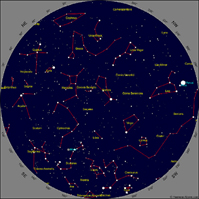
    This star chart is for early July  9 pm mid  July 8 pm and end July 7 pm .

    To use this chart, hold the star chart vertically , face any direction in the sky.

    Turn the star chart around so that the direction you are facing is at the bottom.

    Now, the stars shown at the bottom in the chart are the stars you will see in the sky .Dots represent stars.

    The larger the dot the brighter the star.

    Lines between stars are imaginary and aid location .

    Names of constellation are  along each side 


    Monthly phases

    Full moon

    03 July 2023 17:09

    Last quarter

    10 July 2023 07:18

    New moon

    18 July 2023 00:02

    First quarter

    26 July 2023 03:37


    -Suhas Naik-Satam

    Nehru Planetarium

  • Science Calendar – JULY

    Here is the Science Calendar…The Science that happened in this month…

    July 1: 1968 – The Nuclear non-proliferation treaty is signed in Washington, London and Moscow by sixty-two countries.

    July 2:  1698 – Thomas Savery patents the first steam engine

    July 3: 1886 – Karl Benz officially unveils the Benz Patent Motorwagen – the first purpose-built automobile.

    July 4: 1054 – A supernova is observed by the Chinese, the Arabs and possibly Amerindians near the star Tauri. For several months it remains bright enough to be seen during the day. Its remnants forms the Crab Nebula.

    July 6: 1885 – Louis Pasteur successfully tests his vaccine against rabies. The patient is Joseph Meister, a boy who was bitten by a rabid dog.

    July 7: 1989 – Warner Brothers copyright registered “Batman,” a movie based on a popular cartoon character.

    July 9: 1968 – US patent for the “Portable Beam Generator,” also known as a hand-held laser ray gun, was granted to inventor Frederick R. Schellhammer.

    July 10: 1962 – Telstar, the world’s first communication satellite is launched into orbit.

    July 14: 1965 – The Mariner 4 flyby of Mars takes the first close-up photos of another planet.

    July 15: 1985 – Aldus PageMaker, the first desktop publishing program, was first shipped for sale to consumers, invented by Paul Brainard.

    July 16: 1878 – Thaddeus Hyatt was granted a patent for reinforced concrete.

    July 17: 1962 – Nuclear testing – The “Small Boy” test shot Little Feller 1 becomes the last atmospheric test detonation at the Nevada Test Site.

    July 20: 1960 – The Polaris missile is successfully launched from a submarine, the USS George Washington, for the first time.

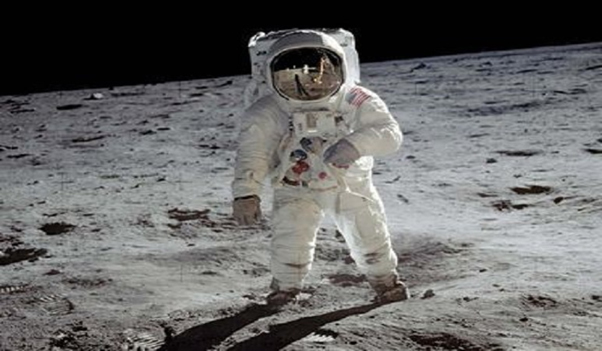
    July 21: 1969 – Neil Armstrong and Edwin Aldrin become the first men to walk on the Moon during the Apollo 11 mission.

    July 22: 1873 – Louis Pasteur received a patent for the manufacture of beer and treatment of yeast, which would later influence his discovery of the process known as pasteurization.

    July 25: 1837 – The first commercial use of an electric telegraph was successfully demonstrated by William Cooke and Charles Wheatstone between Euston and Camden Town in London.

    July 27: 1921 – Canadian scientists Frederick Banting and Charles Best first isolated insulin, and within a year, the first human sufferers of diabetes were receiving insulin treatments.

    July 30: 1933 – The Monopoly board game was copyright registered, and Carles Darrow, the inventor, became the first millionaire game designer after he sold his patent to Parker Brothers.

    -Team ScienceNow

  • AXIS TILT

    Scientific American Magazine has recently reported that the earth axis has significantly tilted and the cause is stated to be the excessive pumping of Groundwater

    The net water lost from underground reservoirs between 1993 and 2010 is estimated to be more than 2 trillion tons. That has caused the geographic North Pole to shift at a speed of 4.36 centimetres per year

    The tilt of the axis on which any celestial object spins tends to be stable. But small changes can occur when large masses shift location inside a planet and on its surface.

    Gravitational surveys have measured the depletion of underground reservoirs, which is caused in large part by irrigation, especially in north-western India and North western America.

    The Earth has lost enough groundwater to thirsty humans to measurably tilt the planet’s axis of rotation.

    This effect causes the Earth’s geographic poles to wobble by up to several metres every year The tilting of the axis has major effect on climate too…

    -Dr Siddhivinayak Barve

    Editor, ScienceNow Digital

  • Editorial

    Greetings from ScienceNow Digital….

    This year the world is experiencing unprecedented impact of the climate Change.. On the one hand extreme heat.. on the other devastating floods… world over the situation is critical… the problem of potable water… agriculture… and now about the onset of monsoon is looming large…

    As we celebrate the World Environment Day this month, a thought should be given to the fact that the many problematic environmental situations can be looked as the opportunities.. Take for instance the solar technology.. When the world is heating up.. it is time to explore solar energy and the solar roads.. In this issue we carry the lead articles on harnessing the solar power… similarly the problem of water pollution can be combated by resorting to grey water technology to solve the menace of availability of water…

    June is the month when the academic institutions resume the next academic year.. the campuses come to life with the hustle – bustle… the exams, results and admissions routine  begins.. The present issue contains the article on career prospects in choosing right career in Biological Sciences…

    As we march on with the mission of ScienceNow Digital to bring science to the masses, we must do conscious effort in communicating right science to the people.. We explore the Science Communication movement in India.. In the Present age, when science is growing, the reach to the society is limited… this is the mission of the ScienceNow … to take Science to the Masses…

    ScienceNow will be with more power packed material in the coming months… we are revamping our website and soon we will be on the app store too… ScienceNow Digital will have a wider reach.

    As the Science Advancesm, new avenues open.. after Chapt GPT, now the NuraLink is launched… it is getting USFDA nod… putting chip in the Brains… The repercussions will be dramatic… will it be social engineering or just a means to keep in touch with rapid advances… the time will tell…

    ScienceNow Digital with its commitment to bring Science and Technology, will leap forward with your support, keeping up the promise of bringing out excellence in Science…

    Scientifically yours


    Dr Siddhivinayak Barve

    Editor,

    ScienceNow Digital

  • Science News

    Take a roundup of What happened In Science…
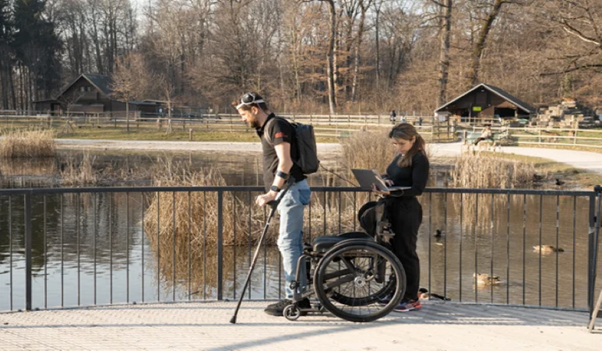
     Brain–spine interface allows paralysed man to walk

    Twelve years ago, a cycling accident left Gert-Jan Oskam, now 40, with paralysed legs and partially paralysed arms, after his spinal cord was damaged in his neck. But these days, Oskam is back on his feet and walking, thanks to a device that creates a ‘digital bridge’ between his brain and the nerves below his injury. The device – a brain–spine interface – builds on previous work by Grégoire Courtine, a neuroscientist at the Swiss Federal Institute of Technology in Lausanne and his colleagues.

    In 2018, they demonstrated that, when combined with intensive training, technology that stimulates the lower spine with electrical pulses can help people with spinal-cord injuries to walk again. After around 40 rehabilitation sessions using the brain–spine interface, Oskam had regained the ability to voluntarily move his legs and feet.

    Will global warming hit the landmark 1.5 ºC limit?

    According to the World Meteorological Organisation report, there’s a 66% chance that the annual global average temperature will hit 1.5 ºC above pre-industrial temperatures at some time in the next five years. The famous 1.5 ºC figure, widely quoted as the desired ‘maximum’ for planetary warming, stems from the 2015 United Nations Paris agreement on Climate Change. This treaty declared the goal of keeping the global average temperature well below 2 ºC above pre-industrial levels, with a preferred limit of 1.5 ºC.

    In 2018, an IPCC special report on 1.5 ºC of warming estimated that the world would probably hit the 1.5 ºC threshold at some stage between 2030 and 2052. By 2021, using a different methodology, that had been pinned down to the early 2030s. “The time frame is getting closer and closer,” says geographer William Solecki at City University of New York, an author on the IPCC special report.

    This paragliding gecko is new to science

    There are flying squirrels, but did you know there are also flying geckos? A new species of gecko has been discovered by scientists; but more importantly, it’s a gecko that can fly. This air-borne gecko, one of genus Gekko, subgenus mizoramensis, is dubbed a parachute gecko for its ability to glide from place to place. While flying geckos are natively distributed across Bangladesh, Myanmar, Thailand, Cambodia, and Laos, this newly discovered paragliding reptile was found in India.

    Flying geckos reportedly can glide up to 200 feet, typically landing with a gentle swoop. They are infinitely restless and nocturnal, with a night-life that revolves around the use of scent-simulations for protection and gliding from one tree to another. Parachute geckos use flaps of skin along their bodies, limbs and tails to glide from tree to tree. Biologists identified the species, Gekko mizoramensis, while surveying gecko populations in northeastern India. The discovery shows that animal and plant life in the region is poorly documented.

    Indian astronomers capture Supernova in distant galaxy

    What happens when a star explodes in a galaxy? For a brief time, it outshines the galaxy, enough to be seen by telescopes from Earth, and one such event happened in May this year in a galaxy nearly 21 million light years away from Earth. The explosion dubbed SN 2023ixf was captured by amateur astronomers at the Indian Space Research Organisation (ISRO), Fahd Bin Abdul Hasis, Kiran Mohan, and VishakSasidharan from the Liquid Propulsion Systems Centre (LPSC).

    The supernova occurred in the Pinwheel Galaxy, which can be seen in the constellation Ursa Major. The galaxy is also called M101. The astronomers took two photographs of the galaxy on May 19 and May 22 to spot the brief flash of the star as it ended up exploding in the two frames. A supernova is the biggest explosion that has been observed from Earth, and it happens when a star at least five times the mass of our sun explodes as it runs out of fuel.
    Alien signal beamed to Earth from Mars

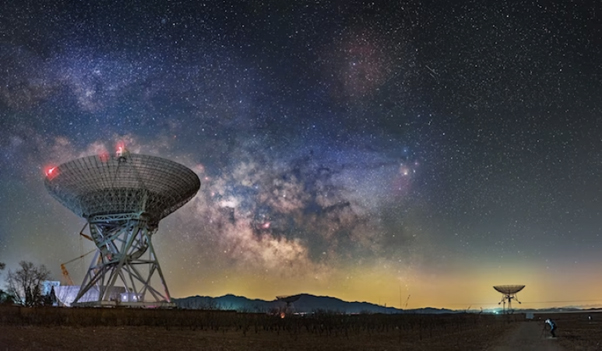
    As the search for another lifeform beyond Earth continues, an alien signal has been beamed to the planet from Mars for the first time. The European Space Agency’s ExoMars Trace Gas Orbiter (TGO) flashed an encoded message to Earth from its orbit around Mars to simulate a situation when a real signal from another civilisation is received by us.

    “Throughout history, humanity has searched for meaning in powerful and transformative phenomena. Receiving a message from an extraterrestrial civilisation would be a profoundly transformational experience for all humankind,” said Daniela de Paulis, the artist behind the ‘A Sign in Space’ project. Search for Extraterrestrial Intelligence (SETI) Institute has brought together a team of international experts, space scientists, and artists to create a project to explore the process of decoding and interpreting an extraterrestrial message.

    Virgin Galactic to launch four people to space

    Nearly two years after it launched its maiden flight to the edge of space, Virgin Galactic is all set for a big mission on Thursday. The Richard Branson-led company will launch six people into suborbital space on the final flight test.While four people will venture into space on the flight named Unity 25, two will pilot the plane after the spacecraft is dropped mid-air for a suborbital take-off. The Unity 25 mission is aimed at making the final assessment of the full manifest of space flight that aims to further strengthen tourism beyond Earth’s boundaries.

    Backed by billionaire Richard Branson, the company had in May last year delayed its commercial service to the first quarter of 2023.The spaceflight missions were delayed due to the supply-chain crisis and labor shortages. During the launch on Thursday, the aircraft will climb to an altitude of 50,000 feet, about 15 kilometers above the surface, before dropping VSS Unity in the air. Unity, once released from the mothership, will ignite its rocket engine to ascend to an altitude of 80 kilometers, acquiring a speed of Mach 3 (three times the speed of sound).
    Neuralink receives FDA approval for human trial of brain-implant device

    Neuralink, Elon Musk’s brain-implant firm, announced that the US Food and Drug Administration (FDA) had given approval for its first human clinical trial. Neuralink envisions the use of brain implants to treat a wide range of conditions, including autism, obesity, depression, and schizophrenia, while also enabling functions like web browsing and telepathy. It is part of an emerging field of brain-computer interface (BCI) technology. BCIs are systems that interpret brain signals and translate them into commands for external devices.

    Over the years, scientists have extensively studied BCI technology, and several companies have developed promising systems with hopes of bringing them to market. Despite Elon Musk’s reassurances, the FDA initially rejected Neuralink’s application in early 2022 due to various concerns that needed to be addressed before human trials could be authorised. According to current and former employees, these concerns primarily revolve around the lithium battery, the potential migration of the implant’s wires within the brain, and the challenge of safely removing the device without causing damage to the brain tissue.

    SpaceX Falcon 9 Launches Four Private Astronauts

    The Axiom Mission 2 (Ax-2), Axiom Space’s second private astronaut mission, successfully launched from NASA’s Kennedy Space Center on May 21. The Ax-2 crew will conduct over 20 scientific experiments on the International Space Station before returning to Earth. Four private astronauts are in orbit following the successful launch of Axiom Mission 2 (Ax-2), the second all-private astronaut mission to the International Space Station (ISS).

    During their time aboard the International Space Station, the Ax-2 astronauts will carry out more than 20 scientific experiments, helping us better understand space radiation, weather in low-gravity conditions, and more,” said NASA Administrator Bill Nelson. “This mission is more proof of NASA’s commitment to help our industry partners develop the next generation of space technology and support a growing commercial space economy.”

    A New Way To Manufacture Lithium-Ion Battery Electrodes

    A research group led by Yan Wang, a researcher from Worcester Polytechnic Institute (WPI), has pioneered a solvent-free methodology for the production of lithium-ion battery electrodes. This novel approach yields greener, more cost-effective, and quicker-charging electrodes compared to those presently available, potentially revolutionizing battery manufacturing for electric vehicles. The team unveiled a dry-print manufacturing technique in the journal Joule, which circumvents the use of harmful solvents and extensive drying periods inherent in traditional electrode production methods that utilize slurries.

    Moreover, the electrodes produced through this method can charge at a faster rate than those created using conventional methods. Current lithium-ion batteries charge too slowly, and manufacturers typically use flammable, toxic, and expensive solvents that increase the time and cost of production. This new solvent-free manufacturing process addresses all the disadvantages of conventional battery by producing electrodes that charge to 78 percent of capacity in 20 minutes, all without the need for solvents, slurries, and long production times.

    Massive US Spiders has a Surprising Survival Trait

    The Joro spider, despite its intimidating size and rapid spread across Southeastern U.S., is surprisingly timid according to a study from the University of Georgia. Contrary to initial speculation, the Joro spider is not aggressive but rather freezes for more than an hour when disturbed, which is significantly longer than most spiders. This spider, originally from East Asia, is believed to have arrived in Georgia around 2013 via a shipping container and has since proliferated across the state.

    Despite their intimidating appearance, the giant yellow and blue-black spiders spreading across the Southeastern U.S. owe their survival to a surprising trait: They’re rather timid. The researchers compared more than 450 spiders’ responses to a brief and harmless disturbance across 10 different species. While most spiders froze for less than a minute before resuming their normal activities, the Joro spiders remained motionless for more than an hour. In fact, Joros are relatively harmless to people, and they won’t bite unless cornered.

    A 100 Million-Year-Old Mystery Unraveled

    Roughly 100 million years ago, a pioneering group of moths began to venture out during the day instead of night, seizing the opportunity presented by flowers abundant in nectar that had evolved alongside bees. This single event sparked the evolution of the entire butterfly species. Since 2019, through extensive DNA analysis, scientists have known the precise timing of this evolutionary shift, debunking a previous theory that suggested the rise of butterflies was a result of pressure from bats following the extinction of dinosaurs.

    Now, scientists have discovered where the first butterflies originated and which plants they relied on for food. Before reaching these conclusions, researchers from dozens of countries had to create the world’s largest butterfly tree of life, assembled with DNA from more than 2,000 species representing all butterfly families and 92% of genera. Using this framework as a guide, they traced the movements and feeding habits of butterflies through time in a four-dimensional puzzle that led back to North and Central America.
    New Type of Battery – The Oxygen-Ion Battery

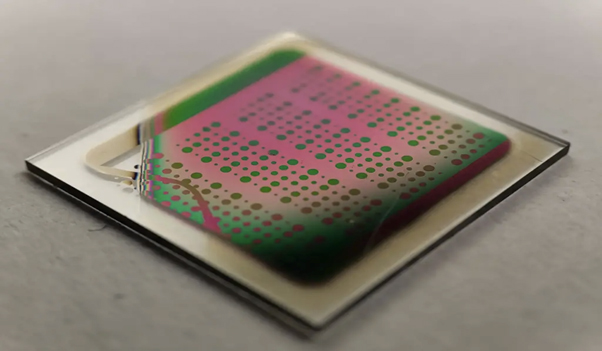
    Lithium-ion batteries, while commonplace in today’s world – powering everything from electric vehicles to smartphones – aren’t necessarily the optimal solution for all applications. Researchers at TU Wien have made a breakthrough by creating an oxygen-ion battery that offers several significant advantages. While it may not match the energy density of lithium-ion batteries, its storage capacity doesn’t diminish irreversibly over time, making it capable of an exceptionally long lifespan.

    These oxygen-ion batteries could provide an outstanding solution for large-scale energy storage systems, such as those required to hold electrical energy from renewable sources. The ceramic materials that the TU Wien team studied can absorb and release doubly negatively charged oxygen ions. When an electric voltage is applied, the oxygen ions migrate from one ceramic material to another, after which they can be made to migrate back again, thus generating electric current.

    -Team ScienceNow

  • ISRO

    The premier Research Institution – India’s Pride…

    “The development of the nation is intimately linked with understanding and application of science and technology by its people.” – Dr. Vikram Sarabhai

    The space research activities were initiated in India during the early 1960’s. Dr. Vikram Sarabhai – the founder of the Indian space programme, envisioned that space research would help address the needs of humankind and lead the nation to progress.

    Inception of Space program

    Dr. Sarabhai summoned brilliant scientists, anthropologists, communicators, environmentalists and engineers from across the nation to build the Indian space programme that focused on building satellites for communication and remote sensing, space transportation system and application programmes. He set up the Thumba Equatorial Rocket Launching Station (TERLS) which pioneered the manufacturing sounding rockets in India. He also initiated Satellite Instructional Television Experiment (SITE) so as to transmit education to remote regions across India. The Government of India set up the Indian National Committee for Space Research (INCOSPAR) under the leadership of Dr. Sarabhai and Dr. Ramanathan. The first Experimental Satellite Communication Earth Station (ESCES) that was set up in 1967 also became a training centre for Indian and international scientists and engineers.

    Setting up of ISRO

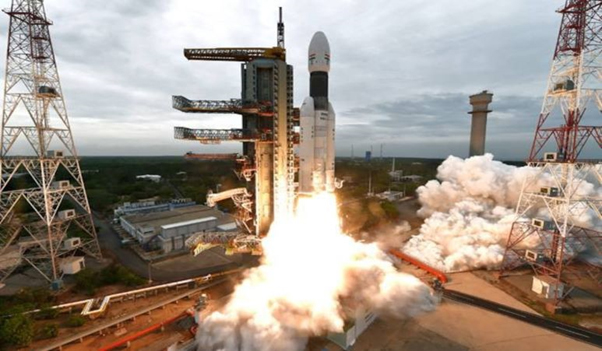
    The time was ripe to harness space technology for India’s development. In 1969, the Indian Space Research Organisation (ISRO) replaced INCOSPAR. The Satish Dhawan Space Centre was formed in Sriharikota, Andhra Pradesh in 1971. The following year, the Department of Space (DoS) was established and ISRO was brought under it. It was now crucial to set up a satellite system that can contribute to the national development. In 1980, ISRO successfully launched its own satellite Rohini-1 from Sriharikota. The launch enlisted India as the eight nation to prove its space technology prowess.

    Leap of success

    Today, space technology in India has brought immense progress and added the nation into an elite club of developed countries. India has become the sixth largest space agencies in the world. ISRO maintains one of the largest fleet of communication satellites (INSAT) and remote sensing satellites (IRS) for reliable communication, earth observation, satellite navigation, climate and environment. ISRO has also developed two satellite launch vehicles – PSLV and GSLV to place satellites in the Earth’s orbits. The vehicles have become favoured satellite carriers by other nations, thereby fostering international associations.

    Contribution towards education

    Apart from technological capability, ISRO has immensely contributed to science and education by initiating several autonomous institutions and research centres, promoting studies in astronomy, astrophysics, atmospheric sciences and space sciences. ISRO’s massive lunar missions (Chandrayaan 1 & 2) and planetary mission (Mars Orbiter Mission) has encouraged scientific study and research, further promoting valuable data to the scientific community.

    Future ready

    With technology as the key to future, ISRO adheres to optimise its development of launchers, human spaceflight projects, reusable launch vehicles, semi-cryogenic engines, orbit vehicles, development and use of composite materials for space applications etc. From the humble beginnings to the massive missions, ISRO has grown as an institution in  space research.

    -Dr Siddhivinayak Barve

    Editor, ScienceNow

  • Solar Energy : Empowering Civilisation

    Whether it be glass knives or arrowheads used in the Bronze Age or jewellery and tableware in late Bronze Age or inexpensive windowpanes and pottery in the Iron Age or exotic stained glass artwork used in Churches through the Middle Ages or transparent solar panels in the Modern times, breakthrough glass manufacturing technologies continue to ‘transform’ and ‘mould’ human civilisation,

    “Why pay hefty electric bill every month? Generate your own electricity at home.”

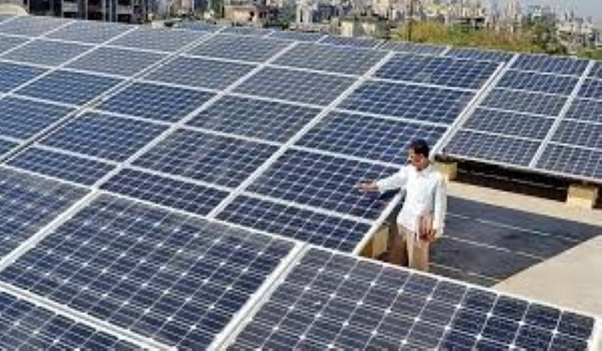
    Don’t be surprised if you happen to see this ad coming up shortly in any newspaper or digital media. Because harvesting solar energy directly from transparent glass windows, rooftops, building walls, smartphones, car roofs… is going to be soon possible. Heliatek GmbH, a German company, has developed partially transparent solar panels which absorbs 60% of the sunlight it receives, and converts it into electricity. The company claims that these panels achieve 7.2% energy efficiency as compared to 12% efficiency delivered by most conventional solar photovoltaic panels. As researchers continue to look for solutions to increase ‘energy efficiency’ and ‘transparency’ of these glass panels, what’s really exciting is the fact that transparent solar panels could soon be mass produced at the cost of regular glass sheets.

    If ever we begin to harness this ‘green energy’ on a large scale in the near future, it wouldn’t be the first time that the wonder substance ‘glass’ would have helped usher in a new revolutionary transformation. Looking back into history, one realises that centuries-after-centuries if there was one substance on earth that has ‘transformed’ and ‘moulded’ the growth and advancement of human civilisation, it was ‘glass’. Ever since mankind accidentally discovered glass some 3600 years ago in Mesopotamia (i.e. coastal north Syria) in the form of glass beads (i.e. a slag by-product during metal work), it has continued to amaze us all through its sheer ‘adaptability’ and ‘versatility’.

    In the Bronze Age…

    Since 30th century BC, the Egyptians obsession for glass led to some rapid growth in glassmaking technology. Coloured glass had grown into a craze and prized possession of the elite class were glass vessels, coloured and shaped glass items, hardglass carvings, ubiquitous beads, etc. This civilisation perfected the art of extracting glass from the ashes (i.e. soda ash) of many seashore plants. Several communities in Western Asia closely guarded their unique manufacturing techniques. Commonly used for production of knives, arrowheads, jewellery and money, by the 15th century BC, glass making grew into being an established industry across Western Asia and Egypt.

    In the late Bronze Age…

    It was around the 9th century (late Bronze Age), the technique of making colourless glass was discovered and craftsmen started using glass to make artistic tableware. By the 6th century the glass making industry started use of moulds for inlays to shape glass and the first glass making ‘manual’ known to mankind dates back to 650 BC.    

    In the Iron Age…

    Somewhere in the 4th – 5th century BC, a Roman merchant happened to rediscover a translucent liquid oozing out of the sand while preparing meals on the beach. This led to the discovery of a new manufacturing technique of producing glass using white silica sand. This new source of raw material led to development of the revolutionary ‘glass blowing’ manufacturing technique during the first century BC. Glass vessels were now inexpensive compared to pottery vessels, and it is said that glass became the Roman plastic being used by masses.

    In the Classic Middle Age…

    It was the Romans (around 100AD) who began to use glass for architectural purpose, and cast glass windows of poor opacity appeared in the most important buildings in Rome. Over the next 1000 years, glass making flourished in the Roman Empire and spread from Italy to all countries across Europe. Throughout Europe the churches and cathedral saw the fine art of making stained glass achieve miraculous height till about 14th Century. The first glass factory in the United States was built in Jamestown, Virginia in 1608.

    India was also at the forefront of the glass technology in South Asia since 16th Century. Indian artisans who were masters in glass moulding, decorating and colouring techniques, benefited tremendously from the new manufacturing techniques developed in Western Asia and Europe owing to its Greco-Roman connect.

    -Dr Siddhivinayak Barve

    Editor, ScienceNow Digital

  • Solar Roads – A Reality Check!

    Following the failure of “solar road” in France, the question arises: will such kind of technology ever work in the future? Read further to know more…

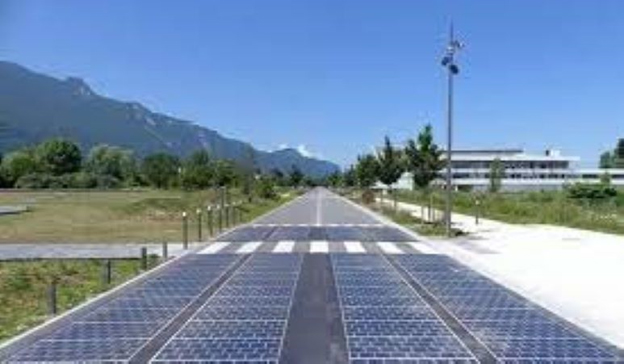
    France’s dream of creating the world’s first 1000km of highways with solar panels has come to end with the failure of a trial “solar road” in Normandy, France. The 1km long test solar road that was flagged-off with much fun-fair by former French environment minister near the small town of Tourouvre-au-Perche in the Orne, have deteriorated to such an extent that it has failed to generate enough electricity as planned.

    Reports say that the solar panels were unable to withstand thunderstorms and heavy vehicles and created too much of noise for the local residents. The photovoltaic panels just ripped off in many places and in some places they were beyond repairs and so had to be removed. Secondly, in the first few months, the highest amount of energy generated from the solar road hit only half their stated goal

    So what is a Solar Road?

    We have always been complaining about the state of our roads, even more as maintaining them has become a costly affair given the price of the construction materials touching the sky. Therefore there is an urgent need to find a solution to this conventional system. The solar road is an intelligent road that offers clean renewable energy along with safe driving conditions, electricity and enormous data for various purpose. Interestingly the solar road will fund for itself by generating electricity, and the same money can be used to maintain or rebuild new solar roads. Also, as coal-fired or nuclear power plants will no longer be used, the same money can be ploughed into making solar roads.

    How do Solar Roads work?

    A solar road is made up of a series of solar panels that can be driven upon. The idea is to replace asphalt roads, parking lots and driveways with solar road panels so that energy generated by them can be used by the homes and offices, while the excess energy can be stored for future use. This way renewable energy can replace use of fossil fuels such as coal, gas, etc. that are currently being used to produce electricity as this will cut down greenhouse gases and help in sustainable development. 

    What are the advantages of Solar Roads?

    The biggest advantage solar roads have is they utilize renewable source of energy to produce power. It can reduce dependence on conventional forms of energy to a greater extent. Moreover, the lifespan of solar panels is more than 20 years, while that of asphalt road is not more than 7 years or so. Some other uses are:

    • Military emergency: During military emergency or natural disaster, solar roads will provide necessary power. Since solar power is renewable it will not require external connection to an artificial power source.
    • Environmental-friendly: Solar power production generates electricity from the sun, which is renewable. So, it will have limited impact on the environment as compared to other forms of electricity.
    • Aesthetic look: By adding LEDs beneath the transparent panel, the road can be lightened up for safe night travel and aesthetic look.

    Construction of Solar Roads

    • Surface layer: The top layer used for solar panels has to be luminous and tough, yet rough enough for the vehicles to provide traction. Importantly, it has to pass through to the solar collector cells implanted inside along with LEDs and other heating components. The layer should be able to handle heavy loads and withstand any weather conditions to protect the electronics layer laid beneath the road surface.
    • Electronics layer: To absorb solar energy, the electronics layer contains photovoltaic cells. The cells are attached to a microprocessor board for detecting loads on the surface and regulating a heating element along with controlling lighting, communications, monitoring, etc.
    • Base layer: While the energy is collected from the sun through the electronics layer, it is the base plate layer that delivers electricity as well as data signals (phone, TV, internet, etc.) to all homes and offices linked to the solar roads. Importantly it needs to be durable to protect the electronics layer above it.

    Still a long way…

    So what’s holding policymakers and industry leaders from getting behind this idea? Of course! It wouldn’t be cheap to pave all of the roads in a country like India with solar roads. In fact it would be cheaper to build coal-fired power plants producing same amount of electricity as compared to solar roads since the initial cost is quite absorbent. That’s a huge investment for a concept that is yet to see the light!

    Although many countries are trying to build a prototype, there are still many questions that remain to be answered: Can the solar road panels deliver the kind of energy that would make them cost-efficient? Would the roads be able to support load of the constant flow of traffic? Would the glass surfaces create any issues for drivers at high speeds in adverse weather conditions? Once these issues are sorted out, it is only a matter of time before the first solar roads become operational!

    Manoj Mahanta

    Team ScienceNow