science share account_circle

Author: sn_admin

  • Riddles

    Fun.. Solve these Riddles…

    -When the son of water returns to the parent, it dies. What is it?

    Ice


    -Many have heard it, but nobody has ever seen it. It will not speak back until spoken to. What is

    it?

    An echo


    -What is black when you buy it, red when you use it and grey when you throw it away?

    Charcoal

    There is a place where if even I stand up straight, I will still be considered sideways?

    The equator


    -What sleeps through the day and cries through the night? The more it cries, the more it creates

    light?

    Candle


    -Team ScienceNow

  • Science Smiles…

    In the Lighter Side….

    Team ScienceNow

  • QUIZ

    Test your Grey matter…

    1) Potassium nitrate is used in _________

    1. Salt B. Fertilizer C. Medicine               D. Glass

    2) Which of the following has the smallest egg?

    1. Homo sapiens B. Ostrich C. Humming bird        D. Pigeon

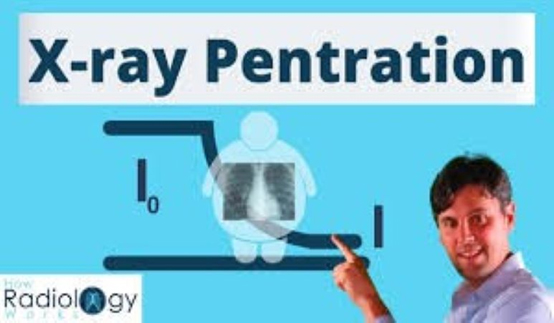
    3)  X–rays cannot penetrate through a sheet of __________

    1. Aluminium B. Paper                   C. Lead                    D. Wood

    4) The purest form of carbon is _________

    1. Sugar charcoal B. Animal charcoal      C. Coconut charcoal    D. Wood charcoal

    5) The acid used in car battery is _________

    1. Nitric acid B. Citric acid              C. Sulphuric acid         D. Hydrochloric acid

    6) Bleaching powder is produced from- __________

    1. Calcium and Oxygen.
    2. Sodium, Hydrogen and Oxygen.
    3. Calcium, Oxygen and Chlorine.
    4. None of these.

    7) Which is not a rare gas? ___________

    1. Helium.
    2. Argon.
    3. Neon.
    4. Radon.

    8)Which is the allotrope of carbon? _____________

    1. Diamond.
    2. Gold.
    3. Silver.
    4. Copper.

    9)Amalgam is a mixture of metal with- _____________

    1. Mercury.
    2. Gold.
    3. Iron.
    4. None of these.

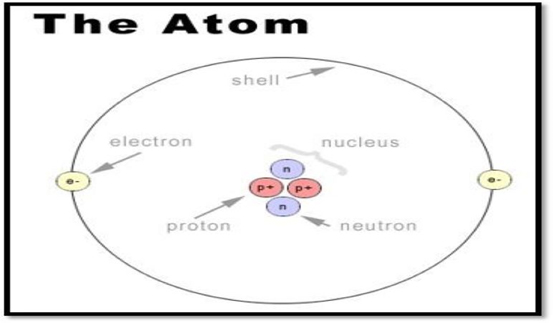
    10)The lightest and simplest atom is- ______________

    1. Oxygen.
    2. Hydrogen.
    3. Nitrogen.
    4. Carbon dioxide.

    11) The gas usually filled in the electric bulb is ___________.

    1. Nitrogen
    2. hydrogen
    3. carbon dioxide
    4. Oxygen


    12) Which of the gas is not known as greenhouse gas?

    1. Methane
    2. Nitrous oxide
    3. Carbon dioxide
    4. Hydrogen

    13) The hardest substance available on earth is

    1. Gold
    2. Iron
    3. Diamond
    4. Platinum


    14) The average salinity of sea water is

    1. 3%
    2. 3.5%
    3. 2.5%
    4. 2%


    15) Heavy water is _____________

    1. deuterium oxide
    2. PH7
    3. rain water
    4. tritium oxide


    16) Artificial silk is prepared from ___________.

    1. Wood pulp
    2. Wool
    3. Synthetic fibres
    4. Phloem fibres


    17) Silviculture is study of __________.

    1. Fish rearing
    2. Planned forestry
    3. Garden plants
    4. Silkworm rearing


    18) The metal present in haemoglobin is _________.

    1. Magnesium
    2. Iron
    3. Copper
    4. Zinc


    19) _________ is used to produce artificial rain.

    1. Sand
    2. Silver iodide
    3. Silver nitrate
    4. Copper oxide


    20) Tannic acid is present in ________.

    1. Sour milk
    2. Tea
    3. Grapes
    4. Lemon

    -Team ScienceNow


    Answers

    1) C     2) A     3) D     4) A     5) C   6) C    7) D    8) A  9) A 10) B

    11) A  1 2) D  1 3) C  1 4) B  1 5) A  C 16) B 17) B  18) C   19) B 20) B

  • Science Calendar JUNE

    Find what happened in Science in the month of June…

    June 1: 1869 – Thomas Edison obtained a patent for an electrographic vote recorder.


    June 2 1857 – James Gibbs patented the first chain-stitch single-thread sewing machine.

                1896 – Guglielmo Marconi receives a patent for his newest invention – the radio.

    2003 – Europe launches its first voyage to Mars from the Baikonur space centre in Kazakhstan.


    June 4: 780 BC – The first historic solar eclipse is recorded in China.


    June 5: 1934 – Dr. Frederick Banting, the co-inventor of insulin was knifed.


    June 6: 1887 – J. S. Pemberton’s Coca Cola label was trademark registered.


    June 7: 1953 – The first colour network telecast in compatible colour was broadcasted from a station in Boston.


    June 8: 1869 – Ives McGaffey patented a carpet sweeping machine, the first patent for a device that cleaned rugs.


    June 9: 1953 – John Kraft was granted patent for the ‘manufacture of soft surface cured

      cheese’.


    June 10: 1952 – The polyester film Mylar was trademark registered.

    2003 – The Spirit Rover is launched, beginning NASA’s Mars Exploration Rover mission.


    June 11: 1895 – Charles Duryea patented a gasoline-powered automobile.


    June 12: 1944 – Marvin Camras was granted patent for the magnetic tape recorder.


    June 14: 1927 – George Washington Carver received a patent for a process of producing paints

                    and stains.


    June 15: 1844 – Charles Goodyear was granted patent for vulcanised rubber.

    1667 – The first human blood transfusion is administered by Dr. Jean-Baptiste Denys. He transfuses 350 ml of sheep blood to a 15-years old boy.


    June 17: 1980 – Atari’s ‘Asteroids’ and ‘Lunar Lander’ are the first two video games to be

        copyright registered.


    June 18: 1935 – Rolls-Royce was trademark registered.

    Gravity Probe A, a satellite-based experiment to test Albert Einstein’s theory of general relativity is launched.


    June 19: 1900 – Michael Pupin granted a patent for long-distance telephony.

    : 1940 – ‘Brenda Starr’, the first cartoon strip by a woman, appeared in a Chicago newspaper.


    June 20: 1840 – Samuel Morse was granted a patent for telegraphy signals.


    June 21: 1834 – Cyrus McCormick of Virginia patented the reaper for the cultivation of grain.


    June 22: 1847 – The donut was invented.


    June 23: 1964 – Arthur Melin was granted a patent for his Hula Hoop.


    June 24: 1963 – The first demonstration of a home video recorder took place at BBC Studio in

        London, England.


    June 25: 1929 – A patent was granted to G. L. Pierce for basketball.


    June 27: 1929 – The first colour television was demonstrated in New York City.


    June 28: 1956 – First atomic reactor built for private research starts operations in Chicago.


    June 30: 1896 – William Hadaway was issued a patent for the electric stove.


    -Team ScienceNow

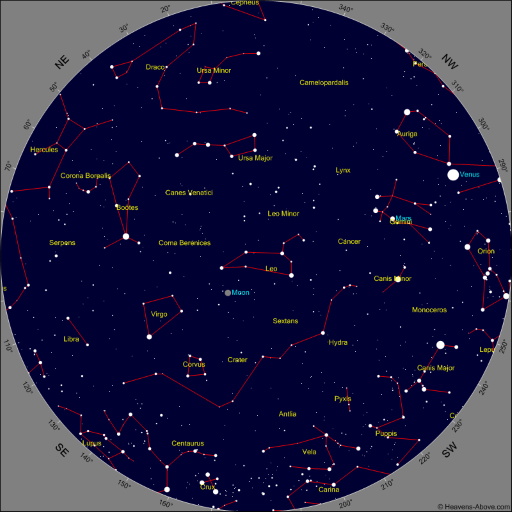
  • Star Chart – June

    Take a look at the sky above…

    This star chart is for early  June  9 pm mid  June 8 pm and end  June 7 pm .

    To use this chart, hold the star chart vertically ,face any direction in the sky.

    Turn the star chart around so that the direction you are facing is at the bottom.

    Monthly phases

    Full moon

    04 June 2023 09:12

    Last quarter

    11 June 2023 01:01

    New moon

    18 June 2023 10:07

    First quarter

    26 June 2023 13:20

    Now, the stars shown at the bottom in the chart are the stars you will see in the sky .

    Dots represent stars. The larger the dot the brighter the star.

    Lines between stars are imaginary and aid location .

    Names of constellation are  along each side 

    Suhas B. Naik-Satam

    Nehru Planetarium

  • Hit or Miss…

    The Jet Propulsion Laboratory’s Centre for Near-Earth Objects (NEO) maintains a list of objects that may come close to Earth to understand the potential risk…

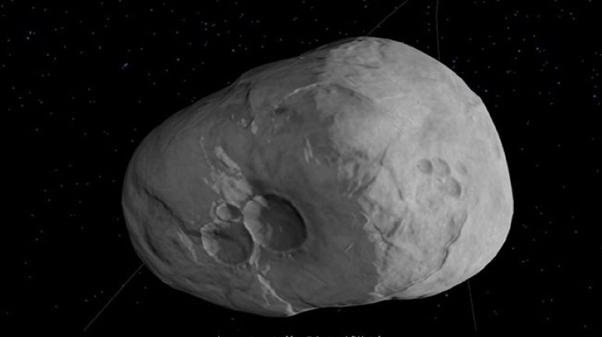
    National Aeronautics and Space Administration (Nasa) telescopes have found two 120-feet asteroids coming closer to the Earth…

    Asteroids are celestial bodies that came into existence during the early formation of the solar system. They are primarily found in the asteroid belt

    They can come very close to Earth and in case of a strike, asteroids can be very dangerous.

    Two such asteroids, 2023JK, 2023 JD4 around 120 feet in size travelling at a speed of over 30000 Km per hour are approaching Earth

    At their closest distance they will pass from a distance of around a million and two miles from the Earth.

    Asteroids approaching Earth always make headlines because a collision with one could result in a massive disaster for human life. 

    Such a dash by asteroids have led to the extinction of Dinosaurs

    NASA’s dashboard tracks asteroids and comets that will make relatively close approaches to Earth. The dashboard displays the date of the closest approach, approximate object diameter, relative size and distance from Earth for each encounter. It tracks asteroids that are within 7.5 million kilometres of Earth…

    Last month such threat was there as Earth has escaped being hit by an asteroid of sizable size… All such objects are tracked by NASA… and projected that there is no immediate threat to Planet Earth…

    -Dr Siddhivinayak Barve

    Editor, ScienceNow Digital

  • Editorial

    Greetings from Science Now Digital….

    It is summer Time… The weather is a bit more warmer.. the terrible heat.. and the temperatures are all time high.. it is an alarming situation…

    It is still more alarming as India becomes the most populous country in the world.. Beating China now we are Number one.. in Population.. is it a boon or bane.. however the other side is that we are the youngest nation in the world and thus there is an opportunity.. to be the leading productive working force in the world.. It is also a concern at the same time in terms of providing food, education and health.. The task is to convert the billion hands into a colossus..

    Again to speak of environment, the El Nino Year is here.. the warm air currents is the cause of adverse weather pattern.. Hot weather, never experienced before and paradoxically the hailstorms in some regions is a strange Climate.. Proper care has to be taken to combat the ill effects of El Nino…

    As we technologically advance, there is more urge to reach to newer heights.. The effort of the SpaceX to take mankind beyond moon to mars and galaxy was shattered as there was mid air explosion of the most ambitious rocket ever made. There are conflicting claims as to whether it is a success or failure.. imagine if there were cosmonauts on board..

    ScienceNow Digital is committed to bring all such latest stories in most interesting way… Since we launched ScienceNow Digital is settling in format… gaining momentum… connecting teens to Scientists providing science platform for networking… Science Now Digital is leaping ahead..

    Let us commit ourselves to face the future and ScienceNow Digital will unfold it for you…
    ..and that is the Promise…

    Scientifically yours

    Dr SiddhivinayakBarve
    Editor,
    ScienceNow Digital


  • Science News

    Learn the latest happenings in Science..

    Researchers Discover Massive 900-Feet-Deep Blue Hole in Mexico

    The second-deepest blue hole in the world has been discovered off the coast of the Yucatan Peninsula in Mexico. The giant, underwater cavern is about 900 feet deep and has an area of 147,000 square feet. It is located in Chetumal Bay. As per Discovery.com, blue holes are home to ancient limestone caves carved into the ocean floor. Due to an accumulation of dead bacteria from fallen trees and leaves, these lesser-known inland blue holes are black in appearance and devoid of light. From the surface, they appear as nothing more than swamps, but what lies beneath is incredible.

    Dubbed Taam ja’ – which means “deep water” in Maya, these blue hole has little oxygen and sunlight only shines on the surface. Even with these conditions, these gigantic voids are teeming with life that has adapted to the low-oxygen environment. It is the second deepest known blue hole in the world, after the Dragon Hole in the South China Sea which is believed to extend down some 980 feet, according to the study. Blue holes may offer a snapshot of what life was like thousands of years ago. It may also tell us more about life on other planets.

    An Indian Space Startup to Test Electric Propulsion for Satellites

    Bengaluru-based space startup Bellatrix Aerospace will send its experimental payload, Hall-effect thruster (HET), on Polar Satellite Launch Vehicle-C55 on April 22, 2023. The ARKA-series HET, which will demonstrate the solar electric propulsion engine for small satellites, will be flying in the PSLV Orbital Experimental Module (POEM), where the Indian Space Research Organisation (ISRO) uses the final stage of the rocket as an orbital platform to carry out experiments in orbit.

    The HET developed by Bellatrix imparts a very high specific impulse or mileage when compared with conventional rockets, reducing the dependence on traditional fuels such as hydrazine, which is very toxic and carcinogenic. With this launch, Bellatrix would be in a position to validate the indigenisation capabilities across the spectrum for all the subsystems that have gone into it. The POEM component of a PSLV derives the power from the solar panels mounted around the PS4 tank and a Li Ion battery. It navigates using four sun sensors, a magnetometer, gyros and NavIC, and carries dedicated control thrusters using a helium gas storage, and it is enabled with the telecommand feature.

    India Approves National Quantum Mission

    The government today approved the National Quantum Mission to nurture and scale up scientific and industrial research and development in quantum technology. The mission involves a cost to Rs. 6,00,365 crore from 2023-24 to 2030-31. The National Quantum Mission (NQM will accelerate quantum technology-led economic growth and nurture the ecosystem in the country. India will be the sixth country to have a dedicated quantum mission after the US, Austria, Finland, France and China.

    The new mission targets developing intermediate scale quantum computers with 50-1000 physical qubits in eight years in various platforms like superconducting and photonic technology. It will also support design and synthesis of quantum materials such as superconductors, novel semiconductor structures and topological materials for fabrication of quantum devices. It will provide a huge boost to National priorities like Digital India, Make in India, Skill India and Stand-up India, Start-up India, Self-reliant India and Sustainable Development Goals (SDG).

    Pentagon Says UFO Sightings Could Be Probes From An Alien MothershipPentagon officials said in a draft document that recent UFO sightings could be alien space probes sent to Earth from a giant ‘mothership’. The draft research is authored by Sean Kirkpatrick, the director of the Pentagon’s All-Domain Anomaly Resolution Office (AARO) and Avi Loeb, chairman of Harvard University’s astronomy department.

    Mr Loeb in the draft paper said that the interstellar objects such as the cigar-shaped “Oumuamua” that scientists spotted flying through the galaxy in 2017 “could potentially be a parent craft that releases many small probes during its close passage to Earth.” The authors then compared the probes to “dandelion seeds” that could be separated from the parent craft by the sun’s gravitational force. “Habitable planets would be particularly appealing to extra-terrestrial trans-medium probes, capable of moving between space, air and water,” the authors wrote in the paper.

    Astrophotographer Captures 60,000-Mile-Tall ‘Wall of Plasma’ On The Sun

    Argentina-based astronomer Eduardo Schaberger Poupeau captured a structure that looked like a wall of plasma on the surface of the sun. The pictures of the sun were clicked by the astrophotographer shows an enormous wall of plasma falling down toward the sun’s surface at fast speeds, according to LiveScience. Mr Poupeau used specialised camera equipment to capture the striking image. The plasma wall rose some 100,000 km (62,000 miles) above the solar surface. That is as tall as around eight Earth stacked on top of one another.

    According to reports these structures have been seen on the sun many times before. They frequently appear in rings around the sun’s poles, and are called Polar Crown Prominences (PCP). The PCPs are similar to normal solar prominences, which are loops of plasma, or ionized gas, that is ejected from the solar surface by magnetic fields. However, PCPs occur near the sun’s magnetic poles at latitudes between 60 and 70 degrees North and South, which often causes them to collapse back towards the sun because the magnetic fields near the poles are much stronger, according to NASA. This collapse back to the sun has earned them the nickname “plasma waterfalls.”

    NASA Unveils Mars Habitat On Earth For Year-Long Experiments

    Every space enthusiast wonders what a Martian house may be like. The independent space agency of the United States, the NASA has unveiled a 3D-printed housing for a future Mars expedition in an effort to partially allay that curiosity. In the house NASA created to mimic the Martian climate, volunteers rather than astronauts will reside and experience it. This is a 3D-printed Mars simulation habitat in which, in the coming months, the volunteer crew, who are not astronauts, will enter to live and experience.

    The volunteers will live inside a 1,700-square-foot home, dubbed “Mars Dune Alpha,” which includes two bathrooms, a vertical farm to grow salad, a room dedicated to medical care, an area for relaxing, and several workstations. The members of the first experiment team have yet to be named, but the agency stated that selection “will follow standard NASA criteria for astronaut candidate applicants,” with a heavy emphasis on backgrounds in science, technology, engineering, and math.

    NASA is in the early stages of preparation for a mission to Mars, though most of the agency’s focus is on the upcoming Artemis missions, which aim to return humans to the Moon for the first time in half a century.

    Scientists Use Bacteria To Convert CO2 In The Air Into Bioplastic

    Carbon dioxide emissions from the energy sector reached a new high last year, although the impact of rising coal and oil use was mitigated by the development of more eco-friendly technologies like solar energy and electric vehicles. Scientists have been involved in finding the solution to this pollution problem, and it appears that the experts have come up with an environmentally acceptable alternative.

    At the Korea Advanced Institute of Science and Technology (KAIST), a group of chemical engineers has created a prototype system in which a well-known bacterium may transform carbon dioxide from the atmosphere into a useful bioplastic, resolving two global issues simultaneously.

    This hybrid system linked the electrochemical CO2 conversion and microbial bioconversion methods together. The team developed a technology to produce bioplastics from CO2 by linking electrochemical conversion technology with a bioconversion method that uses microorganisms. This electrochemical-bio hybrid system is in the form of an electrolyzer, in which electrochemical conversion reactions occur, connected to a fermenter, in which microorganisms are cultured.

    A New Recyclable Plastic That Isn’t Derived From Crude Oil

    A new type of plastic has just been created by researchers at Boise State University in the US that, unlike other plastics, is not made from crude oil and its byproducts. Boise State University in Idaho have used ethyl cyanoacrylate -the main ingredient in super glue – to create a plastic that could replace polystyrene, which is commonly used in yoghurt pots, disposable cups, and cutlery and accounts for 6 percent of plastic waste.

    The scientists explained the process, saying ethyl cyanoacrylate can be made from formaldehyde, which in turn can be made from carbon dioxide. When super glue is exposed to moisture, ethyl cyanoacrylate molecules bond to form polymer chains, but the reaction is so fast that you only get short chains. The researchers created a way to slow that process down in order to form longer polymer chains and therefore a stronger material, known as poly (ethyl cyanoacrylate), or PECA.

    Webb Telescope Discovers Oldest Galaxies Ever Observed

    The James Webb Space Telescope has discovered the four most distant galaxies ever observed, one of which formed just 320 million years after the Big Bang when the universe was still in its infancy. The galaxies date from 300 to 500 million years after the Big Bang more than 13 billion years ago, when the universe was just two percent of its current age.

    That means the galaxies are from what is called “the epoch of reionisation,” a period when the first stars are believed to have emerged. The epoch came directly after the cosmic dark ages brought about by the Big Bang. All four galaxies are “very low in mass,” weighing roughly a hundred million solar masses. The Milky Way, in comparison, weighs 1.5 trillion solar masses by some estimations.

    The Webb telescope has unleashed a torrent of scientific discovery since becoming operational last year, peering farther than ever before into the universe’s distant reaches — which also means it is looking back in time.

    NASA, SpaceX Launches Device To Monitor Air Pollution From Space

    NASA has launched an instrument that will improve how scientists observe air quality from space. The American space agency in collaboration with Elon Musk’s launched an air-quality monitor called TEMPO or Tropospheric Emissions Monitoring of Pollution Instrument.

    The NASA-Smithsonian instrument TEMPO is the first space-based tool to monitor major air pollutants hourly in high spatial resolution – down to four square miles – in a region stretching from the Atlantic to the Pacific and from the Canadian Oil Sands to below Mexico City, encompassing the entire continental United States.”

    The American space agency said that TEMPO would provide hourly, daytime measurements of air quality in North America. It will monitor three main pollutants and reveal disparities in exposure in our cities and communities. A unique feature of TEMPO, which is about the size of a washing machine and has been described as a chemistry laboratory in space, is that it will be hosted on an Intelsat communications satellite in geostationary orbit.

    A New Non-Antibiotic Method to Cure Drug-Resistant Infections

    The effectiveness of antibiotics and antivirals has been in danger for some time as a result of the emergence of germs that are resistant to a number of antimicrobial therapies that used to work.

    But now that a novel chemical has shown promising results in treating staphylococcus infections in people with cutaneous lymphoma, researchers may have discovered the solution. This is great news for the patients and for the threat of antibiotic resistance around the world.

    Researchers from the University of Copenhagen have discovered an unique enzyme that can be used to destroy Staphylococcus aureus, sometimes known as golden staph. It is a common bacterium that grows on the skin or in the nose and has developed drug resistance. Antibiotic resistance is an increasing problem, especially on a global scale. And when you have this relatively simple infection that suddenly cannot be treated with antibiotics, the situation can turn serious, sometimes life-threatening.

    US Scientist Living Underwater for 100 Days Claims to Have Discovered “Brand New Species”

    A scientist who has been living underwater for almost a month now claims to have discovered a new species. Professor Joseph Dituri of the University of South Florida, who is also known as “Dr. Deep Sea” on social media, is attempting to break a world by spending 100 days in a habitat 30 feet (9 meters) below a Florida lagoon, and testing how the body reacts to long-term exposure to extreme pressure. However, one month into the experiment his team may have unexpectedly made a different scientific finding.

    “We found a single-cell ciliate, a single-celled organism that we believe is a brand new species to science,” Dr Dituri told The Independent. “People have dived in this area thousands and thousands of times- it’s been here, we just didn’t look,” he added.

    The specimen will continue to be examined by microbiologists to confirm that it is a new species. It is one of the many discoveries Dr Dituri is hoping to make by spending an extended amount of time beneath the waves, diving in the surrounding area and conducting experiments in a small lab set up in a 100-square-foot underwater capsule, he said.

    -Team ScienceNow Digital

  • Most Populous

    IT is a demographic Change… World has grown with assumption that the most Populous Country on the earth is China..Now the situation is different. The UN Report has brought to the fore that Now the most Populous country in the world is India….

    Too many

    India has overtaken China to become the most-populous country in the world. With 142.86 crore people, marginally ahead of China at 142.57 crore, India is on track to be the world’s most populous country.

    Acccording to UN World Population Prospects published in 2022, by 2050, India’s population would reach 166.8 crore, far exceeding China’s declining population at 131.7 crore.

    Population Surge

    If we take a look at the population surge In 1950, India was at 86.1 crore, while China was at 114.4 crore.

    India’s population is expected to grow further for the next three decades after which it will begin declining.

    According to the report, the average life expectancy at birth for males in India is 71 years while for females it is 74 years. India’s total fertility rate (births per woman in the reproductive age) is estimated at 2.0.

    The global population has touched 8 billion and according to the new UNFPA report, it is growing at its slowest rate since 1950, moreover it has fallen under 1 per cent in 2020.

    Blessing in disguise?

    According to the UNFPA’s State of World Population Report 2023, 68 per cent of India’s total population is between the ages of 15 and 64 years, which is considered the working population of a country. About 25 per cent is between 0-14 years; 18 per cent between 10 and 19 years, 26 percent between 10 and 24 years, and 7 per cent above 65 years.

    As the world reaches 8 billion people, India’s 1.4 billion people could be seen as as 1.4 billion opportunities, As India with the largest youth cohort, its 254 million youth in the age group of 15 to 24 years can be a source to reckon with.

    Concern

    India’s “population explosion” is certainly a cause of concern

    The growing population is indeed a cause of concern in terms of economic issues, environmental, Health and Education

    The most significant aspect about India’s population is the young and working population is larger than the population which needs care

    Population Boom

    The demographic shift is attributed to fertility rate which accounts to the rise and fall in the population India’s current fertility rate is 2 which has come down from over 3.4 in 90s

    The statistics shows that the rise in population is more in North than South India.

    The population is expected to grow before declining which is due to momentum of population

    India’s population is expected to peak by 2060

    Youngest Nation

    Indias workforce is expected to be around 1 billion, one in every eight of world population, is considered as an asset as a workforce of the world.

    Young English-speaking, digitally literate massive workforce is considered as a big resource, which can be realised by proper planning and policies to convert it into an opportunity

    The current average age of India is just 28 which is decade lesser than China

    Challenge

    IT is a two pronged war for India as India needs people who have the skills to fill some of the high-value jobs and an economy that produces these high-value jobs.

    Poverty should be addressed with utmost urgency, there are too many mouths to feed and the jobs should be made available for the working hands

    Most of the India’s population relies on Agriculture, the youth should be provided with the jobs in Industries or the Service Sector

    India Needs to strengthen the policies to convert the population as a Force

    With Over a Billion dreams and million aspirations… the population should be made an asset than the liability


    -Dr SiddhivinayakBarve

    Editor, ScienceNow Digital

  • El Nino Effect

    El Nino is accompanied by high air pressure in the western Pacific and low air pressure in the eastern Pacific. Developing countries that depend on their own agriculture and fishing are usually most affected….

    El Nino Effect

    El Ninois the warm phase associated with a band of warm ocean water that develops in the central and east-central equatorial Pacific Ocean. The cycle of warm and cold sea surface temperature of the tropical central and eastern Pacific Ocean affects the weather including Monsoon.

    IMD Alert

    According to the India Meteorological Department There is a nearly 70% probability of an El Nino developing this monsoon,

    IMD’s has issued a renewed assessment with El Nino probability projected to be a bit less, however the threat looms large and the alerts are issued to take appropriate actions to protect from the ill effects of El Nino

    El Nino is strengthening concerns that the weather phenomenon could threaten agricultureIndia being the agrarian country the effect of El Nino effect are severe.

    Agarian Economy

    Monsoon is the lifeblood of the world’s fifth-largest economy. Nearly half of the country’s net-sown area lacks irrigation access, making the rain-bearing system vital.

    With an El Nino almost certain to arise, the Govt is taking appropriate action to to prepare region-specific mitigation plans

    Between 2001 and 2020, India saw seven El Nino years. Of these, four resulted in droughts. These years also saw Kharif or summer-sown farm output decline tremendously. Kharif harvests account for nearly half of the country’s annual food supply.

    In 1997, India faced the strongest El Nino ever, but the monsoon was normal

    The country is counting on another weather phenomenon, a positive Indian Ocean Dipole which is the temperature difference which tends to boost the rains and thwart an El Nino.

    In 2009, when the country had its worst drought in three decades, the nation managed to produce a million more tonnes of food grains than it did in 2007, a normal monsoon year.

    The country’s food output has risen sharply from about 50 million tonnes to 323.5 million tonnes during 2022-23, keeping pace with population growth.

    Effect

    El Nino is the weather pattern triggered by a warming of the eastern equatorial Pacific Ocean, causes climate chaos across the globe and, often, drought in India.

    Due to monsoon-disrupting weather pattern

    The specific advisory is issued to India’s 700-odd districts based on different rainfall scenarios.

    The probability of El Nino is forecastedin the June, July, August the intensity may rises to 80% in July, August and September season.

    Yet, a drought still drives up inflation, erodes farm incomes and hurts the overall economy.

    Forecast

    IMD’s forecast of a normal monsoon on the lowest of the lower side.

    The US Met Department has announced increase in the El Nino effect

    The 2023 El Nino is expected to develop following a triple dip La Nina event

    La Nina is the opposite of El Nino and is characterised by cooler currents in the equatorial eastern Pacific.

    In any case El Nino is developing and better to be prepared to face it..

    Dr Siddhivinayak Barve

    Editor, ScienceNow Digital