
science share account_circle

Author: sn_admin

  • Heliocentrism – The Theory of the Solar System

    Through centuries science and its theories have defined and analysed numerousoccurrences right from the formation of an atom to the latest artificial intelligence. We bring to yousome of the theories that revolutionized the world of science….

    In astronomy, heliocentrism is the theory that the Sun is at the center of the Universe or the Solar System.The word is derived from the Greek word Helios meaning Sun; and kentron meaning “Center;. This theorywas a sharp contrast to the earlier understanding which placed the Earth at the center, called geocentrism.

    The theory that the Earth revolves around the Sun and rotates on its axis had been proposed as early asthe 3rd century BC by Greek astronomer, Aristarchus of Samos. This was a dangerous assertion at thetime and being denounced as against religion, could not win over supporters of the geocentric model. Sowhile the sphericity of the Earth was widely recognized in Greco-Roman astronomy from at least the 4thcentury BC, the issue did not assume any importance, however, for nearly 2,000 years. In fact, the Earthsdaily rotation and yearly orbit around the Sun was never universally debated until the CopernicanRevolution.

    The Copernican Revolution

    Nicolaus Copernicus explained that the sun is at the centre of the universe and we move around it alongwith all the other planets. This is called the Heliocentric Model which was published in his manuscript, “Onthe Revolutions of the Celestial Spheres”. His observations, confirmed the heliocentric theory byAristarchus, who attributed the annual reappearance of the constellations in the same celestial position tothe Earth orbiting the Sun. This, and periodic reappearances of Mercury, Venus, Mars, Jupiter and Saturn,in the same respective celestial places, persuaded him to proclaim that all planets orbit the Sun. However,due to fears that the publication of his theories would lead to condemnation from the church he withheld hisresearch until a year before he died. It was only in 1542, when he was near death, that he sent hismanuscript to be published. The Copernican model makes the claim of describing the physical reality of thecosmos, with the heavenly bodies in rotation around the Sun, and introduced Earths daily rotation on itsaxis.

    Like Copernicus, German scientist Johannes Kepler asserted the physical reality of a heliocentric model asopposed to a geocentric one. Kepler concluded that certain mathematical laws govern planetary motion.One of those laws discarded the assumption that planets moved in uniform circular motion, replacing it withelliptical motion. This showed that Copernicus’s basic ideas were true.

    Galileo’s Telescopic View

    Ultimately it was Italian scientist, Galileo who used his telescope to affirm the heliocentric theory. In 1610,he discovered moons orbiting Jupiter. Galileo also used his telescope to observe mountains and volcanoeson the Moon, sunspots, individual stars within the arm of the Milky Way and moon-like phases for Venus.

    This observation of Venus is what gave proof to the theory of heliocentrics. If one imagines a universe inwhich Venus is always between the sun and the Earth, it could never appear fully illuminated thanks tobasic geometry. It would always appear like a crescent moon of some sort; its fully lit side would always befacing away from Earth and toward the more distant sun. Galileo demonstrated clearly that this was not thecase. However, he was put under house arrest by the church and it was only 350 years after his death thatthe theory of heliocentrics was completely established.

    Do you know?

    In 5th century AD, the Indian astronomer Aryabhata also proposed a heliocentric Universe. However, as hiswork was not translated into Latin until after Copernicus had written De revolutionibusorbiumcoelestium,his theories were apparently unknown in the West.

    Manoj Mahanta

    Team, ScienceNow Digital

  • SpaceX : Success or Failure

    SpaceX’s Starship rocket successfully took off from a Launchpad, but exploded roughly four minutes into its flight… Chasing a dream to reach the stars, the mission ended in the ambitious rocket blowing mid-air..The questions are raised whether the launch was a success or a failure…

    For the ambitious programme of reaching the stars, the engines on the Super Heavy booster ignited in a huge cloud of fire, smoke and dust, and Starship took off. But it shortly began to tumble before it exploded

    0:51

    0:51

    This This was the tallest and most powerful rocket ever built which cleared the Launchpad before exploding during its first test flight.

    Ambitious Plans

    NASA is counting on Starship as a major component for its Artemis program, aimed at returning astronauts to the moon as a stepping stone to eventual human exploration of Mars.

    The private space agency is relying on SpaceX to build a version of Starship that will carry two astronauts from lunar orbit to the surface of the moon during its Artemis III mission.

    Programme

    The launch had no people aboard and aimed to validate the design of the rocket

    On the broader terms the flight fell short of complete success. The flight plan was that the spacecraft to reach a higher altitude of about 150 miles before splashing down in the Pacific Ocean near Hawaii about 90 minutes later.

    The experiment was aimed to test the flight of the most powerful rocket to launch the cosmonauts in space

    Explosion

    SpaceX’sStarship rocket exploded minutes after lifting off from a Launchpad. The rocket was the most powerful ever built by Elan Musk’s private space agency, but it did not reach the orbit

    Even though it blasted mid-air the SpaceX claimed that it provided important lessons for the private spaceflight company.

    The event was applauded by saying that, every great achievement throughout history has demanded some level of calculated risk, because with great risk comes great rewards.

    Questions are raised as to whether the launch was a success or failure…

    Concerns

    The blast off from the SpaceX facility, adjacent to a national wildlife refuge near Boca Chica Beach, also hurled large chunks of concrete and metal thousands of feet away.

    The rocket tumbled out of control and blew up in mid-air a few minutes into its flight.

    While the SpaceX’s new Starship rocket blowing up over the Gulf of Mexico raised the public attention, it was the explosive launch.

    Environmentalists seized the opportunity as evidence that a more in-depth study of potential hazards to public safety and wildlife should be conducted before further Starship launches.

    The event is said to be not a failure but it is a learning experience


    -Dr Siddhivinayak Barve

    Editor, ScienceNow Digital

  • Zero Budget Farming

    In 2016, Mr. SubhashPalekar was awarded India’s fourth highest civilian award, the Padma Shri

    for his exemplary efforts to make small scale farming in India sustainable using his indigenously

    developed natural technique – Zero Budget Farming…

    For several decades now, farmer suicides across India owing to seasonal drought, failed harvest and

    rising debts have been a major cause of concern for both the government and society alike. In a

    country that is largely agrarian, agriculture as a ‘vocation’ is working out to be an unviable propositionfor many-a-farmers, especially those with smaller land holdings. In the wake of unpredictable monsoonand rising input cost resorting to modern farming techniques (i.e. use of hybrid seeds, chemicalinsecticides and pesticides, drip irrigation, etc.) for optimal water management and higher crop yield isbecoming a costly proposition, invariably leading farmers into debt trap. Just when the entire farmingcommunity is split on the issue of whether or not to look for an alternative vocation, SubhashPalekar’s‘Zero Budget Natural Farming’ (ZBNF) technique has come as a big sigh of relief for many.

    In an era where we have been conditioned to habitually look at the West for solutions to our household problems, interestingly the ZBF technique has been develop indigenously using ancient/traditionalIndian farming practices. Its blockbuster success can be gauged from the fact that an estimated100,000 farmers have already switched over to this method in Karnataka alone.

    Normally, the ZBF technique delivered to farmers in batches of 300-500 are intense hands-on

    learning sessions of 8-hours each and extending over five-days are often supported by local

    businesses, NGOs, corporate houses, social/religious institutions, etc.

    This technique developed isbased on four main pillars:

    1. Jivamrita: Use of a fermented microbial culture as nutrient and catalytic agent to promote the

    activity of micro-organisms in the soil. Invariably, this fermentation solution is created by use of cow

    dung and urine, jaggery, pulse flour and undisturbed soil as a means to inoculate native species of

    microbes and organism.

    1. Bijamrita: A solution developed for treatment of seeds, seedlings and planting material. It is used

    mainly for protection of young roots from fungus and soil-borne and seed-borne diseases that

    commonly affect plants during monsoon. It is created using cow dung, cow urine, natural fungicide,

    a natural anti-bacterial liquid, lime and soil.

    1. Acchadana-Mulching: This technique uses three type of mulching to facilitate plant growth.

    – Soil Mulch: It is done to protect the topsoil during the cultivation and is aimed at limiting the

    nutrient damage at the time of tilling. It promotes aeration and water retention levels in the soil.

    Straw Mulch: Dried biomass of the previous crops is added to the soil, which eventually

    decomposes and forms humus through the activity of the organisms in the microbial culture

    thereby increasing the soil fertility.

    Live Mulch: Harnessing on the advantages of symbiotic intercrops and mixed crops

    comprising by planting a mix of monocotyledon and dicotyledon plants to ensure supply all

    essential elements to the soil/crops.

    1. 4. Whapasa (Moisture): Shattering the myth that plant roots need lots of water for healthy growth,

    instead ZBF has shown that roots when exposed to adequate amount of water vapour (i.e.

    Whapasa) yield good harvest. Hence farmers are recommended to irrigate their farms in the noon

    to create optimal Whapasa ecosystem (i.e. a condition where there are both air molecules and

    water molecules present in soil), thereby reducing wastage of water.

    While Zero Budget Natural Farming doesn’t necessarily imply that farmers do away with any kind of

    spending, it assures the farmer that whatever little money that he spends during the course of his

    agriculture activities is recovered from the intercropping harvest. Moreover, resorting to ZBNF ensuresthat the farmer takes adequate measures to preserve rain water by resorting land contouring andbunds, maintain high soil fertility through vermicomposting and addition of organic material andmaintain highest concentration of micro-organism in soil through addition of Jivamrita and Bijamrita (i.e.natural fertilizers and insecticides/pesticides).

    Considering the long-term and short-term benefits, the farmers are deriving through implementation of ZBNF it is apparent that it is in the best interest of small farmers and the government (State and Union) and corporate houses offer adequate encouragementand support to widespread this movement across India.

    -Manoj Mahanta

    Team, ScienceNow Digital
  • SCIENCE QUESTIONS

    What’s the Colour of Mirror?

    It’s actually green. A human eye can distinguish between 10 million different colours. But to identify the colour of mirror, whether it is white or silver is very difficult. Mirror reflects the colour that is seen in it. It reflects all the images in the exact opposite direction due to angle of reflection and distance. But every mirror absorbs a very tiny amount of light within the 510 nanometre range. So, as the spectrum of visible light is green, the colour of the mirror is technically little green.

    Where Do Permanently Deleted Files Go in Computers?

    Actually the computer doesn’t delete anything. When we delete a file, we just put it into a new address or a pointer on the hard disk where it is stored. Large files are stored in multiple locations. When we open a file, the hard drive follows the pointer to identify the data. Thus any file is never erased and is always physically present on the hard disk. The files can be retrieved using special software. The data can only be erased when the hard disk is destroyed.

    Where is the Centre of Universe?

    The universe started with a “Big Bang” about 13.7 billion years ago and it has been expanding ever

    since. The centre of this expansion is everywhere. No matter where you are in the universe, everything will seem to be expanding or moving away from you at the same rate. Everything looks the same in every direction. So, there’s no one particular centre of Universe, rather the Centre of Universe is everywhere.

    Why does fish smell so strongly?

    In order to maintain fluid balance, fishes must fill their cells with amino acids and amines to remain safe from the saltiness of seawater. Ocean fish have trimethylamine oxide (TMAO) for this purpose.

    However once the fish is killed and bacteria and fish enzymes convert TMAO into trimethylamine, it

    gives off the characteristic fishy odour.

    Why do taste buds change over time?

    As we age, our taste buds actually change. Most of what we think of as taste comes from our noses’

    smell receptors. As we age, it gets harder for our body to replace those receptors when they die off. As a result, people in old age are sometimes less sensitive to taste and so they gravitate toward things that have stronger, more detectable flavours.

    -Team ScienceNow Digital

  • The Challenge

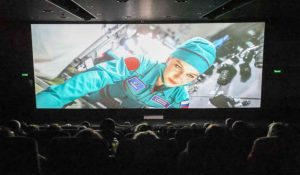
    First Film Shot in Space

    The first feature film shot in space premiered in Russian cinemas…

    The film “The Challenge” is about a surgeon dispatched to the International Space Station to save an injured cosmonaut. 

    Russia sent an actress and a film director for a 12-day stint on the International Space Station  in October 2021 to film scenes aboard the orbiting laboratory

    “The Challenge” is the first feature film shot in space.

    In “The Challenge” a surgeon played by 38-year-old YuliaPeresild — one of Russia’s most glamorous actresses — is sent to the ISS to save a cosmonaut injured during a spacewalk. 

    Director KlimShipenko, 39, who was in charge of camera, lighting and sound, brought back 30 hours of footage, 50 minutes of which were used in the final cut.

    Peresild and Shipenko underwent training for four months before going to space on a Soyuz spacecraft accompanied by a cosmonaut.


    -Team ScienceNow

  • Black Hole Imaging: New Frontier in Space Science

    While NASA considered building a large space telescope to image black holes for a year, a

    coordinated effort of the eight radio telescopes from across the globe has helped achieve the milestonedecades ahead of time…

    Introduction

    In April 2019, the entire world was awestruck looking at the stunning images of a supermassive black

    hole at the center of Messier 87 (M87) – an elliptical galaxy some 53 million light-years from Earth. A

    team of international astronomers had achieved the impossible by imaging a black hole 6.5 billion timesthe mass of the Sun; considering the fact that scientists were expecting completely black images asthey believed no light ever escapes it. The greatest challenge of the project was to capture hot glowinggas falling into the black hole from thousand or even millions of light-years away. Working for well overa decade, the scientists of EHT – an international network of radio telescopes called the ‘Event HorizonTelescope’ finally achieved this historic feat.

    The Challenge: Building an Earth-sized telescope

    We are all familiar with the fact that distant space objects are seen using a telescope. The ability of thetelescope to see further into the space is determined by its diameter or aperture. The greater its

    diameter, more light it will gather and higher will be the resolution of its images.Now, in order to see the black hole situated approximately 53 million light-years from Earth, thescientists were faced with a unique challenge of gathering as much light coming from it onto Earth, invery high resolution. It had to create a telescope on land with a very large aperture, preferably with adiameter as big as the planet Earth.

    Achievement

    The scientists decided to resort to a popular technique called Very Long Baseline Interferometry (VLBI),which had been often used for imaging of far-away objects. The crux of this technique was setting upan array of smaller telescopes across locations that are synchronised to focus on the same object atthe same time, acting as one giant virtual telescope.The aperture of a large telescope is as large as the distance between the two farthest-apart telescopestations. In this case with stations at the South Pole and in Spain, the scientist had achieved to createan aperture of the size of Earth. So in a coordinated effort, the EHT operated from across its eight radiotelescopes using different wavelengths of light in such a manner that the images it managed to captureseem to look as though taken from one huge telescope of the size of planet earth.

    Where to look for?

    ‘Sagittarius A’, a supermassive black hole was the closest to the Earth at the centre of our Milky Way

    galaxy at a distance of 26,000 light-years. Definitely, it was not the only black hole in our galaxy, but

    being closest it would appear largest of all. Being the closest to Earth and in the same Milky Way,

    Sagittarius A may seem a natural choice, but it had several technical challenges.

    Located in the same galaxy meant that while imaging the black hole, one had to be conscious of

    ‘pollution’ caused by stars and space dust, meaning that scientists would have more data and that theywould have to filter it while processing it.

    Why Messier 87 (M87)?

    Located at the center of the gigantic elliptical galaxy Messier 87 or M87, is one of the largest known

    supermassive black hole, 53 million light-years away. It is more massive that ‘Sagittarius A’ containing6.5 billion solar masses (i.e. one solar mass is equivalent to mass of our Sun). Importantly, it was anactive black hole with matter falling into it and spewing out in the form of jets of particles. While itsdistance made its imaging a challenge as compared to ‘Sagittarius A’, processing the data of the imagewas comparatively easier.

    Mission Accomplished

    Thirteen partner institutions worked together to achieve this exceptional breakthrough, which a

    generation ago was presumed to be ‘impossible’, undoubtedly a rare example of ‘global teamwork’.

    Once again, in a joint pursuit to ‘know more about the unknown’, scientists from across the globe havemanaged to harness their unique technological expertise to write this innovative algorithm of ‘mankind’striumph over matter’.

    Manoj Mahanta

    Team, ScienceNow Digital

  • Acharya Charak

    Acharya Chark was the founder of Ayurveda- a holistic system of medicine…

    Acharya Charak born around 300 BC and was a key contributor to Ayurveda’s ancient art and science, medicine, and lifestyle philosophy. Charaka lived between AD 150-200 and 100 BC.

    Charaka was an important and respected part of ancient Indian society and medical practice. He followed professional behavior and ethical ideals.

    Charaka studied all parts of medicine, including the logic and philosophy underlying the Indian medical system, he placed a specific focus on illness diagnosis and regarded Ayurveda as a holistic system of health care that addressed both preventative and curative elements.

    The Charaka Samhita written by Acharya Charak is an Ayurvedic treatise written in Sanskrit. The Charaka Samhita is one of Ayurvedic fundamental texts. The text is a fascinating source of ancient medical practices.

    According to Charaka, a body works because it has three doshas or principles: movement (Vata), transformation (Pitta), and lubrication and stability (Kapha). They are created when dhatus (blood, flesh, and marrow) interact with the food consumed.

    Dr ShobhaTawade

    Team ScienceNow Digital

  • Iron Pillar of Delhi

    Iron Pillar of Delhi is a monument that allures everyone with its mysterious iron built that has not rusted since its construction for more than 1600 years back. It is an excellent example of scientific and engineering advancement in ancient India…

    Iron Pillar is situated inside the Qutub Complex where the famous QutubMinar is located. Iron Pillar stands majestically with a height of 24 feet, placed in front of the Quwwatul Mosque in Qutb Complex. It is made up of 6 tons of wrought iron.

    The history of Iron Pillar Delhi is still under research and as per scholars, the Mehrauli Iron Pillar was constructed during early period of Gupta reign however according to one of the prominent theories, Iron pillar was built on top of a hill Udaygiri in Madhya Pradesh and was transported to Delhi by King Iltutmish after his victory

    Iron Pillar stands on an artistically carved base with a diameter of 48 cm and a weight of 6.5 tonnes. The pillar weighs more than 5865 kg. Iron pillar has inscriptions carved on it.

    It is an ancient Indian architectural wonder.


    -Dr Shobha Tawade

    Team ScienceNow Digital

  • Visualisation: Law of Attraction

    Visualisation: Law of Attraction

    Successful people have a clear idea of their life goals. Constantly dreaming and visualising about them, they are able to harness the power of their subconscious mind thereby setting in motion favorable events that eventually help achieve the goals…

    “What you think, you become” – Gautama Buddha..Centuries ago, when the great saint spoke these wise words, he was trying to bring to fore the strong connection between our ‘thinking’ and ‘actions’? Surely, he wanted to communicate the fact that ‘negative’ people invariably think negative, and likewise attract negative people/events into their lives’.

    So also, positive people habitually tend to do a lot of ‘positive’ thinking and likewise attract positive people/situations into their lives. Eventually, bringing us face-to-face with the universal law of attraction– ‘like attract like’.

    Today, spiritually inclined or otherwise, most thought leaders/corporate trainers working with the nuts-and-bolts of ‘how thinking works’ and even modern-day scientists researching on ‘neurons’ and ‘brain‘would agree that Lord Buddha uttering those golden words might have just got it right.

    Visualisation: Reprogramming Mind

    In the 21 st century, humanity has clinically re-discovered that mind can be reprogrammed to get things to work-out in a desired manner. We are all waking up to a new reality that it is possible to train our brains to achieve set life goals and objectives. It is possible because the brain isn’t able to differentiate between things ‘actually happening’ and the things that are being ‘imagined’. In short, the brain cannot distinguish between a ‘real’ memory and an ‘imagined’ one. It means that if you visualise some life goal/objective and get the brain to encode it as a ‘real memory’, the brain would immediately set in motion a whole sequence of events leading to its achievement.

    Understanding the Brain’s Process System

    Our brain has a system called ‘Reticular Activating System’. It is a network of neurons that is designed to filter information allowing in only the required information and blocking the unwanted. It is a protective system, to prevent information overload. Because if the brain starts processing all the information it received, it would simply explode.

    Guess who programs this system? We do it, all the time. For instance, if you start feeling, ‘you are not loved’, your reticular activating system will immediately, through the day, start pointing out every piece of evidence to confirm the negative belief that, ‘you are not loved’.

    How to get our brain to work for us?

    We identify a ‘life goal’ and create a vivid picture in our mind of how things would seem to be when it is finally achieved. Immediately, this would create a conflict in our mind – between the visualised image of the goal being achieved and the present-day reality. Now as our minds are programed to resolve conflicts, our subconscious mind will get working on this visualisation. It will activate creative powers of the subconscious mind, motivate the mind to work harder, create new solutions, find innovative means… only to realise our goals.

    When should one do it?

    While visualisation can be used to help achieve life goals, we need not spend all day thinking about the goals and objectives. On the contrary, if you spend too much time on visualisation while going about the day-to-day tasks, it could prove to be counter-productive. Instead, you ought to establish the right balance between ‘visualisation’ exercise and ‘daily routines’. Ideally, you should spend no more than 5-10 minutes twice-a-day, preferably first thing in the morning when you wake-up and then just before you go to bed.

    How to get better results?

    While going about the daily 5-10 minute visualisation exercise, try making the images more real by

    adding a lot of emotions to it. The real feelings of sound, smell, taste and touch when added to visual image of life goals/objectives will make the mental image look more profound, and thus the brain will work more passionately to achieve them.

    Why make it a practice?

    Waking up every day and visualising life goals and objectives for a couple of minutes will not only help you reprogram your mind to get things done, but it will also help you develop the art/skill of getting the mind involved in constructive things. You will begin to feel really good.

    -Noel Fernandes

    Team, ScienceNow Digital

  • Portable Water Filter

    Innovation Competition to encourage the Novel innovations and to promote Start-ups was convened in Mumbai by Bhanushali Chamber of Commerce, Mumbai. The Innovations were awarded with Prizes.

    In this issue we are bringing to you a novel innovation, Mobile Water Purifier which leads to sustainable development…

    Introduction

    The issue of potable water is a major concern. Especially during the scotching summer heat, the need of pure water is very eminent. The water needs to be pure and safe. The issue is very effectively and innovatively handled by Mr Rohit Shah of Kalki Ecosphere. The innovative solution is adjudged as the Best Sustainable Solution in providing easy potable drinking water at the BCOC Innovation Meet

    Need

    The Mobile water Filter is a sustainable solution for reducing dependency on packaged water bottles. Thecontribution in problem of single use plastic by bottled water is more than 12% and day by dayit’s increasing. Each second more than 20,000 bottles are produced and dumped in the landfillsand oceans. The speed is so alarming that need very urgent attention to address.

    The water consumed from the Plastic Bottles even leads to several health issues.

    Innovation

    InnovatorMr. Rohit Shah founder of Kalki Ecosphere, a DPIIT recognized start-up, observed that Government is spending huge amount on water treatment plantsto provide safe water, but this water is not fit for drinking purpose because of basic nature ofwater to attract dirt and get contaminated with bacteria and viruses.

    There is need for defence to take this water for drinking purpose. There are water Taps everywhere in publicareas, railway stations offices etc. The water from these sources is even not safe to drink.

    People have no option but to buy very expensive bottledwater just because there is absence of any Efficient, Reliable and Convenient portableor mobile water purifier which can be easily carried along and plugged to any water tap andget optimum quality of drinking water.

    It is also observed that these bottles have hazardouseffect on human health because the micro plastic get dissolved in stored water during production, distribution till it reaches to final consumer.

    The Device

    Personal device for which consumer himself isresponsible for maintenance, just like Mobile Phone, is developedwhich is  a very efficient, reliable and Convenient Mobile Water purifier which can

    be easily carried along and can be plugged to any water taps or narrow bottles mouth like soda

    bottles to get the pure water. It is very handy therefore can be used by people on the move, Hikers or trekkersand the younger generation where there are no taps available.

    Testing`

    The Devise is tested at the recognized NABL accredited laboratory and the results are miraculous with elimination of 99.9999% of Bacteria, Protozoans and 99.99% Viruse Apart frommicrobiology, it can also address the issue of  Heavy metals, Pesticides, Toxic materials, Chlorine, micro plastic and to top it bad Odour and bad taste of the water is removed effectively.

    The product is very handy and versatile to use any where that it can really helpto

    our environment and human health.

    -Team ScienceNow
