science share account_circle

Author: sn_admin

  • Ancient Vaigyanik

    Bhaskaracharya – The Mathematician Astronomer

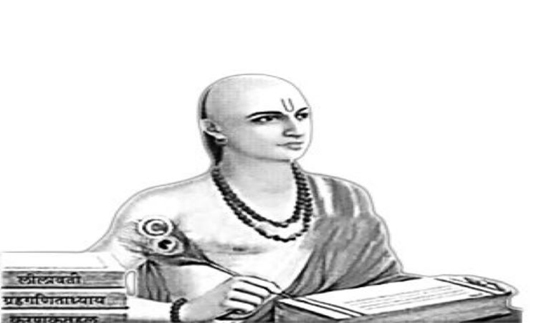
    India’s Ancient Mathematician and Astronomer Bhaskaracharya with his famous treatise Siddhant Shiromani…

    Bhaskaracharya was one of the leading mathematicians of the 12th century. He is famous for his book Siddanta Shiromani, which is divided into four sections: Lilavati (Arithmetic), Beejaganit (Algebra), Goladhyaya (Sphere) and Grahaganit (mathematics of planets).

    He developed the Cyclic or the Chakrawat method for solving algebraic equations. The Bhaskara II satellite, named in honor of the mathematician and astronomer, was launched by the Indian Space Research Organization (ISRO) on November 20, 1981.

    -Dr Shobha Tawade

    Team ScienceNow

  • Ancient Vigyan

    The Konark Sun Temple

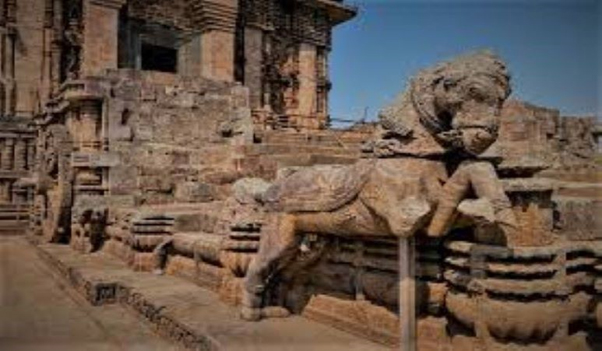
    The magnificent Sun Temple at Konark is the masterpiece in ancient architechture…

    The Konark Sun temple in Odisha is a famous Indian temple dedicated to the sun god, Surya. The temple faces the east and it is built at such an incline that the first rays of sunlight hit the main entrance of the temple. But what is fascinating is that the 24 stone carved wheels of the Sun Temple are actually sundials which show time anti-clockwise.

    This sundial at the temple, has 8 major spokes that divide 24 hours into 8 equal parts. This means that the time between two major spokes is 3 hours. There are also 8 minor spokes. Each minor spoke runs exactly in the middle of 2 major spokes. This means that the minor spoke divides the 3 hrs in half, so the time between a major spoke and a minor spoke is 90 minutes.

    The edge of the wheel has several beads. There are 30 beads between a minor and a major spoke. So, the 90 minutes are further divided by 30 beads. This means that each bead carries a value of 3 minutes. The beads are large enough, so you can also tell if the shadow falls in the centre of the bead or on one of the ends of the bead. This way we can further calculate time accurately to the minute. The placing of the sundial in the monument shows the precision and co-ordination that must have taken place between the astronomers, engineers and the sculptors to create a structure like this one, 750 years ago!

    Do you know?

    The chariot of the Sun Temple at Konark contains twelve pairs of wheels, each twelve feet in diameter, representing the twelve months of the Hindu calendar. The eight spokes of the wheel represent the eight intervals of the day and the seven horses represent the days of the week.

    Dr Shobha Tawade

    Team ScienceNow


  • Water, Water…

    In the wake of severe water scarcity in several districts of the country, its high time urban residents who are the largest consumers of the freshwater resources, got conscious of recycling of Grey water 

    According to a recent World Bank study, India – a home to 17 percent of world’s population, holding about 4 percent of the world’s freshwater resources is already the largest consumer of freshwater in the world. Annually, it is consuming freshwater to the tune of 750 billion cubic metres and it is estimated that the demand would double to 1.5 trillion cubic metres by 2030. For a country that has been battling a near drought like situation virtually every year, the World Bank figures definitely warrants some serious thinking about ways and means the country could bridge the widening gap between the water ‘haves’ and ‘have nots’.

    Why is Waste water recycling a neglect in India?

    Undoubtedly, waste water treatment plants and restructuring of sewerage system is a costly proposition. Considering the magnitude of waste water generated across India, it ought to be processed on a day-to-day basis. Creating such an infrastructure by the government alone without any support from private sector and individual residents is simply impossible. Moreover, non-availability of land in the urban areas to create zone-wise centralised recycling systems makes the project virtually impossible to undertake.

    What is Grey Water recycling?

    Used water from bathroom sinks, showers, tubs, washing machine, etc. that has not come in contact with faeces from the toilet, is called Grey water. It may look dirty and may contain food, grease, hair and certain household chemical, yet it is considered safe and beneficial source of water for irrigation and various household purposes like flushing toilets.

    Why reuse Grey water?

    Often, Grey water is directly released into existing water bodies. Grey water released directly into rivers, lakes or ponds leads to pollution of potable water owing to presence of chemical nutrients. On the contrary, we can use the same polluting chemicals as growth promoters (i.e. fertilizer) making them beneficial for the plants. Importantly, reuse of Grey water especially in the urban ghettos would not only help check the ever swelling sewer or septic system, but to a great extent solve food shortage issues and also turn the surroundings clean and green.

    Which technology is best suited for you?

    Individual households should always try sticking to low-tech simple design while recycling Grey water using gravity wherever possible, instead of using costly pumps and filtration techniques. The entire focus should be on making optimal use of Grey water for development of food and a green ecosystem. However, if the system is being designed for the entire residential or commercial complex, it is advisable to engage an engineer or water expert to design a system that is capable of treating and reusing large volumes of water. Undoubtedly, a complex system would work out to be a bit expensive, as it may require a good amount of space and also involve heavy pumps and modern filtration systems.

    Word of Caution!

    In case you are planning an independent Grey water recycling system here are some issues that you need ponder about:

    • Storing Grey water: As plants have to be watered at regular intervals, a basic storage system ought to be in place. Ensure that you don’t store Grey water for more than 24 hours, as the nutrients in it will start to break down, creating bad odour.
    • Avoid physical contact: One cannot entirely rule out pathogen contamination, especially if someone in the family is infected or sick, so ensure that the Grey water directly soaks into the ground and people or animals come in its direct contact.
    • Optimal use: While using Grey water for irrigation, ensure that plants are optimally watered and there is no run-off or pool-up. Pooling of Grey water could be breeding grounds for mosquitoes and run-off water could infect households.
    • Managing excess water: In case the Grey water generated is in excess of what’s required for irrigation of plants, then it is sensible to let the excess Grey water into the sewer/septic system. Here a valve system could be used to switch the excess flow into the sewer system.
    • Keep it simple: Always go for a recycling system that would last longer, require less maintenance, require less energy and cost less money. As far as possible try avoiding pumps in favour of gravity, and use a filtration system that is simple, manageable and cost effective.


    -Manoj Mahanta

    Team, ScienceNow


  • Innovation

    Cycling Across Rivers & Floods

    India has periodically faced severe flooding problems in several regions. During such calamities when transportation network is completely disrupted, low-cost amphibian bicycles could help people overcome tragedy and return to normalcy….  

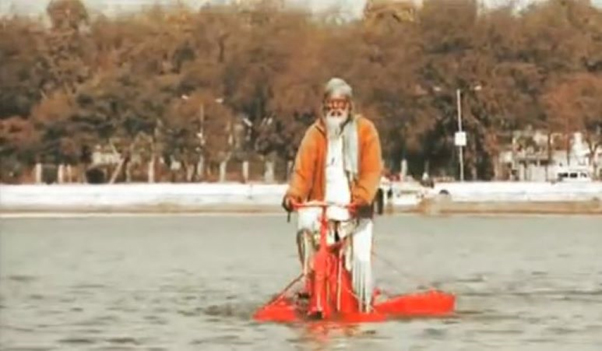
    When Mohammad Saidullah was unable to meet his wife owing to overcrowded boats, he decided to find a permanent solution to his routine problem – he invented an amphibious bicycle, the one that could be used on land and water. His ‘Noor bicycle’ (named after his wife) became the talk-of-the-town overnight with the media world happily flashing the news across channels. Even President APJ Abdul Kalam lauded his ingenuity taking a serious note of his innovation and recommending it for defence use. Subsequently, Saidullah received the National Innovation Foundation (NIF) lifetime achievement award for it, and NIF acquired the bicycle for further studies and design development on the personal instructions of President Kalam. 

    This may not have been the first time that someone passionately crossed the water hurdle against all odds to: meet his beloved, attend school, reach office or marketplace…But what makes the story unique is where others used their grit and determination Saidullah put his ingenuity to good use. Completely adhering to Greek philosopher Plato’s words, “Necessity is the mother of invention” Saidullah used his limited resources to find solution to a ‘universal’ problem. Certainly, it is this extraordinary spirit of Saidullah that motivated him to build a fan that runs without power, a mini-tractor for material transportation, a fodder cutter-operated centrifugal pump, a mini-turbine for electricity generation, etc.

    Amphibious Bicycle Design

    Majority modern-day amphibious bicycle designs proposed by several grass-root innovators in India and abroad appear to be strikingly similar. To understand more about how amphibious bicycle designs have evolved over the years, we look at some of the popular designs:

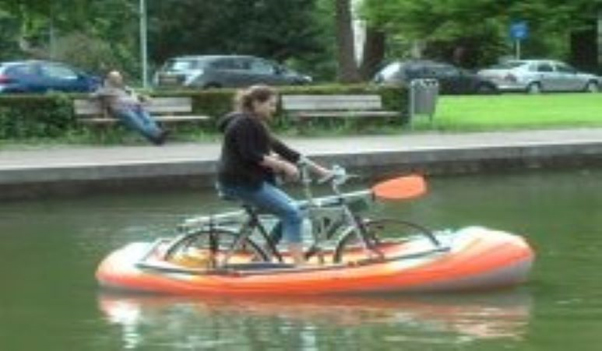
    • CYCLOMER BICYCLE: First introduced in 1932 by the French, who were then the helm of bicycle design and development across Europe, with some major structural changes in the bicycle design. Its looks were very different from those of the conventional bicycle, with front and rear buoyant bells as wheels. When in water, the bike gained its stability owing to the four smaller bells extended out from the bike’s frame.


    • NOOR BIKE: The bike uses four rectangular air-filled metal floats for buoyance, and a paddle system in the rear wheel. These floats were made from recycled metal containers and are attached directly to the bike’s main frame. Here there is no major tinkering with the bike’s conventional design expect for the attachment of paddle to the rear wheel spokes.


    • SHUTTLE BIKE: This project to build an all-weather, easy-to-carry amphibious bike was undertaken in 1992, near Milan in Italy. The Italian engineering company, SBK Engineering designed the Shuttle Bike with two inflated floats on either sides. The cyclist could carry the floats in his bag-pack while on land, and these could be inflated using pumps and then fastening it to the bicycle frame cross the water body. All the accessories and floats weighing approximately 11 kg could be easily dismantled in about 10-minutes and carried in a bag-pack.

    Designing amphibious bicycle – Critical factors

    • Buoyance: It is an upward force exerted by a fluid that opposes the weight of an immersed object. Moreover, the pressure increases with depth as a result of the weight of the overlying fluid. In short, an object experiences greater pressure at the bottom than at the top.

    Buoyance force extended by the water on the bicycle while running in the water ought to be balanced, else it will be unstable or topple. The floats attached on either sides balance the buoyance force exerted while running in the water.

    • Drag: It refers to forces acting opposite to the relative motion of the moving object with respect to a surrounding fluid. This force exists either between two different types of fluids or between a fluid and a solid surface.

    Drag force balancing is critical while moving bicycle in the water. Invariably, the shape of the front float should be such that the bicycle experiences minimum drag force while moving.  So also, the blades on the spokes of rear wheel should be designed in accordance to the drag force it experiences.

    In Conclusion:

    Designing of an affordable amphibious bicycle can help millions of poor people living in the flood prone areas across the globe overcome their day-to-day commuting problems, and probably, India stands to gain the most. The country is blessed with rich monsoon with several parts receive abundance of rain, eventually leading to flooding. During these periods of calamity, often there is a total breakdown of transportation services. People are forced to use boats, which are limited and scarce considering the population of those affected. The amphibian bicycle could prove to be an optimal solution, and its high time we dedicatedly worked on creating a truly world-class, low-cost “Indian Amphibian Bicycle’.


    -Noel Fernandez

    Team ScienceNow

  • Book Review

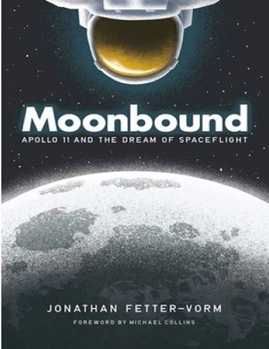
    Moonbound

    Apollo 11 and the Dream of Spaceflight….

    On a summer night in 1969, two men climbed down a ladder onto a sea of dust at the edge of an

    ancient dream. When Neil Armstrong and Buzz Aldrin first set foot on lunar soil, the moon ceased to be a place of mystery and myth. It became a destination.

    Moonbound tells the monumental story of the moon and the men who went there first. With vibrant images and meticulous attention to detail, Jonathan Fetter-Vorm conjures the long history of the visionaries, stargazers, builders, and adventurers who sent Apollo 11 on its legendary voyage.

    From the wisdom of the Babylonians to the intrigues of the Cold War, from the other worldly discoveries ‘[of Galileo to the dark legacy of Nazi atrocities, from the exhilarating trajectories of

    astronauts―recounted in their own words―to the unsung brilliance of engineers working behind the scenes, Moonbound captures the grand arc of the Space Age in a graphic history of unprecedented scope and profound lyricism.

    -Team ScienceNow

  • Believe it or Not!

    You can’t believe it… but it is true…

    • Time passes slower the faster you move!
    • You can see without your glasses! All you have to do is make a pinhole with your hand, which will help you focus the light coming into your retina. Sure, it won’t give you 20/20 vision, but it’s a good start if you’ve left your glasses at home!
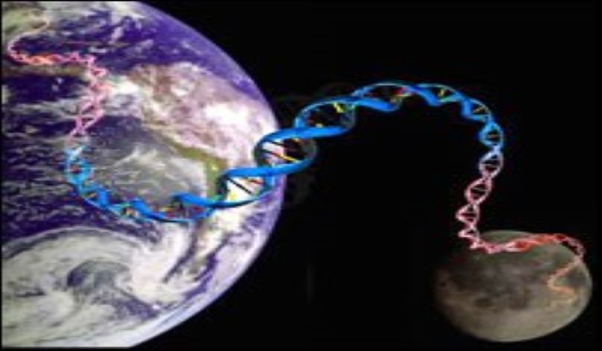
    • There is enough DNA in the average person’s body to stretch from the sun to Pluto and back 17 times!
    • Except for identical twins, each person on Earth has a unique smell!
    • By the time you go to bed at night you are about 1 cm shorter than when you woke up that morning! This is because the cartilage between your bones is compressed throughout the day.

    Team ScienceNow

  • Biologically Speaking…

    Take a look at the career prospects in the Subject of Biology…

    The Tenth Result is out… and  now it is the Career Time… Every parent is thinking of putting his ward in the best of the best career… lot of debate at home as to where to go… Mostly what parents think and what the ward has in his or her mind is just opposite…

    I like Biology… I love Chemistry… I also love Environmental Science and so on… I like Biotechnology…. It goes on and on….

    These are the words by so many science loving aspirants who pass 10th grade examination. Most of them want to enter into science. Their parents also insist that there ward should take up Science…

    Science of Biology                                       

    Science domain is vast, to be used to underline any such subject… and the reality is that in 11th & 12th science students need to study subjects other than that what is in their mind like all students intending to pursue Biology have to study Physics and Chemistry whether they like it, love it or not. Here a lot of conflict arises… Even the learned parents ask that if their ward can skip Maths or Physics..

    The things may change when the new education policy will be implemented. At present you need to study Physics and Chemistry if you love any of the above subjects. Basically Physics is a difficult subject to crack at 11th  and 12th  standards as it all needs good understanding of Mathematics.

    These are the minimum requirements to enjoy Biology learning. Biology and Chemistry go hand in hand because Biochemistry is needed in Biology.. Environmental science needs all subjects but mainly Biology & Chemistry.

    Career in Biology

    After completing 12th standard with Physics, Chemistry and Biology usually 3 subjects like Chemistry,  Botany and Zoology can be continued for B.Sc. Degree. Microbiology, Biotechnology, Biodiversity can also be chosen in select colleges. Studying  these subjects you can pursue your interest in Biology.

    Biology is a vast and interesting subject. Microbes, Bacteria and Viruses are part of our life. Their mutants are challenging scientist. In a benevolent way to think that these microbes and very useful in Food production, Cultivation crops. Just to understand the behaviour of domesticated animals can be of interest to animal lovers. Study of wild but endangered species can be undertaken by nature enthusiast. The study of Bird migration is a curious subject all over the world. The list is unending in terms of Drugs, Vaccines and food and beverages and the environment… The science is having enormous applied opportunities with entrepreneurial avenues.. The Medicine and Pharma field is very much sought after… The training in applied area is the need of the hour and the science of Biology is Booming with opportunities…

    Applied Approach

    However, in reality, in pure science virtually in all the streams what is observed is the lack of practical and applied approach. For example the Botany students cannot identify even the common plants.. same is for Zoology that they lack the knowledge of Fauna around them… These classical subjects need attention as they are having tremendous potential in terms of research and development

    Environmental avenues
    For all the Life Sciences the upcoming promising field is Environmental Science… In the era of global warming and climate change, the science is getting momentum… It engulfs all the branches of science. The impact of understanding harmful gases polluting the air, water and soil is a big challenge and the mitigating the impact is a great applied potential… River pollution is a big problem all over the world… There are various laws to prevent pollution but it’s implementation is neglected by the authorities. Zealously a good environmentalist can force the fellow citizens to act lawfully. Water scarcity is another a big problem… Vehicular Pollution, Loss of Biodiversity all these issues need urgent attention.

    Here I have presented what are the avenues in the Life Sciences… In fact there are many more than discussed here… and beyond these the environmental concern is prime…

    Sky is the limit to pursue your career in Biological Sciences and it a good choice to fulfil your passion if you are a Biology enthusiast…

    -Dr Shreeram Geet

    Senior Career Councillor

  • Nurturing Science Culture through SciComm : An Indian Experience

    This is an interpretative narrative of the six decade long experience of a People’s Science Movement and the creation of a cumulative scientific culture  in the southern Indian state of Kerala. Major milestones of that scientific culture are presented with a plausible correlation  with status of the state in SDG goals and HDI illustrating the creation of scientific culture value chain…

    Historically the first SciComm initiative in India started in 1947 with the formation of Bangla Vigyan Parishat by the celebrated physicist S.N. Bose of Bose Einstein condensate fame. Ten years, later similar efforts were made in the southern state of India, Kerala with the Science Literature Council. Five years later this Council was reorganized with 40-odd science writers in 1962 which evolved and metamorphed into a massive People’s Science Movement (PSM) presently with  60,000 grassroot Scicommers  in 1300 networked units with one SciCommer per 650 of population active in the field. The strategic  manifesto is ‘Science for Social Revolution’ and exclusively used the native language, Malayalam, to create and sustain scientific culture with measurable  societal impact. Mission driven, it weaponized the people with the tools of science and technology to reverse the process of monopolizing the benefits of science and technology by a privileged minority.

    Science and Culture

    Bertrand Russell while receiving the Kalinga Prize for the Popularization of Science lamented the divorce of science and culture describing the separation of science from culture as a modern phenomenon (1). He underlined the importance of science communicators, who act effectively as liaison officers between scientists and the public as performing a work which is necessary not only for human welfare but also for bare survival of the human race. Charles Snow hypothesized that  science and the humanities which signified  the western intellectual life had fissioned into “two cultures” and that this was a major handicap to both in solving the world’s problems (2). This concept had a long term damaging effect of fence building and the two cultures were not only on not speaking terms  but also revelled in making faces at each other. Culture studies scholars posit  two quite distinct cultures within science , one more inclusive, that promotes transparency of reporting and open science, and another, less inclusive, that promotes reproducibility as a remedy to the current practice of science.(3)

    Russian Revolution

    The early evolutionary history of the PSM had a distinctive critical phase in Bombay where a team of nuclear scientists planned, organized and executed a science capital development project and validated the proof of concept. A nuclear engineer MP Parameswaran, affectionately referred to as MP nationally in PSM, returned from Moscow absorbing the best practices of the Russian science popularization revolution and set off a chain reaction with a team of  100 Malayalam speaking scientists and engineers of the Atomic Energy Establishment, then Bombay. Inventing technical glossary, production of science articles, discussion meets, translation work,  type writer keyboard development and building a cadre of writers and speakers from the scientist community were the high points of this phase. Later MP moved to his home state for full time engagement in PSM.

    Trained in the Russellian thoughts and dissatisfied with the dichotomy of two cultures and influenced by Marxian thoughts, MP envisioned a scientific revolution in dialectical terms foreshadowing Stephen Gould. Science and technology in the Soviet Union served as an important part of national politics, practices, and identity. From the time of Lenin, science and technology were intimately linked to the ideology and practical functioning of the Soviet state, and were vigorously pursued. Max Weber differentiated between science as profession and science as an intensely inspired inner calling for the truth. Soviet state made it a strategy to establish a harmonious link between profession and vocation  through a cultural-ideological ‘dispositif’ with a set of Soviet specifics of science communication (4) .

    Nuclear Nexus

    MP was witness to the Soviet SciComm revolution. He had returned from Moscow after training and was fluent in Russian language. In 1966, under the project planning  ‘Let 100 flowers bloom’, he galvanized a group of Malayalee nuclear scientists and engineers in Bombay to actively consider the possibilities of producing science literature in Malayalam. The continual contacts between the Bombay group and the organizers of the Kerala Sastra Sahithya Parishad led to the formation of the Sastra Sahithya Parishad (Malayalam), Bombay in January 1966. Similar organizations were formed for other regional languages and they were sought to be coordinated through a ‘‘Federation of Indian Languages Science Associations’’ (FILSA). SSP (M), Bombay was the most active among these groups, with regular monthly discussion meetings on various science subjects in Malayalam.

    The proof of concept was developed in Bombay where a high quality, high density science capital in inter-, multi-, and trans disciplinary knowledge  areas was fortuitously available with knowledge of Malayalam.  Transformation as well as  transmutation of this science capital into Scicomm asset  was the  strategy. Tactically, an association SSP(M) was registered and preselected activities were programmed and operationalized. Every subject matter expert was persuaded to create two  SciComm articles in Malayalam and present it in a meeting and finalize the text.  One article will be technical with the principles and concepts explained and the second article will be complementary describing some practical applications. Gas Chromatography, Nuclear Fuel Reprocessing, Reverse Osmosis, Food Irradiation, Mass spectrometry, Radiocarbon Dating and similar topics came out in Malayalam. Planned production of science articles and books was the tactical  priority. Vocabulary enrichment was the first critical step taken. Around 3000 SciComm words were coined  and placed in public domain for comments by linguists and teachers contributing to the development of a scientific glossary.

    Six Decades

    A helicopter view of the scientific cultural landscape can be had by following the arrow of time in the evolutionary history of the PSM history over six decades. The first decade coincided with the golden age of capitalism. The state was experiencing a renaissance cultural  revolution shaking the core of its body- social destroying the fabric of the old order. One of the intellectual streams was a library movement and its architect was a school science teacher, PT Bhaskara Panicker who galvanized a network of concerned citizens, mainly school science teachers. In 1962 April 8, a Science writers Association was formed in Kozhikode and the 32 founding members were all technical experts. For a decade,  concentration was on science popularization and creating science awareness among the public and membership rose to 4000. Constitution  was made in in1967 and emblem created in 1971. The sixties witnessed the ascent of science spectacularly by the conquest of space and the human footprint on lunar surface. The zeitgeist of those times was unbounded optimism in science culture. Sociologically it was also the golden decade of capitalism.

    The second decade signified the oil crisis and the rising oil price created structural changes. The middle east became the Eldorado of wealth creation and epicentre of employment with the resultant working class migration to the gulf . PSM attention was shifted from the platform of protest of misuse and abuse of science and technology to the slogan of science for social revolution and reconstruction. The philosophical underpinning was that the  Indian society as one; divided into two groups: a minority, which is continually getting richer and a majority which is continuously getting impoverished or is facing the threat of degradation.  The analysis was that science and technology serve as efficient tools in the hands of the minority, the haves, in exploiting the majority, the have-nots. PSM took, on every issue, a stand partisan to this majority consequently against the minority and strove to arm the majority with the weapon of science and technology in their fight against impoverishment, against the exploiters. Educating people was enhancing their power to understand and analyze social issues in a scientific way and help them to play a more active role in transforming the society. If science and technology become a tool in the hands of this majority, it will bring about a radical change in the society. Hence the KSSP slogan Science for Social Revolution. Concurrently it paved the way for building a broad based massive movement opening up membership  to all  who are interested in science. Those who do not Reply to letters, do not Keep proper accounts, do not Accept responsibilities, do not Fulfil accepted responsibilities,  do not Understand the value of others’ time, do not have Faith in human beings  and Those who always complain about others are not admitted into the fold.

    The third decade witnessed the end of cold war as also the fall of the Soviet Union and the Socialist Block. PSM evolved into a movement studying social problems, analyzing them and critiquing them and developing alternatives and transferring the campaigns to the public. Membership became more diverse and reached 42,000 including women. During this decade the Oil crisis displayed a new social phenomenon and saw a migration of people to the middle east with changes in the economy. The fourth decade of the PSM experienced pervasive Neoliberalism including in scientific research. The ascent as well as  the descent of the influence of financial capital formation was the characteristic feature of the fifth decade. Also was luminous consequences of environmental degradation and climate change. All these changes impacted the course of science and technology (5).

    Recent advances in Information Technology,  Biotechnology and Nanotechnology have deeply impacted body social and countries have on place Science ,Technology and Innovation policies. Quark theory of matter,  Lasers that transformed communication and treatment modalities, Rapid growth of Internet, Discovery of microwave background radiation validating Big Bang theory, Human Genome Project, Gene Editing Technology, Discovery of Gravitational Waves , Exoplanets, Search for Extra-terrestrial life and diagnostic MRI scanning made a long inventory of the impact of science.  Such advancements in science generated rational optimism and great expectations among the literate masses. Several problems that remained insoluble were dissolved creating trust in science culture (6).

    The interaction between the traditional existing local culture and the scientific culture has not been an easy straightforward acceptance of the scientific culture introduced in deficit mode. Deficiency and insufficiency were evident but were not responsive to the presentation of facts and reasoned arguments alone. One successful case study is that of kitchen fireplaces. Most households used firewood and burning firewood in the confines of the kitchen was bothersome. A new improved fire place was designed with higher heat transfer efficiency and was installed in selected houses. The story spread like wildfire. The demand skyrocketed and the science activists had access to the kitchen and the woman head of the family leading to a relationship management and trust building 500,000 fire places were installed and the acceptability of PSM as a public service provider gathered momentum.(7)

    Over these decades , PSM  expanded its fields of interests and activities to almost all fields of human endeavour. In essence it remained educative, combative and constructive informating the masses. The macro vertical domains it operationalized are environment, health, education, energy, literacy, micro planning and development in general deeply embedded in the culture of science. However, a  cultural aberration a toxic concoction of tragic capitalism and antiscience attitude  is emerging in COVID19 pandemic time challenging the scientific culture. The Universal Immunization program and the principle for vaccine for all are being jettisoned by commercial considerations and distinctly discriminatory vaccination program have highlighted the fact that scientific culture needs eternal vigilance.


    SDG and HDI

    The six decade long development of Sciculture is reflected in sociological parameters and the report card of measured indices are available validating process and strategies. The Index for Sustainable Development Goals (SDGs) evaluates progress on various parameters including health, education, gender, economic growth, institutions, climate change and environment. First launched in December 2018, the index has become the primary tool for monitoring progress on the SDGs in India. The state  has retained the top rank in Niti Aayog’s SDG India Index 2020-21 for the third consecutive year, a recognition of its social, economic and environmental progress. The state bagged 75 points, an improvement from 70 and 69 in the previous years. Since its launch in December 2018, Kerala has been topping the index, which has become the primary tool for monitoring progress on the SDGs in the country. Kerala scored in segments such as ‘zero hunger’, ‘quality education’, and ‘affordable and clean energy’. Kerala’s rating of HDI is 0.790 is the highest in India, resulting mainly from the vast improvements the state has made in the fields of sanitation, health, education and poverty-reduction. A cumulative scientific culture can be created and sustained by intensive strategic science communication.


    P.Jayaraman, S. Sivadas and MPS Ramani

     

  • Do you know?

    Know the incredible facts…

    Why do we get PINS and NEEDLES?

    Most of us have gone through the phenomenon of legs turning numb as a consequence of sitting in a particular posture for a long time. The sciatic nerve controls and provides sensation to the muscles of our thighs, feet and legs. This nerve runs down from the hips to the legs. Anything that puts pressure on this nerve with prolonged sitting can hinder the nerve function or sensation of the lower legs. This hindering of the nerve function due to compression leads to feeling of pins and needles.

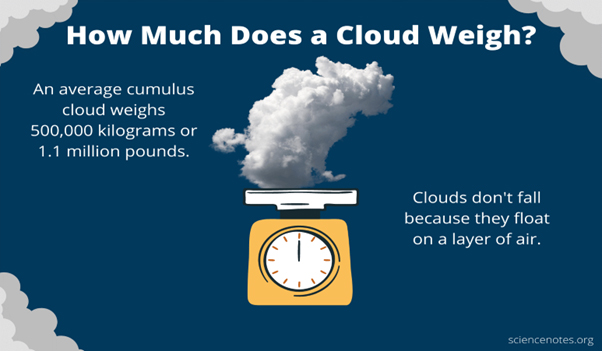
    Why do CLOUDS have weight?

    According to scientists, the weight of the average cumulus cloud or puffy clouds that sometimes look like pieces of floating cotton is an incredible 500,000 kg! Think about that for a moment. This means that at any given moment, there are millions of litres of water floating above your head. That is equivalent to 100 elephants.


    Why are AIRPLANE windows round in shape?

    By curving the window, the stress that would eventually crack the window corner is distributed and the likelihood of it breaking is reduced. Circular shapes are also stronger and resist deformation, and can thus survive the extreme differences in pressure between the inside and outside of the aircraft.


    Why are TUNNELS round in shape?

    Digging round tunnels are not only convenient engineering-wise, but when you line them with concrete, it forms an arch, which is a strong shape to hold back the pressure from the surrounding dirt. Also, the machine that bores the holes are large boring-machines that uses a rotating mechanism. So, the holes they bore – like most drilled holes tend to be circular in shape.


    -Team ScienceNow


  • Solve This

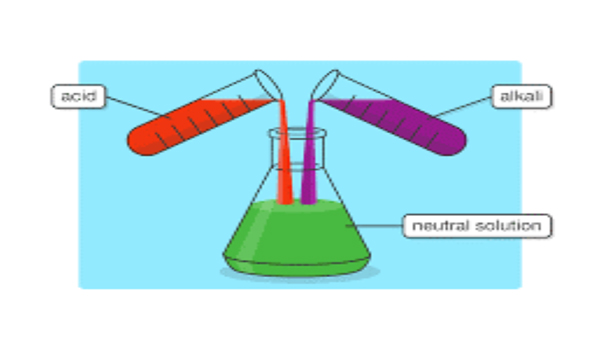
    A king once condemned a prisoner and wanted to give him a very harsh punishment. He keeps a glass containing some hydrochloric acid and another containing an equal amount of sodium hydroxide before the prisoner and asks him to drink both of them. The prisoner knows that the acid is highly corrosive and will destroy the mucous lining, as well as his oesophagus.

    The other solution is equally bad and will cause him to collapse. But he goes ahead and obeys the order. The king finds that the prisoner has survived without any ill effects.

    How did he manage it?

    Answer:

    The prisoner understood the chemical reactions well. He knew that an acid is always neutralized by an alkali. So he poured the liquids in the two glasses into a third empty glass. When they thus got mixed, they reacted producing salt and water. These were harmless, except for the salty taste!

    HCl + NaOH = H 2 O + NaCl


    -Team ScienceNow